

A small big cat with a big small heart. Music, adventure. Leftist. Therian. Poly, pan, demi, mostly gay, ♂. AD @yiffypard. NSFW. Mastodon: @Shroud@Meow.Social
Minneapolis, MN
Joined December 2010
- Tweets39.2K
- Following1.1K
- Followers874
- Likes67.2K




Shroud retweeted

"Oh you like cats? Name every cat"
*challenge accepted*
Mega catpile featuring every single member of the cat family❤️Can you spot your favorite? All species are (more or less) to scale.
PRINTS of this artwork are COMING SOON, along with "The Howl" and "Foxes everywhere" prints❤️




Shroud retweeted

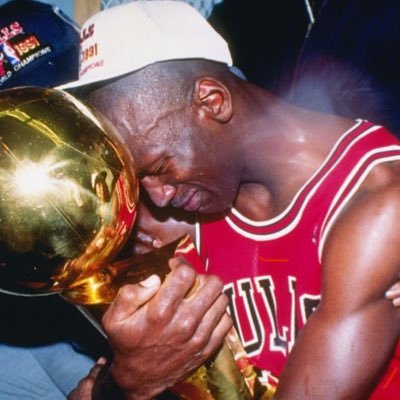
Moved in next to a French family who put these out today apparently to remind us where the yard border is and I swear those people will never learn the lesson of fixed site defensive barriers.


Shroud retweeted

Gonna have a nap party, just set up a whole ass room with blankets and pillows and fans and just sleep in eachother's presence


Shroud retweeted

You can use Blender's geometry nodes to solve physics and electromagnetic equations such as Biot-Savart law. You can calculate the magnetic field of a coil anywhere in 3D space and visualise the magnetic fields. Additionally, you can see in real-time how the magnetic field lines change as the coil gets deformed and twisted! #geometrynodes #b3d #blender3d #electronics #Engineering #Science #physics #kicad #circuits


Shroud retweeted

During the mid-20th century, cats played an important role on ships as skilled rodent catchers. Sailors realized that having cats aboard helped control the population of rats and mice, which were notorious for damaging supplies and spreading diseases. These ship cats became valued members of the crew and were even given passports to acknowledge their contribution and ensure their safety during international travels.
The passports for ship cats were a unique and lighthearted tradition. While they didn't serve any legal or official purpose, they were created to recognize the cats' role and provide a form of identification. The passports typically consisted of a small booklet with pages that included the cat's name, description, and an area for their paw print.
When it was time to depart or dock in a foreign port, the ship's captain or crew members would present the cat's passport to the authorities as a fun way to document the feline's presence onboard. The cat's paw print, obtained using ink or paint, was added to the designated page, providing a personalized and whimsical touch to the document. This practice not only amused the sailors but also showcased the camaraderie they shared with their feline companions.
While these ship cat passports were not legally recognized, they symbolized the close bond between humans and their feline shipmates. They served as a reminder of the cats' essential role in maintaining a clean and rodent-free ship, thus safeguarding the crew's provisions and health during long sea voyages.
However, as the mid-20th century progressed and maritime practices evolved, the reliance on ship cats diminished with the advent of more effective pest control methods. With the decline in the need for ship cats, the tradition of issuing passports gradually faded away. Nevertheless, the memory of these seafaring felines and their unique passports continues to fascinate and entertain those interested in maritime history and the unique relationships forged between humans and animals at sea.

Shroud retweeted

Insurrection is beautiful.

ALT Rioters in a stolen police van in France, driving down the road and hanging out the doors while someone pops a wheelie on a dirt bike


