

Paradigm shift strategy. Non-violent Action plan. Of Zimbabwe, for Zimbabwe by Zimbabwe. Responsible, focused Citizens . A harvest of ideas.
Murewa Zimbabwe
Joined December 2022
- Tweets2.4K
- Following2.7K
- Followers825
- Likes649






Pinned Tweet
Our problem is not the name of an org but the barbaric culture fostered by the institution: corruption, impunity, weaponization of the law, poor economic policies, poverty, unemployment, wicked electoral system etc.
The struggle is by those affected against e beneficiaries.


Power often mistakes itself for justice and repeatition pretends to be truth.
Resistance is a train, an unstoppable one.
7
The Signal Zimbabwe retweeted

Did we shed blood for one man, one vote — only to surrender it now?
Constitutional Amendment Bill No. 3 quietly takes your ballot back and hands it to MPs you barely know.
Six reasons it must never see the light of day. My latest ↓
open.substack.com/pub/allthi…
#RejectCAB3 #DefendTheConstitution
🤖 Made with AI


The Signal Zimbabwe retweeted

I totally agree with the mayor of Zimbabwe’s second biggest city, Bulawayo, David Coltart, when he talks about the need to curb the idolisation of leaders, what I call personality politics.
It is important for Africa and Africans to pursue ideas over personalities, because if you pursue ideas, personalities can be replaced as long as the ideas themselves remain intact and are being advanced.
But if you follow personalities without anchoring yourselves in ideas, it means that when that personality gets things wrong, everyone who has invested blind loyalty in that individual is taken down with them. If that personality has no substantive ideas to turn things around or to confront a regime that is destroying the economy, then the entire movement becomes paralysed.
If that personality is compromised or bought by the other side, the whole movement collapses with them because there were never any institutional or ideological foundations to sustain it.
The central problem we face now is that to follow ideas requires, in most cases, an educated populace. Not just educated on paper, but a populace grounded in critical thinking, citizens who understand why it is dangerous to idolise leaders instead of defending principles, systems, and constitutionalism.
In Zimbabwe’s case, that becomes extremely difficult, and it may not even happen in our lifetime.
Take, for example, a frightening statistic. Zimbabwe has never had an Ordinary Level pass rate above 33 percent. At times the pass rate has dropped as low as 14 percent, 13 percent, or 12 percent. That means up to 88 percent of those who sit for Ordinary Level examinations fail. When such a large proportion of the population struggles with basic academic thresholds, the capacity to interrogate political ideas, governance models, and constitutional questions becomes severely limited.
So if someone cannot pass an O Level exam, the opportunity for them to fully grasp the importance of ideas over personality politics becomes very slim. It becomes even more dangerous when political leaders themselves understand this societal thought deficiency and deliberately exploit it.
That is why leaders are able to do reckless things and get away with it through chete-chete politics, which gained prominence under Robert Mugabe. In the middle of a genocide, killing his own citizens, he remained highly popular and was winning elections in the 1980s without the need for overt rigging, largely because of personality politics.
People were following the man, not interrogating the system he was building. They idolised him, and we all know how that story ended. The economy was destroyed and the country was driven into the prolonged crisis we find ourselves in today.
So leaders like David Coltart are very rare in our society, leaders who have the courage to publicly challenge personality cult politics. Many other leaders speak about these issues privately, but they are afraid of being demonised by the very personality cults that dominate both ZANUPF and sections of the opposition.
As long as a country is not led through ideas, it will never succeed. It will never reach its full potential. That is why some young but deeply thoughtful Africans are beginning to ask difficult and controversial questions about governance on the continent, including whether military regimes, if they are idea driven and institution focused rather than personality driven, might sometimes produce better outcomes.
This line of thinking is emerging because electoral politics in many African countries has failed. Where elections are not rigged, citizens often still vote along personality cult lines rather than ideological or policy lines.
As Professor PLO Lumumba once explained, he entered an election campaign armed with ideas, policy proposals, and intellectual substance, but his opponent arrived with money. The opponent became wildly popular because politics became transactional rather than ideological.
Citizens voted for the man who brought them money, not the man who brought them ideas to help them make their own money. They settled for handouts.
In places like Zimbabwe, the situation is even worse. You do not even always need money. If you look at the opposition today, much of its dysfunction is rooted in personality cult politics. Supporters are sustained on sweet nothings and empty rhetoric, and they embrace it enthusiastically because the bar for critical thinking has been driven very low.
So whilst Mayor Coltart is absolutely correct, the reality is that the transformation he is calling for may take generations to materialise. It will take a very long time for Zimbabweans to transition from personality driven politics to idea driven politics.
Until that shift happens, both the ruling party and the opposition will remain trapped in cycles of dysfunction driven not by a lack of leaders, but by a lack of institutional and ideological grounding.
The irony is that Coltart may even be demonised for saying this, because if you remember, the opposition in Zimbabwe was split in 2006 largely because of personality politics. The leader at that time lost a vote in the national executive over senatorial elections, but because people were following him, not ideas or constitutional processes, the opposition fractured. Those who were looking for constitutionalism and institutional integrity ended up leaving.
The same pattern repeated itself in 2016. The opposition leader made a serious blunder by appointing vice presidents in direct violation of what the party constitution provided for. Once that unconstitutional precedent was created, it opened the door for the ruling party to later exploit those internal weaknesses after his death and weaponise that illegality to dismantle the opposition from within.
Up to today, if you engage supporters on these issues, many still refuse to see the common sense in this analysis. They defend the very decisions that weakened their own movement, even with the benefit of hindsight.
It happened again in 2022. The opposition leader set up a political party without a constitution, without defined structures, and without institutional safeguards. He was warned, including by Dr Alex Magaisa, that it was dangerous and that even a temporary constitution would protect both the party and its supporters. He did not listen.
If you read the support base’s comments today, many still do not want to accept that the current mess in the opposition is rooted in those very decisions. That is the danger of idolising leaders instead of defending ideas, systems, and constitutionalism.

The Signal Zimbabwe retweeted
Speed came and left. Boy is making millions. Now, I was hoping that ZANU PF would ask themselves how somebody without a farm or tractor could be making such. I sit here as someone who has been building streaming infrastructure for years and think, what our farms add to the GDP in year we cld add 2x that by just opening the country up. But again...POWER is more important than happiness

A true and clear reflection of the Zimbabwe situation.
The post and the comments are what Zimbabwe is today.
Maybe takaroiwa.
Far from freedom.
Battered women syndrome at play.
Denial.
Voices of rescue are despised.
Yet no hope no solution no plan.
Just a fools play.
Painful
unavailable
1
6
Trying times, moments of despair.
A silent loud question.
Why everything appear not working in & for Zimbabwean?
Social, economic, political.
Is it worth fighting for?
Is this why some masses (vakafuratira) turned their back on the country.
Painful😭😭😭😭😭
2

The Signal Zimbabwe retweeted
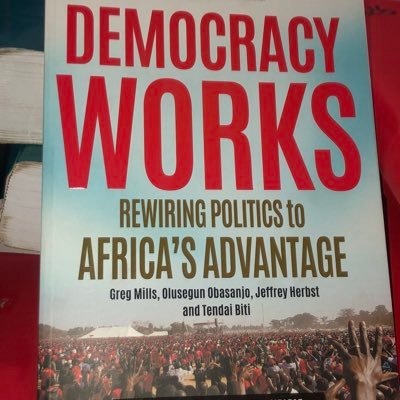
This car remains permanently parked in our neighborhood offering unwelcome security to our premises. The paraonia is deafening&unwelcome .It includes stalking&harassing members of the CDF,plans to plant contra band at our premises&homes.These are old regime tactics #LeaveUsAlone

The Signal Zimbabwe retweeted
1. In 2006 I was literally banned from working in Zim by the state. I had a job offer by the Gov of Botswana, cld not leave because they had taken my passport & they were denying me my Certificate of Good Standing. I was 25 & single. It was a scotched earth policy by the system..


The Signal Zimbabwe retweeted
I have just spoken to Mbuso Fuzwayo of Ibhetshu Likazulu, and he confirmed to me that he was approached by Sengezo Tshabangu’s lawyer, Nqobani Sithole, to front the constitutional application.
He told me that he was not aware of the nefarious agenda behind it at the time. According to him, he was informed that the final application was still being polished and would later be brought to him to sign on behalf of himself and his organisation.
However, Mbuso Fuzwayo made it clear to me that he will not be signing the application. He has since become aware of the broader scheme behind it — that the case was designed to go to court under the guise of challenging the 2030 agenda, but with a predetermined outcome ensuring its dismissal.
That dismissal would then be used as a political and legal basis to justify and legitimise an unconstitutional extension of President Mnangagwa’s term to 2030.
This revelation adds credibility to the growing concern that the courts are being used not as instruments of justice, but as tools to manufacture legality for political ambitions and forced consent.
It is now clear that after losing the political argument for 2030 in the Court of Public Opinion, the drivers of this agenda have now turned to the courts as their next weapon. Their strategy is to secure a ruling that, while unconstitutional, will still carry the weight and appearance of legality. Once obtained, that ruling will be used to justify and advance their political project of extending President Mnangagwa’s term to 2030.
This tactic mirrors previous manoeuvres where the judiciary was manipulated to produce outcomes that served political ends rather than justice. It represents a dangerous trend in which the law is twisted to manufacture legitimacy, eroding public trust in the courts and turning them into instruments of political expediency rather than constitutional guardianship.
