
Professor of Economics University of Technology Sydney
Joined August 2012
- Tweets1.1K
- Following451
- Followers809
- Likes3.7K




Peter Siminski retweeted

On Iran and Anthropic:
Robert Mugabe, Zimbabwe’s dictatorial president since 1987, won the big prize in the country’s lottery in 2000. Why did he go out of his way to concoct such a charade? A surface-level answer: Because he could. Once you destroy institutions constraining your power and behavior, you can act in largely unrestricted fashion, whether it is for personal enrichment, personal aggrandizement, or simply projecting even greater power.
But there is a deeper, more problematic answer as well: What better way to further decimate institutional checks on your power than showing how much of a farce the existing system of rules is.
It is not just a coincidence that such behavior can do damage to norms, institutions and security and stability of the country. It is part of the design.
Mugabe’s lottery win echoes in two fateful decisions by the Trump administration, which will have long-lasting and troubling implications, are just. Trump and his allies are pursuing these actions because they can and because these actions are consistent with their agenda of upending all rules and constraints on their future behavior.
The first problematic action is the US-Israeli attack on Iran and the killing of the country’s supreme leader Ayatollah Khamenei. Leave aside the loss of life and the immediate chaos, it should be obvious that such a move will trigger a long period of instability in the Middle East.
There should be no doubt that the Iranian regime was repressive, murderous and bad news for its own people’s economic and social well-being. The supreme leader, leading Iranian elites and the country’s feared Revolutionary Guard had blood in their hands and the repression had intensified lately.
But none of this justifies the United States and Israel initiating a war in the Middle East, without support from international allies or from the public in the United States (still considered a democracy where people’s views should in principle matter). But even worse, this act violates the sovereignty of another nation and risks plunging the entire region into carnage.
And however awful Ayatollah Khamenei’s track record may be, he’s no Nicolas Maduro (who had only a few diehard supporters even in the Venezuelan military). By virtue of his religious role, Khamenei enjoyed respect and authority among the Shiites and even the broader Muslim mission community, and his killing risks turning him into a martyr, which is the last thing that Iran or the region needs.
The second is the Department of Defense (it is still painful to call it the Department of War even if recent actions confirm that this change of name wasn’t just for optics) designating the AI company Anthropic a supply-chain risk. The official designation is typically used for companies from foreign adversaries, such as China’s Huawei. It bars federal contractors using the Anthropic’s models and heralds major restrictions on what the company can do in the future. The Secretary of Defense Pete Hegseth announced “Effective immediately, no contractor, supplier, or partner that does business with the United States military may conduct any commercial activity with Anthropic.”
The reason? Because Anthropic wanted safeguards against its models being used for mass surveillance of Americans and autonomous weapon systems. Neither of these two provisions would have put meaningful restrictions on the DoD in practice. Mass surveillance is illegal under US law and autonomous weapon systems are a not near-term possibility.
Yet, it is the showdown that matters, just like Mugabe’s lottery winning.
This action will also have major consequences, perhaps more far-reaching than the attack on Iran. Regardless of what one might think of current AI capabilities, there is little doubt that who controls AI will have momentous implications for democracy, business, communication and privacy. This designation can be interpreted by many in the industry that it will be the US government, not the private sector, that controls AI.
Even more far-reaching are the broader implications of this action: this administration, and perhaps future administrations, can now bring hugely disproportionate penalties on any contractor they disagree with. Security of private property rights, which has been a mainstay of American state-business relations for centuries, is now looking much shakier. It also sends exactly the wrong signal to the world that Pentagon is intent on mass surveillance and the development of autonomous weapon systems (why else bother about these two ineffective provisions in the contract?).
The absurdity of both actions is what harkens back to Mugabe’s lottery win. Trump came to power promising no foreign adventures, and now has spearheaded a potentially riskier one than the Iraq war, with even flimsier justification. There would have been no bite to the provisions that Anthropic wanted in the contract, since current AI systems are nowhere near reliable to be used in autonomous weapon systems and the US government has plenty of other tools that can be (and sometimes are) used for mass surveillance.
The shock value and the norm breaking are part of the intent. Mugabe’s lessons continue.
Peter Siminski retweeted

Postdoc hiring at Economics Department for the ARC DP grant by @NathanKettlewe1:
recruitment.uts.edu.au/OA_HT…..
Peter Siminski retweeted
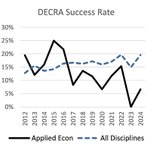
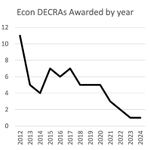
Colleagues in our department were awarded 3 DPs and 1 DECRA last year, 1 Linkage recently, and 2 more DPs this round. Moreover, all 6 are large grants with postdoc funding. Way to go EDG!

We are excited to share that two Discovery Projects from our department will be funded: arc.gov.au/discovery-project…
Congratulations to Professors Adeline Delavande & Luis Pontes de Vasconcelos as well as Isa Hafalir! A true testament to the hard work of our Economics colleagues!

Peter Siminski retweeted
A post-doc opportunity at UTS:
econjobmarket.org/positions?…
"We seek candidates ... with a focus on inequality and intergenerational mobility ... demonstrated experience in applied econometrics, working with administrative data, and survey research methods"


Peter Siminski retweeted

It has been weirdly quiet on social media ever since the I4R dropped 2 of 15 reports about the questionable research practices of Asad Islam-GDRI and scores of his collaborators. Here is my take on what we know and need to know.
@AaronCharlton
a-ortmann.medium.com/the-asa…

Peter Siminski retweeted

Sending my best wishes to all New Zealanders this Waitangi Day.
Australia and New Zealand are family - and we join in commemorating community and culture.
Peter Siminski retweeted

An unscheduled but necessary intervention in @FinancialReview. afr.com/policy/economy/ross-…

Peter Siminski retweeted

Great conference at QUT. Very honoured to have been invited to deliver a keynote speech.
@page_eco @UTS_Economics

Peter Siminski retweeted

Dr Nathan Kettlewell, ARC DP 2025 recipient, will be: Comparing public and private provision of healthcare
You can learn more about Nathan’s prior work in the healthcare space here:
uts.edu.au/about/uts-busines…
Peter Siminski retweeted
Prof Peter Siminski (ARC DP 2025) will be exploring: Inequality and intergenerational mobility: measuring what matters and why
You can learn more about Peter’s impactful research here: youtube.com/watch?v=phFUFMuk…
Peter Siminski retweeted
It is such a great day for the UTS Economics Department, as 3 UTS-led DP projects were funded! Congratulations to our colleagues
@SiminskiPeter
@MAnufriev
@NathanKettlewe1
You’re unable to view this Post because this account owner limits who can view their Posts. Learn more
Peter Siminski retweeted

Tomorrow, we’ll be announcing the outcomes of Discovery Projects 2025. All Lead Chief Investigators will receive a notification email to check RMS regarding applications.
Stay tuned for an update.
Peter Siminski retweeted

Organizing the 2024 UTS Behavioural Lab Conference with Dr. Saluja was fantastic! Huge thanks to @jesspan13, Prof Brown @UTS_Business, Dr. Tindall @B_I_Team, and all who presented and joined us for insights on #Diversity, #Equity, & #Inclusion 📸 @UTS_Economics


Peter Siminski retweeted
2024 UTS Behavioural Lab Conference: Behavioural Science for Diversity, Equity and Inclusion on Nov 7th (lnkd.in/gkrbW5za). An amazing lineup of speakers: @jesspan13 @NUSingapore, Prof Brown @UTS_Business, Dr Tindall @B_I_Team. @UTS_Economics

Peter Siminski retweeted

Billionaires own about 4% of US wealth, but contributed 1/3 of the money raised by Trump, a billionaire himself. The triumph of plutocracy, in real time

An FT analysis of campaign finance filings found that roughly a third of all of the money raised by the Trump campaign and allied groups came from billionaires, while billionaires represented 6% of the money raised by Harris groups. on.ft.com/4e62tlo

Peter Siminski retweeted
I and twenty-two other Nobel economists signed a letter endorsing Kamala Harris for President.
We believe Harris's policies will result in a stronger economic performance, with economic growth that is more robust, more sustainable, and more equitable.
cnn.com/2024/10/23/politics/…

Peter Siminski retweeted

Don’t forget to submit your papers @USydneyEcon @MarianVidalFdez @AlfredoPaloyo @SiminskiPeter @ArezouZaresani @UTS_Economics @UNSWEcon @BusEcoNews for joint @eale_sbe @SOLE_Labor_Econ @AASLE_Econs deadline 1st dec 2024

Call for Papers is now available for the 2025 World Labor Joint Conference we are hosting with @eale_sbe and @AASLE_Econs in Toronto, Ontario, Canada. Deadline for submissions is December 1. ow.ly/scuT50TFUUu

Peter Siminski retweeted
CONGRATULATIONS on their outstanding teaching performance in the first half of 2024: Dr Elif Incekara-Hafalir (Top Teacher & Top Postgraduate Subject Award), A/Prof Gordon Menzies (Top Teacher & Top Small Undergraduate Subject Award) and Dr Jason Collins (Top Teacher Award)

Peter Siminski retweeted
A thread about what is wrong with the influence of Elon Musk and other tech billionaires. Another thread about content moderation will follow later this week.
Obviously, the problem isn’t that Musk is expressing his opinions, which is his freedom of speech. It isn’t that Musk has turned into a big supporter of Trump. It isn’t even that Musk is posting AI-generated fake images of Kamala Harris: cnn.com/2024/09/03/media/elo…
My concerns are more sociological and political economic.
My starting point is that in any society some individuals have more, much more power than others. Once upon a time, this may have been linked to physical strength or military prowess. Today, it is often related to what Simon Johnson and I called “persuasion power” in Power and Progress.
amazon.com/Power-Progress-Th…
Persuasion power is rooted in status or prestige: those with greater status can more easily persuade others. Where status comes from and how unequally it is distributed vary greatly across societies.
In the United States, status became linked to money and wealth, and income and wealth inequality skyrocketed. This meant a very steep status hierarchy.
That is problematic for several reasons.
First, status – and relatedly persuasion power – are largely zero-sum affairs. More status for somebody means less status for another. A steeper status hierarchy makes some people happy, and others unhappy and dissatisfied. Investment in zero-sum activities is often inefficient and excessive, as compared to investment in non-zero-sum activities. Compare, for example, the social value of spending money on pure gold multi-million-dollar Rolex watches versus spending time to learn some new skills. Both may have intrinsic values for the investors (due to the beauty of the watch and the pride of acquiring new knowledge). But, on the whole, the first type of investment signals that you are richer and more able to undertake conspicuous consumption, and it can easily get out of hand – with people spending huge sums in order to edge ahead of others they see themselves in competition with. The second type of investment, on the other hand, increases your human capital also contributes to society. The first is largely zero-sum the second is largely non-zero-sum.
Second, there are evolutionary and social foundations for linking persuasion power to status and prestige – it is individually rational to learn from people who have expertise and it is reasonable to link this expertise to success. This type of learning is also good for communities, because it enables them to coordinate on certain best practices.
amazon.com/Secret-Our-Succes…
But when status gets linked to wealth and wealth inequality becomes very large, this social justification is lost. Consider the following thought experiment. Who has greater expertise on carpentry? A good, master carpenter or a hedge fund billionaire? If we think about it this way, we would probably conclude the former. But when wealth becomes status, we may start attaching more and more importance to views of hedge fund billionaires on carpentry. This example was purposefully simple and sharp. Let’s take another one to see why the “wealth is status” social equilibrium is problematic. Whose views on freedom of speech you want to attach more importance to? A tech billionaire or a philosopher who has grappled with ethical questions related to the freedom of speech?
Third, even more problematic is the fact that in most societies, wealth inequality has an arbitrary dimension. Take Wilt Chamberlain and Lebron James. We may argue endlessly about which one is better, but clearly, they were both exceptionally talented basketball players. Chamberlain is estimated to have had a wealth of $10 million at the time of his death. Lebron James’s wealth today is estimated at $1.2 billion. These different outcomes are largely arbitrary. Chamberlain happened to live at a time when there were sports stars did not get compensated as much. This is partly about technology (everybody can watch Lebron James today), partly about norms (we’ve have made it much more acceptable for people to be paid hundreds of millions of dollars), and partly about taxes (if the US today had the kinds of tax rates that it had in the 1950s, it would not generate such large wealth inequality). Similarly, if the tech sector did not become so central to the economy and did not have a winner-take-all aspect (which was also partly a choice of how we organize several markets and sectors), tech billionaires would not have become so rich. Bill Gates or Elon Musk are not any wiser because they are taxed less. But they have much more wealth because they are taxed so little. But then in a “wealth is status” social equilibrium, their status and social influence multiplies because they are taxed so little.
Fourth, there is something even more pernicious which Simon Johnson and I explored in Power and Progress using the example of Ferdinand de Lesseps. In fact, we thought this was so important that we devoted the first full chapter, Chapter 2, of the book to it. Lesseps gained tremendous status in late 19th century France, coming to be identified as the “Le Grand Français” (the great Frenchman), because of his success (and luck) in successfully completing the Suez Canal. He showed great skills in convincing politicians both in Egypt and France and some foresight in seeing that maritime international trade would become very important. He was also tremendously lucky in that his hopes that technological solutions to the way that he wanted to build the canal (without locks, which was initially impossible because of the amount of digging excavation that would be necessary) were developed just-in-time to save the project. But then what did Lesseps do with this prestige? He became reckless, unhinged and cocky, pushing the Panama Canal project in an unworkable direction, which ultimately led to the deaths of more than 20,000 people and to financial ruin for many more (including his own family). Persuasion power also makes you unrestrained, which can be socially dangerous and disruptive. Simon and I thought that Lesseps’s story was relevant precisely because the same dynamics were being played out with many tech leaders today.
Fifth, some very rich people choose not to use the status conferred on them by their wealth to centrally influence critical debates (think of Warren Buffett). Some like Bill Gates or Elon Musk do. It follows as a corollary of what I have argued so far that this is not desirable, because their status is excessive, and they are now influencing key social choices beyond their expertise. It is not tech billionaires’ fault that US policy is fueling massive inequality (though they benefit from it handsomely and many of them then use their status in order to keep taxes low and regulations light). But it is their responsibility if they start misusing the huge status that this wealth inequality affords them. It is their responsibility if they turn into bullies and start punching down on people who disagree with them, because they themselves start believing that everybody should respect their opinion on every topic. It is absolutely their responsibility if they use their platform for further polarizing society.
Finally, if we are in such a situation the last thing we want is to give even bigger forums – for example, in the form of their own social network – to these people who already have excess status and influence, and this is doubly true if they have a tendency to punch down.