

PhD student in Computer Vision for plants and certified frenchmaxxer
Joined October 2013
- Tweets1.1K
- Following689
- Followers382
- Likes2.2K






Simon retweeted
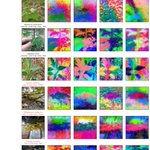
Finally, here’s a visualization of the patch features.
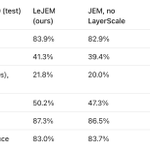
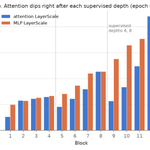
I compare LeJEPA, JEM with and without LayerScale, and the supervised DINOv3 checkpoint from Pl@ntNet as a reference.
Interestingly, even though LeJEPA performs worse, its features still look crisp, especially since it’s only trained through its global embedding and never gets a loss on its patch tokens.
Also, removing LayerScale from JEM was the right move. Without it, the maps are smoother and segment leaves and flowers cleanly.


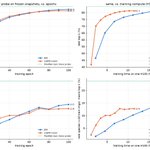
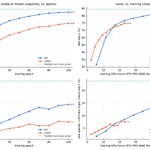
I finished training JEM for 100 epochs, and the results are actually better than I expected. It's only 1 point away from a fine-tuned DINOv3 (which has seen WAY more data). I'm pretty sure it could beat it with more training.
It took a bit more than 20 H100 hours to train for 100 epochs on the dataset (~250k training images), and as you can see, my LeJEPA is still undertuned (Claude is currently working on it to get a better baseline).
The main problem, though, is with rare classes, but that's expected. It might be a sampling issue. For example, I could continue training while oversampling rare classes, but that's not really what I want.
All plants kind of look the same, so I'm wondering if we could make the algorithm better at capturing fine-grained details and the patch-level loss already helps a lot imo. But tbh, the dataset is so hard that I'm not even sure there's much room for improvement on rare classes.


Simon retweeted
here is the code: github.com/saulane/jem-plant…
and also the weights: huggingface.co/saulane/jem-v…

Simon retweeted

Easily one of the best keynotes I've attended in a long time.
Incredibly thought-provoking and very timely for folks in Computer Vision. Thanks for the great talk! @tserre #CVPR2026


Simon retweeted

CVPR@Paris 2026 🇫🇷 — June 1st, co-organised by ELLIS Unit Paris. A one-day local event ahead of CVPR, open to all. Oral & poster sessions for CVPR 2026, CVPR workshops & ICLR 2026 papers.
🔗 cvprinparis.github.io/CVPR20…

ALT CVPR@Paris 2026, co-organised by ELLIS Unit Paris.
Simon retweeted

What if the model didn’t just use a computer, but actually was the computer?
Meta AI introduces "Neural Computer", a model where computation, memory, and I/O are all inside one learned system.
Their early prototype learns from screen recordings of terminals and desktops, and it can already imitate some basic computer behavior like rendering interfaces and responding to clicks or commands.
But it still breaks on slightly harder tasks like reliable reasoning, stable memory, and reusable skills.

Simon retweeted

AGI


I packaged up the "autoresearch" project into a new self-contained minimal repo if people would like to play over the weekend. It's basically nanochat LLM training core stripped down to a single-GPU, one file version of ~630 lines of code, then:
- the human iterates on the prompt (.md)
- the AI agent iterates on the training code (.py)
The goal is to engineer your agents to make the fastest research progress indefinitely and without any of your own involvement. In the image, every dot is a complete LLM training run that lasts exactly 5 minutes. The agent works in an autonomous loop on a git feature branch and accumulates git commits to the training script as it finds better settings (of lower validation loss by the end) of the neural network architecture, the optimizer, all the hyperparameters, etc. You can imagine comparing the research progress of different prompts, different agents, etc.
github.com/karpathy/autorese…
Part code, part sci-fi, and a pinch of psychosis :)

Simon retweeted

I repeat: We have to split lectures / practice / exams and people should be allowed to pick and mix whatever elements from whatever academic institution.
In particular universities must allow LLM-self-taught people to get "real world credentials".

Simon retweeted

> independently discover a Zeno's paradox at age 3
> MIT at 17, grad level math in 1st year
> graduate in 3 years
> drive motor scooters from Boston to Bogotá with the boys
> start a company in Colombia
> start code breaking with the IDA for money
> solve minimal varieties in riemannian manifolds
> speak out against Vietnam War, get fired from IDA
> take over math dept. at Stonybrook, make it a top-ranked program globally
> develop Churn-Simons theory, accidentally contribute more to physics than most physicists
> get bored with math, start modeling financial markets
> return 60% for 4 decades straight
> establish one of the most effective philanthropic organizations of all time
> chain smoke cigarettes the entire time
RIP Jim 🫡
