
Medical device scientist
Joined June 2012
- Tweets264
- Following76
- Followers214
- Likes964






Loving the Royal Albert Hall Christmas Carols with the mighty 9999 pipe organ of Richard Pearce #RAHChristmas
58
A 7 day moving average smooths out the daily variations in practical HRV measures such as RMSSD to let you see your baseline and trends myithlete.com/monitoring-ada…

Certainly true in my experience - work & lifestyle stress limits the amount of training your body can absorb. All subtracted from your 'physiological headroom'

In trained individuals, non-training stress tends to affect ANS activity more so than the training stress that they’re accustomed to.
This means that lower/less stable HRV often reflects the stress that diverts energy away from recovery processes & impairs training adaptations.
1
5
609
ie the better you relax before bed, the better you will sleep and the better your HRV will be the next day: the start of a virtuous cycle
Simon Wegerif retweeted

Same HRV tools/methods we’ve used to monitor training adaptations in athletes seem useful for tracking health and wellbeing in the general population.
Practical summary: hrvtraining.com/2022/08/24/s…
Full text: rdcu.be/cUd9T – at Savannah, GA

📰Self-recorded heart rate variability profiles are associated with health and lifestyle markers in young adults
Read here: link.springer.com/article/10…
In particular, aerobic exercise is one of the very few interventions known to reduce aortic stiffness. Increased aortic stiffness is a key contributor to high systolic BP with aging.
Simon Wegerif retweeted

Developing endurance is simple, yet difficult.
How do you get fitter aerobically? What should I worry about to get better? I get asked this question all the time. So here's the answer
From beginner to Olympian, here’s what to worry about when it comes to endurance development:
Simon Wegerif retweeted

For the love of God, people:
Just put a HR strap on each morning and do the bleeping test!
You put 2,3,4 hrs EVERY day into training but donning a HR strap for a minute or 2 each morning to get accurate data & ensure that training is actually productive is too 'inconvenient'?🙄
You’re unable to view this post because this account owner limits who can view their posts. Learn more
Simon Wegerif retweeted
#HRV guided training in a nutshell:
* Don't plan your recovery days. Take them when your body needs recovery.
* Don't plan your hard days. Do them when your body is poised to get the most out of them!
#NotRocketScience #CommonSense
Simon Wegerif retweeted
I’m a fan of active recovery & certain modalities, but rest days with no or minimal team obligation are underrated. Few things allow players to shut it down & recover better than simply knowing there’s nothing on the calendar tomorrow. Typically see a nice HRV bump the next day.
The promise of training personalised to what your body is able to absorb and benefit from the most has been my ambition since I started measuring HRV with ithlete 11 years ago! @myithlete
No matter what level you race at - from recreational athlete all the way to World Class Pro, if you're not using #HRV to guide your training, you're leaving some performance on the table!
Simon Wegerif retweeted
Outside of intentional overload & beyond the first week or 2 of a new phase, high-level athletes generally require <24 h for post-training HRV recovery, which explains their stable values (low CV). If HRV is decreasing, look for non-physical stress that’s hindering recovery.
Simon Wegerif retweeted
"For all but the most cosseted professional athletes, training is not the biggest source of stress on the body..."
If you're basing your training decisions only on TSS/training stress, you're missing the biggest part of the picture.
trainingpeaks.com/coach-blog…
#HRV #TotalLoad
Simon Wegerif retweeted
1. A few thoughts about justifying inclusion of certain HRV parameters in research. Thread inspired by having my (and seeing other) papers rejected for “only including RMSSD” as one of the primary reasons.
Simon Wegerif retweeted
6. Simplicity that comes from tracking only a couple markers (e.g. RMSSD and RHR) makes HRV more widely accessible and practical. How many people want to track multiple variables and compute questionable ratios to infer autonomic status?
Simon Wegerif retweeted
Great to see #AI in sport starting to get more exposure and more practical implementation. #JustTheBeginning nature.com/articles/d41586-0…

Simon Wegerif retweeted

How Heart Rate Variability Beats Block Periodization Training Plans dlvr.it/RwDWKk

Simon Wegerif retweeted
New one led by @GonzalezFimbres comparing 1 vs 5 min HRV through a 4-wk camp in int’l-level girls field hockey. Values were highly correlated, showed similar responses to load, & similar associations with fitness. Practically same insight, 80% less time. pubmed.ncbi.nlm.nih.gov/3364…


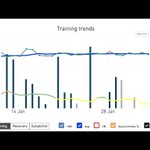
Nice visual case study of how good quality HRV data adds value to the Coach's picture of how the athlete is adapting, and where the optimum balance of fitness, fatigue & lifestyle can be found.

A quick thread on data informing the training process not driving it. "Data" or biometrics have an important place on the bus BUT they never take the wheel!

1
2
Simon Wegerif retweeted

HRV is a measure of global stress. Recently, UK gov granted funds to research about the utility of HRV to early detect #Covid_19. If you are measuring HRV and have had (or think you may have had) COVID-19 you can participate here: myithlete.com/hrv-and-covid-… @SimonWegerif @myithlete – at San Vicente del Raspeig, España