

Scientist. Interested in complexity, organisational principles, quantitative biology, frogs & coffee. Tweets here are my own. @simonereber.bsky.social
Joined July 2013
- Tweets2.3K
- Following348
- Followers980
- Likes39K





Pinned Tweet
✨Thanks to amazing students @TobiasKletter @MrEnkapsis, postdocs @bis_was_here
& collaborators @Omar136661 @VasilyZaburdaev ALMF @EMBLHeidelberg ✨
👉Cytoplasmic material properties control spindle architecture and scaling 👉out today @NatureCellBio rdcu.be/eqPr8

Simone Reber retweeted

Congratulations! Their most renowned work:
1. Georg Nagel & Peter Hegemann's work:
Title: Channelrhodopsin-1: A Light-Gated Proton Channel in Green Algae
2. Georg Nagel & Karl Deisseroth's work:
Title: Millisecond-timescale, genetically targeted optical control of neural activity
3. Georg Nagel & Peter Hegemann's work:
Title: Channelrhodopsin-2, a directly light-gated
cation-selective membrane channel


Simone Reber retweeted

Congratulations to Karl, Peter, and Georg! Another great example of how basic research - in this case, understanding how an algal cell responds to light - can have an enormous impact on our understanding of something as complex as the brain.

BREAKING NEWS
The 2026 #NobelPrize in Physiology or Medicine has been awarded to Karl Deisseroth, Peter Hegemann and Georg Nagel “for their discoveries concerning light-gated ion channels and optogenetics.”

Simone Reber retweeted

Schützt die Verfassung die freie Wissenschaft? @ChristophMllers, der kommende Rektor des Wissenschaftskollegs, hat untersucht, was die Unis bedroht. Er sagt: Das Problem ist größer als die AfD. zeit.de/2026/34/universitaet…

Simone Reber retweeted
CFA: Apply by November 1st! Wiko Early Career Call for fellowships 2027/2028 in the #NaturalSciences and #LifeSciences. Gain time to think during a 3–5 month #fellowship at the Wissenschaftskolleg zu Berlin – Institute for Advanced Study: wiko-berlin.de/en/becoming-a…

💫Thanks to @KateMiro1 @MPI_Muenster for visiting us and discussing the mechano-osmotic state of the #nucleus and #chromatin! 💫

Simone Reber retweeted

Come #work in lab as #labtech #labmanager
🚨 #JobAlert Join an international team at Physics of Life, working at the interface of biology and physics 🧬
👨🔬The Barriga Lab #science is seeking an experienced lab technician.
Please share with your colleagues! Learn more here: tud.link/gunby2 🗓️Application deadline: May 6. #Xenopus #Biomechanics #Bioelectricity

🐸💚

#SciArt Profile: Brittany Carr
In this profile, we meet Brittany Carr, an Assistant Professor at @UAlberta. Brittany uses acrylic, watercolour, gouache & ink to create pictures of the natural world & she is a fan of using microscopy for ‘science’ art.
thenode.biologists.com/sciar…

Simone Reber retweeted

Do not use your energy to worry. Use your energy to believe, to create, to learn, to think and to grow.
- Richard Feynman

Simone Reber retweeted

Ich glaube ich fahre zum nächsten Oktoberfest, einfach nur um neben Markus Söder zu stehen, wenn er einem Grünen zuschaut, wie er das Fest eröffnet.


Simone Reber retweeted

Despite his teacher’s opinion that he couldn’t learn simple biology, John Gurdon went on to receive a #NobelPrize, for his classic frog experiment, which showed that the DNA of mature frog cells has all the information needed to develop all cells in its body.
#WorldFrogDay

ALT John Gurdon's science report noting his poorly learned work and test pieces with low marks. The report questions his suitability for becoming a scientist.

ALT John Gurdon sitting on a large red exercise ball in a grassy field, appearing to balance. Others stand in the background.
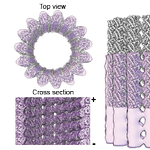
In vitro reconstitution is powerful: we rebuild Plasmodium microtubule architectures from purified components & recapitulate what cells actually do🤩
Thanks to the team that made this possible🙌 in particular Carolyn Moores @BirkbeckScience
Out today: rdcu.be/e7eM2

Simone Reber retweeted

On the cover of The Lancet:
Editorial — “Robert F Kennedy Jr: 1 year of failure”
Read the latest issue: spkl.io/6011Aa3Et

ALT Cover of The Lancet, 28 February 2026 issue. The quote: \u201CThe destruction that Kennedy has wrought in 1 year might take generations to repair, and there is little hope for US health and science while he remains at the helm.\u201D
Density. Crowding. Tomato. Tomato!?! 🍅
@GabrielPopkin @QuantaMagazine thanks for covering the debate. We promise we're all friends 🥰 @LiamHoltLab & @gwgl1979
Nothing would have been possible without @GuckLab & @VasilyZaburdaev
👉quantamagazine.org/the-bioph…

Simone Reber retweeted

Why Seeing Still Matters in Biology
@helenajambor addresses why all biologists need data visualisation. Read and discuss this topic on the Node. ⬇️
#DataVis #BioVis
thenode.biologists.com/why-s…

Simone Reber retweeted

One of the most important discoveries in molecular biology, I'd say, happened in 1974 when scientists took a gene from a frog (Xenopus laevis) and transferred it into a bacterium (E. coli). The bacterial cells read, processed, and expressed the gene.
If a bacterium can read a frog gene, so the logic went, then the entire living world is, in principle, "programmable." Genes can be swapped between kingdoms of life, thus enabling:
- The production of human insulin in bacteria.
- Manufacturing of vaccines in yeast and chicken eggs
- Engineered crops carrying biopesticide genes from algae etc.
Check out A Brief History of Xenopus to learn about other key experiments in which frogs played a role. 🔻

In the 1930s, South African scientists discovered that injecting African Clawed Frogs (called Xenopus laevis) with urine from a pregnant woman would cause them to quickly lay hundreds of eggs.
These frogs thus served as the first mass-scale pregnancy test.
Xenopus frogs later became the first animals cloned from an adult cell (three decades before Dolly the Sheep). This is A Brief History of Xenopus, an essay adapted from our forthcoming book about the origins and future of the research laboratory.


Simone Reber retweeted

Mitosis lovers, get ready for Dubrovnik! 🔬🎉
I’m super excited to be organizing the 4th Mitotic Spindle Conference with @nenad_pavin, and we can’t wait to see you there!
Want your abstract to be selected for a talk? Submit by Feb 8!
phy.pmf.unizg.hr/~mitosis/
#SpindleCroatia2026

Simone Reber retweeted

We're hiring! JCS is looking for a Reviews Editor to join the team. This is a fantastic opportunity for someone who loves cell biology and wants to stay connected with the field (and be part of an organisation that believes in supporting the community).
biologists.com/about-us/work…


Simone Reber retweeted
In @five_books Rector Barbara Stollberg-Rilinger recommends the best books on The Holy Roman Empire fivebooks.com/best-books/the…
