

Navigating your career compass toward success | Smart career tips and insights to fuel your professional development and growth
New Hampshire, USA
Joined November 2008
- Tweets10K
- Following190
- Followers1.6K
- Likes8





Even the most accomplished executives ask me the same question in private: "Am I actually board-ready?"
You've built teams, navigated crises, shaped strategy, and delivered results that moved the needle. But when it comes to board positioning, that quiet voice whispers:
"What if my experience isn't governance-focused enough?"
"I've never served on a board—will that disqualify me?"
"How do I prove I belong in the boardroom without board experience?"
Here's what I've learned after helping hundreds of executives through this process: the doubt isn't about your qualifications—it's about translation.
Most executives dramatically underestimate their board readiness because they're thinking in operational terms instead of governance language.
The experience is there. You've likely:
✅ Made decisions under uncertainty and pressure
✅ Challenged assumptions and asked hard questions
✅ Managed enterprise-level risks and stakeholder expectations
✅ Provided oversight of budgets, compliance, and strategic initiatives
✅ Demonstrated independent judgment when it mattered most
The issue isn't capability—it's positioning. You need to reframe these experiences so nominating committees see your governance value immediately.
Boards aren't looking for directors with perfect resumes. They're looking for leaders who can bring sound judgment, independent thinking, and fresh perspective to complex challenges.
The confidence comes from clarity. Once you can articulate your governance strengths clearly, the self-doubt fades.
That's exactly why I created this resource: 95+ AI Prompts for Board-Ready Executives. It guides you through identifying your unique governance value and positioning it with conviction—so you can step into board opportunities knowing exactly what you bring to the table.
📌 Download it today: distinctiveresumetemplates.c…

1
Before anyone reads a single word on your resume…
They’ve already judged you.
Not your experience.
Not your achievements.
Your design.
Most job seekers think resume design is about aesthetics. It’s not. It’s about perception.
Research shows recruiters infer personality traits from layout, structure, and formatting choices — and those impressions influence hireability decisions in the first few seconds.
Your resume is doing psychological work before your qualifications even get a chance.
I wrote about it in this article on what your resume design is silently communicating — and how to make sure it’s working for you, not against you.
Read it here: distinctiveresumetemplates.c…
#ResumeTemplates #ATSResumes #ResumeDesign #ResumeFormats #ResumeHelp #DistinctiveResumeTemplates

1
11
Will using AI to write your resume get you blacklisted by recruiters? As a professional resume writer, I break down the real risks, what recruiters notice, and how to use AI strategically without losing your voice.
Full article here → distinctiveresumetemplates.c…

7
Most finance executives positioning for board seats make the same costly mistake—they're selling operations experience to governance roles.
I see this disconnect constantly when reviewing board-ready resumes. Boards need governors, not operators—directors who can challenge management, read the story behind the numbers, and manage enterprise risk.
If you're positioning for your first board seat, here's how to reframe your experience around oversight:
Financial Controls & Reporting: Talk about strengthening the control environment, SOX readiness, close/reporting quality, and remediation you led.
Risk Governance: Show how you identified key risks, built heat maps, led scenario planning, or set risk appetite and limits.
Auditor Relations: Describe how you worked with external and internal audit, resolved material issues, and ensured independence.
Financial Literacy Beyond Operations: Demonstrate fluency in cash flow analysis (not just P&L), non-GAAP scrutiny, covenant monitoring, treasury management, and capital allocation trade-offs.
Integrity & Culture Oversight: Highlight whistleblower protocols, ethics/compliance governance, and tone-at-the-top initiatives you championed.
Independent Judgment: Give specific examples where you asked hard questions that changed a decision or challenged the status quo.
Quick reframes:
❌ "Owned a $500M budget."
✅ "Provided oversight of financial reporting quality and internal controls for a $500M operation."
❌ "Led digital transformation of finance."
✅ "Ensured technology governance and data integrity risks were addressed during finance transformation."
Ready to reframe your finance experience for board readiness? I created a comprehensive guide with 95+ AI prompts specifically for executives making this transition—including templates to translate P&L experience into audit committee credibility.
📌 Get it here: distinctiveresumetemplates.c…

13
Here’s the quiet risk in today’s job market:
If your resume sounds like a list of well-executed tasks, AI can compete with you.
Process improvements.
Structured reporting.
Predictive forecasting.
Volume execution.
All valuable. All increasingly automatable.
The professionals who will lead — and protect their earning power — are the ones who clearly articulate:
• How they navigated ambiguity
• What tradeoffs they made
• Where they exercised judgment
• What would have gone wrong without them
It’s not about panic.
It’s about positioning.
I wrote a detailed breakdown of how to audit your resume for AI vulnerability — and how to fix it:
👉 distinctiveweb.com/resume-wr…
#ResumeWriting #ResumeTips #ResumeHelp #ResumeWriters

1
16
Most job seekers don’t realize this—but overusing “I” is one of the fastest ways to weaken a cover letter.
It shifts attention away from outcomes and toward the applicant—making it harder for hiring managers to connect the dots.
This infographic outlines 7 ways to rebalance your cover letter so employers immediately see the value you bring.
The full article includes practical rewrites you can use immediately. distinctiveweb.com/cover-let…

49
A recent study found something fascinating:
Professionals who adopt a "protean career orientation"—being self-directed about their career development—experience:
✓ Significantly higher self-esteem
✓ More effective job search activity
✓ Faster reemployment
✓ Greater perceived career growth
Compared to those who resist change.
Translation? The people who pivot strategically don't just survive disruption—they thrive through it.
But here's what no one tells you: Career pivots don't require starting from scratch.
The secret is finding roles that value your EXISTING knowledge while requiring NEW, less automatable skills. Some examples:
Customer Service → Customer Success Manager or UX Researcher
Administrative Assistant → Project Coordinator or Operations Specialist
Data Entry → Data Analyst or Business Intelligence Coordinator
Accounting → Financial Analyst or Business Operations Analyst
Your experience isn't obsolete. It's just ready for a new market.
I wrote a guide on how to:
→ Identify your transferable skills
→ Explore adjacent career paths
→ Reskill with purpose (without a 4-year degree)
→ Rebrand your resume as a career-change weapon
→ Network strategically instead of desperately
Because adaptability isn't just a buzzword. It's the new job security.
Full guide here: [distinctiveweb.com/resume-wr…

37
“She’s absolutely qualified… but her resume doesn’t reflect it.”
That was the feedback from a board recruiter reviewing an executive’s application.
And it wasn’t the first time I’d heard it.
This leader had everything the board needed—decades of experience, financial acumen, prior nonprofit board service.
But she submitted her executive resume.
That one decision cost her the interview.
Here’s the myth that trips up most board candidates: “If I’m qualified for a C-suite role, I’m automatically qualified for board service.”
Maybe.
But if your resume doesn’t reflect that readiness, the board won’t take the chance.
Here’s why your executive resume sends the wrong message:
❌ It emphasizes execution, not governance
❌ It sounds like you’re applying to run the company, not advise it
❌ It misses key signals: fiduciary understanding, oversight experience, stakeholder balance
And most importantly?
❌ It doesn’t show that you understand what boards actually do.
The fix isn’t difficult. But it is strategic.
A board resume reframes your value:
✅ From operator → to advisor
✅ From metrics → to mindset
✅ From leader of teams → to steward of the enterprise
You only get one shot to show you’re board-ready.
Don’t let the wrong document speak for you.
🔍 Here’s how to get it right: distinctiveweb.com/resume-wr…

13
One resume mistake I see constantly from professionals over 50.
It has nothing to do with your experience, your skills, or your accomplishments.
It's your email address.
An AOL or Hotmail address in your header registers something before a hiring manager reads your name. It may not be a conscious judgment. But it lands.
And that's just one of several small details that can accidentally work against you — before anyone evaluates a single qualification.
I put together a full breakdown: what to audit, what to fix, and which resume templates are actually built to counter age bias by design.
distinctiveresumetemplates.c…
#ResumeTemplates #ATSResumes #ResumeDesign #ResumeFormats #ResumeHelp #DistinctiveResumeTemplates

11
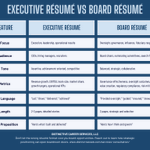
Think your executive resume is enough to land a board seat?
Think again.
Board resumes aren’t just a toned-down version of executive resumes. They’re a strategic repositioning for a completely different role—with different expectations, audiences, and value signals.
This side-by-side chart makes the differences clear 👇
From tone and metrics to keywords and value proposition—it all shifts.
✅ Operational detail → Strategic oversight
✅ Execution language → Governance language
✅ CEO-focused → Board committee-focused
📌 The details do matter—and they might be what’s standing between you and a board interview.
👉 Want to dig deeper? Full article here: distinctiveweb.com/resume-wr…

11
📉 Is your role at risk of automation in the next 5–7 years?
This visual lays it out clearly. If you work in a job where 50–90% of your tasks are repetitive or rule-based, you’re in the AI risk zone.
But that doesn’t mean you’re replaceable—it means your tasks are. The job itself may evolve.
➡ Maybe you shift from routine tasks to strategy
➡ Maybe you move into a new but related field
➡ Either way, the key is to adapt early and intentionally
This article explains:
🔍 Why certain roles are more exposed
🔍 What AI still can’t replicate
🔍 What professionals can do now to prepare for what’s coming
If your role appears on this pyramid, it’s time to get proactive.
📖 Explore the article here: distinctiveweb.com/career-ma…

5
Most finance executives positioning for board seats make the same costly mistake—they're selling operations experience to governance roles.
I see this disconnect constantly when reviewing board-ready resumes. Boards need governors, not operators—directors who can challenge management, read the story behind the numbers, and manage enterprise risk.
If you're positioning for your first board seat, here's how to reframe your experience around oversight:
Financial Controls & Reporting: Talk about strengthening the control environment, SOX readiness, close/reporting quality, and remediation you led.
Risk Governance: Show how you identified key risks, built heat maps, led scenario planning, or set risk appetite and limits.
Auditor Relations: Describe how you worked with external and internal audit, resolved material issues, and ensured independence.
Financial Literacy Beyond Operations: Demonstrate fluency in cash flow analysis (not just P&L), non-GAAP scrutiny, covenant monitoring, treasury management, and capital allocation trade-offs.
Integrity & Culture Oversight: Highlight whistleblower protocols, ethics/compliance governance, and tone-at-the-top initiatives you championed.
Independent Judgment: Give specific examples where you asked hard questions that changed a decision or challenged the status quo.
Quick reframes:
❌ "Owned a $500M budget."
✅ "Provided oversight of financial reporting quality and internal controls for a $500M operation."
❌ "Led digital transformation of finance."
✅ "Ensured technology governance and data integrity risks were addressed during finance transformation."
Ready to reframe your finance experience for board readiness? I created a comprehensive guide with 95+ AI prompts specifically for executives making this transition—including templates to translate P&L experience into audit committee credibility.
📌 Get it here: distinctiveresumetemplates.c…

16
Here’s the quiet risk in today’s job market:
If your resume sounds like a list of well-executed tasks, AI can compete with you.
Process improvements.
Structured reporting.
Predictive forecasting.
Volume execution.
All valuable. All increasingly automatable.
The professionals who will lead — and protect their earning power — are the ones who clearly articulate:
• How they navigated ambiguity
• What tradeoffs they made
• Where they exercised judgment
• What would have gone wrong without them
It’s not about panic.
It’s about positioning.
I wrote a detailed breakdown of how to audit your resume for AI vulnerability — and how to fix it:
👉 distinctiveweb.com/resume-wr…
#ResumeWriting #ResumeTips #ResumeHelp #ResumeWriters

6
We talk a lot about resume content.
But we don’t talk enough about resume design as personal branding.
Studies published in Computers in Human Behavior show recruiters infer traits like conscientiousness and reliability from formatting cues alone — and those inferences affect early hiring decisions.
That means:
• Spacing communicates
• Typography communicates
• Consistency communicates
• Color communicates
The question isn’t whether your resume is designed.
It’s whether it’s designed intentionally.
I unpack the psychology, industry nuances, and common design mistakes I see every day in this article:
distinctiveresumetemplates.c…
Worth a read if you’re job searching — or advising someone who is.
#ResumeTemplates #ATSResumes #ResumeDesign #ResumeFormats #ResumeHelp #DistinctiveResumeTemplates

1
3
37
“Can I use color on my resume?”
I hear this question more often than you’d think—and the answer is:
Yes. You can.
But only if you use it well.
Because color isn’t about decoration. It’s about direction.
Done right, color improves readability. It draws attention to section headers. It helps guide the eye through your story and adds a polished, professional feel to your layout.
In fact, subtle color use can make your resume easier to read— not harder.
Let’s bust a few common myths:
🚫 “Color makes your resume unprofessional.”
✅ The truth: Strategic color can enhance your professional brand when used consistently and sparingly.
🚫 “Color breaks ATS systems.”
✅ The truth: Applicant tracking systems don’t reject resumes for using color. They parse content, not visual style. As long as your text is readable, your formatting is fine.
🚫 “All resumes should be black and white.”
✅ The truth: In a stack of grayscale documents, a clean pop of color (especially in headers or dividers) can subtly help yours stand out—in a good way.
That’s why our templates include thoughtfully chosen color accents—always editable, always subtle, and always designed to keep the focus on your value.
👉 Curious what that looks like?
Here’s the featured template from the post: distinctiveresumetemplates.c…

1
19
The problem with most networking advice? It ignores introverts’ strengths.
For decades, job seekers who identified as introverts were told the same thing: “Just get out there, fake confidence, work the room, shake more hands.”
That advice doesn’t just miss the mark—it actively works against introverts’ strengths.
We don’t thrive on constant chatter. We’re not at our best in noisy rooms. And pretending to be an extrovert usually just leads to exhaustion and frustration.
Networking isn’t about being outgoing—it’s about being genuine. And now, AI is the great equalizer.
✨ It helps you draft thoughtful emails without the blank-page stress.
✨ It points you toward virtual events where you can connect without overwhelm.
✨ It supports consistent, low-key engagement on LinkedIn that builds visibility over time.
In other words: you don’t have to change your personality to succeed. You just need to change your approach.
I wrote a full guide with practical, AI-powered networking tips for introverts—plus a 30-day plan you can follow.
👉 Read it here: distinctiveweb.com/networkin…

15
You have 25 years of experience.
You've navigated recessions. Rebuilt strategies after market shifts. Managed teams through crisis. Made high-stakes decisions with incomplete information.
You know things that a 28-year-old candidate simply cannot know yet.
And your resume might be burying all of it.
Not because you wrote it poorly. Because the template you're using was designed for a linear career path — not for someone with your depth. It emphasizes timeline when it should emphasize judgment. It foregrounds dates when it should foreground impact.
The professionals over 50 who cut through aren't hiding their experience. They're presenting it as what it actually is: current, relevant, and forward-facing.
There's a specific way to do that — design choices, content strategy, template structure. I broke it down here:
distinctiveresumetemplates.c…
#ResumeTemplates #ATSResumes #ResumeDesign #ResumeFormats #ResumeHelp #DistinctiveResumeTemplates

1
16
If you’re hearing nothing after you apply, don’t jump to blaming your resume—or yourself.
You might be applying to ghost job posts. 👻
These are listings that look legit but aren’t being actively filled. And they’re more common than you think:
20% to 30% of job postings fall into this category.
They drain your time.
They distort the job market.
They mess with your confidence.
And while we can’t eliminate ghost jobs, we can learn to spot them—and focus on the opportunities that matter.
This post breaks it all down:
► The 5 red flags of a likely ghost job
► Why employers post roles they’re not hiring for
► How to shift your search strategy for traction and interviews
If you want to stop applying to jobs that go nowhere—and start hearing back—start here.
Full article →
distinctiveresumetemplates.c…

3
3
85
There's a pattern I keep seeing in online job-search conversations.
Experienced professionals with strong backgrounds are applying to roles they're clearly qualified for — and hearing nothing back. Not even a rejection email.
The natural response? Self-doubt. "Is my resume not good enough? Am I not as competitive as I thought?"
Here's what most people don't realize: It may not be either of those things.
Research shows that somewhere between 20-40% of job postings online aren't connected to active hiring.
Why do companies do this?
→ They've already filled the role internally but HR requires a public posting
→ They're building a "talent pipeline" for future (maybe) needs
→ Hiring is frozen due to budget cuts, but they want to appear like they're growing
→ They're testing the market to see what talent is available at what price
→ Company policy requires them to post, even when there's no intention to hire
From your perspective as a job seeker, these postings are nearly impossible to identify. They live on reputable job boards. They collect your carefully tailored resume and cover letter. And then... silence.
So how do you protect your time and sanity?
I wrote a comprehensive guide to what ghost job postings are, why they exist, and how to build a better job-search strategy. Here is the link to the full article: distinctiveweb.com/job-searc…

1
20
You spent two hours customizing your resume.
You researched the company. You tailored every bullet point. You wrote a thoughtful cover letter explaining why you're the perfect fit.
You hit submit.
And then... nothing. Not even an automated rejection.
Companies post these for all kinds of reasons: internal compliance, building talent pipelines, maintaining the appearance of growth during hiring freezes, or simply because the budget for the role hasn't been approved yet (and may never be).
The result?
Qualified candidates spending hours applying to jobs that will never result in an interview. And then blaming themselves when the silence becomes deafening.
So what do you do when you can't trust that job postings are real?
You can't eliminate ghost jobs from your search. But you CAN change your strategy to minimize wasted effort and protect your confidence.
👉Want to know more? I wrote an in-depth guide to understanding ghost jobs, why companies post them, and how to navigate the modern job search without losing your mind. Here is the link to the full article: distinctiveweb.com/job-searc…

1
1
62