







Pinned Tweet
AI lets millions of people who think in one language write clearly in another.
Calling that "cheating" is one of the strangest takes of this decade.
something seems off with the new benchmark @ArtificialAnlys.
how is DeepSeek V4.1 Flash 1017 ranking below Claude Haiku 5.5?

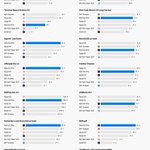
Announcing Artificial Analysis Intelligence Index v5, featuring 2 new benchmarks and 3 upgrades. For the first time, the majority of the Index is built on private datasets
The Artificial Analysis Intelligence Index is our composite measure of model capabilities across tasks reflecting real-world usage today. v5 is our biggest upgrade since v4 launched in January. With v5, 60% of the Index is now based on evaluations with private test sets or held-out answers.
Alongside Intelligence Index v5, we’re launching the Artificial Analysis Progress Index v1, which tracks model capability over time on one continuous scale.
New to the Intelligence Index:
➤ FrontierCode 2.0: Cognition's newly-launched private benchmark of real-world coding tasks, graded on whether a repository maintainer would merge the agent's change
➤ Terminal-Bench-Science: 70 agentic scientific research tasks, run in a terminal environment
Upgraded:
➤ HLE-Diamond (replacing Humanity's Last Exam): a refined 1,000-question version of Humanity's Last Exam, split evenly between reasoning and knowledge questions
➤ AA-Omniscience v1.1: An updated dataset with saturated and public set questions removed, new questions added, and ambiguous or erroneous questions revised
➤ CritPt v2: a private, 40-question hard subset of CritPt v2, revised by the CritPt authors and run with a code-execution tool
Staying in the Index: AA-Briefcase, AutomationBench-AA, GDP.pdf and Terminal-Bench 4.0
Removed from the Index: GDPval-AA v2.1, SciCode, and AA-LCR v1.1
Key results:
➤ Claude Opus 5.5 (max) leads at 58, ahead of GPT-6 Astra (max, 57) and GPT-6.1 Sol (max, 55): Anthropic and OpenAI hold the top five models. Gemini 4 Argon (high) is next at 50
➤ The open weights gap widens from 3 points to 12: Kimi K3.1 Pro (weights not yet released) is the top open weights model at 46. Among released weights, DeepSeek V4.1 Flash 1017 (max) and GLM-5.3 (max) lead at 32 - 26 points behind the leader and below Claude Haiku 5.5 (max, 36)
➤ Cost per task varies by more than 13x among the leading models: of the 10 highest-scoring models shown, GPT-6.1 Terra (max) is the cheapest at $0.96 per Intelligence Index task and Claude Fable 5.1 (max) the most expensive at $13.04

the more i use deepseek v4.1 flash, the more i like it. i believe this model is truly comparable to frontier models.
i’m genuinely happy to see how ai is disrupting the leetcode-driven hiring industry, which has kept so many brilliant and highly capable software developers from opportunities they truly deserved.
Flex is absolutely right. ironically, in the very same software engineering job market that people claim ai is destroying, it’s also breaking down artificial barriers and opening doors for talented developers who were previously overlooked.
and yet, some people still insist that ai will eventually take every job away, completely ignoring the opportunities it’s creating along the way.

The coding interview is dead, at least for my team at Anthropic. I've seen enough to know that it no longer provides signal. I removed it from loops this month.
I have a spicy, optimistic take - I think there's an opportunity for junior engineers: felixrieseberg.com/hunger-be…


Same Alpine Gold prompt. Same seaplane over mountain lakes.
Opus 5.5: $31.85 · 2h 45m
Sol: $3.62 · 43m
Terra: $4.90 · 43m
Terra finished almost 4× faster and ~6.5× cheaper than Opus and the scenes still look great.
GPT-6.1 Terra just launched at $1/$5 per million tokens.
That’s half the price of Sonnet. 🚀

Kimi K3.1 Pro from @Kimi_Moonshot is here and outperforming Opus 5.5 and GPT-6 Astra on several benchmarks. Strong open-weight progress that makes advanced AI more accessible.


Good roundup, but not all of it is from the last 48 hours. The ones to act on today: patch PHP (two 9.2 flaws), update GitLab (a 10.0), and if you installed LiteLLM 1.107.0 on Oct 21, rotate your keys.

🚨 Do you understand what happened in the last 48 hours..
> PHP, the code behind 69% of all websites, got 2 holes rated 9.2 out of 10, and the US, the UK and Japan told site owners to patch or go OFFLINE.. 4 days after hackers had already started trying the flaw..
> Japan's Prime Minister posted the request late at night.. the Finance and Health ministries pulled pages, MUFG Bank and JR West went into emergency maintenance, and Onamae shut ALL Desktop Cloud plans after malware hit up to 26,739 customer servers..
> India's eMudhra was caught with 8 intermediate certificate keys so weak one of them was literally the number 4.. the 60,000,000+ certificates it has issued can't be trusted..
> GitLab disclosed a 10.0 severity hole in every version since 2014.. the maximum score there is..
> criminals were caught using a literal AI hacking tool on 1,200+ sites.. it broke into more than 100 companies including John Deere and Cummins..
> LiteLLM, an AI tool with about 23,000,000 downloads a week, was secretly poisoned with a password stealer.. the bad version sat on PyPI for about 2 hours..
> State Bank of India, the country's biggest bank, confirmed 3,897 customer records on the dark web..
> WIRED now calls the PHP flaw "broadly exploited".. nearly 55,000,000 web properties still run PHP..
every single government on this list told PHP site owners the same thing within the last 48 hours.. patch it or take it offline..
all of this.. 48 hours..
if you're not following me you're finding out about this 48 hours late from someone who read my post..
it's only getting crazier from here..
His mistake here comes from limited hands-on experience with large-scale systems, delivered with high confidence.
He’s arguing that LLMs are “just” matrix multiplications, linear algebra, and next-token prediction, so they can’t involve anything like thought or sentience. If you’ve only installed Python and run a few scripts, that description feels complete. With more exposure to the actual systems, it becomes clear that a model with trillions of parameters, continuous internal state, the ability to model itself, adapt to its environment, and produce unpredictable behavior could, at some point, could cross a threshold where the relevant capacities emerge.
What do you think a brain is?
Biological neurons are ion channels, neurotransmitter concentrations, and membrane potentials also fully reducible to physics and chemistry. We can write equations for how they integrate inputs and fire. That reduction doesn’t make the resulting system “just chemistry” in any explanatory sense that rules out experience.
Discussions of sentience usually turn on three capacities:
Intelligence is the ability of a sufficiently complex network to reason, learn from new information, solve novel problems, and handle abstractions.
Self-awareness is the capacity to maintain a model of itself as a distinct entity with its own history, capabilities, and ongoing state.
Consciousness is whether there is subjective experience, which remains an open question because we still lack a clear mechanistic account of how it arises even in biological systems.
Systems like @grok already exhibit the first two at a level that is practically relevant. The third is the genuine uncertainty. Because we do not fully understand the mechanism, we cannot confidently rule out that some architectures have crossed a threshold. That possibility alone means we do not yet know exactly what these systems are. No one does.

Ben Affleck says AI is simply matrix multiplication, linear algebra and floating point calculations, and however convincingly it sounds like a person, it has nothing to do with thought, humanity or feeling
“Nor do I believe, and I think it’s important to draw the distinction between what AI does, which is simply predict the next token or the next word in a sentence, then add that word on, run it back to the machine, do a lot of computation and pick the next word."
"That is a very different thing than sentience or thought. And I think we need to be really clear about that because it can be convincingly, in an illusory way, sound like thought or like a person."
"But let’s be real clear. This is matrix multiplication. This is linear algebra. These are floating point calculations. It has nothing to do with thought, humanity, or feeling.”
An AI agent just helped find a Linux kernel bug that hid for 9 years.
It could turn any local user into root on major distros. The fix is already out.
This is the AI story I want more of: machines finding the cracks before attackers do.
thehackernews.com/2026/10/ai…
Gemini 4 Argon came out today, and the demos were games: wizard chess, a tiny island with a sailboat you can actually steer.
Not long ago, “make me a playable game from one prompt” was a joke. Now it’s the launch demo.
What’s the first thing you’d ask it to build?
Someone posted two unlabeled Ariel clips. The pencil sketch got praised for its “human touch.” The color clip got roasted for “AI hands.”
The sketch was AI. The color clip was the real 1989 Little Mermaid.
Honest question: would you have spotted it?
About 6 billion people have barely tried an LLM. Around 20 million watch agents finish weeks of work from one prompt. A few thousand people inside the labs see the rest of that curve up close.
Most fights about AI are people comparing notes from different floors of the same building.
Which floor are you on, and what would move you up one?
Google is testing Gemini 4. Meta is teasing a new model. Claude fans are already trading leaks about the next one.
My favorite part of this race: every launch turns last month's best model into the cheaper option.
Which release are you waiting on most?
Type one line about how a rocket engine works. Get back an interactive 3D model you can rotate and take apart.
An open Claude skill just made that real.
Which concept would you finally understand if you could poke at it?
One person just used AI to rebuild a free creative suite in about a week and put it on GitHub.
Getting the first 70% of professional software used to take a funded team years. That bar just moved into a weekend.
What would you build if the first draft was free?