

Skratta med Käften Comedy Club i Sundsvall. Brandman, Deltidsbrandman, Standupkomiker, Aktier, Investeringar,Fil.kand Internationell kris o konflikthantering.
Sweden
Joined September 2008
- Tweets4.1K
- Following382
- Followers332
- Likes11.6K




Jimmy Södermark retweeted
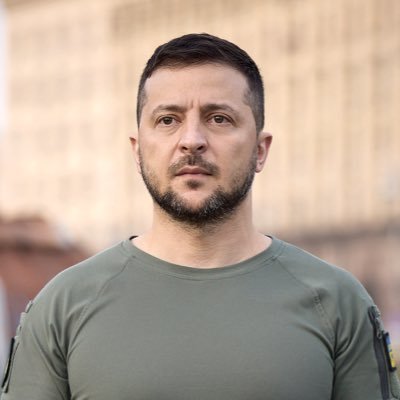
We keep hearing again that Russia supposedly needs security guarantees. Even though no one has attacked Russia for many decades. Since the Second World War, Moscow has not gone through even one decade without starting a war or using military force against another country.
So when the Russians now talk about a security architecture for themselves, or about security guarantees for Russia – they are hardly talking about real security. And peace.
What they really want – is to freely interfere in the affairs of other countries, and to use force whenever they want, and to make sure that no one can support liberty inside Russia because Putin wants to keep his personal power forever and pass on his imperialist and, in many ways, simply fascist views to the next generations.
From a speech at the Danish Folketing. (3/3)
Jimmy Södermark retweeted

I am a member of the Norwegian Nobel Committee.
There are five of us. Five people, appointed by a parliament most of the planet could not find on a map, who decide, once a year, which human being the world has agreed to call good.
I know. I know. I think about it on the tram.
We meet in a building on Henrik Ibsens gate, a street named after a man who wrote almost exclusively about people discovering they are frauds, which nobody on the committee finds funny except me. There is a room with a long table and the portraits of the dead laureates looking down, Mandela, the Dalai Lama, a great many earnest men in spectacles, and one portrait we do not discuss, which is Kissinger, 1973, awarded while the bombs were still falling, after which two of our predecessors resigned and the satirist Tom Lehrer said political satire was now obsolete. We keep him on the wall. A reminder. Every family has the uncle.
It is October in Oslo, which means the sun gives up around four in the afternoon like a civil servant, and it rains the particular Norwegian rain that isn’t quite falling, just hanging there, judging you. I arrive with wet shoes. I always arrive with wet shoes. There is coffee, because this is Norway and there is always coffee, we drink more of it per person than almost anyone alive, and someone’s wife has sent kanelboller, the cinnamon buns, and we sit, five Norwegians, damp, caffeinated, sugared, and we decide the moral standing of the entire species.
Let me tell you how it actually works, because the world imagines a cathedral and it is, I promise you, a book club with a mandate.
287 nominations this year. 208 people, 79 organizations. Anyone can nominate, that’s the secret nobody understands: a professor, a parliamentarian, a former laureate, so the “nominee” list is meaningless, it’s a suggestion box, and every autumn some congressman nominates his own golden retriever and the press writes “SHORTLISTED.” Nobody is shortlisted. There is no short list the public ever sees. There is us, and the coffee, and the rain, and the portraits, and a Norwegian stubbornness that is older than the prize itself.
We read reports. The institute’s advisers write them, thick dull documents, and we argue. Our chairman told the BBC once that in the final meeting “there is a high temperature.” High temperature, for a Norwegian, means someone slightly raised an eyebrow and then apologized for it. We don’t do high temperature. We do a long silence, and then Kristin says “well,” and everyone knows exactly what “well” meant, and it’s settled. That’s our shouting. “Well.” You’d have to be raised here to hear the violence in it.
Now. This year. I will not say the name, because we never say the name, but you know the name.
A certain head of state wanted this prize the way a child wants a thing in a shop window, which is to say loudly, and in public, and with the full belief that wanting it was itself the argument. He said he deserved it. He said he’d ended eight wars, a number that grew most times he said it, like a fish. He had other heads of state phone us. Israel’s prime minister posted it on the internet, “Give him the Nobel.” The leaders of Cambodia and Pakistan announced they’d nominated him, as though announcing it were part of it, as though we tally mentions. A man flew around the globe collecting endorsements for a Norwegian committee the way you’d collect signatures for a petition to the council about a noisy dog.
And here, uff da, is the detail I treasure, the one that makes me smile into my coffee. The nomination deadline is the 31st of January. He took office on the 20th. So for all the phone calls, all the posts, all the gilded lobbying, the only nominations that could possibly count for this year’s prize were filed in the first eleven days of his term, before he had, by his own arithmetic, ended a single one of the eight wars. He campaigned all year for a prize whose window had shut while he was still hanging up his coat. We didn’t have to reject him. The calendar did. We just watched. Norwegians are very good at watching. We have long winters.
People think we sit there weighing his deeds. We don’t. That’s the thing I can’t make the world understand. We’re not grading his homework. We don’t owe anyone the prize for a ceasefire, however real, however loud the announcement. “He made peace” is not a sentence that ends in a medal, the way he believes it does, the way he believes every good thing ends in his name on it. The will of a dead Swede says the prize goes to whoever did the most for fraternity between nations. A dead Swede, I should add, who made his entire fortune inventing dynamite and selling arms, and spent his last years horrified at his own obituary, which called him a merchant of death, and so bought his way to immortality as a man of peace. The whole prize is one guilty arms dealer’s attempt to launder his name. We are, all of us, administering a dead man’s public relations. I find this clarifying. It keeps me humble. It should keep everyone humble, and it keeps, by my count, no one humble at all.
So who did we give it to?
An eighty-five-year-old woman. A judge. Born in Durban, under apartheid, granddaughter of a Tamil man who came to South Africa as indentured labor, a bus driver’s daughter from the poor Indian quarter, who became the first non-white woman to run a law practice in her province, who defended Mandela’s people when defending them was dangerous, who sat on the Rwanda tribunal and the court at the Hague, and who, at eighty-five, is right now a judge weighing whether a genocide is a genocide. When we told the world, our chairman said the rule of law “underpins the system we have set up to ensure peace,” and that “peace requires justice.” She wasn’t even in Oslo. She was in Nuremberg. In courtroom 600. The actual room where they tried the Nazis. You cannot stage that. God staged that, and God, it turns out, is a better satirist than any of us.
She did not phone us. She did not post. No prime minister demanded it for her on the internet. She had, as far as our deliberations are concerned, the one qualification the loud man could never manufacture, which is that she wanted the work and not the medal. The medal finds those people. It flees the ones who chase it. This is not a rule we wrote. It’s just the only pattern the hundred-odd years of our mistakes has ever shown.
The reaction from across the ocean was immediate. His spokesman posted that we “place politics over peace.” Ja. Perhaps. We’re five damp pensioners in a rainy city; of course it’s political, it was always political, it was political when we gave it to a sitting American president nine months into his first term for the promise of things he had not yet done, and we have been quietly embarrassed about that one for fifteen years, so believe me, we had a particular reason this year to prefer a woman with fifty years of verdicts behind her over a man with eight wars in front of him and a deadline already behind him.
Here is what he will never understand, the thing I’d tell him on the tram if he ever took one. We are the one prize he cannot buy, cannot post his way to, cannot have a friendly dictator phone in for him. Not because we’re incorruptible, nei, we’re as vain and wrong and human as the portraits on our wall. But because the entire point of the thing, the only power a small cold country’s book club has ever held, is that it goes to the person not performing the wanting. The moment you demand it, you’ve proven you don’t understand what it’s for, and proving that is itself the disqualification. He ran the most expensive campaign in the history of the prize and the campaign was the reason. He was never losing to Navi Pillay. He was losing to the concept.
It’s dark now. Four o’clock dark. The buns are gone. Kristin said “well” an hour ago and we all went home. I’m on the tram with my wet shoes, and somewhere across the water a very powerful man is explaining to a camera that the prize is rigged, that we’re corrupt, that he’ll win it next year, and he genuinely might, we’re only five idiots and we’ve been wrong before, Kissinger is still on the wall.
But not this year. This year an old woman in Nuremberg, in the room where the law once stared down the exact kind of man who thinks wanting a thing loudly enough should make it his, got a phone call she didn’t ask for.
That’s the job. We don’t reward the man who ends the war and announces it.
We reward the woman who spent fifty years deciding what a war was.
He’ll never see the difference. That’s rather the whole point of him.
Takk for i dag. I have to change trams.
Jimmy Södermark retweeted

Seems like a lot of people get it wrong about
Sivers + Global Foundries SCALE = AMD.
It's not correct... It's much bigger than that ++++++
I mapped out the full GF SCALE ecosystem after today's GF Q2 earnings call.
Here's what most investors are missing:
GlobalFoundries is the ONLY OCI MSA-certified CPO platform. Every design on the platform requires external CW lasers. Sivers is the only named laser partner for GF SCALE.
Three product lanes — not just CPO:
CPO: AMD, Nvidia, Meta, Microsoft, OpenAI, Broadcom + an unconfirmed 7th(speculation in the map)
All active SCALE engagements confirmed today.
NPO: Same 7 customers above, same photonic IC, but earlier timeline (2026-27). GF´s CEO called it "an important application ahead of broader CPO adoption."
Pluggables: GF engaged with 4 of the top 5 transceiver players. Their roadmap to 1.6T and beyond is where Sivers' multi-wavelength arrays become critical.
...and more design wins taped out in Q2, another expected Q3 .
This isn't a one-customer story. It's a full platform play with 7+ engagements across three form factors — and Sivers sits at the top of the supply chain as the prime laser source.
Please check out the map and tell me if I got something backwards or needs to be clarified.
$SIVE $GFS $AMD

Sedan jag bytte till Avanza 2015 har jag en årlig Cagr på 22%. Det är oerhört bra. Styrkan är dock inte cagr utan att jag legat tamejfan 60-80 % minus stundtals utan att ge mig. Tär dock på psyket så nu ska jag lugna mig lite. Sikta på 15% cagr framöver? 😎 #investera #aktier
59
Jimmy Södermark retweeted

The $SIVE week in review. One of the most consequential weeks the stock has had.
Monday: -11.75% on what later turned out to be a coordinated short attack.
Tuesday: GlobalFoundries strategic collaboration announced. $SIVE laser arrays embedded in GF's silicon photonics reference designs. Stock +50-70%. New all-time high.
Wednesday: Ayar Labs — a publicly named $SIVE partner for CPO External Light Sources — joined NVIDIA's NVLink Fusion ecosystem. EU Tech Sovereignty Package + Chips Act 2.0 adopted.
Thursday: Confirmation that three ETF issuers (REX, Defiance, Themes) have filed 2X LONG $SIVE products with the SEC.
Friday: JPMorgan Chase & Co. disclosed a 5.25% position via Finansinspektionen. "Köp" (Buy) classification. 0 → 16,098,583 shares. Transaction date June 2 — the same day as the GFS deal.
Take stock of what happened in five trading days:
→ A foundry partnership that embeds $SIVE at the reference-design layer
→ A supply chain validation through NVIDIA's CPO ecosystem partner
→ EU policy explicitly prioritizing European photonics and semis
→ Three leveraged ETF products positioning ahead of the Nasdaq NY listing
→ The world's largest investment bank crossing the 5% disclosure threshold
The institutional layer that was missing five days ago has started forming.
Three weeks ago, the bear case was "no US institutional ownership, no analyst coverage, no major partnerships, no listing on a major exchange."
Today: JPM owns 5%, GFS embedded the lasers, ETF issuers are positioning, Ayar Labs is in NVLink Fusion, MSCI and OMX inclusions effective, Nasdaq NY listing in motion.
The thesis didn't change. The evidence stack just got compressed into one week.
$SIVE
Jimmy Södermark retweeted

Jag kommer släppa en lång intervju med bolagets förra vd Anders Storm på detta tema, antingen idag eller imorgon. 2,5h djupdykning ned i Silicon Photonics-trenden, den är onekligen spännande.
Jimmy Södermark retweeted

Jag har senaste tiden märkt att fler och fler ställer frågor och vill prata om Sivers, men många inte riktigt vet eller förstår vilken teknik Sivers ($SIVE) faktiskt arbetar med. Det är fullt förståeligt för en vanlig lekman – jag är själv civilingenjör inom datateknik men fick även jag lägga en del tid på att sätta mig in i området när jag 2021 upptäckte bolaget.
Det som frustrerar mig är att stora delar av svensk finansmedia verkar välja den enkla vägen. Istället för att försöka förstå tekniken, marknaden och varför globala teknikjättar investerar miljardbelopp i området, fokuserar man på att vilseleda sina läsare med sociala medieprofiler, kursrusningar, enskilda insiderförsäljningar eller att avfärda allt som en “memeaktie”.
Problemet är att verkligheten är betydligt mer komplex än så.
Sivers verkar bland annat inom ett område som många aldrig hört talas om, men som kommer vara avgörande för framtidens AI, datacenter och kommunikationsnät. För att förklara det enkelt för min familj och vänner brukar jag jämföra det med övergången från internet via telefonjacket (koppar) till fiber (ljus/photonics). Skillnaden är att Sivers utvecklar teknik som hjälper till att flytta enorma mängder data på extremt små ytor och i hastigheter som morgondagens AI-infrastruktur kräver.
Detta är inte en debatt om vilken teknik som ska vinna. Inom datakommunikation håller koppar på att nå sina fysiska begränsningar. Behovet av att använda ljus för att transportera data är inte en trend, det är en konsekvens av fysikens lagar.
Därför ser vi idag Nvidia, AMD, Intel, Microsoft, Google och andra investera enorma summor i denna utveckling.
Sivers kommer inte att få monopol på marknaden. De är fortfarande en liten aktör. Men de har lyckats ta plats vid samma bord som några av världens största teknikbolag inom en marknad som fortfarande knappt har börjat växa.
Därför lägger jag mindre vikt vid om aktien gått +100 %, +500 % eller +2 000 %. Det intressanta är marknaden bolaget adresserar och hur stor del av den Sivers mäktar med att leverera till och lyfter min blick mot 2028-2030.
Detta är inte en köp- eller säljrekommendation. Det är bara ett försök att lyfta diskussionen från dramatiska rubriker, memes och förenklingar – till den teknik och marknad som faktiskt driver utvecklingen och ge alla en rättvis chans att förstå branschen. $SIVE


Jimmy Södermark retweeted
⚡️BREAKING: Sweden announces 16 Gripens for Ukraine.
The transfer would further expand Ukraine's fleet of Western-supplied fighter aircraft, which already includes American F-16s and French Mirage 2000s but remains insufficient to fully defend Ukrainian cities and infrastructure from daily Russian missile and drone attacks.
kyivindependent.com/sweden-s…

Jimmy Södermark retweeted

Sweden will transfer the first 16 Gripen fighter jets to Ukraine.
Thank you, Sweden! 🇸🇪🇺🇦
These are JAS 39 Gripen C/D multirole fighters - aircraft Ukraine had previously described as among the most sought-after for strengthening its combat aviation.
Ukraine and Sweden also signed a declaration on deepening defense cooperation.
Jimmy Södermark retweeted

This is interesting information from Rosenblatt industry update on Indium Phosphide Supply and Demand. They estimate 12x supply increse 2025-2030. NVIDIA have asked for 20x supply increse over the same period.


We called Nebius, Credo, Bloom Energy, AAOI, and AMD before their big run ups.
Don’t miss the next one, come join us for just a $1. milkroad.com/pro/?utm_medium…

Jimmy Södermark retweeted

You can do a lot with Gripen fighter jets.
But they’re built for one thing.
Good luck, Ukraine.
A must read $sive

Golden Dome: Inside the Stack One of the most ambitious DoD programs ever undertaken.
Companies mentioned
$GFS, $YSS, $SIVE, $DRS, $RTX and more..
I've been working on this post for some time, just as a coincidence, yesterday: Sweden and the United States signed a new memorandum of understanding on technology cooperation covering AI, defense innovation, space, and quantum technology. It is a strong signal that the two countries are formalizing strategic alignment in precisely these domains.
andersstorm.substack.com/p/g…


1
161
Jimmy Södermark retweeted

I’ve followed $SIVE long enough to know that this has never been a simple story.
For years, the technology looked ahead of the market, while the stock was still priced like execution would never arrive.
But that gap may now be closing.
What makes the setup so interesting today is not just one contract, one customer, or one vertical. It’s the convergence of several major infrastructure trends at the same time: AI optics, CPO, pluggables, mmWave, SATCOM, LiDAR and defense.
That is where I think the market may still be too slow.
It is still valuing $SIVE like an early-stage promise, while the company may be moving into a phase where the operating leverage finally starts to show.
Deep Dive: 10 questions about $SIVE, and why I think the market may still be underestimating the setup 🧵

Jimmy Södermark retweeted

Idag lanserar @Spiltan Fonder en ny fond: Spiltan Europafond Investmentbolag. Att långsiktigt satsa på investmentbolag är ett av mina allra bästa sparråd. Nu är det rätt tid för Europa. Retwitta så lottar jag ut några x av min Buffettbok:
spiltanfonder.se/fonder/spil…
Jimmy Södermark retweeted

While the market is finally waking up to the AI/Photonics supercycle today (sending $SIVE / $SIVEF up 18% 📈), almost everyone is completely ignoring the other engine quietly revving up in the background.
Let’s talk about the Sivers Wireless division, Intel, and India. 👇
Most investors treat Sivers as a pure-play photonics foundry, but their Wireless unit is deeply embedded in one of the largest telecom rollouts on the planet.
▪️ The Catalyst: Sivers partnered with Intel ($INTC) and India’s WiSig Network to launch the world's first fully stand-alone 5G mmWave CPE (Customer Premises Equipment) solution. (See PR in comments)
▪️ The Problem Solved: Laying physical optical fiber across massive, complex geographies like India (and eventually Africa) is brutally slow and expensive. Sivers' high-frequency RF chips allow telecom operators to replace physical fiber with ultra-fast wireless backhaul.
▪️ The Market: The Indian telecom ecosystem is a $120 Billion juggernaut. By integrating with a domestic player like WiSig and leveraging Intel's Agilex platform, Sivers taps directly into this massive regional rollout.
Right now, the market is essentially pricing the Sivers Wireless division at zero. The entire valuation is built on the consumer wearables and AI datacenter narrative.
You are getting a free call option on a global 5G mmWave infrastructure rollout attached to a world-class photonics foundry. This is the definition of asymmetric risk/reward. ⏳🔥
$SIVE $SIVEF $INTC #5G #mmWave #DeepTech #India
Jimmy Södermark retweeted
I think one of the most underestimated parts of the Sivers / $SIVE story is the SATCOM opportunity with ALL.SPACE.
This is not just another customer relationship. Sivers has been working with ALL.SPACE for years through several development programs worth many millions of dollars, and the relationship appears to go much deeper than a normal supplier agreement. Sivers is part of the technology roadmap for advanced satellite terminals that are built for a world where connectivity will move across different orbits, networks and operators.
That is where the potential becomes interesting.
According to $SIVE own material, a SATCOM terminal can contain up to around 1,800 Sivers chips, with potential Sivers value of up to around $10,000 per terminal. That changes the way you should think about scale. This is not a consumer hardware story where millions of units are needed before revenue matters. In this case, even relatively small deployment numbers can become meaningful very quickly.
If ALL.SPACE sells 1,000 terminals, that is up to around $10 million for Sivers. At 5,000 terminals, up to around $50 million. At 10,000 terminals, up to around $100 million. And that is from one customer platform.
This is why I think the market may be underestimating SATCOM. The focus is often on when Wireless can become meaningful again, but the answer may not only come from huge 5G volumes. It could also come from a smaller number of high-value satellite terminals where Sivers has very high value per terminal.
The timing also matters. $SIVE has indicated that volume ramp is expected in H2 2026. If that happens, SATCOM moves from development revenue into something much more important: recurring product revenue tied to actual terminal deployments.
And the backdrop is strong. ALL.SPACE is already working with demanding customers and partners such as the US Army, NATO-related defence programs, Viasat, SES and Intelsat, while defence demand for resilient satellite communication is increasing and commercial networks are moving toward more advanced multi-orbit connectivity. Terminals need to become smarter, more capable and more complex. That is exactly where Sivers beamforming technology becomes valuable.
For me, this is one of the most interesting parts of the $SIVE story into 2026.
Not because it requires massive volumes.
But because in SATCOM, small volumes can already become big numbers.
#SATCOM #Beamforming #SatelliteCommunications #SpaceTech #DefenceTech #MultiOrbit #SIVEF

Jimmy Södermark retweeted

Strategic Supply Chain Insight: $SIVE $AEVA 🔥
A highly specialized supply chain is quietly aligning to deliver advanced 4D perception to one of the world’s leading humanoid platforms.
Sivers Semiconductors → Aeva Technologies → LG Innotek → Boston Dynamics (Atlas Humanoid)
Here’s how the pieces connect:
$SIVE supplies its high-performance CW DFB lasers + optical amplifiers – the critical light source for ultra-stable, narrow-linewidth operation.
These components are integrated into Aeva’s FMCW (Frequency Modulated Continuous Wave) 4D LiDAR chips.
On March 11, 2026, Sivers announced a major production ramp with a “strategic LiDAR customer” starting Q4 2026, with projected lifetime revenue of $53–138 million. The ramp explicitly covers both automotive and industrial/remote-sensing applications.
$AEVA builds the full FMCW 4D LiDAR platform (Atlas Ultra for long-range and the new Omni sensor for short-range 360°×90° panoramic perception). Aeva’s technology uniquely measures velocity per pixel in addition to depth, delivering interference-free, high-resolution 4D data ideal for dynamic environments.
LG Innotek (a key partner since July 2025 with up to $50M strategic investment and joint-development agreement) handles hardware integration, mass manufacturing, and quality assurance of Aeva’s LiDAR modules. LG Innotek is simultaneously scaling these solutions for robotics and industrial automation.
In May 2025, LG Innotek signed a strategic collaboration with @BostonDynamics to co-develop the next-generation vision sensing system for the company’s flagship Atlas humanoid robot.
These “new eyes” integrate advanced RGB cameras, 3D sensing modules, and optical technologies to enable robust perception in low-visibility, poor-weather, and dark conditions. LG Innotek’s expanding role in optical and LiDAR modules for humanoid robotics positions the Aeva-manufactured sensors as a natural fit for Atlas’s perception stack.
Why this matters:
The Sivers-enabled Aeva LiDAR (produced by LG Innotek) is entering the exact window when Boston Dynamics is scaling Atlas for real-world industrial deployment.
This creates a high-margin, multi-year revenue pathway for the upstream suppliers in one of the most advanced humanoid platforms on the market today.
Production ramp at Sivers begins Q4 2026 – well-timed with Aeva’s Omni sensor commercialization (H2 2026) and Atlas’s next-generation rollout.


Jimmy Södermark retweeted
Här kallar @KalleSundin de som kritiserar Socialdemokraternas förslag till höjd skatt på ISK för lögnare. "Nu ojar sig högerns Krösa-Major över ISK-skatten igen - ljuger för att skrämma småsparare".
Jag har själv börjat med två tomma händer och sparat och investerat idogt i årtionden, så jag vet vad som krävs. Just därför engagerar denna fråga mig.
Sundins huvudargument är att småspararna inte påverkas, bara "de rikaste". Det är en ögonblicksbild, inte verkligheten. En 20-åring som månadssparar 3 000 kr, alltså 10% av medianlönen, med historisk börsutveckling på ca 10% CAGR (OMXS30GI senaste 20 åren) passerar 3-miljonersgränsen strax efter år 23. Den extra skatten (+100 bps över SLR på belopp >3 MSEK) uppgår till 279 000 kr nominellt eller 458 000 kr när ränta-på-ränta räknas in. Dagens småsparare är morgondagens "rikaste tiondel". Det är inte orättvisa, det är matematik. Nu är 3 000 kr troligtvis mer än 10% av 20-åringens inkomst men poängen kvarstår och i den åldern har man heller inte samma stora kostnadskostym som senare i livet.
Denna 20-åring betalar redan 1,65 MSEK i total ISK-skatt under 40 år med oförändrat grundavdrag. S:s förslag höjer den siffran till 1,93 MSEK vilket är en skattehöjning på 16,9% för någon som troligtvis aldrig känt sig "rik".
Han insinuerar att protester mot ISK-skatten är ett gnäll från en välbärgad höger. Verkligheten är att över 4,2 miljoner svenskar sparar i ISK. Det är lärare, sjuksköterskor, lagerarbetare och industriarbetare. Vanliga människor som vågar drömma och som med stor sannolikhet kommer passera den där gränsen under tiden de bygger upp en buffert eller ett pensionskapital. Att kalla deras oro för gnäll ignorerar en grundläggande sanning - spararen tar all risk, staten tar en garanterad schablonskatt varje år oavsett hur börsen går. Jag har sett väldigt många göra denna resa.
Han missar dessutom en central poäng. Om ISK blir mindre attraktivt flyttar sparare till vanlig depå, där staten inte får någon årlig schablonskatt alls, bara 30% på realiserade vinster vid försäljning. En långsiktig sparare som aldrig säljer betalar i praktiken noll i löpande skatt, förutom på ev. utdelning.
Förslaget riskerar alltså paradoxalt att minska statens skatteintäkter, inte öka dem. Lite som att skjuta sig själv i foten och sedan kalla den som påpekar det för Krösa-Major.
Det påminner om när ISK försämrades förra gången och Ulla Andersson (V) förklarade att det bara motsvarade två påsar ostbågar. Ett intellektuellt svek av rang - och samma logik används nu igen.
Att kalla någon lögnare i rubriken och sedan ha fel i sakfrågan är ett djärvt val. Men det är Aftonbladets ledarsida, inte en räknelektion. Som om det inte vore nog så är det tveksamt att denna ledare skrivs på en sida som skulle kunna misstolkas för ett casino, samtidigt som man förlöjligar oro kring långsiktigt sparande och ansvarstagande för sin ekonomi #PrataPengar #Finanstwitter #svpol

Jimmy Södermark retweeted

Agreed, and glad DNB, one of Europe's leading banks, went out to defend $SIVE valuations alongside me.
I still think $SIVE can reach $10B MC in 1 year time as their laser growth scales proportionally to:
- $AAPL Watches
- $JBL 1.6T Volume
- $MRVL CPO Volume
- Ayar Volume
- $POET Volume
Depending on how their qualification plays out into volume ramp.
As Sivers supply lasers to all the next generation of 1.6T/CPO players in the space (into ~ $AMD, $NVDA, $AMZN, $MSFT type supply chains).
These are EXISTING players at a ~990M MC. Not even including TAM expansion or more partnerships coming up.
Especially now with NASDAQ listing, US institutions are forward looking and price in ~12M ahead of time, compared local European valuations that mainly look at previous 12 months.
Banks usually provide very conservative targets (eg. 3 years for a 10x), but I do see potential for this company to be the next $LITE very soon.
Europe should embrace positive-sum growth of their own companies that supply to hyperscalers.
As their frontier companies provide back to locals through taxes, economic growth, and job growth.


$SIVE market cap is a complete joke next to all the other CPO names. Sub 1 billion MC with a US listing on the way.