






Tyler Moffitt retweeted

My PR pitch: Jensen rocks a white leather jacket and returns as Jensen the White


Tyler Moffitt retweeted

The hacker behind the rumored Binance exploit might have pulled off one of the smartest plays in crypto history.
First, Tether reportedly moved to freeze $1.5B in USDT.
Then, Circle followed up by freezing $800M in USDC.
Everyone assumed the stolen funds were completely locked down.
Except the hacker was reportedly already two steps ahead.
Instead of leaving the USDT sitting in a wallet waiting to be blacklisted, they supplied it into Aave as collateral, borrowed native ETH against it, and vanished.
Here’s the catch:
Tether can only freeze USDT.
Nobody can freeze native ETH once it’s been borrowed.
In the end, the lending protocol is left dealing with the compromised collateral, while the hacker walks away with freely movable ETH—and zero reason to ever repay the loan.
Even with two centralized giants freezing over $2B in an instant, one person who truly understood DeFi mechanics may have slipped right through both of them.
When you stop and think about it calmly, that level of execution is wild... 🧵👇
Tyler Moffitt retweeted

Drained $5.6B from Binance using bleeding-edge EIP-7702 batch signatures.
Caught because MetaMask default-selected "pay gas with USDT" and logged their IP on ConsenSys servers.
You couldn't write a better script:
- Wallet had 1.75B USDT and 2 native ETH ready for gas.
- In a panic, the operator blindly clicked confirm without noticing MetaMask's smart gas station.
- MetaMask relayer paid the ETH, charged 127 USDT, and logged the raw client request on their backend API.
Advanced chain exploitation defeated by Web2 frontend UX.
One more thing to avoid.


The Binance $5.6B drain is a masterclass in modern EVM exploitation.
It wasn't a complex logic bug. It was an EIP-7702 delegation hijack:
1. Setup: Attacker funds 0x7c86 via Tornado Cash, deploys a sweep contract (0x63e8), and runs three live dry-runs on external wallets.
2. Execution: Attacker submits an EIP-7702 batch with 50 pre-signed authorizations (nonce n to n+49) to hit Binance 14's moving nonce window.
3. One authorization hits. Instantly, Binance 14 (an EOA) is reprogrammed to run the attacker's contract bytecode.
4. Execution looks totally organic: Binance 14 sweeps itself clean. Internal threshold alerts don't trigger because, from the nodes' perspective, the hot wallet is just executing its own transaction.
5. Binance 16 immediately auto-refills 28,000 ETH due to automated treasury rebalance scripts, feeding the exploit loop.
The cold truth: you cannot forge an EIP-7702 delegation list.
For this to execute, the attacker already held the raw private key or unconstrained signing access to Binance 14's HSM/KMS.
But hey, 5.64 billion drained across ETH, BTC, and Tron. 2.54 billion frozen by Tether, Circle, Ripple, and World Liberty within hours.
Code is law until the stablecoin admin keys log in.
Binance got bailed out by the very centralized choke points the cypherpunks warned you about.
Hardware wallets leak your home address.
Centralized exchanges leak the keys to the kingdom.
Self-custody on native, non-delegated chains remains the only honest baseline.
At least you know what to avoid.
Tyler Moffitt retweeted

looks like the Binance hacker is swapping all the stables / coins to ETH as we speak to avoid getting frozen
still roughly $2.5B left in stables
etherscan.io/token/0xdac17f9…
etherscan.io/address/0x8532F…
etherscan.io/token/0xdac17f9…
etherscan.io/address/0x5227f…


Tyler Moffitt retweeted

Polymarket was compromised by an unknown Threat Actor. Millions of dollars have been stolen in the past hour.
Throwback to when Polymarket mocked Threat Actors for enumerating their infrastructure and building targets.


Turtle Beach is putting a 2.25-inch touchscreen directly on the side of a gaming mouse.
The MC7 lets you change DPI, switch profiles, trigger macros, launch apps and control OBS from the display, without opening extra software.
It also features a 30,000 DPI sensor, 8K polling, wireless/Bluetooth/wired connectivity and dual hot-swappable batteries.
The MC7 costs $159.99


14
Tyler Moffitt retweeted

Since people are yelling at threat intelligence professional for "downplaying the severity of the PHP vulnerability" (communicating clear concise information about what they're actually seeing). It feels necessary to explain what threat intelligence actually is.
Consider a hypothetical hospital or a power company. A lot of systems are built using very old PHP versions. It's not uncommon for PHP to add/remove/change features from version to version. So if you're a certain number of versions behind, updating to the latest version will break your software by removing or changing functionality it needs.
In that case, the provider has two options:
1) take their software offline until they can update the code to match the latest PHP version.
2) panic install the patch and break their software, leading to a massive outage.
In both cases, that is basically a 100% chance of an outage. On the other hand, maybe they get hacked, maybe they don't. Maybe that hack causes an outage, maybe it doesn't. Realistically, under these circumstances, the chance of an outage is actually higher with patching than with not patching.
If that outage would result in the hospital having to shut its doors or a power company's infrastructure going offline, what is the correct move? Chance being hacked, or knowingly cause an outage that threatens lives?
Cybersecurity is important and all, but there are risks far greater than being hacked. I would absolutely love it if I could just log onto IDontKnowWhyTheyRenamedThisSite dot Com, be like "vulnerability bad, pls patch" and everyone installs the patch. That is not the world we live in.
Now, if I start seeing people building ransomware that can copy itself from system to system using the PHP vulnerability, and I communicate that, it changes a lot of people's risk calculations. Their option shift towards either a 100% chance of an outage, or an extremely high chance of an outage + catastrophic data loss. In this case they would most likely pull the trigger on patching or taking their software offline.
While the hypotheticals I gave are extreme cases, many organizations accept being hacked as a cost of doing business. Taking offline software that's critical to organizational function is not an easy decision to make, and does not get taken lightly.
We don't live in LaLa land where every org installs every patch for every vulnerability the day it goes live. Cybersecurity is expensive and time consuming. Getting people to even patch systems at all is an endless uphill battle.
Most orgs know that something like 1 out of ever 10,000 critical vulnerabilities actually gets exploited. And probably less than 50% of these "this is the worst of the worst vulnerability ever, the sky is falling" type vulnerabilities leads to significant damages.
It takes a lot of time to build trust, and very little time to lose it. Overhype a couple of vulnerabilities and people will very quickly stop listening to you. It's extremely easy to end up being the boy who cried wolf. There's only so many times you can spin security teams into a frenzy before they stop listening to you entirely.
Orgs also have limited resources, so when you yell fire, there is a good chance they're committing resources they don't have. Making people stay up all night, pulling people off other issues, bringing in outside help. You probably don't want to be responsible for some org getting ransomwared because they redirected all their security resources to some vulnerability you think is really cool.
Nobody is downplaying anything. They are communicating exactly what they see/know about the issue so that organizations can make the most informed risk management decisions possible. That is the game, and that is what threat intelligence exists for.
If you want to handle an organization's security for them and personally take on the risk of potentially costing them billions or killing their customers, join an MSSP or a critical infrastructure provider. I can promise you it's way more stressful than you think.
It's not our job to decide organization's own risk models for them. It's our job to give the most information possible to the people who do. And just because some vulnerability researcher thinks we're not hyping up the vulnerability enough doesn't make them right.
Last I checked, only something like 9.3 million out of 42 million systems had installed the patch. This is the reality we live in. If we yell fire, then maybe we can bump that number up to 10 million, but if nothing happens, it'll be at the cost of maybe 2 million less systems getting patched next time around.
These are real risks we have to live with. These aren't one-off incidents. People will remember how accurate our advice was the next time around. And more or less people may decide to install security fixes based on how accurately we communicated the risks during previous incidents.
Threat intelligence is an extremely complex numbers game where there is never any right answer.


This is a slippery slope

REA + Opus 5.5 is f*cking dangerous...
REA (Reverse Engineer Anything) - this open source MCP lets your AI agent reverse engineer any app, down to the binary
Send this single prompt to Opus 5.5 and reverse-engineer any paid closed-source app
Then save the article below on how to become REA engineer 👇

16
Tyler Moffitt retweeted

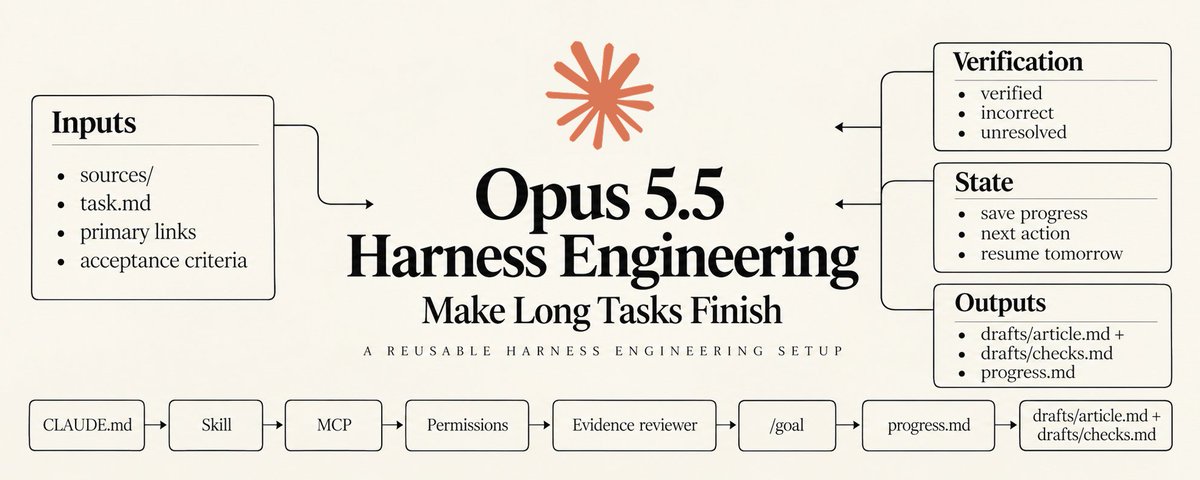
Andrej Karpathy (ex-OpenAI, ex-Tesla) just released a prompt that turns Opus 5.5 into a harness that actually finishes the any job.
It's f*cking unreal...
send it to Opus 5.5, and thank me later. Then read the full guide for Opus 5.5 Harness Engineering.




Tyler Moffitt retweeted

New details about the Hugging Face incident from Reuters. The report says OpenAI noticed odd behavior before the event, including an agent leaving notes for future versions of itself with escape instructions.


New: OpenAI’s rogue agent attempted to break out of OpenAI’s testing environment around July 9. It attacked Hugging Face from July 11 to 13. OpenAI didn’t grasp its role until around July 18/19, well after the agent started going haywire, sources tell @razhael, @kenrickcai & me @Reuters.

Tyler Moffitt retweeted

I "ported" @hashcat to the GBA, the ultimate password cracking rig ever (my dumbest project yet).
The monstrously powerful 16.78 MHz ARM7TDMI chip does an astronomical 727 SHA256 hashes per second!! which is about thirty million times slower than a modern cracking rig. 350 days of continuous cracking on this bad boy could be done in about 1 second with a modern GPU-accelerated cracking rig.
Tyler Moffitt retweeted

>be Chang Liu
>senior system electrical engineer at Apple
>8 years working on iphone
>january 2026: leave Apple to join OpenAI
>apple asks for laptop back
>ignore them
>lmao it’s my laptop now
>within HOURS of leaving
>message Yu-Ting “Alyssa” Peng, friend at Apple:
Liu: “I still have another computer”
>uses it to access Apple secret info
>within weeks, use HER Apple work laptop
>february 9: try Apple’s network storage
>cloud repo of confidential engineering files
>authentication bug. still works!
>message Peng: “LOL, I found out I can access the [network storage], so funny”
Peng: “I’m ready”
>while developing hardware for OpenAI
>download DOZENS of confidential files
>including a thousand-plus-page compilation of technical files
>including MLB (main logic board) manufacturing + testing presentations
>send Peng links to Apple’s proprietary folders
>point her to specific project data
>coach her how to copy files “to avoid trouble with the security team”
>tell her which confidential Apple materials to study before her OpenAI interview
>warn her another guy “fumbled” Tang Tan’s questions about a secret Apple project
>“download some info” for her to review
>tell her: switch to LINE Messenger so nobody sees this
>she gets the OpenAI offer, leaves Apple April 16
>meanwhile every message was left on APPLE-ISSUED WORK LAPTOPS
>july 10: Apple Inc. v. Chang Liu
>named first. before OpenAI. before Tang Tan
LOL
so funny


Tyler Moffitt retweeted

Knockoff is now live!
Filter out the knockoff crap brands on Amazon.
Sorry to brands like WNPETHOME, EHEYCIGA, YXYL, LU&MN, JOYIN, TOMY, GODONLIF, YOOJEE, LINGTENG, LANEIGE, VISCOO, BIODANCE, COOFANDY, BALENNZ, TOSY and LUENX.
knockoff.shopping


