

Probability | Prediction | PhD @Cambridge_Uni/@Kings_College | Book: https://xitter.cf/t.co/zlhV775WpE | https://xitter.cf/t.co/dWI0XskCYX
Ottawa, Canada
Joined April 2019
- Tweets737
- Following52
- Followers280
- Likes1.1K





Pinned Tweet
Great to be a part of the UKRN!

We are pleased to have Dr Stan Lazic (@StanLazic, stanlazic.github.io/) as a member of the UKRN Advisory Board. To find out more about the structure and membership of UKRN, visit ukrn.org/people/ #UKRNSpotlight
Some researchers are so thorough they p-hack their sensitivity analyses.


I've been working on this for a couple of years but it still feels incomplete. If you know of other papers discussing a similar idea, I would be grateful for the reference. And comments are welcome.
[link to preprint in reply]


Stanley E. Lazic retweeted

The Behavioural Insights Team decided to scare people.
statmodeling.stat.columbia.e…
Stanley E. Lazic retweeted
StanCon 2024 Oxford: recorded talks are now released!
statmodeling.stat.columbia.e…
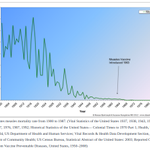
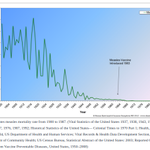
An example of regression to the mean? It would be interesting to see the first derivative of the time series. It looks like the final uptick is happening faster than past increases.

THERE IS NO MAN MADE CLIMATE CRISIS AND THIS IS THE SCIENTIFIC EVIDENCE
"The timeline, published Thursday in the journal Science, is the most rigorous reconstruction of Earth’s past temperatures ever produced, the authors say."
The timeline shows we are at a historically cold low, no wonder then that there may be warming, and that therefore if the planet heated up considerably before homo sapiens even existed, it is not likely at all that the reason for any warming is really man.

Stanley E. Lazic retweeted

Look, here’s the thing about free speech:
YES, it’s not “absolute”. Even the most hardcore free speech advocates agree that there are exceptions. Extreme case: telling e.g. Russia about UK military secrets is “just” a speech act, but it is (and should be) illegal in UK law.
BUT: the point is not to keep saying “well actually, it’s not absolute!” as if this was a novel argument. This just shows you have a straw-man view of the pro-free speech side.
The point is that freedom *should be the default*. We should take on a generally permissive attitude and then think carefully about—and demand strong justification for—any exceptions. That’s as opposed to a generally restrictive attitude, where we just assume that speech is always going to be policed.
If you fixate on the “it’s not absolute” part, then it starts to seem normal that the police could arrest someone for telling an “offensive” joke on social media (as has now happened many many times in the UK). After all, free speech isn’t absolute! Maybe that person should’ve thought before posting! You might even find yourself taking to Twitter to defend the actions of the police in making the arrests.
But arresting someone for telling a joke is not normal—or, it shouldn’t be normal in a liberal democracy where we accept that people have a wide variety of opinions, tastes, and so on.
Automatically jumping to talk about the limitations of free speech (as so many people do whenever the issue is in the news) doesn’t show that you’re a sophisticated person who understands “nuance”. It shows that your thinking is completely backwards.
Instead, you should be asking questions like:
-“What’s the specific justification for cracking down on this speech act?”
-“Is there evidence that this speech act has caused any harm, or could cause any? What would such evidence look like?”
-“Is arresting someone for making a joke the start of a slippery slope that could lead to even stronger restrictions? What sort of precedent is this setting?”
-“How would I feel if someone was arrested for saying something I agreed with? Do I hold any views that might at any point in future be seen as controversial enough to censor?”
Probably because the issue is now seen as an unfashionable right-wing thing, a lot of journalists and academics take the default restrictive attitude rather than the default permissive one. Indeed, they spend a lot of time ridiculing the idea of free speech and those who espouse it. This is extremely unfortunate and goes totally against the fundamental core of those two professions. Good journalism and good research are 100% reliant on freedom of speech.
The freedom to say things—especially if those things might upset someone—is very precious! We should ask very serious questions of anyone who wants to take it away.
PSA: If you’re triggered by “strong theoretical guarantees”, avoid reading the conformal prediction literature.

You can guarantee that the term “statistical guarantee” will irritate me. Here’s why, and let’s go into some details.
statmodeling.stat.columbia.e…
Interesting product being sold at Home Depot 😯
Thankfully, we don't have a large Swiss community here...


Stanley E. Lazic retweeted

Nutrition science is filled to the brim with embarrassingly low quality research.
The modal nutritional epidemiological study is a heavily confounded cross-sectional one with results that don't hold up and don't reflect causal effects, but rather, that certain people opt into having or reporting having certain diets. So if you're going to do nutrition studies, at least do them in the multiverse.
The way this works is basically by exploiting disagreement about the proper way to specify a model.
As an example, imagine there are two people, Cynthia and Bob. Cynthia thinks that to properly analyze the effect of a vegan diet on cardiovascular health, we just need to control for education, sex, and age and then we can compute a hazard ratio for heart attacks. Bob thinks we need to control for sex, age, and we need to use a different measure of cardiovascular health. So in the multiverse analysis, we run both models and report both results. But not only that, we run every set of analyses in between.
Here's a recent empirical example of how this plays out in practice: assessing the impact of red meat consumption on all-cause mortality.
Wang et al. used the National Health and Nutrition Examination Survey to check the relationship with every possible combination of these variables:
They used outright different models, operationalized red meat consumption in different ways, looked within different groups, and used a lot of different controls, like smoking status, pregnancy, BMI, etc. When you plot the coefficients from all of these more than one thousand different specifications on a curve from the lowest to the highest effect size, it looks like this:
The blue lines are significant, negative estimates, and the red lines are significant, positive ones. Overall, there's just not much there. If you want to look at your favored specification, you can check that out in the paper, but because there's so little there, I'm just going to focus on the aggregate result: 4% of specifications had significant results (roughly the 5% expected by chance), the median effect size was a hazard ratio of 0.94 (i.e., a nonsignificant 6% reduction in all-cause mortality), and the average of all specifications' Z-values was not more extreme than would be expected if red meat didn't do anything to all-cause mortality.
Looking at every result, it seems like there's nothing worth caring about here. The specifications with significant results looked basically random and marginal, but if you were motivated, you could probably write a paper on them. You might even be able to get it published, and it would look like a typical nutrition epidemiology paper.
The meta point here is less about red meat and more about how we ought to do cross-sectional research without causal designs. We cannot and should not get rid of this sort of research. We need to know things are related, so when we do it, we should do it in multiverse analyses that show that our results hold up in reasonable alternative models, as with the example of red meat and death.
If you want to read the paper, it's here: jclinepi.com/article/S0895-4…


Does anyone else find it troubling when you can predict the conclusions of a paper based solely on the author list?
Stanley E. Lazic retweeted
It's widely known that there's a lot of fraud in cancer research.
A new study looked at misspelled cell lines and found that some subsequent studies (mostly by Chinese authors) claimed to use and described experiments with those nonexistent cell lines.
Hundreds of fake studies!

Stanley E. Lazic retweeted
Fraud is much more common in science than you might think.
A recent preprint provided some stunning evidence for this in a systematic review of preclinical depression studies. Specifically, the paper's authors were looking for fraudulent image duplication.
Before looking at their results, we have to understand the taxonomy of image duplications. This comes from @MicrobiomDigest, and it's pictured here:
The first type in the taxonomy is simply repeating a picture. This often happens for innocuous reasons, but it's still frequently suspect. When this involves duplicating parts of images within other images, such as what often happens with Western blots, it's probably a sign of fraud.
The second type is less, but still, sometimes justifiable. This involves taking an image and duplicating it while changing its orientation, zooming in, or just generally doing anything that mildly obscures the fact that the image was repeated. A zoomed in image is justifiable if the point is to see something requiring a zoom, but usually zooming is just done to obscure that an image was repeated for more nefarious reasons. If it's not problematic, it will be stated in the text in some clear way like "Picture B is a zoomed in version of Picture A." Unmarked zooming is unfortunately common.
The third type of duplication is pretty much unjustifiable. It involves duplicating an image, but editing some aspect of it. This is generally done, not so much to, say, make parts of an image more visible, but to mislead, to push a fake finding.
So, out of 1,035 papers screened for a systematic review of preclinical depression work, the authors of this study found that 588 of those studies included images.
Well, of those 588 papers, at least 19% had photo duplication issues:
That's 19% with a very clear issue. Now maybe some of those are innocuous accidental duplications of the Type I variety. But if you look at the breakdown, it actually seems that there are more Type II and III, severe duplication events. That's bad, and this is a lower bound on how bad things are.
Before going on, do note: 17 "Other" problems, not fitting into the typical taxonomy. These were described as issues like images being switched around, leading to mismatched descriptions, and cases where images appeared to come from a "paper mill" that was fabricating research at the request of paper authors.
Now OK, this is bad. But what does it do? For that question, the answer is tough. The studies cited in the review which had detectable issues also reported 0.81 g larger effects than studies that weren't flagged, but they fit in with plenty of potentially non-problematic studies:
Even when these problematic papers were stratified by their checklist-based "quality of reporting," they seemed to be indistinguishable from the papers that weren't obviously fraudulent. Their "quality" came out at 5.8(/10) versus 5.1 for all of the studies with a quality rating. The "risk of bias" wasn't much better, showing a score of 3.2(/11) for the potentially fraudulent studies and 2.9 across every study where the risk of bias was reported.
That's extremely unfortunate, as it indicates commonly-used metrics for indicating study quality don't pick up outright, visually-detectable problems. Or maybe they do detect problems, and there are just huge numbers of undetected problems among remaining studies. That is the best case scenario, but it's not a happy one.
But surely peer reviewers, editors, and subsequent readers of studies will identify and penalize papers with image duplication issues, right? Well, the fact that these were published speaks against some interpretations of that belief, so the real question regarding publishing is do high-impact journals, with their high-powered reviewers, editors, and readers, recognize problematic papers?
The answer is no: studies with problematic image duplication are published in journals with comparable impacts to the ones non-problematic papers are published in, and they're cited just as often too.
The authors had this to say:
"We would suspect that the reason why most researchers would agree with the statement that research fraud is rare, all the while data seems to point to the contrary, is that they have not encountered it personally."
Fraud is very prevalent in science, and there's every incentive for it to be, and there are relatively few tools for figuring it out. Fraud is rewarded, and not caught, so of course it's around, and that means many conclusions that might be mainstream might be completely wrong and we may just not know it, yet, or even ever.
But there's a potentially happy note: frauds seem to be productive. Some of the time, they're productive through paper mills, and much of the time through simply rushing out papers at implausible rates. This means that a few people can corrupt entire scientific literatures, and that's bad, but it also means that, like violent and property crimes outside of academia's ivory tower, we can stop it. We just have to crack down on the few people who engage in extremely disproportionate levels of scientific malpractice.
Right now, it doesn't seem like that will happen: "Journal retractions happen at a glacial speed, and author protests can sometimes be enough to prevent them wholesale." But the "scientific community cannot afford to act as slowly as the industry that publishes our reports."
While science currently isn't equipped to deal with large-scale fraud, that doesn't mean it has to be. This problem is fixable, it'll just involve a lot of hammers coming down on a lot of fraudsters' necks. We just have to commit, because the problem won't fix itself.
Give the paper a read. It's good: biorxiv.org/content/10.1101/…


Stanley E. Lazic retweeted

Over the past few years I've been designing my 🐀studies to increase not only the sample size but also the cage # to address the cluster effect inherent in group housing and it's wild how many 'cage effects' you see. I didnt trust n=5-10 🐀studies b4 but increasingly even less so
A new(ish) organisation involved with research reproducibility that might be of interest:
brokenscience.org/
I like their emphasis on prediction (and they dig Bayes...)
Stanley E. Lazic retweeted

Important message below but infuriating #AI field has to 'discover' this rather than being guided by long-standing stats literature
eg, onlinelibrary.wiley.com/doi/…
by @GSCollins says:
'Categorising continuous predictors is ... inefficient & should not be used in model development'


AI models perform better when trained on underlying measurements rather than the associated diagnoses, because dichotomizing data loses information that is useful in training AI models. Read the Case Study by @amey_vrudhula, BS, et al.: nejm.ai/3PjiqeI

ALT Case Study The Impact of Task Set-up in Algorithm Design: Regression versus Classification Figure 1. Classification versus Regression Model Calibration.