

Official communications from the Office of the President of the Republic of Sierra Leone. His Excellency, President Julius Maada Bio.
Freetown, Sierra Leone
Joined November 2024
- Tweets416
- Following150
- Followers297
- Likes32





Sierra Leone’s President Julius Maada Bio Commissions Sierra Leone Ocean Shipping Company to Expand Maritime Capacity and Boost Exports
Quay Elizabeth II, Freetown, Monday, 19 October 2026 - His Excellency President Dr Julius Maada Bio has officially commissioned the Sierra Leone Ocean Shipping Company Limited (SLOSCO), a joint venture aimed at strengthening Sierra Leone’s participation in international trade, expanding national shipping capacity and creating employment opportunities for Sierra Leoneans.
The establishment of SLOSCO marks a step towards increasing local participation in the maritime sector, reducing reliance on foreign shipping services and enabling Sierra Leone to capture a greater share of the economic value generated by its imports and exports.
The company is structured as a joint venture between the Sierra Leone National Shipping Agency, which holds a 30% stake, and China’s Zhejiang Xiehai Group Company Limited, 70%.
Welcoming President Bio, Director-General of the National Shipping Agency, Mr Mustapha Mark Lissa, expressed appreciation for the President’s leadership in advancing the initiative. He also commended Zhejiang Xiehai Group for investing in Sierra Leone, noting that the partnership would create employment opportunities and strengthen the country’s shipping industry.
The President of Zhejiang Xiehai Group, Mr Wang An, described the partnership as a reflection of the longstanding trade relations between Sierra Leone and China. He highlighted its potential to stimulate economic activities across trade, mining and the marine industry, while reaffirming the company’s commitment to local employment, skills development and strengthening Sierra Leone’s shipping management capacity.
Representing the mining sector, Deputy Minister of Mines and Mineral Resources, Mr Foday Mousa Fofana, described the establishment of SLOSCO as an important development for the industry. He noted that improved shipping capacity could facilitate the transportation of minerals and other goods, helping to strengthen the mining sector’s contribution to national economic growth.
Minister of Trade and Industry, Mr Alpha Ibrahim Sesay, welcomed the initiative, saying it would create additional opportunities for businesses engaged in import and export activities. He called for arrangements that would enable more local businesses to participate in the shipping sector, emphasising the importance of public-private partnerships in expanding trade, supporting exporters and stimulating economic activity.
Minister of Transport and Aviation, Ambassador Alhaji Fanday Turay, described the commissioning as a milestone in the Government’s efforts to develop the transport sector. He highlighted ongoing work across maritime, land transport and aviation, including port operations, revenue generation, road safety and policy development. He also acknowledged the contributions of the National Shipping Agency, Zhejiang Xiehai Group and other stakeholders in establishing the company.
Delivering the keynote address, President Bio described SLOSCO as a strategic investment that could strengthen Sierra Leone’s participation in international trade, improve the competitiveness of local businesses and create opportunities for young people, particularly women, in the maritime industry.
“We have the trade; we now develop the capacity to take the greater share of those fees, and that is the challenge that we must take years,” President Bio stated, underscoring the importance of building national capacity to retain greater economic benefits from international commerce.
The President emphasised the importance of technology transfer, professional training and skills development, stressing that Sierra Leoneans must have meaningful opportunities to participate in and benefit from the shipping industry. He also highlighted the potential benefits for the mining and agricultural sectors, noting that improved shipping services could facilitate


Sierra Leone’s President Julius Maada Bio Commissions Sierra Leone Ocean Shipping Company to Expand Maritime Capacity and Boost Exports
Quay Elizabeth II, Freetown, Monday, 19 October 2026 - His Excellency President Dr Julius Maada Bio has officially commissioned the Sierra Leone Ocean Shipping Company Limited (SLOSCO), a joint venture aimed at strengthening Sierra Leone’s particip aaaaation in international trade, expanding national shipping capacity and creating employment opportunities for Sierra Leoneans.
The establishment of SLOSCO marks a step towards increasing local participation in the maritime sector, reducing reliance on foreign shipping services and enabling Sierra Leone to capture a greater share of the economic value generated by its imports and exports.
The company is structured as a joint venture between the Sierra Leone National Shipping Agency, which holds a 30% stake, and China’s Zhejiang Xiehai Group Company Limited, 70%.
Welcoming President Bio, Director-General of the National Shipping Agency, Mr Mustapha Mark Lissa, expressed appreciation for the President’s leadership in advancing the initiative. He also commended Zhejiang Xiehai Group for investing in Sierra Leone, noting that the partnership would create employment opportunities and strengthen the country’s shipping industry.
The President of Zhejiang Xiehai Group, Mr Wang An, described the partnership as a reflection of the longstanding trade relations between Sierra Leone and China. He highlighted its potential to stimulate economic activities across trade, mining and the marine industry, while reaffirming the company’s commitment to local employment, skills development and strengthening Sierra Leone’s shipping management capacity.
Representing the mining sector, Deputy Minister of Mines and Mineral Resources, Mr Foday Mousa Fofana, described the establishment of SLOSCO as an important development for the industry. He noted that improved shipping capacity could facilitate the transportation of minerals and other goods, helping to strengthen the mining sector’s contribution to national economic growth.
Minister of Trade and Industry, Mr Alpha Ibrahim Sesay, welcomed the initiative, saying it would create additional opportunities for businesses engaged in import and export activities. He called for arrangements that would enable more local businesses to participate in the shipping sector, emphasising the importance of public-private partnerships in expanding trade, supporting exporters and stimulating economic activity.
Minister of Transport and Aviation, Ambassador Alhaji Fanday Turay, described the commissioning as a milestone in the Government’s efforts to develop the transport sector. He highlighted ongoing work across maritime, land transport and aviation, including port operations, revenue generation, road safety and policy development. He also acknowledged the contributions of the National Shipping Agency, Zhejiang Xiehai Group and other stakeholders in establishing the company.
Delivering the keynote address, President Bio described SLOSCO as a strategic investment that could strengthen Sierra Leone’s participation in international trade, improve the competitiveness of local businesses and create opportunities for young people, particularly women, in the maritime industry.
“We have the trade; we now develop the capacity to take the greater share of those fees, and that is the challenge that we must take years,” President Bio stated, underscoring the importance of building national capacity to retain greater economic benefits from international commerce.
The President emphasised the importance of technology transfer, professional training and skills development, stressing that Sierra Leoneans must have meaningful opportunities to participate in and benefit from the shipping industry. He also highlighted the potential benefits for the mining and agricultural sectors, noting that improved shipping services could facilitate
Sierra Leone’s President Julius Maada Bio Inspects US$417m Nant Power Project As Sierra Leone Targets 2027 Power Boost
Kissy Dock Yard, Freetown, Friday, 16 October 2026 - His Excellency President Dr Julius Maada Bio has inspected the construction site of the 108.4-megawatt Nant Power Plant in Kissy, Freetown, where project officials assured him that the facility is on course to begin generating electricity in 2027.
The multi-fuel Combined-Cycle Gas Turbine (CCGT) power plant, designed to utilise liquefied petroleum gas (LPG) and liquefied natural gas (LNG), represents a major investment in Sierra Leone’s energy infrastructure and a partnership involving the Government of Sierra Leone and United States-backed development financing.
During the inspection, the President received a briefing from Mr Karim Nasser, Chief Executive Officer of the Nant Power Project, formerly known as the Western Area Power Generation Project, and his technical team on the project’s construction progress, safety measures and planned operational facilities.
The approximately US$417 million project is being developed by TCQ Power and Anergi Group Plc. Its financing includes a US$292 million loan from the United States International Development Finance Corporation (DFC), a US$40 million loan from the ECOWAS Bank for Investment and Development (EBID), and equity contributions from the developers.
Construction was officially launched in mid-2024, with first power generation targeted for September 2027. Upon completion, Siemens Energy is expected to operate the facility, while Shapoorji Pallonji is responsible for engineering and construction.
Mr Nasser also briefed President Bio on the plant’s safety arrangements, including plans to encapsulate three tanks with sand and concrete. The completed facility will include an administrative building, firefighting department, warehouse, security control room and other supporting infrastructure designed to strengthen operational safety and protect surrounding communities.
The President was further informed that Sierra Leoneans had undertaken the construction work at the site, while the project incorporates internationally sourced equipment and advanced treatment technology.
President Bio reaffirmed his Government’s commitment to the successful implementation of the project and emphasised the importance of timely delivery as Sierra Leone works to strengthen its electricity supply and support economic activity.
Once operational, the 108.4 MW facility is expected to make a significant contribution to the country’s power-generation capacity, supporting households, businesses and wider development priorities.
*For Media Enquiries:*
*State House Media and Communications Unit*
[email protected]


Sierra Leone's President Julius Maada Bio Outlines Five Priorities to Secure Lasting Peace in Africa
Geneva, Switzerland, Tuesday 13 October 2026 – His Excellency President Dr @julius_maadabio has outlined five priorities for securing lasting peace in Africa, calling for stronger democratic institutions, preventive diplomacy, regional cooperation, people-centred security and sustainable financing for African-led peace operations.
Delivering a keynote lecture titled *”Building Lasting Peace in Africa: The Catalytic Role of ECOWAS”* at the Geneva Graduate Institute in Switzerland, as part of its Director’s Global Leadership Series, President Bio stressed that lasting peace requires more than ending hostilities; it demands addressing the underlying conditions that drive conflict.
“The absence of war is the beginning of peace. It is not its guarantee,” he declared.
Drawing on his experience as a former soldier, Sierra Leone’s post-war recovery and his tenure as immediate past Chairman of the ECOWAS Authority, President Bio highlighted the country’s journey from receiving international peacekeeping support to contributing to peacekeeping efforts abroad.
He emphasised that while regional and international solidarity can create the conditions for peace, national ownership, justice and effective institutions are essential to sustaining it.
The President identified preventive diplomacy and early intervention as critical to averting conflicts, proposing a Regional Prevention Compact under which agreed early-warning triggers would automatically initiate mediation before crises escalate.
He called for stronger democratic institutions and accountable governance, arguing that peaceful political transitions and public confidence in institutions are fundamental to preventing instability. Citing Sierra Leone’s peaceful transfers of power in 2007 and 2018, he urged policymakers to measure peacebuilding success not only by wars ended but also by conflicts prevented.
On regional cooperation, President Bio advocated *cooperative sovereignty*, urging West African states to confront shared security threats collectively rather than in isolation. He reaffirmed the importance of dialogue with Burkina Faso, Mali and Niger, while acknowledging that ECOWAS must learn from its shortcomings and deliver tangible results for citizens.
He further called for people-centred security and greater investment in opportunities for young people, stressing that peace is difficult to sustain where insecurity, injustice and economic exclusion persist. He also underscored the need for sustainable financing for African-led peace operations and reiterated Sierra Leone’s support for reform of the United Nations Security Council to give Africa a fairer voice in global peace and security decisions.
“The greatest achievements in peacebuilding are the wars that never began, the elections that passed peacefully, the young people who found work instead of weapons,” President Bio said.
He concluded that lasting peace must be measured not simply by the silence of guns, but by whether people, especially young people, enjoy the security, opportunities and confidence needed to build a better future.
*For media enquiries:*
*State House Media and Communications Unit*
[email protected]


President Julius Maada Bio Welcomes Gavi’s US$60.9 Million Allocation to Sierra Leone, Reaffirms Commitment to Global Advocacy
Geneva, Switzerland, Tuesday, 13 October 2026— His Excellency President Julius Maada Bio has welcomed Gavi, the Vaccine Alliance’s allocation of US$60.967 million to Sierra Leone under the Gavi 6.0 programme for 2026–2030.
The President made the remarks during a high-level meeting with Dr. Sania Nishtar, Chief Executive Officer of Gavi, at the organisation’s headquarters in Geneva.
“Sierra Leone greatly values its longstanding partnership with Gavi and its contribution to protecting the health and lives of our people, particularly our children,” President Bio said.
He highlighted results delivered through the partnership, including expanded immunisation coverage, the introduction of life-saving vaccines and improved access to services in underserved communities.
President Bio also underscored Sierra Leone’s commitment as a dependable partner. “We have exceeded our recent vaccine co-financing obligations, committed approximately US$4.8 million in domestic financing for 2026–2030, and continue to finance more than 2,500 immunisation personnel,” he stated.
He told Gavi’s leadership that, through the 300 Days of Activism for Triple Zero initiative, the Government is strengthening accountability at district level to prevent avoidable maternal and child deaths and ensure essential health services, including immunisation, reach every community.
The President also sought Gavi’s support in exploring options to sustain existing malaria vaccination coverage beyond 2027. He called for predictable disbursements and timely implementation of Sierra Leone’s Gavi 6.0 allocation to ensure the continuity of immunisation services through 2030.
Dr. Nishtar thanked President Bio for visiting Gavi’s headquarters, saying his presence demonstrated a strong commitment to the organisation’s ideals. She commended his continued leadership in global advocacy for Gavi.
“This is something very close to your heart and you are committed to it. I am struck by your knowledge and understanding of the issues,” she told President Bio.
Dr. Nishtar also said she was a strong advocate for Sierra Leone, citing the country’s impressive progress. She praised the 300 Days of Activism for Triple Zero initiative and urged President Bio to continue using his leadership and voice in support of Gavi.
In Sierra Leone, national coverage for key antigens is above 90%. Gavi has also supported Sierra Leone’s vaccination efforts by helping ensure that 90% of public primary health care facilities have functional cold-chain equipment. Its support has included motorbikes and dedicated vaccine trucks for first- and last-mile delivery, vaccine doses and operational assistance during the Mpox outbreak, and support for the national Ebola preventive vaccination campaign.
*For more enquiries:*
*State House Media and Communications Unit*
[email protected]


Sierra Leone’s President Julius Maada Bio Urges World to Invest in Preventing Wars, Proposes New Geneva Commitment to Prevention
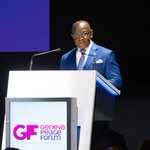
International Conference Centre Geneva (CICG), Geneva, Switzerland, Monday, 12 October 2026* - His Excellency, President Dr Julius Maada Bio has challenged world leaders to shift global priorities from financing the consequences of war to preventing conflicts before they erupt, proposing a Geneva Commitment to Prevention that would make early action a measurable priority of international cooperation.
Delivering the keynote address at the inaugural Geneva Peace Forum at the International Conference Centre Geneva (CICG), under the theme “Choose Peace,” President Bio questioned why the world mobilises enormous resources after wars begin but invests far less in preventing them, insisting that the problem is not simply money, but political will and priorities.
“We have become experts at managing the consequences of war. We must show the same determination in preventing its causes,” he declared.
The President proposed two practical commitments: progressively increasing the share of international assistance devoted to conflict prevention and publishing annual reports on early warnings received and the actions taken. He urged the Forum to measure success by the conflicts prevented and lives saved, not merely by declarations adopted.
Drawing on Sierra Leone’s civil war and recovery, President Bio recalled the broken-legged wooden chair at Geneva’s Place des Nations, a monument to landmine victims, which reminded him of Sierra Leoneans who lost limbs but rebuilt their lives despite the enduring scars of conflict.
“War does not end when the guns fall silent,” he said, warning that its consequences persist in wounded survivors, divided communities and children who inherit the costs of decisions they never made.
Speaking from his experience as a soldier who served with the Economic Community of West African States Monitoring Group (ECOMOG) in Liberia, a military Head of State who oversaw Sierra Leone’s transition to civilian government in 1996, and a democratically elected President, Bio recalled the country’s declaration in January 2002: “Di wor don don”, meaning, the war is over.
He stressed that peace had to be built through reconciliation, accountability and national recovery, citing the Truth and Reconciliation Commission and the Special Court for Sierra Leone as essential parts of that journey.
“We learned that reconciliation without justice is fragile, and justice without reconciliation is incomplete. A nation needs both,” he said, highlighting Sierra Leone’s transformation from a recipient of peacekeepers to a contributor to international peacekeeping and its service on the United Nations Security Council in 2024 and 2025.
Referencing conflicts in Sudan, the Sahel, eastern Democratic Republic of Congo, the Middle East and Ukraine, President Bio warned that the international community too often acts only after violence begins, despite early signs such as exclusion, inequality and broken trust.
He called for stronger early-warning systems and decisive action before disagreements become hatred, misinformation fuels mobilisation and grievances turn violent. He emphasised that peace prevention must also include investment in education, employment, fair courts, credible elections and opportunities for young people.
The President further warned that climate-related disasters can aggravate poverty and exclusion, while misinformation, artificial intelligence misuse and cyberattacks threaten public trust and essential services. He called for fair climate financing and more inclusive global technology rules.
“On all of these challenges, Africa does not come to Geneva only to seek solutions. Africa comes to offer them,” he declared, drawing on his tenure as Chair of the Authority of Heads of State and Government of the Economic Community of West African States (ECOWAS) to stress that lasting peace


At a time when crises and wars are putting peace and stability at risk, the world turns to the @UNGeneva, a leading international forum dedicated to peacebuilding.
President @julius_maadabio , a peace scholar who has dedicated his life to promoting peace in Sierra Leone and around the world, will deliver the keynote address at the high-level opening ceremony of the Geneva Peace Forum 2026 on *Monday, 12 October 2026*. The ceremony begins at *09:00 AM Geneva time / 07:00 AM Sierra Leone time.*
Watch live on networks across Sierra Leone (see flyer for details), or join the livestream: us06web.zoom.us/j/8932415849…

Sierra Leone’s President Julius Maada Bio Receives Alhaji Amadu Juldeh Sowe After Election as President of Tabital Pulaaku International
State House, Freetown, Monday 5 October 2026 - His Excellency President Dr Julius Maada Bio has received the newly crowned President of Tabital Pulaaku International, Alhaji Amadu Juldeh Sowe, and other representatives of the organisation from various countries, describing his election to the global Fulah leadership as a source of pride for Sierra Leone and reaffirming his Government’s support for the Fulah community.
Alhaji Amadu Juldeh Sowe, a Sierra Leonean, was accompanied by senior representatives of Tabital Pulaaku International, including Alhaji Sidie Dem and Dr Abubakar Gerei, who formally presented him to President Bio and the people of Sierra Leone following his election as the highest-ranking Fulah leader of the international organisation.
Speaking during the courtesy call, a senior member of Tabital Pulaaku International from Guinea-Bissau, Dr Helena Sahid, said the delegation had travelled to Sierra Leone to formally hand over the newly crowned Horeejo to President Bio, the Fulah community and the people of Sierra Leone.
She described his election as a reflection of the confidence, unity, peace and respect enjoyed by Alhaji Amadu Juldeh Sowe among Fulahs across 34 countries, while expressing appreciation for President Bio’s support for the Fulah community in Sierra Leone.
Dr Sahid further noted that the election of a Sierra Leonean to the highest leadership of Tabital Pulaaku International during President Bio’s tenure was a significant demonstration of the country’s supportive environment and the confidence placed in its leadership.
The global Fulah representatives expressed gratitude to President Bio, First Lady Fatima Bio, the Government and people of Sierra Leone for their support to Alhaji Amadu Juldeh Sowe and the Fulah community, describing his elevation as an achievement not only for him but for Sierra Leone.
In his remarks, the newly crowned Horeejo thanked President Bio, First Lady Fatima Bio, the Government and people of Sierra Leone, as well as Fulahs across the world, for the confidence and trust placed in him.
Alhaji Juldeh Sowe said he had been accompanied by representatives of Tabital Pulaaku International from 34 countries to formally present him to his people and to express their appreciation to President Bio for his support and leadership.
He used the occasion to call for peace and unity among Fulahs in Sierra Leone and across the world, while dedicating his tenure to the Fulah community in Sierra Leone.
He described his election as a national achievement, stressing the importance of using his new position to promote unity, peace and cooperation.
Congratulating Alhaji Juldeh Sowe on his election, President Bio said he was pleased to receive the global leadership of Tabital Pulaaku International and to welcome the newly crowned President, whom he described as a peaceful, respectful and highly consultative leader.
“You have demonstrated for far too long that you are peaceful and that you have been contributing meaningfully to our country,” President Bio said.
The President said the SLPP Government had remained supportive of the Fulah community, emphasising the longstanding bonds that unite Sierra Leoneans across communities.
“We have lived together in our communities, attended schools together, and shared good memories,” President Bio noted.
He urged Alhaji Juldeh Sowe to use his new position to bring the wider Fulah community together and ensure that his tenure at the helm of Tabital Pulaaku International is defined by unity, peace and successful leadership.
President Bio said his extensive engagement with the Fulah community had consistently demonstrated their commitment to peace and national development, adding that he believed Alhaji Juldeh Sowe’s leadership would take Tabital Pulaaku International to another level.


Sierra Leone’s President Julius Maada Bio Turns Quincy’s Amistad Legacy Into Fresh Call For Reparatory Justice
Quincy, Boston, Massachusetts, Sunday, 27 September 2026 - His Excellency, President Dr. @julius_maadabio has renewed Sierra Leone’s call for reparatory justice for the enduring consequences of enslavement and the transatlantic slave trade, saying the lessons of the Amistad story must move beyond remembrance to responsibility, justice and reconciliation.
Addressing a gathering at the United First Parish Church, also known as the Church of Presidents, on the theme “Celebrating Courage: Honouring the Historic Link Between Quincy and Sierra Leone,” President Bio described the relationship between Sierra Leone and Quincy as “historical, human, and, in places such as this, deeply personal.”
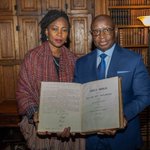
The address followed the President’s visit to the Adams National Historical Park, where he viewed the Mendi Bible preserved in the Stone Library. He described the Bible as “a witness to history, a bridge across the Atlantic, and a sacred link between generations and peoples,” and as a covenant of memory between Sierra Leone and the United States.
President Bio recalled that in 1839, Sengbe Pieh, known in the United States as Joseph Cinqué, and fellow Mende captives were forcibly taken from their homeland and enslaved aboard the Spanish schooner La Amistad. Their resistance eventually brought their case before the United States Supreme Court, where former President John Quincy Adams argued that they were free human beings who had been unlawfully captured and enslaved. In 1841, the Supreme Court affirmed their freedom.
President Bio said the story represented two expressions of courage: Sengbe Pieh’s courage to resist injustice and John Quincy Adams’ courage to confront it through law, conscience and principle.
“Nearly two hundred years ago, Sengbe Pieh came to these shores in chains. Today, the President of the Republic of Sierra Leone comes to Quincy in freedom and friendship. That is the distance history has travelled,” he declared.
The President said the passage of time must not diminish the responsibility to confront the consequences of historical injustice, reaffirming Sierra Leone’s commitment to reparatory justice.
He stressed that reparatory justice was not about reopening old wounds, but about acknowledging historical truth, honouring those who suffered, addressing enduring consequences and building a more equitable future.
“It is about memory joined with responsibility, and justice joined with reconciliation,” President Bio said.
Linking the Amistad legacy to Sierra Leone’s present, President Bio said the courage of Sengbe Pieh remained part of the country’s national character, reflected in its resilience through the eleven-year civil war, Ebola, the 2017 mudslide and COVID-19.
“Each time, we grieved. Each time, we stumbled. But each time, Sierra Leone rose again,” he said.
Drawing on his own experience during the civil conflict and Sierra Leone’s return to democratic civilian rule, President Bio said lasting progress must be built through peace, strong institutions, education, justice and respect for human dignity.
He said the challenges of today still require courage: to educate every child, confront hunger and food insecurity, expand opportunities for women and girls, protect peace and enable Africans to shape their future with dignity and agency.
“Sengbe Pieh fought for freedom. Our responsibility is to give that freedom meaning,” President Bio said, stressing that freedom must mean education for every child, opportunities for young people, equal participation for women, peaceful families and nations able to determine their futures with dignity.
Thanking the people of Quincy, the Adams National Historical Park and the United First Parish Church for preserving the historic connection, President Bio said the Amistad story carried a timeless lesson: “courage can cross oceans.”


Sierra Leone’s President Julius Maada Bio Raises Sierra Leone’s IFAD14 Contribution by at Least 50 Percent, Backs Food Security with Increased Investment
New York, Friday 25 September 2026 - President Julius Maada Bio has announced that Sierra Leone will increase its contribution to the International Fund for Agricultural Development (IFAD) 14th Replenishment by at least 50 percent, reinforcing the Government’s commitment to agriculture, food security, rural livelihoods and job creation.
President Bio made the commitment on Friday during the IFAD14 African Leadership Moment at the Goals Lounge, United Nations Headquarters in New York, where he underscored the central role of agriculture in Sierra Leone’s development.
“Agriculture is more than a sector for Sierra Leone. It is the foundation of our food security, our livelihoods and our future,” President Bio said.
The President stressed that Sierra Leone’s rural communities should not be viewed as being at the margins of national development, noting that they are where the majority of citizens live and work and where the country’s food security begins.
“Rural areas are often called the last mile. In Sierra Leone, they are the first mile, where most of our people live and work, and where food security begins,” he stated.
President Bio highlighted the longstanding partnership between Sierra Leone and IFAD, noting that the institution has supported the country for more than four decades. He said Sierra Leone has increasingly complemented that partnership with stronger domestic financing for agriculture.
According to the President, agriculture’s share of Sierra Leone’s national budget has increased from 2 percent to 8 percent in two years, while rice self-sufficiency has risen from 68 percent in 2019 to 73 percent.
Against this backdrop, President Bio formally confirmed Sierra Leone’s commitment to the IFAD14 replenishment, announcing that the country will increase its contribution from IFAD13 by at least 50 percent, with the increased contribution to be financed through the national budget.
The pledge, he said, reflects Sierra Leone’s determination to invest in the people at the heart of its food systems and to strengthen the foundations for sustainable agricultural transformation.
“If we want to transform food systems and create jobs, we must invest in the people who produce our food,” President Bio said.
He further called on development partners and other stakeholders participating in the IFAD replenishment process to match Sierra Leone’s commitment with increased support for agricultural development and rural communities.
“Sierra Leone is doing its part. I invite every partner here to do the same,” the President said.
The announcement reinforces Sierra Leone’s broader emphasis on placing agriculture, food production and rural development at the centre of efforts to strengthen food security, expand livelihoods and create opportunities for citizens.
For Sierra Leone, the IFAD14 commitment represents not only an increased financial contribution to a longstanding international partnership, but also a reaffirmation that transforming the country’s food systems must begin with sustained investment in the farmers, producers and rural communities who feed the nation.
*For media enquiries:*
*State House Media and Communications Unit*
[email protected]


Sierra Leone’s President Julius Maada Bio Sets Five Principles To Turn G7+ Peace Framework Into Action
New York, Thursday, 24 September 2026 - His Excellency President Julius Maada Bio has outlined five principles he says must underpin the g7+ Framework for Peace through Dialogue and Reconciliation, calling for its formal endorsement, prompt implementation and clear accountability to transform the framework from an aspiration into a practical instrument for preventing conflict and sustaining peace.
Speaking as an Eminent Person of the g7+ at a High-Level Summit on the margins of the 81st Session of the United Nations General Assembly in New York, President Bio identified national ownership, prevention, practical action, adequate resources and coordinated global advocacy as essential to making the framework effective.
President Bio said the framework must first be founded on consent, trust and national ownership. It should be activated only at the invitation of the concerned member state and remain voluntary, confidential and complementary to existing regional and international efforts.
He said the distinctive value of the g7+ should come from the shared experience of countries that have confronted conflict and recovery, with member states working to “listen, accompany and share experience” rather than dictate solutions.
On prevention, President Bio called for a fundamental shift in the way the international community responds to conflict, arguing that action should begin before tensions become crises.
“The measure of this framework should not be how many crises it responds to, but how many crises it helps to prevent,” he said.
He proposed that the Council of Eminent Persons become a standing and readily available resource capable of early, discreet and constructive engagement when invited by a member state, alongside a high-level meeting to establish a roadmap for preventive engagement, dialogue and reconciliation.
President Bio said the framework must also be practical and inclusive, providing for peer-accompaniment missions, structured knowledge exchange and targeted technical assistance among member states. He called for the strengthening and expansion of the Rapid Response Advisory Centre to help countries address legal, political and development risks before they escalate.
He further stressed that peacebuilding cannot be confined to governments and political leaders, insisting that women, young people and communities affected by conflict must have a meaningful place in peace processes.
“Sustainable peace is built not only around negotiating tables, but also in homes, communities, schools, institutions and places of worship,” President Bio said.
On resources, President Bio warned that a framework without the capacity to act would remain “no more than a communiqué.” He called on member states to equip the g7+ Secretariat with the financial and human resources required to fulfil its mandate and urged predictable and flexible financing under g7+ ownership.
He also called on international partners to invest more in prevention rather than concentrating support on emergency response after crises have already erupted.
“Investment in prevention is not charity. It is the most responsible and cost-effective investment the international community can make in collective peace and security,” he said.
The President’s fifth principle focused on stronger and more coordinated global advocacy by the g7+. He urged member states to speak with greater unity in global decision-making institutions, arguing that their experience of conflict, recovery and state-building should inform international decisions on political transitions, peacebuilding and development financing.
He said fragility should not be treated as a permanent identity or a condition to be indefinitely managed, but as a challenge to be overcome through national leadership, sustained partnership and patient institution-building.


UN Secretary-General Commends President Julius Maada Bio’s Leadership
New York, Thursday, 22 September 2026 — United Nations Secretary-General António Guterres has commended the leadership of Sierra Leone’s President, His Excellency Julius Maada Bio, during a bilateral meeting at the United Nations Headquarters in New York.
Secretary-General Guterres expressed his pleasure at receiving President Bio, describing him as a symbol of unity in Sierra Leone and across the West African region.
He also praised Sierra Leone’s leadership during its 2024–2025 tenure on the UN Security Council, highlighting the country’s efforts to build consensus and its effective contribution to advancing international peace and security.
Reaffirming his commitment to Africa, Mr. Guterres said his advocacy for greater African representation on the Security Council and in international financial institutions would remain unwavering.
In response, President Bio noted that the meeting could be their last bilateral engagement during Mr. Guterres’s tenure as UN Secretary-General. He conveyed his deepest appreciation, on behalf of the Government and people of Sierra Leone, for Mr. Guterres’s leadership and consistent support for Sierra Leone and Africa.
President Bio also acknowledged the support provided by the UN Secretariat during Sierra Leone’s 2024–2025 Security Council term, saying it enabled the country to contribute fully and responsibly to the Council’s work.
Addressing the issue of Security Council reform, President Bio commended the Secretary-General for his continued advocacy for greater African representation and a more equitable multilateral system.
He also expressed appreciation for Mr. Guterres’s support during his tenure as Chairman of ECOWAS Authority of Heads of State and Government.
“I thank you for the strong partnership between the United Nations and ECOWAS during my chairmanship, as well as for Deputy Secretary-General Amina Mohammed’s participation in our summit in Lungi,” President Bio said.
President Bio further informed the Secretary-General of Sierra Leone’s intention to give equal priority to the economic foundations of regional stability by hosting the West Africa Integration and Investment Summit in Lungi in November 2026.
“As you approach the conclusion of your tenure, Sierra Leone will remember your commitment to multilateralism, to Africa and to the most vulnerable,” President Bio stated.
*For further enquiries:*
*State House Media and Communications Unit*
[email protected]


Sierra Leone’s President Julius Maada Bio Commends First Lady Fatima Bio’s Determination to End Child Marriage, Announces Three Further Commitments
New York, Wednesday, 23 September 2026 - His Excellency, President Dr. Julius Maada Bio has commended First Lady Fatima Bio for her determination and advocacy in the global fight against child, early and forced marriage, while announcing three further national commitments to strengthen Sierra Leone’s efforts to protect girls and eliminate the practice.
President Bio made the remarks at a high-level event in New York on the margins of the 81st Session of the United Nations General Assembly, following the 4 September 2026 adoption by consensus of a Sierra Leone-led resolution establishing 27 November as the International Day for the Elimination of Child, Early and Forced Marriage.
The high-level gathering was graced by President Bassirou Diomaye Faye of Senegal, Chairman of the ECOWAS Authority, and First Lady Marie Khone Faye, alongside several other First Ladies and distinguished representatives of Governments, the United Nations system and civil society.
Sierra Leone served as the main sponsor of the resolution alongside 84 co-sponsoring countries, taking the country’s national campaign against child marriage to the highest level of global decision-making. President Bio described the adoption as a historic achievement for girls worldwide and a significant milestone in Sierra Leone’s leadership on the issue.
“At a time of deep global division, every Member State agreed that no girl should lose her childhood, education or future through marriage,” President Bio said.
He specifically commended First Lady Fatima Bio for her determination to advance the issue, saying her advocacy had helped bring greater attention to the need for stronger action to protect girls from child marriage. The President also acknowledged Zambia and Canada for their earlier work in laying the foundation for the initiative, and paid tribute to President Hakainde Hichilema, the African Union Champion on Ending Child Marriage, as well as the United Nations system, civil society organisations, survivors and advocates who have sustained the campaign.
President Bio said the establishment of the International Day provides a permanent global platform to maintain attention, mobilise action and assess progress towards eliminating child, early and forced marriage. He noted that more than 640 million girls and women alive today were married in childhood, while millions of girls continue to be married before adulthood each year.
“These numbers represent a girl whose education may have ended, whose health may have been placed at risk and whose choices were taken away before she was old enough to make them,” he said.
President Bio stressed that child marriage is not simply a private family matter, but a violation of rights with serious consequences for national development.
“A country that allows its daughters to be married too early pays the price for generations,” he said.
President Bio said Sierra Leone’s leadership at the global level is grounded in concrete national action. He pointed to the Prohibition of Child Marriage Act, which he signed into law in July 2024, establishing 18 as the minimum age of marriage without exception and providing accountability for those who facilitate child marriage.
He stressed, however, that legislation must be matched by opportunities that enable girls to remain in school, access healthcare and build independent futures. In that regard, he cited the Free Quality School Education programme, the Radical Inclusion Policy, which enables pregnant girls and young mothers to continue their education, and the Gender Equality and Women’s Empowerment Act 2022.
He also emphasised the importance of listening to girls themselves, saying their experiences and aspirations should guide the laws, policies and programmes designed to protect them.


*Sierra Leone’s President Julius Maada Bio Tells The United Nations that The World Cannot Spend Trillions on War While Millions Struggle for DevelopmenT
New York, United States, 22 September 2026 - His Excellency, President Dr. Julius Maada Bio has challenged world leaders to rethink global priorities, warning that the vast resources mobilised for military expenditure must be matched by greater investment in peace, development and human security.
Addressing the General Debate of the 81st Session of the United Nations General Assembly in New York, President Bio said the persistence of conflict around the world demonstrates that military action alone cannot deliver lasting peace.
“Military action may contain a threat, but it cannot, by itself, build lasting peace,” President Bio told world leaders, stressing that insecurity takes root where hunger, exclusion and despair deepen.
The President pointed to the scale of global military spending, noting that expenditure reached almost US$2.9 trillion in 2025, marking the eleventh consecutive annual increase.
He acknowledged that nations have legitimate security needs but questioned the imbalance between the resources available for warfare and those committed to preventing conflict and advancing development.
“The connection between peace and development must therefore move from our resolutions into our budgets,” he said.
President Bio argued that lasting global stability requires addressing the conditions that fuel conflict, including poverty, exclusion, unemployment and weak institutions. He cited conflicts in Sudan and the eastern Democratic Republic of Congo, as well as terrorism across West Africa and the Sahel, as evidence of the human cost of delayed action.
He also called for greater fairness in the global economic system, arguing that developing countries require stronger representation, fairer voting power, affordable finance and better debt treatment in international financial institutions.
Turning to Africa’s natural resources, President Bio said the continent’s critical minerals, essential to the global energy transition, must generate greater value for African economies.
He called for processing at source, fair value chains, technology transfer and local industry, arguing that these measures could transform natural wealth into skilled employment, stronger economies and greater opportunities for young people.
“The green transition must not reproduce the extractive terms of the past,” he warned.
President Bio connected economic opportunity directly to peace and security, particularly for Africa’s youth, warning that young people without jobs, skills or a stake in the future become vulnerable to exploitation, smuggling and dangerous migration.
He said jobs, skills and dignity must therefore be treated as essential components of serious peacebuilding and development policy.
The President further used Sierra Leone’s own experience of conflict and recovery to reinforce his argument, recalling that the country’s peace became meaningful not simply through the formal end of the civil war, but through the rebuilding of communities, institutions and public confidence.
He concluded by urging the international community to restore faith in multilateral cooperation and ensure that the promise of the United Nations theme “For All” is reflected in decisions that improve people's lives.
“Let this session give them that reason,” President Bio said. “The words ‘FOR ALL’ should not remain at the end of this year’s theme. They must become the measure of our work.” He concluded.
*For media enquiries:*
*State House Media and Communications Unit*
[email protected]


Sierra Leone’s President Julius Maada Bio Warns Africa Against Repeating Past Mistakes at the United Nations High-Level Roundtable on Artificial Intelligence
New York, 21 September 2026 - His Excellency, President, Dr. Julius Maada Bio has warned African countries against repeating historical economic patterns in the emerging artificial intelligence (AI) era, urging the continent to play a greater role in developing, governing and benefiting from technologies that will increasingly shape the global economy.
President Bio made the statement on Monday at a high-level roundtable on Artificial Intelligence convened by Kenyan President William Ruto on the margins of the 80th United Nations General Assembly in New York.
Addressing Heads of State and Government and other distinguished participants, President Bio posed a fundamental question about Africa’s place in the AI revolution: whether the continent would simply consume technologies developed elsewhere or take a meaningful role in building and governing them.
He noted that while no African country could build the entire AI ecosystem alone, the continent should not accept a future in which its infrastructure, models, data and the rules governing AI are largely determined elsewhere.
“We have another choice. We can build what we can build ourselves, work together where scale is necessary, protect what is sovereign, and engage the rest of the world on terms that reflect our interests,” he said.
President Bio described this approach as “shared sovereignty”, arguing that African countries could achieve greater capacity and resilience by cooperating in areas where scale is necessary while retaining control over matters of national interest.
He pointed to the continent’s significant infrastructure gap, noting that Africa is home to roughly one-fifth of humanity but accounts for only a fraction of global data-centre capacity.
For Sierra Leone, President Bio said the country is developing its first national AI strategy with support from the World Bank Group and is conscious of the realities from which it is starting, including limited internet access, particularly outside urban centres.
He stressed that Sierra Leone’s AI solutions must be adapted to local realities and should work on mobile devices, function in low-bandwidth environments, understand African languages and contexts, and ultimately improve people’s lives.
“For me, that is the real test. Can a farmer get better information about his crops? Can a health worker make a better-informed decision? Can a teacher use these tools to help a child learn? Can a citizen access a public service more easily?” President Bio asked.
He further called for innovative approaches to digital infrastructure, particularly for smaller economies, arguing that countries should consider properly governed regional infrastructure where this can provide greater security, resilience and capacity.
President Bio disclosed that Sierra Leone has been exploring the concept of regional data embassies, under which a country could host critical public data in another participating State while retaining clearly defined legal jurisdiction and control over that data.
“The principle is simple: sovereignty should travel with the law, not simply with the building,” he said.
Turning to the economic implications of AI, President Bio warned that Africa must avoid reproducing the extractive patterns associated with previous economic eras.
“For generations, we have exported raw materials and imported much of the value created from them. We should be careful not to do the same thing with data,” he said.
He observed that Africa’s minerals would help power the infrastructure on which AI depends, while African people would generate data from which AI systems learn. He therefore called for greater investment in African talent, research institutions, languages, datasets and innovation ecosystems, alongside strong protection for citizens’ privacy and rights.


IMF Managing Director Commends President Bio for Sierra Leone’s Impressive Macroeconomic Consolidation
New York, United States, 21 September 2026 — International Monetary Fund (IMF) Managing Director Kristalina Georgieva has commended President Julius Maada Bio for Sierra Leone’s impressive progress in macroeconomic consolidation.
Georgieva made the remarks during a bilateral meeting with President Bio on the margins of the 81st United Nations General Assembly in New York.
She noted that Sierra Leone had made significant progress in its partnership with the IMF despite the pressures created by challenging global economic conditions.
“This is a difficult time for governments everywhere, particularly because of the rising cost of energy,” Georgieva said.
She reaffirmed the IMF’s commitment to supporting the Government of Sierra Leone in further improving the country’s investment climate. She also called on the Fund to engage in proactive communication about the progress Sierra Leone has made and the reforms it has undertaken.
During the meeting, President Bio formally introduced Sierra Leone’s new Minister of Finance, Karefa A.F Kargbo, who also serves as the country’s Governor to the IMF.
The President reaffirmed his Government’s commitment to the sustained implementation of prudent economic policies as a foundation for sustainable economic growth and job creation.
“The IMF has been a very reliable partner in these efforts, and you, in particular, have been very supportive throughout my presidency,” President Bio told Georgieva.
He thanked the IMF Managing Director for her support in facilitating the approval by the IMF Executive Board of the third review of Sierra Leone’s performance under the ongoing Extended Credit Facility programme, as well as the simultaneous approval of the Resilience and Sustainability Facility.
President Bio also briefed Georgieva on progress in implementing various structural benchmarks. He said the Ministry of Finance was introducing new revenue-enhancing measures to strengthen domestic revenue mobilisation.
The President further highlighted the impact of the crisis in the Middle East on Sierra Leone’s economy. He said the Government had made significant progress in stabilising the economy over the past two years.
“By the end of 2025, inflation had fallen to 4.4 per cent, its lowest level in decades. The exchange rate remained stable, the fiscal deficit narrowed, the trade deficit declined, public debt began to stabilise, and foreign reserves recovered slightly,” President Bio said.
“However, the closure of the Strait of Hormuz and the resulting disruption to oil supplies led to a sharp rise in international oil prices. This translated into higher domestic fuel prices and increased transport costs, as well as higher costs for producing and distributing goods and services. These developments have reignited inflationary pressures,” he added.
The meeting underscored the continued cooperation between Sierra Leone and the IMF as the Government pursues economic reforms, strengthens fiscal management and works to create conditions for inclusive and sustainable growth.
*For media enquiries:*
*State House Media and Communications Unit*
[email protected]


Sierra Leone’s President Julius Maada Bio Champions Value Addition and Investment at UNSTOPPABLE AFRICA 2026
New York, United States, 20 September 2026 — His Excellency President Julius Maada Bio has called for a fundamental shift in Africa’s approach to its mineral resources, urging countries to process and transform their minerals on the continent rather than continuing to extract and export them in raw form.
President Bio made the call while participating in a fireside chat at UNSTOPPABLE AFRICA 2026, where he became the first African Head of State to kick-start this year’s programme.
He emphasized that Africa’s vast mineral wealth must serve as a foundation for industrialisation, economic transformation, and inclusive development. According to the President, expanding mineral processing and manufacturing within Africa would promote value addition, strengthen national economies, and create meaningful employment opportunities, particularly for the continent’s growing youth population.
President Bio also called for increased investment in infrastructure across key sectors, stressing that improved infrastructure is essential to unlocking Africa’s productive potential and supporting sustainable economic growth.
“Africa must move beyond the extraction and export of raw materials. We must process and transform our minerals on the continent, while investing in the infrastructure needed to drive value addition, strengthen our economies, and create meaningful jobs and opportunities for our young people,” President Bio stated.
Following the fireside chat, President Bio witnessed the high-level opening ceremony of UNSTOPPABLE AFRICA 2026, which brought together leaders of the United Nations, former African presidents, prominent African business leaders, and representatives of leading financial institutions.
United Nations Secretary-General António Guterres and Chairperson of the African Union Commission Mahmoud Ali Youssouf delivered powerful addresses during the opening ceremony, highlighting the importance of African leadership, global partnerships, and bold investments in the continent’s development.
The theme for this year’s UNSTOPPABLE AFRICA is “Powering Business, Scaling Economies, Shaping the Future.” The event is organised by the United Nations Global Compact and convened by the United Nations and the African Union.
*For media enquiries:*
*State House Media and Communications Unit*
[email protected]


ACC Presents 2025 Annual Report To President Bio, Highlights Progress In Fight Against Corruption
State House, Freetown, Wednesday, 16 September 2026 - The Commissioner of the Anti-Corruption Commission (ACC), Mr Francis Ben Kaifala, alongside Deputy Commissioner Mr Augustine Foday Ngobie and senior officials of the Commission, has presented the ACC’s 2025 Annual Report to His Excellency President Dr @julius_maadabio at State House, in fulfilment of the Commission’s statutory mandate under Section 19 of the Anti-Corruption Act, 2008.
Presenting the report, Deputy Commissioner Augustine Foday Ngobie described the occasion as the fulfilment of a statutory responsibility, noting that the report provides a comprehensive account of the Commission’s performance during 2025, including its achievements, progress and challenges.
He highlighted the work of the Commission across its core areas, including prosecution, prevention, audits, investigations and intelligence, public education and outreach, human resource and administration, as well as the Project Coordination Office responsible for the grievance redress component of the Productive Social Safety Net and Youth Employment (PSSNYE) Scheme. He also referenced the work of the National Anti-Corruption Strategy Secretariat and the Commission’s five regional offices in Bo, Makeni, Port Loko, Kenema and Kono.
Mr Ngobie noted that, as part of efforts to strengthen the fight against corruption, the Commission, in collaboration with the Office of the Attorney-General and Minister of Justice and Parliament, developed and operationalised the Whistleblower and Witness Protection Regulations 2025.
He said the regulations reinforce Sierra Leone’s commitment to protecting individuals who report corruption or provide evidence in corruption-related matters in the public interest, while establishing mechanisms against retaliation.
The Deputy Commissioner also highlighted the Commission’s increased public engagement during the reporting period through intensified public education and sensitisation, expanded social media and digital outreach, and strengthened collaboration with the media and civil society organisations, including through formal partnerships and Memoranda of Understanding.
According to the report, the Commission recorded a 90 percent conviction rate in 2025, while Sierra Leone’s position on the Transparency International Corruption Perceptions Index improved from 114th in 2024 to 109th in 2025. He also highlighted the implementation of the National Anti-Corruption Strategy as another significant achievement during the reporting period.
Mr Ngobie expressed appreciation to President Bio for what he described as his sustained leadership and support for the national fight against corruption, adding that the opportunity to contribute to the country’s transformation was a responsibility the Commission had embraced with commitment.
In his response, President Julius Maada Bio welcomed the ACC leadership and team and commended the Commission for its contribution to Sierra Leone’s development and the fight against corruption.
The President expressed pride in the work of the Commission, noting that its efforts had contributed to strengthening the country’s position in the fight against corruption.
President Bio described corruption as “an enemy of the state and a natural risk to the development of a nation,” stressing that the fight against corruption requires sustained commitment because corruption itself remains persistent.
He encouraged the Commission to remain relentless in the discharge of its mandate and to pay particular attention to protecting vulnerable citizens from the effects of corruption.
The President also underscored the importance of safeguarding public resources, noting that while revenue collection is the responsibility of institutions such as the National Revenue Authority, protecting public resources and ensuring that they are used for their intended purposes


Sierra Leone’s President Bio Calls for Faster Development Delivery, Stronger Coordination at DEPAC Meeting
State House, Freetown, Thursday, 10 September 2026 - His Excellency, President Dr. Julius Maada Bio has called on Government and development partners to strengthen coordination, close critical financing gaps and accelerate implementation of national development programmes to deliver greater results for the people of Sierra Leone.
Speaking at the Presidential Development Partners Committee (DEPAC) meeting at State House, President Bio said the Medium-Term National Development Plan 2024–2030 and its Big Five Game Changers provide a clear roadmap for national transformation, but stressed that greater discipline, urgency and coordination are required to translate plans into results.
The President identified five priority areas: data, delivery and the 2026 Population and Housing Census; political stability and constitutional and electoral reforms; youth, agriculture and human capital development; macroeconomic stability, energy and private-sector growth; and development financing, coordination and accountability.
President Bio highlighted the urgent need to close the financing gap for the 2026 Population and Housing Census, estimated at US$37 million. He revealed that Government has committed US$24 million, of which approximately US$15 million has been disbursed, while development partners have committed about US$1.5 million.
He called for an urgent financing and disbursement plan to protect the Census timetable, with Census Night scheduled for 1 December 2026, stressing that reliable national data is essential for effective planning, resource allocation and service delivery.
On peace and democratic governance, President Bio described the return of former President Ernest Bai Koroma as an important opportunity to deepen national reconciliation and reduce political tensions.
He urged political leaders and citizens to reject inflammatory rhetoric, regional division, political intolerance and violence, while reaffirming Government’s commitment to peace, constitutionalism, due process and national unity.
The President also called for inclusive and nationally owned constitutional and electoral reforms ahead of the 2028 elections, including stronger electoral institutions, credible voter registration, transparent results management and effective electoral dispute resolution.
On youth and agriculture, President Bio stressed the need to move beyond subsistence farming by connecting young people to skills, finance, production, processing, markets and sustainable employment. He called for stronger alignment between Feed Salone and the Youth Employment Scheme to expand opportunities in commercial agriculture, agro-processing and agribusiness.
Addressing harmful drug and substance abuse, the President called for a comprehensive response combining prevention, law enforcement, mental-health care, treatment, rehabilitation, reintegration, skills development and employment support.
On the economy, President Bio reaffirmed Government’s commitment to fiscal discipline, domestic revenue mobilisation, improved debt management and protecting priority investments in food security, health, education and social protection.
He called for greater use of development resources to unlock responsible private capital, strengthen SMEs and women-led businesses, improve access to finance and expand investment in reliable electricity, renewable energy and climate resilience.
The President noted that the increasingly constrained international financing environment requires a more coordinated approach, combining domestic resources, concessional financing, climate finance and responsible private capital.
He directed the Ministers of Finance; Foreign Affairs and International Cooperation; and Planning and Economic Development to present, within 30 days, a joint framework for development-partner coordination, financing predictability and mutual


Sierra Leone’s President Bio Swears In New Ministers And Deputy Ministers
State House, Freetown, Wednesday, 2 September 2026 - His Excellency President Dr @julius_maadabio has administered the oath of office to newly appointed Ministers and Deputy Ministers, urging them to serve with integrity, discipline, honesty and a strong commitment to delivering results for the people of Sierra Leone.
The newly appointed officials sworn into office include, Karefa Kargbo (Minister of Finance), Umaru Napoleon Koroma (Minister of Employment, Labour and Social Security), Jeneba Bangura (Deputy Minister of Foreign Affairs and International Cooperation) Dr. Steven Jusu (Deputy Minister of Energy II) and Foday Musa Fofana (Deputy Minister of Mines and Mineral Resources)
Speaking on behalf of his colleagues, the newly appointed Minister of Finance, Karefa Kargbo, expressed profound appreciation to President Bio for the confidence reposed in them through their appointments.
He assured the President that they accepted the responsibilities entrusted to them with humility and a clear understanding of the weight of their respective offices, pledging to serve with integrity, discipline and a strong focus on results.
Mr Kargbo noted that the Ministry of Finance occupies a critical position in the Government’s ability to deliver on its development priorities and expressed appreciation to his predecessor, Sheku Ahmed Fantamadi Bangura, for his service and contribution to the management of the country’s economy and public finances.
He also acknowledged the technical and administrative teams within the Ministry of Finance and across Government Ministries, Departments and Agencies, noting that significant work was already underway.
“My intention is to build on that work, strengthen what is working, address the challenges that remain and ensure greater consistency in delivery,” he stated.
The Minister of Finance pledged to work closely with the Bank of Sierra Leone, National Revenue Authority, Ministries, Departments and Agencies, the private sector and other stakeholders, noting that effective economic management requires coordination, timely information and collective responsibility.
In his remarks, President Julius Maada Bio congratulated the newly appointed Ministers and Deputy Ministers, describing their new responsibilities as a “heavy task” that requires the best support, commitment and strength to enable Government to deliver for the people.
The President explained that the appointments were based on merit and urged the new officials to approach their responsibilities with firmness, dignity, integrity and honesty.
President Bio also reminded the newly sworn-in officials of the sacred nature of the oath they had taken, noting that they had each sworn their allegiance using either the Bible or the Quran.
He encouraged them to take their oaths seriously and conduct themselves in a manner consistent with the responsibilities entrusted to them.
“I took my oath of office with the Bible, and I took it seriously because of the sacredness of the book I used,” President Bio stated, urging the new appointees to similarly honour the commitments they had made to the nation.
The President wished the Ministers and Deputy Ministers success in their respective assignments and called on them to work collectively towards advancing the Government’s development agenda and delivering meaningful results for the people of Sierra Leone.
*For media enquiries:*
*State House Media and Communications Unit*
[email protected]


