

We help individuals and institutions become more experimental and participatory so they can respond wisely to the challenges of our era.
Everywhere
Joined October 2017
- Tweets1.8K
- Following677
- Followers5.4K
- Likes2.3K



Ezra Klein argues that when governments try to do a good thing while also piling on regulation after regulation to make sure the good thing is as good as it can be, they end up making the good thing super costly—and therefore less likely to happen at all. nytimes.com/2023/04/02/opini…

Service Designers are engaged in designing the most fundamental aspects of human life but are dangerously under-educated in the politics of it all youtu.be/_sK7A1NR-6A?t=101
Five fulcrums for fundamental public sector reform. @piacandrews writes how "in government, we often speak about policy levers. But in the real world, a lever without a fulcrum is just a plank of wood". pipka.org/2023/04/17/five-fu…
Many governments are pretty much run on presentations, and yet (and yet!) a lot of them could be, ahem, a lot better. Some simple ways to make your presentations much, much better; work out what you actually want to say. vimeo.com/712319769
Don’t let important things go unsaid, "ask a question you suspect someone in the audience has, but isn't asking for whatever reason". One of ten suggestions for getting the most out of a 'show + tell'. public.digital/2023/03/21/ag…
"data is created, not found; and creating it well demands humanity, rather than objectivity"
-- Melanie Feinberg thereader.mitpress.mit.edu/t…

what holds back less successful organisations "is not an inability to innovate but a failure to embed their innovation efforts within a robust process for translating those efforts into impact.” ssir.org/articles/entry/when…
“System changing activities are as much about finding out what we need to change as they are about mobilising the will and strategic support for transformative change.” @JesperC_ medium.com/@jesper_34371/sys…

“If we want to bring about radical and systemic change, it’s more interesting to question the purpose of the existing systems. After all, the purpose determines the legitimacy and value of solutions and courses of action.” ddc.dk/how-to-turn-wicked-pr…

“If you want to teach people a new way of thinking, don't bother trying to teach them. Instead, give them a tool, the use of which will lead to new ways of thinking.”
— R. Buckminster Fuller
“To take on challenges which rely on collective and collaborative efforts, we need to […] understand how relational infrastructure is built, shaped and maintained, whilst acknowledging that it can also be degraded and destroyed.”

[NEW✍️] On Relational Infrastructure: Exploring the role of relationships, trust and mutualistic approaches to change.
samrye.xyz/on-relational-inf…
Thanks to so many who have had a hand in shaping my thinking on this! Lots of hat tips inside to excellent humans in this space 🙏

“indicators are inevitably political [...] they represent the perspectives and frameworks of those who produce them, as well as their political and financial power. What gets counted depends on which groups and organizations can afford to count.” law.berkeley.edu/files/Merry…
“It’s hard for public sector organisations to innovate because they have structural blockers to productive relationships to not-knowing. The way to fix this is with sneaky strategies that seem trivial, boring, or oblique.”

I've been preoccupied watching sneaky strategy being implemented in some important data protection litigation, while eating bad sandwiches
Anyway, this newsletter issue is about sneaky strategies for injecting not-knowing into big orgs
More here: uncertaintymindset.substack.…

“It’s only through attending to endings that we will create the conditions for the emergence of the projects, organisations and movements needed to drive change in these uncertain and complex times.” medium.com/thefarewellfund/t…

“we need a new kind of leader. Not innovation managers, but mission managers who focus on achieving a long-term vision of change for a wide range of stakeholders instead of internal org development". @christianbason ddc.dk/mission-managers/

What do these illustrations of different national parliaments say about how democracy is seen to work, how it was designed?


"a monthly meet-up for people who are developing practices around - supporting organisations to die, intentional discontinuation, composting, leaving behind, dismantling, system abandonment, hospicing, preparedness for loss." @CassieRobinson docs.google.com/forms/d/e/1F…

"the goal of coherence testing is not to settle on what is right. It is to create a series of safe-to-fail probes around any coherent idea which isn’t clearly wrong"

Another post in the series on coherence, science, elimination of the absurd and so on. thecynefin.co/coherence-and-…


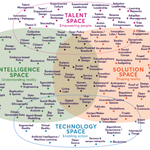
We've always been proud of this for showing just how many innovation approaches exist out there in the world

This Post is from an account that no longer exists. Learn more
"an overview of innovation methods and approaches that help people make sense of reality" states-of-change.org/resourc…