

I'm a doctor dedicated to improving health and cancer care. Trust, learn, collaborate. Neutral good. He/him. עם ישראל חי
Manchester, NH
Joined November 2009
- Tweets109K
- Following5K
- Followers19.5K
- Likes80.4K








Matthew Katz, MD 🇺🇸🟦 retweeted

AI-induced never-skilling in medical education
nature.com/articles/s41591-0… via @nliulab et al


Matthew Katz, MD 🇺🇸🟦 retweeted

1/24
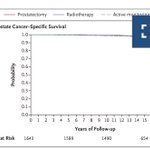
New EviCore #radonc changes drop this wk
Guidelines expand IMRT, add selected dz coverage, tighten some eligibility criteria/fx limits, relax several planning restrictions
The biggest overhaul is in nonmalignant disease (HUGE number of conditions get non-covered!)
🧵
Matthew Katz, MD 🇺🇸🟦 retweeted

Planning SBRT in MDACC, we have always SIB GTV another spicy 20% of PTV prescription dose.

🌶️🌶️ A journal preprint demonstrates what's possible with lung SBRT as long as the prescription is Spicy enough. This is why all my prescriptions have a Dmin of 125% within the IGTV. @HoppeBrad advancesradonc.org/article/S…


Matthew Katz, MD 🇺🇸🟦 retweeted

A truly disturbing report on the administration's effort to politicize and dismantle the scientific infrastructure in the US. This should be concerning to all who care about the health of their loved ones, all businesses concerned with the welfare of their employees and their future products, and all those who care about the long term economic and military strength of America.
Free link below:
nytimes.com/2026/10/31/clima…

Matthew Katz, MD 🇺🇸🟦 retweeted

🫁🌶️ SPICE-ing up lung SBRT
Intentional tumor 🔥hotspot (PTV Dmax ≥120%) vs <120% in VMAT SBRT for early-stage NSCLC
3-year local recurrence rates:
🔥0% with ≥120% hotspot
🧊8-9% with <120% hotspot
📚 Not a novel concept. Prior work has suggested that higher intratumoral dose improves local control!
✅ What this study contributes is additional clinical evidence, plus a practical planning strategy (SPICE: Stereotactic Planning with Intentional Central Escalation).
⚠️ No PFS or OS advantage seen.
🎯Take-home: Another data point supporting intentional hotspot escalation in lung SBRT, rather than proof of a brand-new concept
@ASTRO_org
advancesradonc.org/article/S…


Today was Safari themed cancer care for Halloween @ElliotHealthSys such a fun group of people to work with, they even got something I could wear! 💙 #radonc


Matthew Katz, MD 🇺🇸🟦 retweeted

The spread of gram-negative antimicrobial resistance is driven by human, environmental, and other factors. Pranita D. Tamma, MD, reviews clinically important pathogens, mechanisms driving resistance, and strategies for treatment.
Read the Review Article “Gram-Negative Bacterial Resistance”: nej.md/4yIbmfe

ALT An illustrated diagram from the Review Article "Gram-Negative Bacterial Resistance" that shows a representative gram-negative bacterial cell and the principal mechanisms of antibiotic activity and resistance. Panel A is labeled "Antibiotic Mechanisms against Gram-Negative Bacteria." Panel B is labeled "Gram-Negative Bacteria Resistance Mechanisms against Antibiotics."
Matthew Katz, MD 🇺🇸🟦 retweeted

The audacity 😱
#UCL
Matthew Katz, MD 🇺🇸🟦 retweeted

A few notes on the Israeli elections:
- Ignore the early partial counts: Voting tally speed varies significantly across the country, for instance, results from many Arab towns are still pending. In the latest update of tallies Raam gained 2 more seats. The final votes to be counted are the "double envelopes" (primarily around 150,000 soldiers and active-duty reservists). Because this group is demographically distinct from the general population, with negligible Haredi and Arab representation, their votes typically cause late shifts in seat distribution.
- Exit poll adjustments: Overnight, TV networks updated their exit polls using real results from sample polling stations to adjust for late voters and those who misled pollsters. This shifted roughly three seats in favor of the Netanyahu bloc. Still, he remains short of the 61-seat majority needed to form a government.
- The leaders of the 3 of the opposition parties, Eisenkott, Bennet and Lieberman, have to break one of their core campaign promises, or Israel will head to another election in six months. In the interim, Netanyahu would remain caretaker PM leading a minority in the Knesset, which could allow the opposition majority to pass key legislation, including establishing a State Commission of Inquiry into the failures that led to the October 7th massacre.
- Netanyahu's strategy: The core promises from these three leaders were to exclude Netanyahu, exclude Arab parties, and exclude Haredi parties from a coalition. Netanyahu’s "victory" speech and political track record indicate he will not abandon his ultra-Orthodox alliance. Instead, he aims to pressure right-leaning opposition leaders to abandon their principles and join his government on his terms (much as Benny Gantz did previously, destroying his own political credibility).
- The consequences of racism: Netanyahu, the Right, and their media ecosystem have systematically delegitimized Arab political participation or reliance on Arab party votes. Currently, "The Democrats" is the only opposition party advocating for a joint Jewish-Arab coalition. The three right/centrist opposition leaders who reject Arab inclusion must now decide: bow to Netanyahu's narrative, thereby depriving themselves of power and giving Bibi another shot to win the elections in 6 months, or cooperate with Arab parties to have them support the government from the opposition. Such a government won't be stable, but it could get important things done for all of Israel's citizens.
Matthew Katz, MD 🇺🇸🟦 retweeted

It’s very exciting to be in Israel as it goes to the polls today.
This thread explains the complexity of how it works here in Israel and why we may not see a winner for some time.
Israelis use proportional representation. In many ways this is the purest form of democracy - and it’s a model Andy Burnham wants to replicate.
But Israel is also an example of its flaws: it allows in extremists, can be extremely fragile and means certain blocks are only interested in protecting their own narrow base.

Matthew Katz, MD 🇺🇸🟦 retweeted

This paper answers why you can't think straight even when you're not touching your phone.
Researchers from UT Austin and UC San Diego published a paper that explains every unfinished task, every reread paragraph, and every afternoon that vanished.
It's called "Brain Drain."
they took 520 people and gave them tests of memory and problem solving.
the only difference was where their phone was.
on the desk, face down. in their pocket or bag. or in another room.
every phone was on silent. no buzzing. no notifications.
And the results are wild.
the people whose phones were in another room did significantly better than the people whose phones sat face down on the desk.
the closer the phone, the worse they scored.
then they ran it again and made half of them turn their phones completely off.
it didn't matter.
off and face down on the desk still drained the brain.
the paper revealed a brutal paradox:
most people said they weren't thinking about their phone at all.
75.9% said its location didn't affect their performance "at all."
they were wrong.
your brain spends energy just to not pick it up. a quiet, constant effort to ignore the most interesting object in the room.
that effort comes from the same tank you use to think.
and the more dependent people were on their phones, the bigger the hit.
you are not distracted because you're weak.
you are distracted because the most powerful attention machine ever built is sitting three inches from your hand.
the fix is almost insultingly simple.
put it in another room.

Matthew Katz, MD 🇺🇸🟦 retweeted

It's definitely an interesting concept, and we do need to test a variety of RT de-escalation concepts for robust responders after neoadjuvant IO... but we really need long-term follow-up and careful patterns-of-failure data.
Induction chemotherapy by itself can lead to very impressive - but not necessarily durable - pathologic responses, and so it is difficult to distill out the depth of an immune response from cytoreduction due to chemotherapy.
In Zinner et al (CCR 2026), 8 patients had an mPR/pCR at the primary site and did not receive PORT for whatever reason, and 6 had a local and/or regional recurrence. So there is a risk that the path response with chemo-IO is a "fake-out" in some non-trivial number of cases.
Matthew Katz, MD 🇺🇸🟦 retweeted

These results are absolutely astounding.
This should give us enthusiasm to study more IT targeted therapies.
I do need to understand in this trial who got concurrent TDxd as this is likely contributing to results.
#ESMO26

IT trastuzumab and pertuzumab for HER2+ LMD
(Pts could continue treatment with HER2-directed systemic therapy)
@OncoAlert #ESMO26

Matthew Katz, MD 🇺🇸🟦 retweeted

Clinicians’ Over-reliance on incorrect AI findings and Under-reliance on correct AI findings @LancetDigitalH thelancet.com/journals/landi…

Matthew Katz, MD 🇺🇸🟦 retweeted

Happy to share that our multicenter, randomized, sham-controlled phase II trial of low-dose whole-brain radiotherapy in mild-moderate Alzheimer’s disease is now published in Radiotherapy & Oncology!
Why we did it: LDRT reduced amyloid and neuroinflammation in AD mouse models. Our two dose arms came from early human reports: a CT-dose case report (0.04 Gy; Cuttler et al., 2016) and a single-arm pilot (0.5 Gy; Kim et al., ROJ 2023). Neither had a control group.
What we did: 41 amyloid-PET+ patients were randomized to sham, 0.24 Gy, or 3 Gy (6 fractions over 3 weeks), on top of standard medication.
What we found:
- 6-month ADAS-cog (primary endpoint) was not met
- 12 months (exploratory), −5.4 points with 3 Gy (nominal p = 0.044), though findings were not consistent across other outcomes. No treatment-related adverse events.
What’s next: LDRT was safe, but efficacy is not established. Larger, adequately powered trials with longer follow-up are needed, and we look forward to LDRT-MIND from Dr. Evan Thomas, which will add more robust data and explore maintenance.
Grateful to our patients, and co-investigators across three centers.
🔗 doi.org/10.1016/j.radonc.202…
#Alzheimers #LowDoseRT #ClinicalTrial @EvanThomas84 @jryckman3

Matthew Katz, MD 🇺🇸🟦 retweeted

Some feel good news.
Robert Kraft’s Blue Square gala pulls in $32 million.
Tom Brady, Jon Bon Jovi and leaders from business and faith communities were among those supporting the effort.
The initiative focuses on combating antisemitism and encouraging people outside the Jewish community to actively oppose anti-Jewish hatred.
jewishinsider.com/2026/10/ro…

Matthew Katz, MD 🇺🇸🟦 retweeted

MASTERPLAN full publication is out!!
The RT volumes are worth a closer look. CTV = primary GTV + nodal GTV + tumour-vessel interface. The TVI extends 5 mm proximally and 5 mm distally along involved/closely adjacent vessels, for patients where surgery is likely. PTV = CTV/ITV + 5 mm. No elective nodal irradiation, and no elective perineural or celiac/SMA plexus volume specified in the protocol. That is a focused target, with gross nodal disease included.
Real-time RTQA is a big part of this story. Review identified 36 major planning deviations in 12 patients, reduced to 2 deviations in 2 patients after QA. All plans passed independent review before treatment. As a radiation oncologist, I want that detail alongside the outcomes. Reproducing the treatment means reproducing the contour review, OAR constraints and image guidance too.
Also worth keeping the treatment delivery denominator in view: only 40/49 patients assigned to SBRT actually received it (82%). The efficacy analysis is intention-to-treat. It should not be read as an outcome series of patients who all completed SBRT.
The surgical numbers need some unpacking. All comparisons below are chemo + SBRT vs chemo alone:
✅ Underwent surgery: 62% vs 44% (29/47 vs 11/25).
✅ Completed resection: 53% vs 44% (25/47 vs 11/25).
✅ R0 among all resected patients: 52% vs 36% (13/25 vs 4/11).
✅ R0 in the resected POPC subset: 62% vs 40% (13/21 vs 4/10).
POPC is the potentially operable cohort. So the 62% surgery figure includes exploration without resection, while the 62% R0 figure applies only to resected POPC patients. These are different endpoints with different denominators. None of those between-arm surgical comparisons was statistically significant. The paper also defines R0 as more than 1 mm clearance.
Adjuvant chemo is another important difference: 80% vs 36% of resected patients received it (20/25 vs 4/11). That complicates attribution within the treatment pathway. Early progression in the control group may have contributed, so this is a post-randomisation imbalance with more than one possible explanation. The post-hoc analyses were directionally consistent, but the authors explicitly caution about selection bias.
For the planning details: PTV_EVAL excluded the GI PRVs, with a minimum 3 mm PRV expansion. OAR constraints took priority over target coverage. Duodenum, stomach and small bowel D0.5cc were each constrained to <33 Gy, with V30 <5 cc. Delivery used standard linacs; breath hold was recommended, and fiducials were placed in 35/40 patients (88%). This is relevant to how we would implement the approach in practice.
With no elective nodes, isolated regional nodal relapse was 4% vs 8% (2/49 vs 2/25). Reassuring, although that does not establish the optimal elective volume (especially considering these patients went to surgery - ASTRO/NRG recommends inclusion of elective perineural coverage). Overall G3+ AEs were 70% vs 64% (33/47 vs 16/25). One G3 pancreatitis and one G2 small bowel obstruction were attributed to SBRT. The practical takeaway for me is to keep the target definition and prospective QA attached to the results, and to be precise about what the surgery and R0 numbers actually measure.

Matthew Katz, MD 🇺🇸🟦 retweeted
🚨SANO 5y: surveillance vs surgery after cCR
OS 50% vs 54% (NS)
Distant mets 46% vs 29% (P<.01)
Reminder: only 41.4 Gy/23 fx, a pre-op, arguably non-definitive dose, especially with/ ~75% adenocarcinoma.
Nonsignificant OS doesn't establish noninferiority.
#ESMO26 #RadOnc #OncTwitter

Matthew Katz, MD 🇺🇸🟦 retweeted

When you type an unpublished idea into a chatbot or coding agent, could it end up being used by the company that built the model—or a rival who asks the right question a year later? And what can you do to reduce the risk?
No setting makes a chatbot fully private, but experts suggest steps that can make leaks much less likely: scim.ag/4sihqtz

ALT Could your chatbot tip off a scientific rival? It’s possible, researchers say
Matthew Katz, MD 🇺🇸🟦 retweeted

So thrilled to share in this work with @DrJennyReese and our team!

Excited to get the word out about our SHIFT course to train hem-onc fellows in discussing sexual health at #ASCOQLTY26 Keep an eye out for the pub in the works and the next step…disseminating this more widely
ascopubs.org/doi/abs/10.1200…
