
Neurointensivist/ Asso Professor ICU EEGer/ Director of Academic Affairs -Neuro / NCC Fellowship Director @UNMC @UNMCCOM

Omaha, NE
Joined April 2020
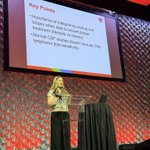
Excellent trainee oral presentations at the Annual Nebraska Neurological Society 2026 @NENeuroSociety @AANmember @NeurologyUNMC @UNMC_neurology @ChildrensNE
1
2
226
Great conference notes !!!
2
183
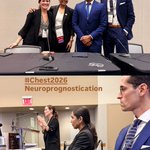
#Neuroprognostication w/ a great group at #CHEST2026. Great Q&A & discussions. A reminder of how far we’ve come, how much more we need to learn & the impact of our decisions on pts & families at critical moments.@caseyalbin @drdangayach @UNMC_neurology
1
1
11
863
Great catching up with our @UNMC_PCCM faculty & fellows at #CHEST2026. Such a fun and talented group to work with in the ICU. Impressive talks and posters. Proud to see them doing so well. @UNMCCOM @UNMCIMResidency
2
12
634
Great talk at #Chest2026 , Death by Neurological Criteria: Challenging Cases Monday, October 19 4:00 PM – 5:30 PM MST @drdangayach @JackieKraft4
2
9
353
The University of Nebraska Board of Regents approved a revised program statement that expands the scope and scale of Project Health during its meeting on Friday. Learn more: buff.ly/Ma12sB1
3
10
792
The Nebraska Neurological Society invites you to their 2026 Annual Meeting on Saturday, October 24th from 2:30 - 8:00 pm at the Scott Hall in the Holland Center, 1200 Douglas Street, Omaha. Register for the meeting: neneurosociety.org/2026-fall…
2
3
279
Congratulations to Dr. @SubinMatthews on his recent and well-deserved promotion from Assistant Professor to Associate Professor in @UNMC_neurology! We are proud of you and wish you nothing but the best in your new promotion! @UNMCCOM @unmc
3
2
24
994
🫀 The Most Dangerous Moment in the ICU May Last Less Than 60 Seconds We often think of tracheal intubation as an airway procedure. Physiologically, it is a profound cardiovascular intervention. Why Do ICU Patients Crash During Intubation? The problem begins before the laryngoscope enters the mouth. Many critically ill patients survive on a fragile compensatory state characterized by: 🔹 Endogenous catecholamine surge 🔹 Tachycardia 🔹 Vasoconstriction 🔹 Increased myocardial oxygen demand What appears to be "stable" hemodynamics may actually represent physiological exhaustion. The moment induction drugs are administered, this compensatory sympathetic drive disappears. The result? A sudden reduction in: • Systemic vascular resistance • Cardiac output • Coronary perfusion pressure • Organ blood flow This phenomenon has been termed adrenergic collapse. Intubation Is a Hemodynamic Timeline The authors propose viewing intubation as a sequence of cumulative threats rather than a single procedure: 1️⃣ Pre-induction adrenergic dependence 2️⃣ Sympatholysis after induction 3️⃣ Apnea, hypoxemia, hypercapnia, and acidosis 4️⃣ Transition to positive-pressure ventilation 5️⃣ Post-intubation ventilator and sedation effects Each phase adds physiological stress. Together, they can culminate in cardiovascular collapse. The Propofol Question One of the most clinically relevant findings is the growing evidence regarding induction agent selection. In the INTUBE cohort, propofol was associated with a higher risk of cardiovascular collapse and was the only modifiable risk factor consistently identified. The review therefore suggests: ✅ Ketamine ✅ Etomidate as preferred induction agents in patients at risk of hemodynamic instability, while propofol should be used cautiously in shock states. Positive Pressure Ventilation: The Forgotten Hemodynamic Challenge Once the tube is secured, many clinicians relax. The physiology is only beginning. Positive-pressure ventilation: 🔹 Reduces venous return 🔹 Increases intrathoracic pressure 🔹 Raises right ventricular afterload 🔹 May precipitate right ventricular failure This is particularly relevant in ARDS, pulmonary hypertension, pulmonary embolism, and severe hypoxemic respiratory failure. Reference 📚 Kotani Y, Koroki T, Hayashi Y, Russotto V. The hemodynamics of tracheal intubation in critically ill patients: a narrative review. Journal of Intensive Care. 2026;14:42. DOI: 10.1186/s40560-026-00877-4.
3
100
1
271
12,034
🧠🫁 In neurocritical care, extubation is not simply a respiratory decision. It is a brain protection strategy. The article proposes an important shift: Weaning in neurocritical patients should not only evaluate: ✅ oxygenation ✅ ventilation ✅ secretion management but also: 🧠 neurological stability 🧠 intracranial pressure dynamics 🧠 cerebral perfusion 🧠 delirium prevention 🧠 neuroinflammatory risk One of the strongest messages of this review is that: Mechanical ventilation is not biologically neutral for the brain. The review summarizes emerging evidence showing that ventilator induced lung injury (VILI) may trigger systemic cytokine cascades involving: ⚠️ IL 1 ⚠️ IL 6 ⚠️ TNF α ⚠️ NF κB activation with potential downstream neuroinflammation and secondary brain injury. Particularly interesting is the discussion around: 🧠 IL 6 mediated neuroinflammation 🧠 microglial activation 🧠 post extubation delirium 🧠 long term cognitive impairment after prolonged ventilation The review also highlights an uncomfortable clinical reality: 📌 Failed extubation in neurocritical patients is not a benign event. It is associated with: • increased mortality • longer ICU stay • higher pneumonia rates • prolonged mechanical ventilation • higher tracheostomy rates One of the most valuable contributions is the proposed CAPREVI algorithm. Rather than asking: “Can this patient breathe?” the algorithm asks: 🧠 “Is the brain stable enough to tolerate extubation?” That distinction is fundamental. The proposed framework integrates: • neurological stability • ICP considerations • airway secretion control • hemodynamic status • delirium prevention • sedation optimization • respiratory muscle strength • spontaneous breathing trials • multimodal neuromonitoring Another highly important point: ⚠️ traditional ICU weaning protocols may inadequately account for cerebral vulnerability. This is particularly relevant in: • severe TBI • SAH • ICH • neuro postoperative patients • prolonged neuro ICU admissions The review also appropriately emphasizes resource limited settings. Advanced multimodal neuromonitoring is ideal, but neuroprotection can still be approached systematically using: 📌 bedside clinical examination 📌 airway evaluation 📌 ultrasound 📌 CT imaging 📌 structured neurological assessment Perhaps the most important conceptual takeaway is this: 🧠 Extubation failure in neurocritical care may itself constitute a form of secondary brain injury. And that changes how we should think about ventilator liberation in this population. Modern neurocritical care increasingly requires us to stop separating: 🫁 lung physiology from 🧠 brain physiology because critically ill patients experience both simultaneously. 📖 Zarra F,. Brain Circulation. 2026. DOI: 10.4103/bc.bc_10_26
1
36
2
122
5,261
This review considers pathophysiology & natural history of malignant MCA stroke, indications for DHC, technical considerations of craniectomy & cranioplasty, & importance of clear communication in shared decision-making.🧠 shorturl.at/ey69g #SCCMNeuro #NeuroICU #NeuroX
1
9
14
988
MRI patterns in Autoimmune encephalitis
4
222
3
949
103,586
🧠⚡ EEG may be one of the most underused monitoring tools in modern intensive care. This new 2026 perspective in Critical Care argues something provocative: EEG should evolve from a specialist diagnostic test into a true bedside monitoring system for intensivists. The paper highlights a reality we face daily in ICU: Many critically ill patients develop: • delirium • non convulsive seizures • metabolic encephalopathy • hypoxic ischemic injury • sedation related cortical suppression Yet much of this cerebral dysfunction remains clinically invisible. Especially in: ⚠️ sedated ⚠️ mechanically ventilated ⚠️ unconscious patients Clinical examination alone is often insufficient. One of the strongest points of the article: The authors argue EEG should follow the same trajectory as: 📌 bedside echocardiography 📌 lung ultrasound Not every intensivist needs to become a neurophysiologist. But intensivists should learn to recognize: • background suppression • asymmetry • burst suppression • epileptiform activity In the same way we identify: • RV failure • tamponade • B lines • pneumothorax This is a major conceptual shift. The proposed model is particularly interesting. The authors describe a tiered EEG system: 🟢 simple bedside alarms for nurses 🟡 simplified interpretation for ICU physicians 🔵 qEEG trend analysis for trained intensivists 🔴 full raw EEG interpretation for neurophysiologists Combined with: 🤖 AI assisted pattern recognition The objective is not replacing experts. The objective is: faster recognition of dangerous brain physiology. One of the most important messages: Current ICU monitoring focuses heavily on: • blood pressure • oxygenation • cardiac output • ventilation But often ignores the organ we are ultimately trying to protect: 🧠 the brain. EEG may become the missing physiological layer of multimodal ICU monitoring. The article also raises a very practical concern: alarm fatigue. If EEG systems generate excessive false positives, ICU staff will rapidly ignore them. This is where AI may become transformative: continuous surveillance without fatigue. Particularly fascinating is the potential future of: 📡 point of care EEG 📡 emergency department EEG 📡 prehospital EEG 📡 tele neurophysiology Imagine: an ambulance transmitting simplified cerebral activity before hospital arrival. That possibility no longer sounds futuristic. My personal takeaway: Critical care spent decades refining cardiovascular monitoring. The next frontier may be: continuous functional brain monitoring. Not simply detecting seizures. But integrating cerebral physiology into real time ICU decision making. 📖 Reference Taccone, F. S., Critical Care, 30, 195. doi.org/10.1186/s13054-026-0…
1
50
165
7,278
Presenting at the Emirates Critical Care Conference 2026 🇦🇪 ,in the country where I spent 19 years of my life and childhood — feels incredibly special. From attending my first critical care conference here to presenting at one today…. Surreal. #ECCC2026 #CriticalCare
1
5
481
A structured overview of Autoimmune Central Nervous System (CNS) disorders, categorizing them based on the presence and type of associated antibodies. nature.com/articles/s41582-0…
55
158
7,144
Incredible energy and enthusiasm on display at American Academy of Neurology this year by @UNMCCOM medical students and residents, their research, curiosity, and drive to push the boundaries of neuroscience are truly inspiring 👏@UNMC_neurology
1
4
523
Airway management in critically ill children, what clinicians and searchers must know CCR Journal Watch criticalcarereviews.com/late…
12
34
2,187
Huge shoutout to Mathias Maisenbacher, MD for the dedication and hard work behind an impressive poster presentation @NeurologyUNMC @UNMC_neurology @AANmember #AANAM 2026
1
9
454
The invisible emergencies: metabolic and neuro-critical disorders often missed in the pediatric ED — a narrative review CCR Journal Watch criticalcarereviews.com/late…
11
1
37
2,879
New online! Glymphatic dysfunction: a unifying hypothesis for delirium dlvr.it/TRn6vt
2
74
6
221
15,123