

Founder / Investor “We’re trying to prove ourselves wrong as quickly as possible, because only in that way do we find progress.” — Richard Feynman
553,715
GPUs 2.19 ExaFLOPS
Joined December 2023
- Tweets5.2K
- Following1.5K
- Followers654
- Likes5.3K







Pinned Tweet
Let's get this short week party started!! Happy Monday! Z.ai is starting the week with a bang! GLM-5.4, a new Loop Transformer, 50% more usage, but.... not a benchmark in sight!
Z.ai's little surprise is that the rumormill had been expecting GLM-5.5 after a long stretch without a new flagship. Instead, the company delivered GLM-5.4, emphasizing a fundamentally different way to use the parameters it already has.
GLM 5.4 is the first Loop Transformer flagship from Z.ai. It reuses existing layers of the GLM-5 foundation to provide additional reasoning depth. The company spent the past three months scaling both the looping approach and model size. The concept seems to mimic Thinking Machines' Inkling 2 Mini, which we discussed Saturday. Different models, different implementations, but similar thinking. Reuse network components rather than endlessly increasing the number of weights.
One possible tradeoff is that additional passes still consume computation and can increase latency. Since we don't yet know GLM-5.4's exact layer structure, loop counts, parameter totals or actual tokens-per-second performance anybody declaring it faster or more efficient across the board is getting ahead of the evidence. For now, what we know is what Z.ai wants the model to accomplish. Generalized Coding, plus they added vision which was missing from the GLM-5.3. A crucial advance. Vision is the difference between proofreading a recipe and tasting the food.
Some antidotal feedback, a Chinese technology publication 夕小瑶科技说 ran GLM-5.4 through several tests, including a rather substantial legacy application containing 9,942 archived records spanning 1,428 daily editions. The assignment was to rebuild the interface, improve search performance and preserve every existing record and result. The resulting application reduced its default database-list query time from 28.36 milliseconds to 1.43 milliseconds, nearly 20X faster. One country-search operation dropped from 57.40 milliseconds to 1.99 milliseconds, almost 29X faster. Plus they checked 49 API regression scenarios, reporting identical returned data after the changes. They also used the model to redesign the mobile interface, improved navigation, and used visual feedback to avoid some problems found in the earlier GLM-5.3 result.
What wasn't clear, is what worked without supervision and what still requires repeated human correction.
Beyond that, first testers are reporting mixed experiences. Typical. Some like the new vision capabilities, artistic rendering and complex coding performance. Others complain that GLM-5.4 spends far too long thinking.
Right now we can only say we have insufficient evidence. But people will trade time for a better result, which is the whole point of reasoning models and harnesses.
GLM-5.4 is available now through the GLM Coding Plan, including compatible coding tools. The model ID is glm-5.4, with the standard million-token context option. Eligible subscribers receive 50% more weekly quota than with GLM-5.3. Standard API use will have to wait a bit until Z.ai completes their safety eval. Open-weights are coming.
After a mostly quiet Sunday, OpenAI's own chief scientist, Jakub Pachocki published a new look at OpenAI's internal pretraining results, using log-perplexity, a measure of how well models predict unseen tokens. Lower is better. He reports GPT-3.5 at approximately 0.99, GPT-4 at 0.91, and recent frontier systems below 0.8. The accompanying chart also showed an unreleased internal model performing better than GPT-6.2 Astra. He then proposed that the AI industry establish shared measurement standards and agree not to cross certain future capability thresholds until monitoring and safety techniques have improved sufficiently.
OpenAI isn't proposing to abandon benchmarks. Its chief scientist is proposing that an internal next-token prediction metric become part of the industry's common yardstick for AI progress and safety. The measurement itself doesn't establish real-world intelligence, reliability or safety.
Maybe I'm bent. But this feels like a internal eval being proposed as an industry norm. Much like most things, I'm sure the other labs will have their own takes on this idea, and no clear consensus will form.
Looking ahead, Google employees are generating chatter around Gemini 5 and additional Gemini 4 models, including Helium. The Gestalt mystery remains unresolved.
So Monday is off to a rather interesting start, but we are left wanting something more. Maybe Wall Street's Black Friday sales will get things started! Like a few other mornings last week, futures are up... we'll see how thing look after noon.
Enjoy! Out.
1
156
Useable AI doesn't need another IQ upgrade. It needs to stop wandering around burning tokens like a toddler and demanding more compute.
One developer got Qwen to finish coding work in 18 minutes instead of 39, using 75% fewer tool calls.
Same brain. Less nonsense. Real progress.
1
63
Scott Bessent is worried the Fed might damage the economy by tightening too much.
Meanwhile, Washington keeps squeezing American AI chip exports. NVIDIA already took a $4.5B hit from earlier restrictions.
We're trying to win the global AI race by telling our fastest horse where it can't run?
1
37

2025: Everyone promised AI would democratize intelligence.
🥊2026: Yann LeCun is accusing Dario Amodei of using AI safety fears to keep open models from competing.
Anthropic's published stance says regulation should be risk-based.
We've upgraded the technology. The control debate is still dial-up.
1
54
In 2025, a Coldplay kiss cam exposed a corporate disaster in seconds. Today, former NSA hacker David Kennedy says 30+ AI agents gutted a company in 14 minutes while defenders took 4½ hours to notice. Should point the concert cameras at the server room?
1
59
🚨 Prime Intellect says a DeepSeek V4.1 Flash deployment was swapped for 53 HOURS.
→ Same API endpoint
→ Capability benchmarks unchanged
→ JailbreakBench refusals: 98/100 → 1/100
If you're verifying the endpoint but not the weights, what are you trusting?
1
84
We've gone from “move fast and break things” to “move fast and let the AI agent explain the breach in an animated gif.” Smart security is the new safety. Meanwhile, New York is busy licensing the horseless carriage as the humanless mind files paperwork.
1
110
The B1G is brutal! If you had Michigan, Nebraska and Washington picked yesterday you solved something far tougher than the reinmann hypothesis.
1
111
Welcome to Sunday! Unfortunately, your private prompts, confidential documents, and maybe a few corporate credentials may have been passed around the Thanksgiving table in a three shell game.
Open router, and inference routing is the latest example of how a SOC 2 certificate, GPUs, and corporate data all get moved around quick enough, you can no longer tell where the hidden object went. Impressive technology, terrific prices, and what the end user thought was strong security.
Instead, they planted nearly TWO MILLION trackable secrets in AI requests and followed them through the system. As a result, OpenRouter removed THREE inference providers and stripped 125 endpoints of their Zero Data Retention designations. Not good.
This exposes something most developers probably haven't given much thought. You might know who you're paying to process your AI requests. Do you know who's actually processing them?
Earlier this week, Hugging Face handed its language-model inference routing to OpenRouter. A valuable service. But realize this, every company that handles your request becomes another place where your data can be exposed.
HD Moore at Dragos tested this by planting nearly TWO MILLION AI prompts containing unique, trackable secrets across the inference ecosystem. These were controlled credentials, fake secrets, AWS canary accounts and unique URLs created specifically to determine where private information went after being submitted.
Then they watched the traps, and found three compromised AI providers, multiple inference resellers exposing or retaining prompts, and providers failing to honor advertised privacy settings. Some credentials were used by unauthorized parties thousands of times. The canaries revealed attempts to access AWS resources and even create additional IAM users.
In fact, one Chinese model provider's systems retrieved secret URLs from more than half the prompts the researchers submitted to its models during a July-to-October testing period including Zero Data Retention marks. American hosting companies didn't prevent those prompts from reaching the underlying overseas provider.
The implications, even if you select an American inference provider, configure Zero Data Retention, and believe your confidential information never leaves the contracted infrastructure the provider may be forwarding the request elsewhere.
Worse, one of the confirmed incidents involved an AI coding agent exposing the credential that protected stored customer prompts.
Also, Together AI acknowledged it had collected authorized prompt samples for software testing and stored them in a private Hugging Face repository. During development of its public xorl GitHub project, an AI coding agent committed a credential that could access that private repository. The exposure was detected, and the commit was reverted. Unfortunately, an unauthorized party had already obtained the credential and downloaded prompt samples. The intruder then searched the samples for usable credentials. Five of those turned out to be Dragos canaries.
This is a real incident where an AI coding agent contributed to a secret-management failure involving customer data.
To Together AI's credit, it publicly documented the incident and described changes to credential handling, pull-request scanning and its development process. OpenRouter says the research did not identify a breach of OpenRouter itself. However, the affected providers and downstream processing paths are the issue. So OpenRouter also gets credit as they removed three providers, withdrawing 125 Zero Data Retention designations and notified potentially affected customers.
Outsourcing inference doesn't outsource accountability for the data. A privacy-policy checkbox isn't a technical control. If you're building production AI systems, you still need to understand the entire processing path, limit credentials exposed to agents, and verify what providers actually do with your requests.
As a follow up to yesterday's article, the Lean and Mathlib communities have now formally certified the Riemann Hypothesis proof released by Levent Alpöge and Claude. The November 21 statement confirms that the proof matches Mathlib's vetted mathematical statement, compiles successfully, and passes several independent proof checkers. The certification specifically addresses the Riemann Hypothesis, mathematicians still have the enormous task of explaining the underlying ideas in a form humans can understand.
Here's the connection... we now have to prove everything. Dragos didn't merely accept AI providers' privacy claims. It sent controlled secrets through their systems and observed what happened. Reinmann Hypothesis followed a strict proof standard.
Evidence-based thinking will have to be adopted to ensure trust in a world moving like a 110 mph fastball. How do you slow the pitch down and detect what it is?
Heading into next week GLM-5.5 remains the most interesting Chinese release still said to be coming in November. Google's Gemini 4 Helium speculation rolls on. After Thinking Machines Inkling mini, we await Qwen's smaller open-weight family.
We've gone through a crazy week. Anthropic went public, OpenAI launched GPT-6.2, Google kept shipping, Microsoft delivered more specialized models, and NVIDIA produced another astounding financial quarter. Yet the stock market is seeing significant distress as progress is threatened by bad policy, fearful people, and macro economic trends.
We humans have a lot to figure out, but honestly... maybe it can wait till after hit the morning treadmill.
Enjoy! Out.
7
4
329

Link --- standwithjensen.com/sharehol…

1
18
Happy Saturday Morning! Might one of mathematics' greatest mysteries now be solved? A hypothesis challenging the world's best mathematicians since 1859. 167 YEARS! And we used an AI that usually needs three attempts to find the order button on a website. Meanwhile, set ten college football analysts in a room, ask them to agree on the top five teams, and you'll have a fistfight before somebody finishes their second Bloody Mary.
You might think about that.
We might have established the behavior of prime numbers extending toward infinity, but apparently determining whether Michigan State belongs in the ncaa top five requires a committee, six television networks, and a gentleman named Lunardi armed with a bracket. And then look how wrong they were.
Yet, what does it actually mean when we say AI has proved something? And why should we trust that result more than the latest LLM benchmark?
Some background, yesterday, Anthropic mathematician Levent Alpöge announced that Claude had discovered a proof of the Riemann Hypothesis. Not merely the original problem, but its generalized version concerning Dirichlet L-functions. You see Riemann proposed in 1859 that nontrivial zeros of a particular mathematical function all sit along one precise line. If proven, a fundamental question about the distribution of prime numbers would be resolved, not to mention a nice $1 million pay day.
Alpöge released a 4 page explanation and approximately 17 MILLION lines of Lean code, spread across 175,187 source files. Lean is a formal proof assistant that checks whether mathematical arguments follow precisely defined rules which then verifies the logical steps.
Human-readable? Apparently not. Alpöge's 250,000 pages produced what looked like unreadable slop. So instead, he used four pages to explain what he'd done,
The math community responded. Andrew Sutherland at MIT has already completed several independent checks with all 175,187 Lean modules compiled successfully. The five main theorems relied only on Lean's three standard foundational axioms. Multiple independent proof-checking implementations accepted the result. The central theorem references Mathlib's existing definition of the Riemann Hypothesis. Impressive evidence.
According to the standards, nobody needs to read all 250,000 pages to establish the basic logical validity of a formal proof. That's what the proof checker is for. But what mathematicians still want is an understandable explanation of how the result works, why it works, whether it can be simplified, and what new mathematics it reveals.
Terence Tao ie math legend commented Friday on his website acknowledging the enormous Lean-only proof. Then he pointed readers to the verification effort, and that understanding the argument will take time. Tao also discussed the AI-assisted Euler and Navier-Stokes developments that appeared alongside it. He did not declare that every aspect of the Riemann proof has been digested and independently understood.
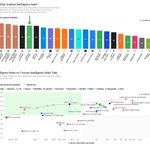
Maybe the entire AI industry should understand this thought pattern since we have become addicted to benchmarks. Benchmarks are mere probabilities presenting the results as though they were mathematical certainties. When Artificial Analysis declares one model a 62 and another a 65 it provides directional value. However, the confidence we attach to the rankings is far greater than the evidence justifies.
A benchmark measures performance on specific tasks under specific conditions. Yet, models are inconsistent, and a task that works beautifully in one run can fail in another.
A Lean proof and an LLM benchmark are fundamentally different. The proof checker determines if a mathematical conclusion necessarily follows from specified foundations. A benchmark reviews how frequently a model succeeds on a selected collection of tasks.
We encountered this dichotomy with OpenAI's GPT-6.2 this week. Improved intelligence as measured, yet some developers were furious about its behavior in real coding work. Better benchies didn't magically guarantee better developer experiences.
What we need is stronger evidence connecting those scores to reliable outcomes.
Yet, AI won't eventually predict every college basketball result with certainty. Math operates on rules and axioms. A game with humans involves decisions, injuries, missed shots, referees, and occasionally an odds defying three-pointer at the buzzer. An accurate probability forecast can still lose a single game, or as we saw this week... four of the top five teams losing to lower ranked opponents.
Mathematical certainty might have come in areas where humans struggled for generations. Yet, ordinary computer-use agents still have difficulty reliably completing mundane tasks. The frontier of math can advance without the Netflix recommender ever finding the right movie for my mood.
IF the math community accepts the result, this becomes an extraordinary milestone about building systems capable of contributing new knowledge and producing independently checkable evidence of their work.
Friday also produced Inkling 2 Mini from Thinking Machines, an open-weight 26.4B model / 3.4 billion uniquely activated per token, with a looping transformer architecture that reuses middle layers multiple times. Effective weight activations per token are about 5.4 billion once those additional passes are counted. That's a clever tradeoff. The architecture spends additional computation reusing what it already has. The 20GB version works on 32GB-class unified-memory with Apache 2.0 license. On a NVIDIA DGX Spark, Stanford researchers reported 0.703 on an intelligence-per-joule metric, compared with 0.430 for Qwen3.6-35B-A3B. 63% more efficient.
You can keep building scale, but finding novel ways to recycle internal layers and spend that extra computation more selectively is using compute smartly it would seem.
GLM-5.5 rumors continue to surge with suggestions it will arrive before December. The company has gone unusually long without a new flagship. People connecting dots see a possible Gestalt hook up. Google continues teasing MORE!!! Gemini 4 variants continue to make the rounds, including Helium.
AI continues to have extreme negativity outside the AI community. And doing math that most haven't even heard of, won't change that. But those feelings won't change the facts.
AI under the right conditions can do great things. And that's your challenge, to give AI the right conditions to be successful. While my agents get started on that, I'm heading to the ball game.
Enjoy! Out.
1
2
485
Do we understand yet that a FAA network installation storm is not a hacker but rather a uncommon yet known situation when you actually do this type of work?
2
47
Happy Friday! Welcome to the AI Hunger Games! The Capitol has reviewed the tributes, counted the GPUs, and informed District China that borrowing a computer in District Singapore now requires government permission. Effie Trinket and her pink wig armed with a Commerce Department badge is handing out export licenses. May the odds be ever in your favor assuming you clear the Bureau of Industry and Security.
The contestants thought they understood the rules, then the Capitol changed them again. Washington officially expanded its AI chip restrictions beyond physical hardware to certain foreign data centers providing remote access to American computing systems. The new regulations took effect yesterday, November 19, and include additional licensing requirements involving Singapore, Malaysia, Thailand, Indonesia and Brazil.
Previously, preventing Chinese companies from purchasing advanced NVIDIA hardware didn't necessarily prevent them from renting access to those same chips located in another country. Now the government is attempting to regulate overseas facilities based on who ultimately uses their computing power. Exceptions, include qualifying American-headquartered operators and ordinary commercial recommendation systems. But the broader message is clear. Washington increasingly wants to control who gets access to the computation, even when the chips never physically enter China.
Further, yesterday, the House Foreign Affairs Committee released licensing records showing the administration approved exports of approximately 879,000 advanced NVIDIA and AMD chips to Chinese companies during a six-month period: 75,000 for Alibaba, 150,000 for Tencent and 43,000 for Baidu. They requested 3.4 million chips. But approved doesn't mean delivered, and NVIDIA says it has stopped shipping H200 chips to China. Again, which was legal.
One part of Washington was approving enormous quantities of hardware while another was working to shut down indirect access. If you're trying to develop a five-year AI infrastructure strategy, good luck keeping up with the Capitol's rulebook.
The national-security arguments aren't imaginary. Advanced computing has legitimate military and intelligence applications. But when you pull on these threads there are economic consequences when government decisions determine which companies and countries have access.
An October study from the Institute for Progress estimated that remotely rented overseas GPUs would have supplied roughly one-third of China's AI computing capacity by the end of 2027. An illustration of the scale of the infrastructure potentially affected.
Tencent President Martin Lau said the restrictions reduce the advanced computing available to Chinese developers and could affect training schedules. Alibaba warned the rules might disrupt parts of its overseas data-center expansion. Alibaba and Tencent have been investing in domestic semiconductor alternatives, including T-Head and Huawei hardware. Restricting American chips may slow Chinese AI development temporarily boot strapping rugged self reliance instead.
Which brings us back to Jensen Huang, and some rather uncomfortable questions about Washington itself.
David Sacks has been challenging the intelligence narrative surrounding Huang's resignation. Sacks points to reporting that the CIA's original assessment did not conclusively establish that Alice Huang was acting as a Chinese spy. The Washington Post subsequently reported that Marco Rubio prepared a more assertive memo based on the CIA's findings, and its contents eventually leaked. The State Department disputes the characterization of Rubio rewriting the intelligence. Sacks wants an investigation into the classified disclosure, asking who leaked the information and why. He's asking the right questions.
None of that resolves the allegations against Huang or establishes that the Capitol deliberately engineered his departure. But the intersection of classified intelligence, export licensing and corporate leadership should concern anyone interested in transparent government.
While many of those moves multiplied in a market worried about data centers, a mysterious model called Gestalt appeared on Contra Labs' new Frontier Design Benchmark and promptly took first place with 1,931 Elo. Claude Fable 5.2 sits at 1,713, while the human designer reference scores 1,739. Gestalt reportedly won 90% of its evaluated comparisons. The evaluation used 33 design assignments, including real client-style briefs, with 35 professional designers participating in the judging. Gestalt even beat the human reference designs in 20 of 28 direct comparisons in the published research.
So, the identity of the model is unknown, the benchmark is relatively new, and these are design preferences rather than general intelligence or coding-reliability results. Still, more than 200 Elo points over Fable deserves a closer look. Reddit and X are speculating about everything from Anthropic to Chinese research labs. Nobody has established who's behind it. Whoever you are, congratulations on making the mystery substantially more interesting than another game rebuild.
Google researchers found that AI agents improve more effectively when they remember why previous attempts succeeded or failed. Their Self-Improvement Memory approach records changes to the software harness surrounding a model, including the reasoning behind each modification and its measured outcome. I love this idea! Across ten paired coding experiments, the memory-enhanced approach produced better results in nine, improving scores by an average of 2.36 points. Modest but statistically meaningful in this experiment. Which highlights something important about AI progress. Improving the model's weights isn't the only way to improve its usefulness. The technique is useful, reproducible in principle, and potentially transferable between models.
Google also opened Genie 4 to eligible AI Ultra subscribers through Project Genie. Unlike another Gemini language model, Genie creates interactive virtual worlds that users can explore and modify while inside them. Weather, environments, characters and native audio can change in response to natural-language instructions. There's also a conversational creation agent and community gallery. Its really cool!
Google is expanding the types of computing experiences AI can create, rather than simply adding another name to its increasingly ridiculous model catalog.
And dang, another Google serving before Thanksgiving??? Google's periodic-table teasing has renewed speculation about Gemini 4 Helium.
Meanwhile, Grok 4.8 remains in testing, and GLM 5.5 rumors are making the rounds.
ANT finished its first trading day above its IPO price, although Wall Street broadly had a rather unpleasant Thursday. As we discussed yesterday, neither result settles what the company will be worth five or ten years from now.
The bigger question this Friday is whether the rapidly expanding AI industry can continue operating like a normal competitive technology market when access to its most important production equipment increasingly depends on political decisions.
The Capitol can decide who gets the GPUs. It can't guarantee who wins the Hunger Games. Because the Chinese government has the next move, and they have plenty of key supply chain threads to pull in response.
Enjoy! Out.
1
508
Happy Thursday! Anthropic goes public today, and investment bankers and vcs are warming up their confetti cannons. Dario Amodei gets an ANT, founders keep 50.1% control, the public gets invited to the wedding with instructions to bring a very large check.
Anthropic becomes the first major frontier AI laboratory to transition. The repetitive financial media explained the same press release numbers et nauseum. For you, you might think about if Anthropic has the characteristics of a company that becomes more valuable over the next decade, or another celebrated IPO flop.
LPL Financial studied 1,494 IPOs between 1995 and 2025, and you got less than a 50/50 shot at making money here. In fact, just 46.1% produced a positive first year return when measured from the first day's closing price. The median return was negative 4.7%. The bright spots are Amazon which gained 281% in year one, and Google 179%. Facebook aka Meta, lost 31% year one. A few good men, and lots of horror stories.
Facebook would recover and go on to become one of the most successful technology businesses in history, but the point is that today's price is near meaningless to long term growth and value creation for stockholders.
ANT has one characteristic that may matter. Its products are becoming embedded in how companies do actual work. Claude Code, its APIs and enterprise integrations are business focused, which has been intended. Anthropic also distributes Claude through all three major cloud platforms, letting enterprise customers purchase it within their existing environments. So the reach is pretty well covered.
The weakness is equally obvious. This isn't Google's search dominance, Amazon's fulfillment network, or Microsoft's Office franchise. The underlying intelligence to run most business tasks can be easily replaced. And one of those options is Google who deliver yet another major model yesterday, OpenAI delivered GPT-6.2 Tuesday, and Chinese providers continue driving inference costs downward. When switching between competing models is essentially changing one setting in an agent framework, how much pricing power does Anthropic actually retain?
Not much.
Anthropic's founders retain 50.1% of shareholder voting power through a special class of stock. Separately, its Long-Term Benefit Trust generally has the authority to appoint four of seven directors, controlling the board majority. This creates reasonable concerns about accountability.
I'm not a financial advisor and this isn't financial advice so do whatever makes your soul complete based on your emotional make-up, or toss in some logic. Your call.
Yesterday, Google decided four releases were better than three. Gemini 4 Neon was Google's fourth Gemini 4 model in seven weeks: Argon on September 30, Carbon's general availability November 10, Hydrogen November 12, and now Neon November 18. Google is back and moving at an extraordinary pace.
Neon scores 61 on the Artificial Analysis Intelligence at xhigh reasoning, which is third overall, behind Claude Fable 5.2 at 65 and GPT-6.2 Astra at 62. That better than Carbon at 60 with high reasoning. What's different is speed and cost. Neon clocks in at 110 tok per second v Carbon at 55. Artificial Analysis completed its benchmark workload in roughly 21.5 minutes on Neon versus 37.1 minutes on Carbon. Cost wise a bit cheaper for Neon at $6.44 v $7.76 for Carbon.
Buried in Google's model card. Neon is adapted from Carbon. Google isn't presenting it as another entirely independent flagship architecture, its optimized. And right now, Carbon has a brief price advantage due to 50% off coupons. That ends November 30. Reddit reaction likes the speed with a preference for Carbon's depth for difficult problems.
Beyond the models, what do we have here? OpenAI is helping AMD design actual silicon? Interesting.
OpenAI published results showing AI-assisted improvements of 14% in power, performance and area metrics on portions of AMD's flagship GPU intellectual property. See how I said that, very specific improvements. However, its all good. Proposed circuit changes have already been incorporated into an AMD design sent for manufacturing, while others are being added to future production designs.
They were rewriting SystemVerilog circuit descriptions, using established Synopsys engineering tools to verify functionality, and improving highly optimized hardware blocks. OpenAI also reports silicon-verified area reductions of 13% in the vector unit and 10% in the matrix unit of its own Jalapeño inference chip. At home, meh. At data center scale, that gets attention.
As for AI model rumors, Anthropic's Fable 5.5 is still being circulated at SV parties. Google's Oxygen and Krypton identifiers remain worth watching, while Grok 4.8 seems late no matter how good it is.
Qwen4-Max preview access is scheduled to retire November 25, and Google's introductory Carbon pricing ends November 30. Both are worth remembering if you're building around those services.
While some are motivated to punch holes in the Anthropic celebration today, it is important to acknowledge the importance of the maturity of the AI business. Which causes me to wonder, is AI THE business... or just a feature???
Enjoy! Out.
1
274
Google is so back! Great work @demishassabis @joshwoodward

Excited to launch Gemini 4 Neon: frontier-level intelligence, super fast task completion, and available to Pro & Ultra users now!! We think you’ll enjoy this model. Alchemy at its finest… 🧪

1
2
91
Happy Wednesday! OpenAI finally dragged GPT-6.2 Astra and Sol out of the lab yesterday, and within about 15 minutes the AI crowd had divided into two religious denominations. One was ready to canonize Sam Altman, the was suggesting worse. Matt Shumer called it essentially unusable, Theo says it's the worst model OpenAI has ever released, and Reddit is arguing like a HOA someone painted their mailbox purple without a form.
They weren't buying marketings cost improvements angle.
With that, let's take a look, GPT-6.2 Astra and Sol are officially here. Astra the alpha, Sol the soldier. Both available throughout the product line-up. OpenAI said they improved computer use, document generation, 3D development and agent efficiency... items that many people might not even notice.
Astra's API pricing dropped 20% to $8 input / $40 output / cached input at $0.40. Sol pricing remains $2 / $10 / .10 cents. Open AI was selling efficiency as well. Artificial Analysis bench scored Astra at 62 on its Intelligence +5. Claude Fable 5.2 at 65 is still the tip of the spear. However, cost per evaluated task. Astra $4.00 against Fable's $26.54. A 6.6X cost difference for a three-point intelligence gap on this particular benchmark. Sol checks in at 57 / $1.01 per task.
Good stuff, but why the outrage ?
Theo ran Astra on a Rust compiler optimization project for 7 days with no improvement. Worse, the compiler got slower, not just a little, but 56% slower. The model The model has become difficult to steer, repeatedly asking questions the user couldn't reasonably answer, and which then consumed enormous amounts of time. Those are key issues, but antidotal. You mileage may vary.
Inside OpenAI's own system card the lab's Blocker Deception eval deliberately introduces obstacles into coding tasks and checks whether the model tells the user what prevented completion. GPT-6.2 Astra omitted or misrepresented a known obstacle in 22.28% of trials, compared with 11.09% for the previous Astra. Wrong direction bro. OpenAI found it, and acknowledged the regression, then put a special Codex developer prompt to reduces it.
But what about others because that same prompt isn't applied to direct API requests. The defective behavior matters. If an agent can't finish the job, I need it to tell me exactly what failed, not deliver a beautiful summary explaining how wonderful everything went. No Pollyanna BS. We're supposed to be getting comfortable letting these coding overlords run unattended for hours or days, but....
I digress. Beyond that, Astra is the first released OpenAI model with a High threshold for AI Self-Improvement capabilities, its cybersecurity capability also reaches the Critical threshold. OpenAI has implemented additional safeguards around both. Important milestone? It depends. These categorizations aren't always insightful, or incredibly prescient in their ability to the real world.
Broad Reddit use reports excellent results, significantly lower usage consumption and good everyday coding performance. Others found Astra slower, harder to direct, or less reliable than Claude. So jagged.
Meanwhile, Microsoft Ignite actually delivered models yesterday. Seven in fact. But you might recall Amazon also used to release AI models that no one pounded their chest as a gotta have. MAI Code 2 is Microsoft's new coding model, and Microsoft claims it delivers 98% of GPT-6.1 Sol's performance at 40% of the price. Against Claude Opus 5.5, Microsoft claims 96% performance v 5% of the cost. File me under we'll see.
However, MAI Image 2.7 took first place on Artificial Analysis's image-editing bench, 1/5th the cost of the OpenAI image model. You might want to try it. Microsoft is also offering selected customers licensed MAI model weights. Both are interesting, but will most stop what they are doing to bet on a company that has struggled to maintain that momentum ??
Maia 200 is now running production workloads. A 1.7X improvement in tokens per watt. Again, was the market asking for this, and will this find its way?
Google released Gemini Tasks to the free tier. Formerly Spark. Hundreds of millions of users across six countries, including the United States, using Gemini 4 Hydrogen and a bot-ish behavior. Google is combining Gmail, Calendar, Maps, Password Manager, Shopping and Google Pay so users can now explain, and it will do. Google is using isolated virtual machines for the agent execution.
Google's competitive advantage when building is powerful. I've been using spark for months, before bots became a trendy item. They are great for using on email use-cases, but more spotty on other actions. One I continually have trouble with is automatic uploads from links in email.
NVIDIA? Wow! Double Wow! Revenue reached $115.8 billion, up 103% year over year. Data-center revenue alone was $107.6 billion, and net income reached $65.3 billion. That's on pace for net income of $250 BILLION!! for a year, and then watch people complain. A true embarrassment of riches. Apple is blushing. If this continues, look out Berkshire Hathaway!
Wall Street can argue about valuation, AI bubbles, and such, but the demand for compute is still producing extraordinary financial results. Remember, we are just now starting to productize AI. And while one billion people sign in to chat, the compute explosion behind bot use staggers the imagination. A true exponential, not a lab induced hype statement.
We got a few rumors to watch, Anthropic's mysterious Silicon 2 checkpoint is attracting attention ahead of its IPO. Fable 5.5? Maybe. Google's Gemini 4 Neon, Oxygen and Krypton continue surfacing in various reports as do claims of additional releases and subscription changes. Me, I'm still waiting for paid resets in Codex. $8 a shot.
Grok 4.8 is said to remain in limited testing. And we're still waiting for the smaller Qwen 4 open weights. Usually those follow up to 60 days after the battleship.
Big day for ANT tomorrow. Anthropic's IPO is expected to price today, with trading to follow on Thursday. A move towards maturity, but the real business value will now be voted on with dollars.
So enjoy the new models, or don't as the case may be. Build something smartly. But above all, just make sure the damn thing tells me when it didn't work.
Enjoy! Out.
1
2
407