

Founder, Portfolio Manager - SVN Capital "Money often costs too much" - Ralph Waldo Emerson Disclosure: https://teapawt.net/t.co/mPynSZsgwR
Lincolnshire, IL
Joined June 2020
- Tweets1.2K
- Following395
- Followers10.9K
- Likes2.1K





Pretty interesting article on succession issues in family businesses in @TheEconomist
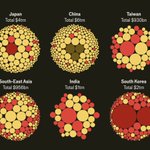
S. Korea 🤔


A fantastic piece on Henry Ellenbogen, another success story from T. Rowe Price.
According to his study..."1% of public companies turn out to be great..." This is even fewer than Dr. Hendrik Bessembinder's finding.


Henry Ellenbogen has, very quietly, become one of the most influential investors of this millennium.
His early teachers included Jeff Bezos and John Malone. His early bets included Amazon at $10 billion, Booking Holdings below $1 billion, and Google at IPO. He managed his first fund through the financial crisis. For 5 years, he outperformed by more than 10% a year.
In 2010, Ellenbogen took over the largest pool of small-cap money in America, built it to $40 billion, and beat his peers by more than 5% a year.
While managing that fund, he pioneered a way to invest mutual fund capital into private businesses. He backed Workday, Atlassian, Twitter, and dozens more. By 2019, he'd invested in the private rounds of more successful IPOs than any venture capital firm.
His strategy is simple: invest in small companies that can grow into large ones.
He finds these businesses early, but his edge comes when they fall apart. Every exceptional company passes through at least one moment that looks identical to failure. Ellenbogen separates the ones dying from the ones being remade.
In 2019, he left to start Durable Capital Partners, raising $6 billion in one of the largest fund launches on record. His ability to spot young businesses, hold them as they grow, and help them become giants, has made him a go-to investor for founders who want to take their startups public.
He has invested in over 50 businesses that have gone public, yet he keeps a low profile. To understand why, you have to go back to a funeral in Pittsburgh when he was twelve years old.
This is the story of Henry Ellenbogen, told in full for the first time by @domcooke.

All things Alts…well written 🙏🏽
by @Edelweiss_Cap open.substack.com/pub/edelwe…
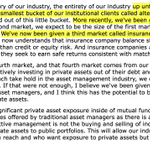
$APO Marc Rowan in Q3 2025 earnings call today. The entire piece is worth reading.

A very interesting post by @GWInvestors on passive vs hi insider ownership %...🙏
Owner-operated > agent-run


SVN Capital retweeted

Acabo de publicar en abierto los resultados anuales presentados ayer por Copart $CPRT. En abierto, en un nuevo formato (para que votéis que os parece) y en el sitio habitual 🟠🟠🟠
Si encuentras una directiva que tenga tan claro lo siguiente (extracto de la call) pégate a ella y olvídate.
@SvnCapital I know that you like this 😉
“Lo que sí le diría es que, a largo plazo, digamos, durante los últimos 10 años aproximadamente, hemos devuelto efectivo a los accionistas consistentemente mediante recompras. En algunos casos, hemos realizado ofertas estructuradas más amplias. En otros, hemos ejecutado compras en el mercado abierto, etc. Y ese será probablemente el mecanismo a largo plazo mediante el cual devolveremos efectivo a los accionistas.
En cuanto a su pregunta sobre fusiones y adquisiciones, siempre estamos buscando oportunidades que nos ayuden a mejorar nuestra propuesta de servicio. Creo que ya lo he mencionado antes, pero tenemos un enfoque doble para cualquier actividad de fusiones y adquisiciones. Uno son las inversiones. De forma independiente, es un factor determinante, es decir, si John, Leah y yo estuviéramos aquí, ¿estaríamos dispuestos a financiar una inversión si la manteniéramos como una empresa privada? Y la segunda pregunta es: ¿mejora fundamentalmente lo que Copart es y hace?, o ¿podemos mejorar lo que hacen gracias a las capacidades de Copart?
Observarán que no mencioné en la rúbrica que tengamos el capital ni el efectivo disponible. Eso no viene al caso. Creo que sabemos que, en el caso de la gran mayoría de las empresas que consideraríamos adquirir, podríamos financiarlas fácilmente con el balance general o endeudándonos. Por lo tanto, el efectivo no es, por sí mismo, la base de una estrategia de fusiones y adquisiciones. ¿Podría utilizarse parte de él algún día para una adquisición? Por supuesto que sí. Han oído hablar de un par de iniciativas de fusiones y adquisiciones que, a lo largo de los últimos 10 años, la empresa ha llevado a cabo en el Reino Unido, y también en Norteamérica, iniciativas que han sido muy productivas y, en última instancia, han mejorado nuestra oferta de servicios a largo plazo.
Así que, en última instancia, la respuesta es recomprar acciones sin un plazo preciso. Ese es el momento en que lo haríamos. Pero el efectivo no nos obliga a cambiar nuestro comportamiento ni en fusiones y adquisiciones ni en gastos operativos, ¿verdad? Simplemente reconocemos que pertenece a nuestros accionistas y lo trataremos como corresponde.”


$CPRT a very well done and an informative interview on @_inpractise 🙏
Lots of little nuggets, and in the end, the expert wonders why he's getting inundated with calls 🤔:


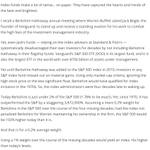
A good summary of alt. asset mgrs Q2 results. 🙏 @GoesAlt.
AGM Alts Weekly | 8.10.25: Alternative asset managers in three charts, by @GoesAlt
open.substack.com/pub/altgoe…
2 charts stand out:


3
8
3,671
$NOVN Biopharma is not in my wheelhouse, but am always interested in learning more. Vas Narasimhan teaches a lot about the space, Novartis, and how he is the 'Chief Energy Officer'. h/t @mihaljevic 🙏
youtube.com/watch?v=A_z4Jow0…

$CPRT While this article highlights all the burdens for the auto consumer, it inadvertently or not highlights the tailwinds for CPRT
- avg. age of vehicles is 14.5 yrs
- repair costs up 43% in 6 yrs
- total loss ratio UP

Poland: the ignored stockmarket superstar - The Economist
"Poland is the new Germany" - Peter Bosek, CEO of Erste Group Bank
Poland's GDP per capita will exceed Japan's on PPP
economist.com/finance-and-ec…

Average time researching a stock? According to this WSJ article, the answer is: 6 minutes! 😯
Research? What research? wsj.com/finance/investing/bu… via @WSJ

1
4
2,546
$APO Each one of the alts is different in its own way; Marc Rowan of APO is the best at explaining the opportunity. Q1 2025:
- US IG debt is ~$9.0 trill, most of it is public
- Banks & bond market can't handle hi-grade and complexity, which is where APO and others come in

