

Confronting toxic leadership. Building Christian leadership. Seeking safe churches, businesses, and organizations.
Wyoming, USA
Joined October 2018
- Tweets1.6K
- Following1K
- Followers442
- Likes713






Dr. Diane Langberg explains, “Systemic abuse occurs when a system, such as a family, a government entity, a school, a church or religious organization, a political group, or a social service organization, enables the abuse of the people it purports to protect. Even when acts of abuse are perpetrated solely by an organization’s leader, his or her behaviors tend to be perpetuated by a systemic organizational response with the goal of preserving the system in reaction to a perceived threat.”
Michael Kruger notes that Israel chose a king based on systemic foolishness. Though it was not unbiblical for them to choose to have a king (Deuteronomy 17:15), there was an underlying problem in their choice.
“It meant they wanted a king who would ‘go out before us and fight our battles’ (1 Sam. 8:20). In other words, they wanted the typical, worldly profile of a leader: one who is strong, tough, dynamic, and powerful. They would rather have a leader to beat up their enemies than one who would care for the sheep.”
Israel had a systemic problem. It would give rise to a wicked king (Saul) who would do much damage to the fabric of Israelite society. Why does the organization not seem to learn their lesson as multiple toxic leaders come and go, creating havoc and chaos?
It is in systems theory that we find why so few will stand up for the targets of abuse.
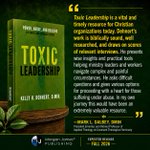
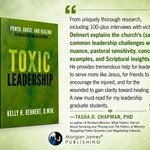
Pre-Order “Toxic Leadership: Power, Abuse, and Healing in the Christian Organization” at your favorite online bookstore.
KellyDehnert.com

Gaslighting is defined by the Newport Institute as “a form of psychological manipulation in which the abuser attempts to sow self-doubt and confusion in their victim’s mind. Typically, gaslighters are seeking to gain power and control over the other person by distorting reality and forcing them to question their own judgment and intuition.”
The term came from a 1938 play by Alfred Hitchcock called “Gaslight.” The lead character spends the movie convincing his wife that she is crazy as he steals from her. He turned the lights on in their attic as he searched through her collection of jewelry and the gas lights would dim in the main part of the house. When she would notice it, he would tell her it was in her imagination.
As the movie progresses, she is questioning “her own memories and perceptions.” She thinks she is crazy.
Abusers are master manipulators. Part of their skill is in creating this kind of confusion. Their seeming lack of conscience as they tell bald-faced lies about the victim or interactions with the victim can be bewildering. For those looking in, it may appear to be simple misunderstandings as the victim and the leader share their perspectives. But when it comes to abuse, it is more likely that the practiced deception of the toxic leader has created the perplexity.
Pre-Order “Toxic Leadership: Power, Abuse, and Healing in the Christian Organization” at your favorite online bookstore.
KellyDehnert.com
#MJBOOKs #MJAuthor #toxicleaders #leadership #ChristianLeadership
🤖 Made with AI

The manipulative ability of abusive people makes them particularly difficult to identify and hold accountable. It is exasperating to victims. Because of carefully crafted façades, their victims are often left wondering, “What just happened?” The abuser has everyone else confused and, at times, even the victim herself.
It is not always easy to identify abusive individuals because they carefully choose certain people to abuse. Their chosen victims are rarely their authorities.
Researchers across the spectrum—Christian and non-Christian—note this phenomenon. “Leaders who behave destructively towards subordinates may not necessarily be destructive in other interpersonal relationships.”
As Lundy Bancroft argues, “Most abusive men put on a charming face for their communities, creating a sharp split between their public image and their private treatment” of their victims. Allender and Longman agree, writing, “Often the one who delights in evil is an ordinary, unassuming person who hides behind a facade of normalcy.”
Victims hesitate to share their story, leaving much of the detail out, not fully grasping the enormity of the crimes committed against them or fearing the results of their whistleblowing. Those who hear their story may respond with lukewarm support, in part because the partial story just doesn’t “seem that bad” to them. As a result, victims are left isolated in their pain while the abusive leader fools everyone else.
Pre-Order “Toxic Leadership: Power, Abuse, and Healing in the Christian Organization” at your favorite online bookstore.
KellyDehnert.com
#MJBOOKs #MJAuthor #toxicleaders #leadership #ChristianLeadership

3
44
Clergy sexual abuse is one of the least understood abuses within the church. Because of ignorance, much harm has come to victims.
One victim of clergy sexual abuse is Jada. She related, “Although God talks about oppression throughout scripture, in all churches I’ve attended, leaders only refer to oppression as spiritual oppression or the slavery Israelites endured under Pharaoh. How many survivors of abuse would benefit from knowing that God directly addresses what they have been through in the Bible when he condemns oppression in scripture?”
Jada said she “felt like a prisoner set free” when she left her abusive pastor.
Jada was in college when she came to know and love Jesus Christ. She was on fire for the Lord and got connected to a small house church. As a new Christian, she described herself as “completely open to the things of God and eager to be taught. Hungry for personal discipleship.” She was the type of convert every evangelist seeks to make.
Pastor Martin, the leader of the house church, was at first very helpful. He became like a father figure to her. Her family had rejected her when she became a Christian, and he gave her extensive spiritual counsel. He told her how special she was. Pastor Martin said she was submissive and dedicated and described these attributes as critical markers of spiritual growth and true conversion. He used his authority and Jada’s vulnerability to groom her for sexual abuse.
Jada said, “One minute, he would be domineering, large, and in charge, especially in public. But in private, he would become kind to me, but inappropriate and without professional boundaries as well.”
He told Jada she was his “best friend” and the only person he could confide in. He was married.
Jada told me, “[Pastor Martin] enmeshed himself in my life. Then, my pastor began flirting with me. I didn’t know how to react. Maybe I’m misinterpreting his behavior. I must’ve imagined that.” Even though the pastor’s flirtations were confusing and uncomfortable, compared to his hot temper and insults, his strange flirtatious behavior felt like a relief.
Pre-Order “Toxic Leadership: Power, Abuse, and Healing in the Christian Organization” at your favorite online bookstore.
KellyDehnert.com
#MJBOOKs #MJAuthor #toxicleaders #leadership #ChristianLeadership

2
183
A significant cross-over persists between psychopaths and bullies in the workplace. “The traits of narcissism, lack of self-regulation, lack of remorse, and lack of conscience have been identified as those displayed by bullies. These traits are shared with psychopathy.”
A significant crossover persists between psychopaths and bullies in the workplace. “The traits of narcissism, lack of self-regulation, lack of remorse, and lack of conscience have been identified as those displayed by bullies. These traits are shared with psychopathy.”
Robert Hare, author of This Charming Psychopath, says psychopaths have a “remarkable ability to rationalize their behavior” and are “deceitful and manipulative.”
A result of a recent study in Australia, which sounds almost tongue in cheek, found that about “one in five corporate executives are psychopaths—roughly the same rate as among prisoners.”
Some estimate three times the number of corporate board members suffer from these disorders than among the general population. Again, it is likely that Christendom contains its fair share, though statistics are unavailable.
#MJBOOKs #MJAuthor #toxicleaders #leadership #ChristianLeadership
Pre-Order “Toxic Leadership: Power, Abuse, and Healing in the Christian Organization” at your favorite online bookstore.
KellyDehnert.com

1
41
As the careful observer considers the similarities between personality disorders and abusive or bullying, it is easy to confuse the two.
Keep in mind that Alliance for Hope says, “Domestic violence is not something that can be controlled or resolved through therapy because abuse is a choice, not a mental illness.”
Prevailing research agrees that abuse is a separate issue, though personality disorders may provide fertile ground in which the choice to abuse is germinated. One well-known writer adds, “though abusive individuals may have personality disorders, an abuser’s ‘value system is unhealthy, not their psychology.’” He concludes, “Mental illness doesn’t cause abusiveness any more than alcohol does.”
Therefore, it is important to note that not all those with personality disorders are abusers, and abusers do not necessarily have a personality disorder.
Pre-Order “Toxic Leadership: Power, Abuse, and Healing in the Christian Organization” at your favorite online bookstore.
KellyDehnert.com
#MJBOOKs #MJAuthor #toxicleaders #leadership #ChristianLeadership

21
We believe in a God who regularly transforms the hearts of people as they turn to Him (1 Thessalonians 5:23).
Sadly, the testimony of those who work with abusive individuals say that in practice, few abusive leaders genuinely turn to Him and seek that transformation.
Where Christians will commonly give the benefit of the doubt, finding difficulty in suggesting a toxic leader is inflexibly evil, Scripture speaks often of wicked individuals who refuse to repent.
Reverend Lloyd Pierson of Refuge Ministries’ Turning Point, a ministry to perpetrators of domestic violence, says their Christ-centered program only sees approximately fifteen percent of the men who complete their entire program—normally a year—turn from abusive behavior and attitudes.
However, he notes that most do not finish the course and are not counted in those statistics. Therefore, the change rate is even lower. Some of these men are likely to have personality disorders as part of their toxic mix.
#MJBOOKs #MJAuthor #toxicleaders #leadership #ChristianLeadership
KellyDehnert.com

Mary and John joined a mission work. They were excited about their ministry in which they would work shoulder to shoulder.
But now, on a mission field far from home, they were under the director's seeming complete control. Their work visa, their house, their children in the mission school. Everything was controlled in some way by the mission agency.
The director abused his authority and created daily drama in their lives.
He lied. He manipulated. And he isolated them.
The director abused his authority and created daily drama in their lives. ing complete control. Their work visa, their house, their children in the mission school. Everything was controlled in some way by the mission agency.
pearlsandswinesite.com/2021/…

Authoritarian leaders seek to control followers.
They may believe it is the duty of subordinates to do only what their leaders say. Looking to such passages as Romans 13 and Titus 3, these leaders often focus on the commands to “submit to authorities.” They become enamored with their position and ignore their responsibility to serve, a lifestyle that is so much a part of biblical teaching on leadership.
Leaders often centralize power and if they feel it is being challenged, exert more control.
This form of management style was common in the past, though it is being challenged more and more in contemporary business leadership models.
Scripture has always challenged it.
Pre-Order “Toxic Leadership: Power, Abuse, and Healing in the Christian Organization” at your favorite online bookstore.
KellyDehnert.com
#MJBOOKs #MJAuthor #toxicleaders #leadership #ChristianLeadership

19
Why do authoritarian leaders lack the willingness to hear criticism?
Lipman-Blumen argues, “Some leaders fall into the trap of believing in their own wisdom” as their followers become more and more dependent on them.
They begin to believe their own press.
Within the Christian organizational setting, some believe followers “can’t criticize leaders without being critical of God.” When God is on the leader’s side, even the most flagrant failures in decision-making must be overlooked by employees.
The leader loses all accountability.
Pre-Order “Toxic Leadership: Power, Abuse, and Healing in the Christian Organization” at your favorite online bookstore.
KellyDehnert.com
#MJBOOKs #MJAuthor #toxicleaders #leadership #ChristianLeadership
🤖 Made with AI

14
One of the most challenging of toxic leaders is the authoritarian or autocratic manager.
In fact, Jean Lipman-Blumen says authoritarianism is “a hallmark of toxic leaders.” Power hungry and taking control, the autocrat gives little thought of his subordinates other than how he can dominate them.
No matter the name given to them, it seems preposterous that these kinds of leaders would gain prominence in Christian organizations; yet they do.
One possible reason for both the large numbers of leaders with these leadership traits and the support they receive from those around them is the sometimes-positive character traits they possess. They are often extroverted, attractive people who are driven, visionary, and good at self-promotion.
There are reasons they get to the top.
Pre-Order “Toxic Leadership: Power, Abuse, and Healing in the Christian Organization” at your favorite online bookstore.
KellyDehnert.com

As employees leave because of the bully, many administrations spin the narrative to manage supposedly disloyal subordinates.
Toxic leaders say that loyalty is dead or, if on the mission field, that those who leave just couldn’t handle life in the field, suggesting they are weak or unfaithful. The shame is piled on, making it difficult for those remaining to take that step in and support the bullied.
“Disloyalty” is bandied about at every staff meeting, making it evident that those who would think of leaving just don’t have what it takes to be part of their “wonderful organization.”
But, Hay says, “Organisations that draw that conclusion are toxic.”
Pre-Order “Toxic Leadership: Power, Abuse, and Healing in the Christian Organization” at your favorite online bookstore.
KellyDehnert.com
#toxicleaders #ChristianLeadership #toxicleadership #Leadership #MJAuthor #MJBooks

Robert Sutton suggests that the bully normally attacks people who have less power instead of those who have more.
As Einarsen notes, there is a distinct power differential between a victim and a bully. That power may be used as a means of gaining more power, not just retaining it. By bullying, they can gain power over those who may at first have positional authority over them.
In the long run, the bully may lose his job, but in the short term, he may gain the element of dominance he so desires and to which he believes he is entitled.
Pre-Order “Toxic Leadership: Power, Abuse, and Healing in the Christian Organization” at your favorite online bookstore.
KellyDehnert.com
#MJAuthor #MJBooks #ChristianLeadership #toxicleaders #toxicleadership #Leadership #abuseawareness

“Power is defined as ‘the ability to influence the behavior of others to get the outcome you want.’ There are two primary types of power: soft power and hard power. Soft power is defined as influence through trust and relationships. Hard power is defined as influence through coercion, force, or threats” (Walker and Watkins, “Toxic Leadership: Research and Cases”: 2023).
Fundamental to bullying is the position of power one individual has over another. Power can be in the title and position held by an individual or it can come from his relational authority.
The leader may have a title or they may have authority in the church due to being longtime members, commitment to the organization, or perceived intellectual or experiential superiority.
In addition, those who have been members of a church for many years and those who have careers that are celebrated as particularly significant to the community are often held in high esteem. Their opinions matter. Others have an inordinate desire to please these people.
And therein lurks the danger of toxicity.
KellyDehnert.com
Pre-Order “Toxic Leadership: Power, Abuse, and Healing in the Christian Organization” at your favorite online bookstore.
#MJAuthor #ChristianLeadership #toxicleadership #abuseawareness #toxicleaders #Leadership

The Pharisees were hypocrites. “Hypocrite” is defined as, “A feigning to be what one is not or to believe what one does not: behavior that contradicts what one claims to believe or feel.”
Jesus, when the Pharisees came to challenge Him, said, “You hypocrites! Well did Isaiah prophesy of you, when he said: ‘This people honors me with their lips, but their heart is far from me; in vain do they worship me, teaching as doctrines the commandments of men.’” (Matthew 15:7–9).’”
The Pharisees, according to Jesus, were feigning to be what they were not:
· They sounded good because they honored the Lord with their words
· But they did not honor God in their hearts
· They put on an act of worshipping God
· Teaching commandments that were not the Lord’s
“Emphasizing detailed rules means abrogating essential demands. Hence the legal practice of Pharisaism amounts to hypocrisy (Matthew 6:1ff.).” We are often impressed by and consider someone who keeps “additional” rules as being “godlier.”
We look up to these people as examples of righteousness because of their spiritual discipline. And yet, this does not mean they actually follow God’s law in their heart or when certain eyes are not on them.
KellyDehnert.com
#LeadershipDevelopment #toxicleadership #abusiveleadership
1
34
It is an extraordinary thing what the God of the universe has done on our behalf. It is written all over the Bible and experienced by millions upon millions through the millennia.
Jesus illustrated this reality in Matthew 18 when he told a parable (or story) of a middle manager (MM), his boss, and a subordinate of his own.
What I want to point out, in the context of this blog, is the toxicity of this middle manager. pearlsandswinesite.com/2026/…
KellyDehnert.com

1
18
Common to leadership abuse in the Christian organizational setting is “spiritual abuse.” This type of abuse is one of the worst types of abuse in that the targets of it are led to believe they are hearing from God.
Michael Kruger provides a helpful definition of spiritual abuse. “Spiritual abuse . . . is when a spiritual leader—such as a pastor, elder, or head of a Christian organization—wields his position of spiritual authority in such a way that he manipulates, domineers, bullies, and intimidates those under him, as a means of accomplishing what he takes to be biblical and/or spiritual goals.”
Dr. Langberg provides another helpful definition of spiritual abuse: “When we use God’s sacred Word in a way that harms another, commanding them to do wrong, manipulating them, deceiving them, or humiliating them, we have spiritually abused them.”
A distinct difference exists between a pastor clearly preaching a particular sin and giving evidence in Scripture, and a pastor doing so either to control and manipulate his congregants. Some pastors go so far as to twist a verse to make an argument and then shame those who disagree.
Note that this form of abuse is perpetrated by one who has some form of spiritual authority. It may be formal authority like an ordained pastor or elder or CEO. However, even those who have significant influence spiritually over another person may abuse the informal spiritual authority they have.
Watch out for these Pharisees who use God’s Word to destroy rather than to build.
Pre-Order “Toxic Leadership: Power, Abuse, and Healing in the Christian Organization” at your favorite online bookstore.
KellyDehnert.com
#AbuseAwareness #ChristianLeadership #toxicleaders #ChristianLeaders #toxicleadership #Leadership

1
19
The Pharisees, probably the most important Jewish leaders of the time of Jesus, were a sect that was formed approximately two centuries before Jesus was born.
The “Pharisees were a populist pressure group, not an official body with any official power.” However, the informal power they held was felt throughout the Jewish nation.
The sect’s goal was to challenge “the Jerusalem establishment that [was] departing from the law.” The Pharisees saw themselves as the “true Israel.” They had high standards for sanctification and were “distinguished from the rest of Judaism by specific rules.”
In essence, the Pharisees sought to develop a complete picture of God’s ethical will for His people. They worked hard to “apply the law of God for as many ethical situations as they could.”
The problem was, these traditions came to be considered God’s.
Pre-Order “Toxic Leadership: Power, Abuse, and Healing in the Christian Organization” at your favorite online bookstore.
#AbuseAwareness #toxicleadership #ChristianLeaders #toxicleaders #ChristianLeadership

1
27
Many Christian organizations allege that if abusive leadership—or simply abuse in the pews—is brought to light, Jesus’ name is tarnished.
However, it is unbiblical to think Jesus needs our image control rather than bringing sin to light.
Rachael Denhollander is the well-known whistleblower of Dr. Larry Nassar, the Michigan State University and USA Gymnastics Team doctor, now known for his horrifying, serial sexual assaults on young athletes.
She states that “The gospel of Jesus Christ does not need your protection. It defies the gospel of Christ when we do not call out abuse and enable abuse in our own church. Jesus Christ does not need your protection; he needs your obedience. Obedience means that you pursue justice, and you stand up for the oppressed and you stand up for the victimized, and you tell the truth about the evil of sexual assault and the evil of covering it up.”
The point is that failing to speak truth is never protective of Jesus’ image. Just as creating a false image for the watching world is disingenuous, so ignoring truth to create an image for Jesus is only a lie.
Pre-Order "Toxic Leadership: Power, Abuse, and Healing in Christian Organizations" online at your favorite bookseller.
#toxicleadership #Leadership #ChristianLeaders #ChristianLeadership #AbuseAwareness #toxicleaders

Image management can cause greater trauma to those who have already suffered under the abuse of a leader.
Kimi Harris, writing on the silencing of sexual assault victims, suggests, “When the abuser is a respected person in the community, such as a pastor, the community’s knee-jerk response can be, ‘Is she lying? Please tell me she is lying,’ because the stakes are so high for the community if it were true.”
Unfortunately, this common bias against those who report leadership abuse creates an environment of distrust and shame for those who have already suffered under the violence of toxic leadership.
The victim is silenced—silenced from telling the truth.
The Christian community needs to carefully hear reports of leadership abuse, recognizing that their initial response can be either re-traumatizing or healing for targets of that abuse.
SUBSCRIBE TO PearlsAndSwineSite.com to get updates on the release of "Toxic Leadership: Power, Abuse, and Healing in Christian Organizations".
#ChristianLeadership #LeadershipMatters #toxicleadership #AbuseAwareness #ChristianLeaders #Leadership #toxicleaders

20