
Needed for flourishing; too few choose responsibility, fewer become stewards with wisdom flourishing demands Contact/tag for support | Community soon
India
Joined May 2026
- Tweets762
- Following42
- Followers1.4K
- Likes2.1K









How should a society be designed so as to prevent the ills of lobbies?
Skin in the game, radical poly-centred decentralisation, clear rules, optionality.

The lack of public transit robustness could have been avoided if it had incentives for private players. Chennai could have been an incredibly functional city.


Major reason for air pollution in India is farm fires. Singapore witnessed the same these days not because it has no sound internal policy but because of Indonesian activity.
Who is ready to break the bad union of farms in India and tarnish people of the same protectionist mindset!

As India braces for Delhi - Mumbai "pollution season" and accompanied protests (we can all predict this), do read my post below.
Attached is a photo of Singapore in media some days ago. It seems their pollution level had gone to hazardous levels.
Not because the well managed and clean city-state did any mistake, but because of Indonesia burning their forests.
The fires of Indonesia themselves seem a little suspicious. They didn't happen naturally but were lit widely by humans - specifically companies. Right at a time when the wind will turn towards Singapore.
So the Singapore govt is now taking some extreme steps like going after these culprit companies even if they are based outside Singapore. Good work by their govt.
But here's what Indians need to understand. Delhi or Mumbai pollution getting worse at this time of the year is not because of automobile, not because of road dust, not because of construction activity as they are all always blamed.
They do contribute their bit, but never as much as farm fires. Just like Singapore facing Indonesian farm and forest fires, Indian cities face farm fires lit by our Anna Datas in many provinces.
The govt and local authorities are afraid of them. They have already been encouraged to use machines and compactors but they wont. If authorities go to tell them to use it, they may get violent and force the authorities to burn the farms themselves.
Now what I feel is going on is some kind of deliberate burning at the right time, using wind direction, to cause pollution in Delhi and Mumbai. Just like Singapore is being hit with pollution from Indonesia by some companies.
So people can protest all they want against Delhi and Mumbai govt in the coming months. They can imagine if they do a "regime change" this pollution issue will go away. But this pollution isn't going away until farm burning stops.

⚡ Share of electricity from nuclear – Top 20 cultural/geographic clusters (2025)
🇫🇷 France (Western Romance)
68%
🇸🇰🇭🇺🇨🇿 Central Europe (Slovakia–Hungary–Czechia)
up to 64% (Slovakia)
🇺🇦🇧🇾 East Slavic (Ukraine–Belarus)
up to 55% (Ukraine)
🇫🇮🇸🇪 Nordic (Finland–Sweden)
up to 40% (Finland)
🇧🇬🇸🇮 Southeast / Balkan-adjacent (Bulgaria–Slovenia)
up to 41% (Bulgaria)
🇧🇪 Benelux-adjacent (Belgium)
~33–41%
🇰🇷 East Asia (South Korea)
~31%
🇦🇲 Caucasus (Armenia)
~30–31%
🇨🇭 Alpine (Switzerland)
~27%
🇦🇪 Gulf (United Arab Emirates)
~20–22%
🇷🇴 Eastern Europe (Romania)
~20%
🇪🇸 Iberian / Southern Europe (Spain)
~19%
🇺🇸🇨🇦 North America (United States–Canada)
up to 18% (US)
🇷🇺 Eurasian (Russia)
~18%
🇵🇰 South Asia (Pakistan)
~16%
🇬🇧 British Isles (United Kingdom)
~11–14%
🇯🇵 Japanese (Japan)
~9%
🇦🇷 Southern Cone (Argentina)
~7%
🇨🇳 East Asian mainland (China)
~5%
🇿🇦 Southern Africa (South Africa)
~5%
Source: Eurostat / Ember / IAEA PRIS / Energy Institute aggregates.

⚡ Share of electricity from renewable sources (2025)
✅ Highest in the EU
🇦🇹 Austria: 90.8%
🇸🇪 Sweden: 89.2%
🇩🇰 Denmark: 77.7%
❌ Lowest in the EU
🇱🇺 Luxembourg: 23.3%
🇨🇿 Czechia: 19.2%
🇲🇹 Malta: 11.2%
🇪🇺 EU: 49.9%
Covers electricity only, not all energy use. 2025 figures are provisional.
Source: Eurostat
Institute for Civilisational OS retweeted
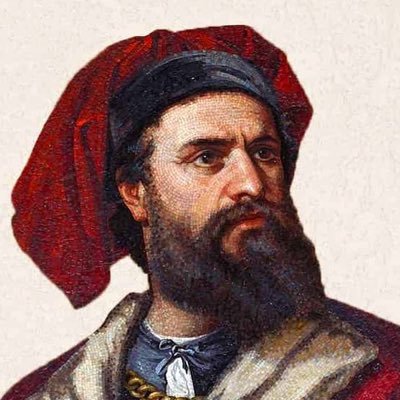
“For what shall it profit a man, if he shall gain the whole world, and lose his own soul?”
— Jesus Christ, Mark 8:36 (KJV)
Nearly 2,000 years ago, Jesus asked a question that remains one of the most unsettling in human history.
Consider where the conversation took place.
Jesus and his disciples were in the region of Caesarea Philippi, a city named in honor of the Roman emperor. Rome commanded vast territories, controlled enormous wealth, and possessed military power on a scale few civilizations had achieved.
In that setting, Jesus challenged his followers to consider what a person truly gains by acquiring everything the world offers at the cost of his own soul.
History gives us reasons to take that question seriously.
Around 110 BC, the Numidian king Jugurtha discovered how easily powerful men in Rome could be bribed. According to the historian Sallust, he departed the city with a devastating observation:
“A city for sale and doomed to speedy destruction if it finds a purchaser!”
Rome continued to expand. Its wealth grew, its armies conquered, and its monuments became grander. Yet Sallust, writing in the first century BCE, argued that the destruction of Carthage in 146 BC had removed a common enemy and allowed greed, ambition, and corruption to flourish.
Rome was gaining power while its own historians questioned what that power was doing to its character.
Centuries later, Florence faced a different moral crisis.
On February 7, 1497, followers of the Dominican preacher Girolamo Savonarola gathered in the Piazza della Signoria for the famous Bonfire of the Vanities. Mirrors, luxury goods, books, and works of art were thrown into the flames.
Florence had become one of Europe’s great centers of banking, commerce, and artistic achievement. Its wealthy patrons had commissioned some of the Renaissance’s greatest masterpieces.
Yet Savonarola believed that the city’s pursuit of wealth and pleasure had corrupted its Christian foundations.
His methods were extreme, and his movement eventually collapsed. In May 1498, he was executed in the same square.
How does a society preserve its moral character while enjoying the prosperity its achievements have produced? And how far should it go in trying?
The words of Jesus also changed individual lives.
In sixteenth-century Paris, Ignatius of Loyola reportedly repeated Mark 8:36 to Francis Xavier, a young man with considerable academic and worldly ambitions.
Xavier eventually joined Ignatius and became one of the founding members of the Society of Jesus. He would spend much of his remaining life as a missionary in Asia.
For Xavier, the question became deeply personal. What was he willing to surrender for something he considered greater than worldly success?
Perhaps that explains why this verse has endured for nearly two millennia.
Christianity itself has inspired some of history’s greatest works of architecture, music, literature, and art.
Jesus understood the temptation to measure success by what we acquire. His question asks us to consider what we might sacrifice along the way.
If a man can gain the whole world and lose his soul, can a civilization do the same?

ALT Palazzo Vecchio CC BY-SA 3.0

ALT Benvenuto Cellini's statue Perseus with the Head of Medusa (1554) Public domain

ALT The statues in front of the Palazzo Vecchio CC BY-SA 3.0

ALT Equestrian Monument of Cosimo I by Giambologna (1594), honoring Cosimo I de' Medici CC BY-SA 3.0
Institute for Civilisational OS retweeted
If same family couples happen to carry the exact same hidden, inactive "broken" gene, their child has a 25% (1-in-4) chance of inheriting that broken gene from both parents. Causing autosomal recessive genetic disorders.
40% to 50% of the children who actually end up sick enough to be treated for them at Indian specialized hospitals come from parents who are blood relatives.
There is also enhanced risk of cardiovascular diseases, diabetes and development pauses.


In less than 10 years the Rupee, Pound, Dollar and Euro fell by around 30%. Moral of the story is to never store money.
Think about deploying in hard currencies and things people would value otherwise (forget money in its traditional sense)


If same family couples happen to carry the exact same hidden, inactive "broken" gene, their child has a 25% (1-in-4) chance of inheriting that broken gene from both parents. Causing autosomal recessive genetic disorders.
40% to 50% of the children who actually end up sick enough to be treated for them at Indian specialized hospitals come from parents who are blood relatives.
There is also enhanced risk of cardiovascular diseases, diabetes and development pauses.
Political will for infra saw a good rise in all NDA governments. Just needs to build up and percolate.

Why do India's infrastructure projects get delayed?
The Centre has shared the numbers with states:
• 75% of delays happen before work even starts
• Land acquisition is the biggest reason, at 35% of all issues
• These delays have added ₹3 lakh crore to project costs
• Forest clearances take 500+ days, not the 150 they should
• Moving pipes and power lines takes 500–600 days
• A highway needs 22 approvals from 16 state agencies
The road transport ministry also ranked states on how well they acquire land for highways using an efficiency score
Best:
Haryana 75.8
Madhya Pradesh 66.2
Rajasthan 65.9
Worst:
Tamil Nadu 45.4
Maharashtra 43.6
Gujarat 30.5
Gujarat is last. Delhi–Mumbai Expressway kind of validates. Its first stretch opened in 2023 in Haryana and Rajasthan, the #1 and #3 states. MP build it fast . The stretches are still stuck in Gujarat with some Gujarat packages weren't even awarded until November 2023,
The road was due in January 2023. About 90 km in Gujarat is now expected only by December 2029.
The Centre wants one time-bound portal for land, faster parallel clearances, and one person in charge of approvals in every state. via @EconomicTimes

C. Rajagopalachari introduced The Single-Point System: Instead of multi-point taxes that required tax collectors to inspect businesses at every stage of production, Rajaji designed a flat, single-point turnover tax. This was in 1939, as Premier of Madras Presidency (aka Tamil Nadu now).
Defying his own bureaucrats and national planners, Rajaji used his executive office to completely abolish food rationing and statutory price controls in Madras overnight. Grain flowed naturally across district borders, prices stabilized, and artificial shortages vanished. His state-level success was so undeniable that it forced the central government in New Delhi to rethink and ease food controls nationwide.

Have you asked your AI to analyse your music playlist? What does it tell about your taste, not just for music but of your inner self?
Institute for Civilisational OS retweeted

Green extremists often speak as though abundance is the disease, when in fact abundance is usually what makes environmental improvement possible.
A poor society burns what it can find and dumps what it cannot manage. A rich society can afford scrubbers, pipelines, wastewater treatment, research labs, and better rules.
humanprogress.org/earth-days…

Why are Indians proactively slow in life?
Here are a few objective factors.
• Parents expecting high commitment but absolutely no risk
• Traffic congestion
• Zero passion employees
• Zero sum thinking
• Bureaucracy
• Unstable internet
• Less responsive banks and daily institutions
Cologne Cathedral took 632 years.
What kept it rising was a purpose that stayed the same across generations: the glory of God, joined to livelihood, mastery, and the desire to leave something that outlives you. That purpose also made the town steadily richer—and the richness compounded in ways people could see and feel.
In 1164 the relics of the Three Kings arrived. Faith brought the pilgrims. The pilgrims brought money, and the money made a larger church possible. The new cathedral, begun in 1248, answered both the spiritual need and the practical one.
Early traffic paid for the first stages. As the walls rose, more people came. More people meant more demand for food, lodging, and goods. A simple pilgrimage stop thickened into markets, and those markets began supporting far more than basic survival.
Stone-carvers cut finer tracery. Glaziers learned to make larger windows. Metalworkers shaped better tools and fittings. Carpenters devised taller scaffolding. Families stayed because the work continued year after year, and apprentices learned skills their fathers had never possessed.
Farmers who once grew only what they needed began producing surplus grain and wool. Merchants handled larger volumes and traveled farther. Quarry rights, regular fairs, and suppliers from distant regions all became economically viable because the town itself had become larger and more capable.
The larger economy could fund a larger cathedral. The larger cathedral drew still more visitors. Quality of life rose with every stage: steadier work, greater specialization, more varied goods, growing status, transferable skills, and the quiet security of a town becoming something greater than it had been.
Ken Follett's The Pillars of the Earth shows the same process with more human detail.
In the poor village of Kingsbridge, Prior Philip sets out to build a cathedral that will honor God while transforming the village into a town capable of sustaining itself. He secures market rights and a fleece fair. Rents, tolls, and trade begin paying for stone and wages long before the cathedral is complete.
The construction site itself employs hundreds of masons, carpenters, laborers, and suppliers. Prosperity starts before the walls are high. As trade expands, the economy thickens in concrete ways rather than merely becoming larger.
Masons and carpenters become increasingly specialized. Aliena begins by buying fleeces directly from farmers, saving them a day's journey, and gradually builds a wool business that finances her brother's return to knighthood. Horses, armor, and status all become possible because trade created the wealth first.
Jack develops better methods for building higher and lighter. Mastery itself advances. Better techniques allow greater beauty, which attracts more people, which creates more wealth, which funds even greater ambition.
The town acquires more cultivated land, stronger institutions, better tools, reliable markets, and skilled crews capable of sustaining work across decades. Later generations continue not simply because they inherited unfinished walls, but because those walls already meant livelihoods, reputation, and obligations worth preserving.
What compounds is not only money or stone. It is the civilizational operating system itself.
Agricultural surplus supports specialized crafts. Specialized crafts support markets. Markets create merchants who extend credit and move goods farther. Those merchants sustain institutions that organize long projects, train successors, and defend the town's rights. Faith supplies the direction. Livelihood gives people a reason to stay. Mastery supplies the means to reach still higher.
Together they transform a simple economy into one capable of supporting complex crafts, multi-generational families, expanding ambitions, richer everyday life, and projects no single lifetime could complete. The cathedral grows because the town has already grown with it.
The same purpose survives, generation after generation.
They knew strangers would finish it. They laid the next stone anyway—because the work was already feeding families, already lifting the town, and already creating the capacity for the stage that would follow.
This is a model worth repeating.
When aspiration, livelihood, and mastery remain aligned, each generation inherits not only a higher wall but also better tools, stronger institutions, deeper skills, and a richer economy. Civilization scales from survival toward specialization, trade, and the ability to sustain work that outlasts any individual.
The Pillars of the Earth is perhaps the best way to feel this compounding from the inside: the faith that set the direction, the markets that funded the next course of stone, the families who raised the next crew, the winters spent beneath scaffolding, and the quiet confidence that those who came after would inherit both a larger building and a more capable town.
Both the real Cologne Cathedral and the fictional one kept rising for the same reason.
The purpose held. The prosperity compounded. The scale followed.
What long project, in your own time, has the same alignment of purpose and livelihood—so that each generation has a concrete reason to continue, and the work itself creates the capacity for the stage that follows?

Institute for Civilisational OS retweeted

Friends, you cannot have community without objective value.
In the classical order, friendship only endures in the measure that two people together fall in love with a transcendent third. Without that transcendent purpose, we lose our connection to one another.
Instead, we begin to live on an island of self-regard—a trend we see exacerbated by social media.
If we want to draw people into authentic community, we have to articulate objective value!
Institute for Civilisational OS retweeted

String theory is what happens when an intelligent system is starved of sensory input and starts hallucinating. Intelligence needs grounding.
For this reason, intelligence is practically never the bottleneck to solving impactful problems. The bottleneck is iterated contact with reality.