The Art of Words Community School (TAWCS) is an independent project-based community K-8th grade school in Brooklyn, New York.
Brooklyn, New York
Joined January 2020
- Tweets6.7K
- Following154
- Followers74
- Likes191








TAWCS retweeted

Dr. Dorothy Height’s life was a testament to courage, dignity, and unwavering commitment to justice. A towering leader in the civil rights and women’s rights movements, she worked across generations and communities to advance equity and opportunity for all.
Often called the “godmother of the civil rights movement,” she was a trusted advisor and strategist who helped shape some of the most pivotal moments in history, while consistently uplifting the voices and leadership of Black women.
Today, we honor Dr. Height’s legacy and the enduring impact of her work to create a more just and humane world.
#TheKingCenter #DorothyHeight #WomensHistoryMonth #BelovedCommunity #MLK


TAWCS retweeted

For the first time, five African American surgeons now lead the Trauma Service at the preeminent Johns Hopkins Hospital. This milestone, recognized during Black History Month, proves generations of determination behind every title. Linsey Davis reports. abcnews.go.com/
TAWCS retweeted

History can feel really distant until it becomes something you can hold, read, and experience up close.
In a Yale College course, students worked with letters, cartoons, magazines, and propaganda posters from the Spanish Civil War using collections at the Beinecke Rare Book & Manuscript Library. Through these materials, they explored how individuals and communities lived through the conflict. They later traveled to Barcelona, connecting their archival research with the people, places, and stories that shaped the objects they studied.
Learn more about how archives bring history to life: bit.ly/3OoBQkw

ALT Pamphlet depitcing the entry of Nationalist forces into Madrid during the Spanish Civil War.

ALT Vialette working with students.

ALT Ricard Martínez with Vialette’s class in Barcelona.

ALT The papers of Joan Alzina, a Catalan soldier who served in the Spanish Civil War’s Republican Army.

TAWCS retweeted

The Moors were a group of North Africans who conquered and ruled Spain for nearly 781 years, from 711-1492 CE. They entered the Iberian Peninsula, Spain, after crossing the Strait of Gibraltar, passing through Morocco...
African Moors were known for their exceptional architecture and engineering skills, and they built numerous impressive structures, such as universities and mosques in Spain, which still stand to this day. They made significant contributions in various fields, including math, medicine, chemistry, philosophy, astronomy, botany, bricklaying and history.
The African Moors were the first to introduce the use of Arabic numbers in Europe, which are still used today. They also made significant advances in medicine, developed treatments for various diseases and created medical textbooks that were widely used.
In addition, the African Moors were skillful astronomers and developed advanced techniques to measure time and determine the position of celestial bodies. They also made important contributions to botany, introducing new plants in Spain and creating gardens admired by many.
African Moors were also known for their expertise in bricklaying and built numerous impressive structures, such as Granada's Alhambra, considered one of the most beautiful and impressive buildings in the world. Finally, they also wrote extensively about their history, creating numerous historical texts that are still being studied today.
📷 : a painting of a figure often associated with the "Moorish" period or culture, particularly in the context of European orientalist art. This style of art, popular in the late 1800s, often depicted North African or Middle Eastern figures in elaborate attire, sometimes with a romanticized or exoticized view.
The term "Moor" in English usage historically referred to inhabitants of Roman province of Mauretania, and later, to the Muslim population of al-Andalus (Spain and Portugal), who were of mixed Arab, Spanish, and Amazigh (Berber) origins. The figure in the painting is dressed in a green head covering, a gold-colored garment, and carries weaponry, including a sword and a pistol, along with a staff.
Such depictions, sometimes referred to as "Blackamoors" in popular European decorative arts, represented African males in exotic attire in various art forms like paintings, statues, and jewelry.
#archaeohistories

TAWCS retweeted
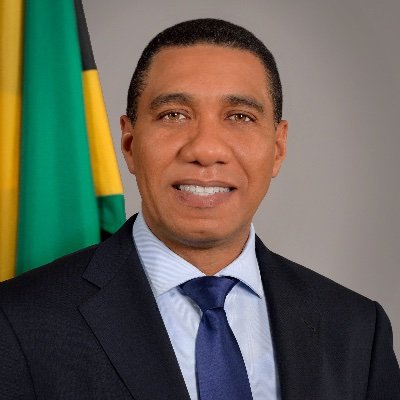
Today, we celebrate the life and legacy of the Honourable Robert Nesta “Bob” Marley, one of Jamaica’s most influential cultural icons and a global ambassador for our music and message.
Through his lyrics, Bob Marley challenged injustice, promoted love, and inspired people across the world to stand firm in their dignity and rights.
His message remains deeply relevant today, reminding us to rise above our challenges and to work together in building a more just and compassionate society.
Decades after his passing, Bob’s music continues to reach new generations, strengthening Jamaica’s cultural impact on the global stage.
We remain proud of his contribution to our nation and to humanity.
One love. One heart, let’s get together and feel alright.

TAWCS retweeted

Recognizing Black history, legacy, and impact — today and every day. #BlackHistoryMonth

TAWCS retweeted
Abu Simbel - The Great Temple of Ramses II ...
Abu Simbel, site of two temples built by the Egyptian king Ramses II (r. 1279–13 BC), now located in Aswān muḥāfaẓah (governorate), southern Egypt. In ancient times the area was at the southern frontier of pharaonic Egypt, facing Nubia. The four colossal statues of Ramses in front of the main temple are spectacular examples of ancient Egyptian art. By means of a complex engineering feat in 1960s, temples were salvaged from rising waters of Nile River caused by erection of Aswan High Dam.
Carved out of a sandstone cliff on the west bank of Nile, south of Korosko (modern Kuruskū), temples were unknown to outside world until their rediscovery in 1813 CE, by Swiss researcher Johann Ludwig Burckhardt. They were first explored in 1817 CE, by early Egyptologist Giovanni Battista Belzoni.
The 20m seated figures of Ramses are set against recessed face of cliff, two on either side of entrance to main temple. Carved around their feet are small figures representing Ramses’ children, his queen, Nefertari, and his mother, Muttuy (Mut-tuy, or Queen Ti). Graffiti inscribed on southern pair by Greek mercenaries serving Egypt in 6th Century BC, have provided important evidence of early history of Greek alphabet. Temple itself, dedicated to the sun gods Amon-Re and Re-Horakhte, consists of three consecutive halls extending 56m into cliff, decorated with more Osiride statues of king and with painted scenes of his purported victory at Battle of Kadesh. On two days of year (about February 22 and October 22), first rays of morning sun penetrate whole length of temple and illuminate shrine in its innermost sanctuary. Just to north of main temple is a smaller one, dedicated to Nefertari for worship of goddess Hathor and adorned with 10.5m statues of king and queen.
In mid-20th Century CE, when reservoir that was created by construction of nearby Aswan High Dam threatened to submerge Abu Simbel, UNESCO and Egyptian government sponsored a project to save the site. An informational and fund-raising campaign was initiated by UNESCO in 1959. Between 1963-1968, a workforce and an international team of engineers and scientists, supported by funds from more than 50 countries, dug away top of cliff and completely disassembled both temples, reconstructing them on high ground more than 60m above their previous site. In all, some 16,000 blocks were moved. In 1979, Abu Simbel, Philae and other nearby monuments were collectively designated a UNESCO World Heritage site.
📷 : Top view of colossal figure of Ramses II; carved into rock, at the Great Temple of Abu Simbel - captured in 1900, by Frank Mason (1839-1928) (Colorized Photo)
#archaeohistories

TAWCS retweeted

African textiles are textiles from various locations across the African continent. Across Africa, there are many distinctive styles, techniques, dyeing methods, and decorative and functional purposes. These textiles hold cultural significance and also have significance as historical documents of African design.
Learn more fun, digestible African facts here: panafrocore.com/blog/

TAWCS retweeted
After slavery ended, Brazil launched a campaign called blanqueamiento, meaning to "whiten" the country. Between 1880 and 1930, over 4 million Europeans were brought in and interracial marriage was encouraged to reduce Black and Indigenous ancestry over time.
After slavery was abolished in Brazil in 1888, the country’s leaders feared the newly freed Black majority and sought to reshape the nation’s population. They promoted “blanqueamiento” (whitening), a state policy rooted in racist ideology that aimed to reduce the presence of Black and Indigenous people through immigration and mixing with Europeans.
Between 1880 and 1930, Brazil encouraged the arrival of more than 4 million European immigrants, mainly Italians, Portuguese, Germans, and Spaniards, to work on plantations and in cities.
The government believed that interracial marriage would gradually “dilute” African and Indigenous ancestry, producing a whiter population over generations. This policy was even supported by intellectuals of the time, who framed it as a path to “progress” and “modernization.”
📷 : a 1895 painting "Ham's Redemption" (A Redenção de Cam) by Spanish-Brazilian artist Modesto Brocos.
The painting illustrates 19th Century theory of "whitening" (branqueamento) through miscegenation, which was a controversial racial ideology prevalent in Brazil. It depicts a Black grandmother, her mixed-race (mulatta) daughter, the daughter's white Portuguese husband, and their white child. The grandmother, with hands raised, is seen as thanking God for her white grandson, symbolizing the perceived "redemption" of her lineage from the "curse of Ham". The work won the Gold Medal at the National Fine Arts Exposition in Rio de Janeiro in 1895 and is a classic illustration of the racist vision of the era.
© Reddit
#archaeohistories

TAWCS retweeted

Through the @ObamaFoundation Leaders program, Michelle and I are working with the next generation of leaders looking to make a difference in their communities.
If you're between the ages of 24-45, apply to our Obama Leaders program by December 12, 2025. obama.org/programs/leaders

TAWCS retweeted

AOC just detonated the House floor:
🔥🔥
“Eight senators are giving themselves over $1 million each while robbing Americans of food assistance and healthcare. How is this even on the floor? How can Congress enrich itself by stealing from the American people?”
This is the truth of the shutdown deal, millions lose care so senators can cash out.
TAWCS retweeted
An ancient Egyptian ostracon (1250 BC), a piece of limestone or pottery used as a writing surface, specifically an attendance record from ancient Egypt, approximately 3,200 years old.... labelled 'Year 40' of Ramses II, it provides a workmen's register for 280 days of the year. There are 24 lines of New Egyptian hieratic on the front and twenty-one lines on the back. A list of 40 names is arranged in columns on the right edge of each side, followed to the left by dates written in black in a horizontal line. Above most dates is a word or phrase in red, indicating the reason why this individual was absent from work on that date.
This is a wonderful glimpse into the daily life of ancient Egyptians, showing that even over 3,000 years ago, people had a variety of reasons for calling out of work. The record you are referring to comes from the village of Deir el-Medina, located on the west bank of the Nile near the Valley of the Kings. This village was home to the artisans and workers who built and decorated the royal tombs.
This particular ostracon lists reasons for workers' absences, revealing a glimpse into the daily lives and challenges faced by laborers in ancient Egypt. Excuses for missing work ranged from serious issues like being "stung by a scorpion" to more mundane reasons such as "reinforcing the door" or even religious observances like needing to "drink with Khonsu".
The excuses you've listed, along with many others, were meticulously recorded on pieces of pottery or limestone known as ostraca. They provide an incredibly rare and personal look into the lives of these laborers, whose work attendance was tracked in great detail. The reasons for their absences ranged from mundane and relatable issues like hangovers ("brewing beer" was a common excuse) and ailments ("bitten by a scorpion" or "his eye is hurting") to more profound, and uniquely ancient, family duties like "his mother is being mummified."
These records are a treasure trove for historians, as they offer a humanizing perspective on a civilization often viewed through the grand scale of pharaohs and pyramids. They reveal a society with a surprising level of social organization and a focus on community, where family obligations, health, and even social gatherings were considered valid reasons to miss work.
Today, this artifact provides evidence that calling in sick or missing work is a practice with a long history, dating back thousands of years. It highlights the importance of record-keeping and attendance tracking even in ancient times. The Deir el-Medina ostraca give us an intimate, almost humorous, connection to the people who built some of the most enduring monuments in human history.
© British Museum
#archaeohistories

TAWCS retweeted

Remembering one of the most powerful and distinguished storytellers of our time: Toni Morrison.
She became the first African American woman to be awarded a Nobel Prize when she received the literature prize in 1993.
What's your favourite book by Toni Morrison?

ALT A smiling Toni Morrison
TAWCS retweeted

RCCG has 50,000 branches worldwide in 197 countries, making it the first African church to achieve this.
The church was founded by Nigerian Pastor, Josiah Olufemi Akindayomi in 1952.
📷 Credit: @RCCGHistory

TAWCS retweeted

Sunday is the International Day for People of #AfricanDescent — a chance to celebrate the extraordinary contributions of the African diaspora around the world.
Learn about the Second International Decade of People of African Descent: un.org/en/observances/africa…



TAWCS retweeted

Stacey Abrams breaks down everything that’s play-by-play, happening in a way that even a child can understand it.
#Trump #America #Democracy #Authoritarianism #Medicaid #SocialSecurity #HealthCare #BlackWomen