

Covering trivia and fun facts regarding the development of Team Fortress 2
- Tweets40
- Following3
- Followers835
- Likes2






ALT Red Spy’s viewmodel arms as they appear in-game.

ALT Red Spy's viewmodel arms with the blue pinstripe layer disabled.


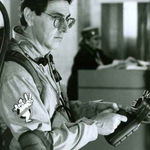
ALT Egon Spengler, as played by Harold Ramis

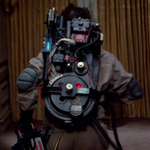
ALT The Proton Pack

ALT The Ghost Trap

ALT The Ecto-Goggles, dubbed "Ze Goggles" in TF2


ALT The screen texture from the Powerhouse terminal prop.

ALT The Nostromo terminal screen from Alien (1979).


ALT Goldrush with normal-mapped wooden boards. Screenshot circa early 2007.

ALT Well with normal-mapped brick walls. Screenshot circa early 2007.

ALT Well with normal-mapped brick walls. Screenshot circa early 2007.

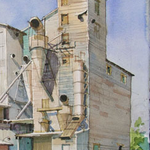
ALT March 1943. "The giant Santa Fe R.R. 10 million bushel grain elevator, Kansas."

ALT March 1943. "Coal and sand chutes at the Argentine Yard, Santa Fe R.R., Kansas City, Kansas."

ALT December 1942. "Locomotives over the ash pit at the roundhouse and coaling station of the Chicago & North Western Railroad yards."

ALT Chicago, April 1943. "Mike Evans, a welder, at the rip tracks of the Proviso Yard, Chicago & North Western R.R."

ALT Charles Sheeler, "American Landscape" 1930

ALT Charles Sheeler, "Classic Landscape" 1931

ALT Unfortunately there is little documentation about Douglas Stenhouse's work online, so I could not find the name or date for his paintings.

ALT Unfortunately there is little documentation about Douglas Stenhouse's work online, so I could not find the name or date for his paintings.


ALT For demonstration purposes, here is a photoscanned copy of moleskin paper.

ALT Now here is the same photoscanned copy of moleskin paper, but with post processing. It has been sharpened, inverted, and had a high pass filtered applied.


ALT "The Dispenser, also known as the Dispense-O-Matic 9000 "Provisions Dispenser, is a building that can be constructed by an Engineer using the Build Tool. The team-colored device is a sort of gas station pump with various supplies inside and a CRT screen with a gauge."

ALT "Tokheim is an American manufacturer of fuel dispensers. It is one of the world's leading manufacturers and servicers of fuel dispensing equipment."

ALT Art director, Moby Francke, talking about the development process behind the class designs for Team Fortress 2.

ALT One of the initial watercolor scans used for texturing, dated to March 17, 2005.

ALT A red test texture made using the aforementioned scan.

ALT A blue test texture made using the aforementioned scan.

ALT "The TI 2500 "Datamath" was Texas Instruments first calculator, launched in early summer 1972. It was very successful and several versions were produced over the next few years."

ALT "The Sharp EL-8 was one of the earliest mass-produced hand-held electronic calculators. Introduced around the start of 1971, it was the first hand-held calculator to be made by Sharp."

ALT The Chevrolet AK Series was a range of pickup trucks sold under the Chevrolet brand, with production beginning in 1941 until 1947. The truck is considered the second real truck produced by General Motors since trucks preceding the Master trucks were completely car-based, and thus coupe utilities. It was later replaced with the Advance-Design, that was also sold as a GMC.