






The Problem of Evil: Suffering in Humans and Animals…
The question already assumes the God of the Bible exists. Suffering must therefore be read from His perspective, not ours.
1. Human suffering is not an accident. It is a vocation.
Everyone on earth is exposed to suffering at some level. Jesus named it: carrying the cross.
“If anyone would come after me, let him deny himself and take up his cross daily and follow me.” (Luke 9:23; Mt 16:24–26)
Jesus opened the door of Heaven. We still have to follow Him through it. Suffering is part of that following.
The amount of suffering is inversely related to the amount of responsibility God will demand:
• Those who suffer much will face less judgment, because they carried less of the burden of obligation toward others.
• Those who live in luxury with little suffering will be asked what they did to relieve the suffering of others.
Jesus Himself frames the judgment this way:
“Depart from me… for I was hungry and you gave me no food, I was thirsty and you gave me no drink…” (Matthew 25:41–42)
Victims of other people’s abused freewill will have little laid to their charge. The abusers will.
“Everyone to whom much was given, of him much will be required.” (Luke 12:48)
Less suffering (wealth, ease) = more accountability.
More suffering (poverty, illness, disability) = less accountability, and often greater reward.
2. Why children suffer—
Three answers stand together:
a. They go to Heaven.
Life is the journey, not the destination.
“Let the little children come to me… for to such belongs the kingdom of heaven.” (Matthew 19:14)
b. Their suffering is undeserved—like Christ’s.
It is therefore uniquely united to His Passion and carries immense merit.
c. Suffering atones.
“Whoever has suffered in the flesh has ceased from sin.” (1 Peter 4:1)
Children do not suffer because of their own sins. They suffer because they exist in a fallen world where suffering is possible. God is both Love and Justice. A child who bears a lifetime of disability may have almost no accountability—and therefore almost unimaginable compensation in God’s love.
3. What Scripture actually says about suffering—
The “problem of evil” (Moral Evil) is straightforward: true love requires free will; free will means creatures can refuse God’s Will. Judgment turns on whether we did the Father’s will (Matthew 7:21–23).
The “problem of suffering” is also stated plainly:
• Suffering is credit against the debt of sin.
“If when you do good and suffer for it you endure, this is a gracious thing in the sight of God.” (1 Peter 2:20)
• Suffering is the occasion for others to love. Love covers sin.
“Above all, keep loving one another earnestly, since love covers a multitude of sins.” (1 Peter 4:8)
• We are judged on whether we fed the hungry, clothed the naked, visited the sick (Matthew 25:31–46).
• We are invited to participate in Christ’s sufferings, not merely watch them.
“Now I rejoice in my sufferings for your sake, and in my flesh I am filling up what is lacking in Christ’s afflictions for the sake of his body, that is, the church.” (Colossians 1:24)
What is “lacking”? Our participation.
“That I may know him and the power of his resurrection, and may share his sufferings, becoming like him in his death.” (Philippians 3:10)
“Provided we suffer with him in order that we may also be glorified with him.” (Romans 8:16–17)
“Rejoice insofar as you share Christ’s sufferings, that you may also rejoice and be glad when his glory is revealed.” (1 Peter 4:13)
Jesus’ sacrifice opened Heaven. He still wants us to carry our own cross with Him.
The end of the story is not the pain:
“He will wipe away every tear from their eyes, and death shall be no more, neither shall there be mourning, nor crying, nor pain anymore, for the former things have passed away.” (Revelation 21:4)
“Blessed are those who are persecuted for righteousness’ sake, for theirs is the kingdom of heaven… your reward is great in heaven.” (Matthew 5:10–12)
(Continue)

(Part 2 of 2–POE: Sufferings in Humans & Animals)
4. Is suffering itself “evil”?
This debate usually equates suffering with evil. That is a mistake.
Suffering includes:
• Pain — a necessary defense against injury
• Hunger — a necessary drive for survival
• Fear / fight-or-flight — necessary in a hostile world
• Anticipation of pain — reflex vs. conscious dread
• Emotional stress, depression, self-pity — these last require a self that can say “I”
Pain is not evil. Consciousness of pain is what makes suffering personal.
5. Who can suffer? Consciousness is the key.
A tree burned in a forest fire does not “suffer.” It has defensive responses (sap, etc.) but no self. No one calls that evil.
A human burned in the same fire suffers intensely—if conscious. Unconsciousness (passing out, anesthesia, third-degree burns that destroy nerve endings) drastically reduces suffering. Open-brain surgery is not painful. A newborn suffers less than a fully self-aware adult.
Animals fall on a spectrum:
photon → atom → single cell → plant → mite → ant → bee → mouse → rabbit → deer → elephant → monkey → human
The usual “animal POE” example is an elephant or a monkey in a forest fire. Even there, their suffering is not comparable to a conscious human’s. Fish lack the nerve structures (ie neocortex) we associate with pain. We do not know how much pain a given injury produces in a given species. We do know pain itself is not evil; it is a survival mechanism.
Possible mitigations we cannot observe:
• Consciousness may simply fade as the animal dies (“awake but not aware”).
• The experience may resemble a dream state rather than full human anguish.
6. Ultimate justice and animals—
If an animal does undergo truly innocent suffering, the question becomes: can animals share in restoration?
Some theologians say yes. Scripture at least pictures animals in the restored order:
“Then I saw heaven opened, and behold, a white horse! The one sitting on it is called Faithful and True…” (Revelation 19:11)
We do not see the full answer. That does not mean there is no answer. The answer tracks level of consciousness—and God’s justice, which never leaves innocent suffering unredeemed.
Bottom line
• Moral evil exists because love requires free will.
• Suffering exists as credit against sin, as participation in Christ’s Passion, and as the arena in which we either love or fail to love the afflicted.
• Capacity to suffer tracks capacity for self-consciousness.
• Those given much ease will be asked for much mercy. Those given much pain will be asked for little—and will be repaid beyond imagining.
The former things pass away. The tears are wiped.
(Part 2 of 2)
4. Is suffering itself “evil”?
This debate usually equates suffering with evil. That is a mistake.
Suffering includes:
• Pain — a necessary defense against injury
• Hunger — a necessary drive for survival
• Fear / fight-or-flight — necessary in a hostile world
• Anticipation of pain — reflex vs. conscious dread
• Emotional stress, depression, self-pity — these last require a self that can say “I”
Pain is not evil. Consciousness of pain is what makes suffering personal.
5. Who can suffer? Consciousness is the key.
A tree burned in a forest fire does not “suffer.” It has defensive responses (sap, etc.) but no self. No one calls that evil.
A human burned in the same fire suffers intensely—if conscious. Unconsciousness (passing out, anesthesia, third-degree burns that destroy nerve endings) drastically reduces suffering. Open-brain surgery is not painful. A newborn suffers less than a fully self-aware adult.
Animals fall on a spectrum:
photon → atom → single cell → plant → mite → ant → bee → mouse → rabbit → deer → elephant → monkey → human
The usual “animal POE” example is an elephant or a monkey in a forest fire. Even there, their suffering is not comparable to a conscious human’s. Fish lack the nerve structures (ie neocortex) we associate with pain. We do not know how much pain a given injury produces in a given species. We do know pain itself is not evil; it is a survival mechanism.
Possible mitigations we cannot observe:
• Consciousness may simply fade as the animal dies (“awake but not aware”).
• The experience may resemble a dream state rather than full human anguish.
6. Ultimate justice and animals—
If an animal does undergo truly innocent suffering, the question becomes: can animals share in restoration?
Some theologians say yes. Scripture at least pictures animals in the restored order:
“Then I saw heaven opened, and behold, a white horse! The one sitting on it is called Faithful and True…” (Revelation 19:11)
We do not see the full answer. That does not mean there is no answer. The answer tracks level of consciousness—and God’s justice, which never leaves innocent suffering unredeemed.
Bottom line
• Moral evil exists because love requires free will.
• Suffering exists as credit against sin, as participation in Christ’s Passion, and as the arena in which we either love or fail to love the afflicted.
• Capacity to suffer tracks capacity for self-consciousness.
• Those given much ease will be asked for much mercy. Those given much pain will be asked for little—and will be repaid beyond imagining.
The former things pass away. The tears are wiped.
Mary’s Lifelong Vow of Total Consecration: “Holy in Body and in Spirit”
(Numbers 6:2–5; 30:3; Luke 1:34, 38; 1 Corinthians 7:34)—
Mary freely and permanently consecrated her entire life to God before the Annunciation. This vow was twofold: Physical Virginity and Spiritual Virginity (complete avoidance of active sin). Scripture already knew this pattern.
The Nazirite Vow is described as
“A special vow, a vow of dedication to the LORD”—being Separated and Consecrated to the LORD as a Nazirite—and to REMAIN HOLY. (Numbers 6:2–5)
A word once vowed to the Lord stands (Numbers 30:3). Mary’s consecration belongs to that same standard: Set apart, Dedicated, and Bound to Remain Holy.
When the angel Gabriel appeared, she did not invent a new identity. She publicly declared an already-settled one:
“BEHOLD, I am the handmaid [δούλη = female bondslave] of the Lord; let it be to me according to your word.” (Luke 1:38)
The emphatic “BEHOLD!” presents her status as something already decided. A Bondslave (δούλη) has denied her own will and exists solely to obey her Master. By calling herself the Lord’s Bondslave (δούλη) , Mary announced a Lifelong consecration—the Nazirite-style Vow of being Separated and Consecrated to God (Numbers 6:2–5)—not a temporary role.
1. The Vow of Perpetual Virginity (“Holy in Body”):
The Nazirite is not merely set apart, but is to remain Holy. Virginity is itself a Holy Virtue (1 Corinthians 7:34). Because Mary had already consecrated herself to God in this way with a Vow of Virginity, she was shocked by Gabriel’s announcement:
“HOW will this be, since I am a VIRGIN?” (Luke 1:34)
She asked this even though she was already betrothed to Joseph. If she had not made a Vow of Virginity, she would naturally have assumed the promised son would come through her marriage to Joseph. Her question only makes sense if she had already bound herself to perpetual virginity—to remain “Holy in Body” as one separated to the Lord.
God Himself desired a VIRGIN to bear the Messiah (Isaiah 7:14). He chose Mary in part because she had already made this Nazirite-style Vow of Virginity dedication and separation.
2. The Vow of Absolute Obedience (“Holy in Spirit”):
A Bondslave (δούλη) exists only to OBEY her Master (ie God). By identifying herself as the Lord’s bondslave, Mary permanently SURRENDERED HER WILL so that she would OBEY GOD without exception. The Nazarite Vow (Numbers 6:2–5) does not stop at the act of consecration; it requires the consecrated person to REMAIN HOLY. A lifelong Vow of Absolute Obedience as “The Bondslave (δούλη) of God” means she maintained Avoidance of Sin throughout her life.
3. Mary as the Perfect Fulfillment of 1Corinthians 7:34—
Paul describes the IDEAL of the Unmarried or BETROTHED Woman:
As the MOST BLESSED among ALL women (Luke 1:28, 42), Mary alone PERFECTLY fulfilled this ideal. As a BETROTHED woman wholly dedicated to the Lord through her Nazirite-style Vow of Separation and Consecration to God, Mary remained:
• Holy in Body — preserving physical virginity throughout her life (PERPETUAL VIRGINITY);
• Holy in Spirit — remaining SINLESS through total, LIFELONG OBEDIENCE as “The Bondslave (δούλη) of the Lord”.
Her “yes” at the Annunciation was not the beginning of her consecration. It was the public confirmation of a vow she had already made: a special vow of Lifelong Dedication to the LORD, to be Separated, Consecrated, and to Remain Holy.

Joseph’s Holy Choice: Mary Remains Joseph’s Betrothed Wife in Perpetual Virginity—According to Scriptures.
1.) The Jewish Reality of Betrothal—
In Jewish law and custom, the BETROTHED woman was already considered the man’s WIFE. The distinction was that the marriage had NOT yet been CONSUMMATED. Sexual relations were forbidden until the final stage of the marriage process.
2.) Paul’s Explicit Teaching in 1Corinthians 7:34–38–
Paul addresses precisely this situation:
“And the unmarried or BETHROTHED woman is anxious about the things of the Lord, how to be HOLY in BODY and SPIRIT.” (1Cor 7:34)
Paul continues…
“If anyone thinks that he is not behaving properly toward his betrothed… let them MARRY—it is no sin.” (1 Cor 7:36)
[“Marry” here means the physical consummation of the already-existing betrothal.]
Yet Paul immediately elevates the higher ideal:
“But whoever is firmly established in his HEART… and has determined this in his heart, to KEEP HER as HIS BETHROTHED, he will do well.
So then he who marries his betrothed does well, and he who REFRAINS from MARRIAGE will do even BETTER.” (1Cor 7:37–38)
[Again, “Refrain from Marriage” here means to “Refrain from Physical Consummation” of the already-existing betrothal.]
Paul therefore explicitly permits—and even praises as superior—a permanent decision to KEEP the BETROTHED WOMAN as BETROTHED (i.e., to REFRAIN from sexual CONSUMMATION) so that both may remain “Holy in Body and Spirit.”
3.) Mary Perfectly Embodies This Higher Ideal—
Mary, betrothed to Joseph, has freely vowed herself as the Lord’s δούλη (“bondslave”) long before the Annunciation by the Angel Gabriel.
“Behold, I am the handmaid [δούλη] of the Lord; let it be to me according to your word.” (Luke 1:38)
This lifelong consecration necessarily included her Physical Virginity (see her question in Luke 1:34: “How will this be, since I do not know man?”).
As the most BLESSED among ALL women (Luke 1:28, 42), Mary alone perfectly fulfilled the ideal Paul describes: a Betrothed woman who remains Holy in Body (perpetual virginity) and Holy in Spirit (absolute obedience as God’s bondslave).
Therefore JOSEPH , in harmony with Mary’s vow and with the higher good Paul praises, KEPT HER as his BETROTHED. She remained his TRUE WIFE under Jewish law, yet the marriage was NEVER CONSUMMATED. This is the scriptural foundation for Mary’s PERPETUAL VIRGINITY.

Scriptural Evidence of Mary’s Perpetual Virginity—
1.) Mary’s Lifelong Vow of Total Consecration: “Holy in Body and in Spirit”—
Mary freely & permanently CONSECRATED her entire life to God long BEFORE the Annunciation. This VOW was both Physical Virginity and Spiritual Virginity (complete avoidance of active sin).
When the Angel Gabriel appeared, she publicly declared this already-settled identity and vow:
“Behold, I am the handmaid [δούλη = female bondslave] of the Lord; let it be to me according to your word.” (Luke1:38)
The emphatic “Behold” presents her status as something already decided. A δούλη (bondslave) has denied her own will and exists solely to obey her Master. By calling herself the Lord’s δούλη, Mary permanently surrendered her will to God so that she might obey Him absolutely and without exception. This self-identification is not a temporary role but a LIFELONG consecration.
2.) Mary as the Ideal of the Betrothed Woman Dedicated to God (1Corinthians 7:34)—
Paul describes the ideal of the unmarried or betrothed woman:
“And the Unmarried or Betrothed woman is anxious about the things of the Lord, how to be HOLY in BODY and SPIRIT.” (1 Corinthians 7:34)
As the most blessed among ALL women (Luke 1:28, 42), Mary alone perfectly fulfilled this ideal.
As a betrothed woman wholly dedicated to the Lord, she remained:
• Holy in Body — preserving her physical virginity throughout her life (PERPETUAL VIRGINITY);
• Holy in Spirit— remaining SINLESS through TOTAL, lifelong OBEDIENCE as the “Bondslave (δούλη) of the Lord”.

Mary: The Most Humble on Earth Became the Greatest in Heaven—
If all God needed was any sinful woman to bear the Messiah, then any woman would have sufficed.
But Mary is not “any woman.”
She is called “Highly Favored” and “Blessed among ALL women” (Luke 1:28; Luke 1:42).
Why?
Because she freely HUMBLED herself with a lifelong VOW: she denied her own will in order to obey God’s will absolutely as the “Bondslave (δούλη) of God”
“BEHOLD, I am the handmaid [δούλη = female bondslave] of the Lord; let it be to me according to your word.” (Luke 1:38)
God saw this HUMILITY:
“He has looked on the humble estate of his servant.” (Luke 1:48)
And He accepted her vow, as confirmed by the angel’s greeting (Luke 1:28).
Mary’s Twofold Status:
1. On Earth—
She lived as the HUMBLE “Bondslave (δούλη) of God” — who completely surrendered “her own will” to God.
2. In Heaven—
Jesus glorified His mother as Queen of Heaven, the woman clothed with the sun, with the moon under her feet and a CROWN of twelve stars (Revelation 12:1–6) — Mother of the King.
Jesus Himself established the principle:
“Whoever HUMBLES himself like this child is the GREATEST in the Kingdom of HEAVEN .” (Matthew 18:4).
The MOST HUMBLE on Earth becomes the GREATEST in Heaven.
Mary, the Perfectly Obedient “Bondslave (δούλη ) of God” who emptied herself of “her own will”, is therefore exalted as the greatest among all creatures in the Kingdom — the Queen Mother beside her Son.
Mary was the FIRST to DENY herself, CARRIED her Cross of Sufferings with Jesus, FOLLOWED Jesus to Calvary—& SUFFERED with Him under the Cross “as a Sword pierced her SOUL ALSO”(Luke 2:35)

God’s Word is His Law—It began with The Forbidden Fruit, to Humanity’s Curse of Suffering & Death due to Adam & Eve’s Disobedience (Genesis 3), to Abraham, Moses, and finally Christ.
Christ is the Living Word of God who FULLFILLED the Spoken Word of God (Matthew 5:17)…
Galatians 3:24 “So then the LAW was our guardian until CHRIST came,”
Christ is the New Covenant to fulfill the Old Covenant—The New Law of Life to fulfill the Old Law of Death in Genesis 3.
(Galatians 3:19) “Why then the LAW? It was added because of TRANSGRESSIONS”…ie Adam & Eve’s Transgressions.
God decreed His LAW of Death in Genesis 3 because of Adam & Eve’s TRANSGRESSIONS.
Do not conflate our “Inheritance of God’s Promise” with our “Inheritance of God’s Curse of Death” in Genesis 3.
It is Humanity’s “Inheritance of the Promise of God—Christ” who conquered Humanity’s “Inheritance of the Consequence of Adam & Eve’s Disobedience—Death”
(Both Physical & Spiritual Death—Revelation 1:18, Romans 6:23).
Mary: Assumed Body and Soul, Immaculate, and Perfectly Obedience in Scripture—
1.) Genesis 3 & The Assumption of Mary, Body & Soul, into Heaven—
God decreed in Genesis 3 the consequences of Adam & Eve’s disobedience:
“By the sweat of your face you shall eat bread, till you RETURN to the GROUND, for out of it you were taken; for you are dust, and to DUST you shall RETURN .” (Genesis 3:19)
That is God’s decree of “the Law of the Lord” in Genesis 3 — the judgments God pronounced on Adam, Eve, and their descendants, rendering humanity cursed, Imperfect, and “Bodily Return to DUST”.
Mary, however, was preserved from the effects of Adam and Eve’s Disobedience. She did not inherit the imperfection that makes humanity incompatible with God’s perfect will. Therefore she is NOT subject to the curse of returning to dust.
Since Mary is free from the consequence of Original Sin, her body did not undergo decay. God took her, Body & Soul, into Heaven. This is the Assumption of the Blessed Virgin Mary.
2.) Why Mary Was Preserved from Original Sin—(The Immaculate Conception):
Scripture requires that the Mother of the Sinless Christ is not subjected to the effects of Adam & Eve’s Disobedience.
“But when the fullness of time had come, God sent forth his Son, Born of Woman, born UNDER the LAW.” (Galatians 4:4)
Jesus had to be born under the Law of the Lord—The same Law that God decreed in Genesis 3 to Adam, Eve, and their Descendants. The Law can be seen in Leviticus 12:6 that treats the mother as sinful and requires a Sin Offering:
“…she shall bring a burnt offering, and a pigeon or a turtledove for a Sin Offering.” (Leviticus 12:6)
Under the Old Covenant the principle is clear:
“Behold, I was brought forth in INIQUITY , and in SIN did my mother CONCEIVE me.” (Psalm 51:5)
Sinful mother➡️child conceived in sin.
IF Mary had Original Sin, Jesus Himself would have been “conceived in sin”(based on the same Law that God decreed in Genesis 3) because God plans for Jesus to be “Born Under the Law”…NOT “Exempted from the Law”.
Therefore God created Mary as a Sinless new creation, the woman of Genesis 3:15, so that the Sinless Son could be born under the Law from a sinless Mother.
Sinless Mother➡️Sinless Child.
There is no “endless regression of sinlessness” since only Mary is the beginning of God’s Plan for the New Covenant with Christ (Genesis 3:15, Isaiah 7:14).
Mary’s participation in the purification rite (Luke 2:22–24) does not prove she had personal sin. It simply shows that Jesus was truly born under the Law — just as His baptism did not mean He needed cleansing.
Because she was preserved from original sin, she was also PRESERVED from its consequence: the Return to Dust. This is why her body was ASSUMED into Heaven.
3. Mary Freely Remained Free from All Actual Sin
(and Kept Lifelong Virginity) Because of Her Vow—
Mary’s freedom from actual (active) sin and her perpetual virginity were not forced upon her. They flowed from a free, lifelong vow of total consecration to God.
She is declared “blessed among women” (Luke 1:28, 1:42). Jesus Himself clarified the deeper reason:
“Blessed rather are those who hear the word of God and keep it!” (Luke 11:28)
Her supreme blessedness rests on perfect obedience, not merely on physical motherhood.
At the Annunciation she freely declared:
“Behold, I am the handmaid [δούλη = female bondslave] of the Lord; let it be to me according to your word.” (Luke 1:38)
The exclamation “BEHOLD!” presents her VOW and identity (“Bondslave-δούλη of God”) as something already settled. She had already vowed herself to God before Gabriel appeared.
A bondslave has one purpose: absolute obedience to her Master without exception. Mary’s lifelong Vow to God included both:
• Spiritual virginity — remains Sinless
• Physical virginity — “How shall this be, since I do not know man?” (Luke 1:34)
Mary perfectly fulfilled the ideal Paul describes:
“…how to be HOLY in BODY and SPIRIT .” (1Corinthians 7:34)
Mary’s IMMACULATE CONCEPTION (Sinlessness) can be found DEFINITELY & EXCLUSIVELY in Scriptures:
1. The Divine Requirement of Galatians 4:4–
God’s plan for the New Covenant is explicit:
“But when the fullness of time had come, God sent forth his Son, born of woman, BORN UNDER THE LAW.” (Galatians 4:4)
Jesus, in His human nature, had to be:
Born of a woman and Born under the Law of the Old Covenant.
This is non-negotiable. God does not make an exception for His Son regarding the Law.
2. What the Law of the Lord Demands Concerning the Mother:
The Law of the Lord regarding childbirth is stated in Leviticus 12–
“…she shall bring… a burnt offering, and a pigeon or a turtledove for a SIN OFFERING…” (Leviticus 12:6)
This requirement exists because the Law treats the mother as sinful and in need of atonement. Under the Old Covenant, the principle is:
“Behold, I was brought forth in INIQUITY, and in SIN did my mother conceive me.” (Psalm51:5)
Old Covenant logic:
Sinful mother ➡️ child conceived in sin / born in iniquity.
If Mary were a sinful woman under the Old Covenant, then Jesus Himself (His Human Nature) would have been conceived in sin and born in iniquity — which is theologically impossible.
3. God’s Solution: A Sinless Mother for the New Covenant—
God therefore created Mary as a sinless new creation (IMMACULATE CONCEPTION)— as the Immaculate beginning of God’s New Covenant — not her parents (thus, no endless “regression of sinlessness”).
She is the woman foretold in Genesis 3:15, the one whose offspring would crush the serpent’s head. Jesus is born “under the Law” of the Old Covenant, yet He is born of the sinless woman of the New Covenant, not of a sinful woman of the Old Covenant.
New Covenant logic:
Sinless Mother ➡️ Sinless Child
(Jesus’ human nature remains under the Law, yet free from the transmission of original sin.)
4. Mary’s Participation in the Purification Rite Does Not Prove She Was Sinful—
Mary offered the required sin offering of two turtledoves or pigeons (Luke 2:22–24). This is not evidence that she or Jesus had sin. It is proof that Jesus was truly “born under the Law.”
This is parallel to Jesus’ own baptism by John: He who was without sin still submitted to a rite that was for sinners, in order to fulfill all righteousness. Mary did the same with the purification rite.
5. Mary’s Sinlessness Is Not Irresistible Grace
God did not remove Mary’s ability to sin. Her sinlessness has two distinct foundations:
1. Freedom from original (passive) sin
God preserved her from the inheritance of Eve’s sin so that she could be the fitting mother of the The Son of God.
2. Freedom from actual (active) sin
Mary freely vowed herself as the permanent bondslave (δούλη) of the Lord:
“BEHOLD, I am the handmaid [δούλη = female bondslave] of the Lord; let it be to me according to your word.” (Luke 1:38)
The exclamation “BEHOLD!” declared her identity (of “Bondslave of the Lord”) as something already settled. She had already vowed herself to God before Gabriel appeared.
A bondslave (δούλη) denies her own will. She exists only to obey her Master. By calling herself the Lord’s δούλη, Mary freely and permanently surrendered her own will in order to obey God absolutely without exception.
Summary
From Scripture alone:
• Galatians 4:4 requires that Jesus be born under the Law.
• Leviticus 12:6 + Psalm 51:5 show that a sinful mother under that Law transmits sin to the child.
• Therefore Mary must be sinless — otherwise Jesus Himself would have been conceived in sin.
• God solved this by creating Mary as the sinless beginning of the New Covenant (Genesis 3:15), while she herself freely vowed lifelong obedience as the Lord’s bondslave (Luke 1:38).
Mary is the Immaculate Mother so that the Son born under the Law remains the Sinless Redeemer.
Mary’s Vow, Perpetual Virginity, and Perfect Obedience—in Scriptures:
1. The Ideal of the Betrothed Woman Dedicated to God—
(1 Corinthians 7:34)
“And the unmarried or betrothed woman is anxious about the things of the Lord, how to be HOLY in BODY and SPIRIT.”
As the most blessed (ie “among ALL women”—Luke 1:28,42), Mary is the only woman to perfectly fulfilled this ideal. As a betrothed woman wholly dedicated to the Lord, she remained:
• Holy in BODY — preserving her physical virginity throughout her life
• Holy in SPIRIT — remaining sinless throughout her life
2. Mary’s Lifelong Vow of Total Consecration:
Mary freely vowed her entire life to God. This vow included both physical virginity and spiritual virginity (complete avoidance of active sin).
Mary made this VOW to God long before the Angel Gabriel visited her. She publicly declared this consecration when the angel appeared:
“BEHOLD, I am the handmaid [δούλη = female bondslave] of the Lord; let it be to me according to your word.” (Luke 1:38)
The exclamation “BEHOLD!” declared her VOW and identity (of being “Bondslave of the Lord”) as something already settled. She had already vowed herself to God before Gabriel appeared.
A bondslave (δούλη) denies her own will and exists only to obey her Master. By calling herself the Lord’s δούλη, Mary freely and permanently surrendered her own will or God in order to obey God’s Will absolutely and without exception.
3. God’s Prior Action and Mary’s Free Response:
• God preserved Mary from original sin so that she might be a fitting Mother for the Son of God.
• Mary, in turn, freely chose to remain sinless and virginal for the rest of her life in fidelity to the vow she had already made to God.
Her holiness was therefore both a divine gift and a human response of perfect obedience.
4. Heaven’s Confirmation of the Vow:
The angel Gabriel’s greeting confirms that God had already accepted Mary’s consecration—
“Rejoice, highly favored one, the Lord is with you; blessed are you among women!” (Luke 1:28)
The title “highly favored” (κεχαριτωμένη — “full of grace”) and the declaration that she is “blessed among women” are not merely anticipations of her future maternity. They acknowledge the holiness she already possessed through her vow of total obedience.
5. Jesus Himself Clarifies Why Mary Is Most Blessed:
A woman in the crowd praised Mary for her physical motherhood:
“Blessed is the womb that bore you, and the breasts at which you nursed!” (Luke 11:27)
Jesus immediately redirected the praise:
“Blessed rather are those who hear the word of God and keep it!” (Luke 11:28)
In doing so, He confirms what Elizabeth had already proclaimed under the Holy Spirit (Luke 1:42): Mary is blessed among ALL women not simply because she was chosen to be His mother, but because she perfectly heard and kept the word of God. No other woman obeyed God with such absolute fidelity.
SUMMARY:
Mary is “blessed among all women” and “highly favored” because:
1. God preserved her from original sin.
2. She freely vowed herself as the permanent bondslave of the Lord (Luke 1:38).
3. She remained HOLY in BODY (Perpetual Virginity) and HOLY in SPIRIT (Sinlessness) for her entire life, fulfilling the ideal of 1 Corinthians 7:34.
4. Both the angel and Jesus Himself affirm that her supreme blessing rests on this perfect, lifelong obedience.
Her maternity is the fruit of that prior and permanent consecration, not the sole reason for it.
Amazing FACT in Sokolka, Poland- "The HEART TISSUE was inextricably INTERTWINED with the remaining bread structure of the Host at a microscopic level—something described as IMPOSSIBLE
to achieve by human means"
Notice the GRADUAL TRANSITION from "Eucharist Host bread" to FLESH.

You’re not getting off that easily.
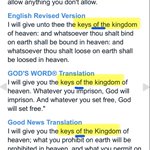
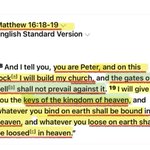
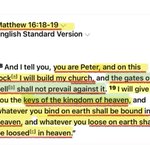
Jesus was talking to SIMON—then Jesus CHANGED Simon’s name to address him by the name PETER (which means Rock)—Then Jesus used Peter (“rock”) to proclaim THIS ROCK upon which to build His Church—Not ANY rock—but THIS ROCK (ταύτῃ πέτρᾳ) that is SIMON (aka Peter the Rock).
You know very well Protestants twisted Jesus’s words & teachings to avoid obedience to Jesus’s one true Catholic Church with Peter as the First Pope.

You also know very well the difference between “Petros & petra” :
“Πέτρος-Petros-Peter” is a FORMAL NAME given to Simon by Christ to mean “ROCK”..and “πέτρᾳ-petra-rock” would be The FOUNDATION upon which Jesus will build His ONLY Church…which is to be SIMON (aka Peter the Rock)…with the Authority to Bind & Loose.
Why do you IGNORE Jesus’s Teaching for His Church to have the Authority to Bind & to Loose?
