

Postdoctoral Scholar at UChicago Data Science Institute studying developmental social cognition and child-robot interactions
Joined December 2020
- Tweets52
- Following127
- Followers162
- Likes271







Children love asking for explanations, but why is that? Our new paper, with @AlejandroVeP, @TamarKushnir, and Shaun Nichols, at JECP, shows that 6-9-year-old believe that there must be an explanation for all phenomena in our world, regardless of topic: doi.org/10.1016/j.jecp.2025.…
1
50
We found this across various topics, from biological and psychological phenomena to religious, nature, and physics events.

1
48

Teresa Flanagan (she/her) retweeted

Know someone who is looking into psych & neuro graduate school? Duke's Anti-Racism Community is hosting a FREE virtual office hours program! Have them sign-up to have their materials reviewed by experienced and friendly reviewers. Link below ⤵️ 📷✨

ALT infographic of duke virtual office hours event, which provides free personal, research, diversity statement and CV help. It's open to anyone applying to any psychology PhD program, and you get individual feedback from a reviewer at Duke. The application deadline is October 27th 2024 at 11:59pm EST, and the event dates are between November 4th-15th, 2024. If you have questions, email [email protected]
New paper out in @CognitionJourn exploring children’s and adults’ trust in inaccurate robots!

Almost all the information we receive is through technologies, but what do we do when technologies are wrong? A new paper with @TMFlanagan1, Nicholas Georgiou, Brian Scassellati & @tamarkushnir explores children's and adults' trust in inaccurate robots doi.org/10.1016/j.cognition.…
How do preschoolers decide whether an action is social or personal? In our new paper, with @XinZhao1, Fei Xu, and @TamarKushnir at @APA JEP General, we look at the differences in U.S. and Chinese children's inferences by action and statistical evidence: doi.org/10.1037/xge0001605
We used a social generalization method in two studies and found that U.S. and Chinese preschoolers' generalizations were on a continuum: with word labels being most social, preferences being most personal, and object functions and game rules falling somewhere in the middle.


1
142
Had an amazing time talking to @paigeemiranda about our recent study on children’s beliefs about technologies!

Hey Alexa, do kids think that smart devices are capable of human thoughts and feelings?
Cut out the robot middle man and read my latest from @WUNC to find out🤖
Thank you to @TMFlanagan1 and @TamarKushnir for sharing their incredible work!
tinyurl.com/5d5ad3e3
Big thing happened yesterday: I defended my dissertation! I am incredibly grateful for the support from my community ✨ so excited to continue working on children’s technology use as a post-doc


Proud mentee moment: watching my amazing advisor, @TamarKushnir, give the presidential address at #SPP2023

27
1,836

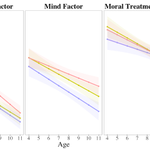
Children also thought that the technologies should not be harmed, regardless of type, even though they thought Alexa and Roomba have less physical experiences than the Nao. However, belief in a technology's agency declines with age

1
5
297
You can also find a summary of some of our findings in a recent @DukeU article: today.duke.edu/2023/04/kids-…

1
3
192
Ever wonder what kids think about Amazon Alexa or Roomba? How does this compare to their judgments of advanced robots, like the Nao? In our new paper, with Gavin Wong and @TamarKushnir, at @APA Developmental Psychology, we look at this in 4-11y/os: doi.org/10.1037/dev0001524
You would think that after all this time working on children’s agency beliefs that I would know how to spell anthropomorphic correctly - and yes it took me three tries to spell it right for this tweet 🤦♀️
6


Are children willing to forgive imperfect robots in the way that they forgive humans? I’ll be presenting my most recent work on this question during the Epistemic Rationality session at 3:45 today during @E_SPPMilan2022, hope to see you there!
