

Helping Buyers and Sellers realize their vision while building thriving, profitable operations. Founder & CEO of https://xitter.cf/t.co/g0nsmCrrua & Making AI and Legal Friends.
Manhattan, NY
Joined December 2022
- Tweets1.2K
- Following1.8K
- Followers416
- Likes1.7K





Pinned Tweet
Mergers and Acquisitions Educational Update (MAEU): Materiality Scraping
In M&A, the details can make or break a deal. Today we will take a brief and simplified look at materiality scrape provisions - a crucial yet sometimes overlooked part of M&A negotiations.
Materiality Scrapes: Sweeping Away the Small Stuff
Imagine buying a house where the seller promises "good working order" for all appliances. You later find a slightly leaky dishwasher. Material breach or not? In M&A, materiality scrapes address this very question.
Definition: Removes qualifiers like "material" or "substantial" from representations and warranties, typically for indemnification.
Buyer's View: A magnifying glass for imperfections. Minor breaches can aggregate into actionable claims.
Seller's Perspective: Feels like being accountable for every dust particle in a "clean" house.
Double Materiality Scrapes
Takes it a step further by removing materiality qualifiers for both determining breaches and calculating damages. This makes it easier for buyers to claim indemnification for even minor breaches.
Prevalence and Trends
In middle market transactions (≤$100 million) and broader private company deals:
*Some form of materiality scrape in about 85% of deals
*Double materiality scrapes most common, in approximately 50% of deals with scrapes (Source: SRS Acquiom's 2023 M&A Deal Terms Study)*
Driving Factors
*Economic caution
*Influence of Representation and Warranty Insurance (RWI)
*Competitive market pressures
*Legal and regulatory changes
*Enhanced due diligence capabilities
*Shifting negotiation dynamics
Strategic Considerations
For Buyers:
*Protection against minor breaches
*Focus on significant issues
*Clarity in indemnification
For Sellers:
*Protection from excessive claims
*Reasonable risk allocation
*Preservation of deal value
The Bottom Line
Materiality scrapes can shift the power balance, influence pricing, and set the post-closing relationship tone. Understanding these provisions isn't just legal nuance—it's strategic advantage in deal-making.
Note: This post simplifies and summarizes complex concepts in part to LI’s character limit. A longer summary version will be included in a matching article, but always consult with competent M&A counsel for transactions.
#MAEU #MergersandAcquisitions #Deals #SMB #Law #WhatsMarket #Trends
*Below, a chart I created in Practical law using publicly available agreements from 2016 onward shows a breakdown over a longer period of time for transactions at or under $100 million. Note that the trends discussed above refer to more recent trends/time period – at Manhattan, NY

MAEU | MERGERS amp; ACQUISITIONS EDUCATIONAL UPDATE 📊 THE 17-CENT DOLLAR: WHY EARNOUTS KILL DEALS — AND HOW THEY SAVE THEM
Two numbers every middle-market dealmaker should know.
17%. That is the median share of the maximum earnout actually paid, across hundreds of private deals (SRS Acquiom, 2026).
57%. That is how many lower-middle-market advisors now name the valuation gap as the #1 reason deals fail to close — double a year ago (Axial, mid-2026).
Connect them and the story is obvious. The gap kills deals before signing.
A poorly structured earnout is how the gap catches up after closing. Earnouts are in roughly 1 in 3 deals under $50M, often worth more than half the closing payment.
So the question is not whether you’ll see one. It’s whether yours will be built to pay.
After 100+ closed transactions, here is where buyers and sellers actually come together:
→ 1. Pick the metric before the price. Revenue is harder to game than EBITDA, but it’s easier to inflate. Whatever you choose, fix the accounting policies, add-backs and allocations in a schedule with a worked example. “GAAP, consistently applied” is not a definition. It’s a lawsuit or arbitration.
→ 2. Shorter wins. For both sides. One-year earnouts achieve a median 66% of maximum.
Over three years: 36%. Shorter periods mean fewer integration variables, fewer disputes, and a buyer who stops paying for the past sooner.
→ 3. Name the operating covenants. Buyers rarely promise to maximize the earnout. Fine. But sellers can get commitments on what buyers won’t do: strip the sales team, reallocate overhead, change pricing, sell the business mid-period. Acceleration on a sale of the business is the single most important line.
→ 4. Decide the fight before the fight. Independent accountant, defined scope, loser pays. Thirty days, not thirty months.
Now the quiet one. The materiality scrape. In 87% of middle-market deals, and the double scrape (for breach and for damages) jumped from 69% to 82% in recent times (ABA, 2025).
Sellers negotiate “material” into every rep, then a single clause deletes the word. Most founders have never heard of it. Buyers call it market. Both sides should know what “market” actually means for their deal.
💡Earnouts and scrapes have one thing in common: they are drafted, not just negotiated. Competent M&A counsel is the difference between a bridge and a trapdoor.
At Benedict Advisors, our corporate, M&A and tax attorneys structure and draft earnouts on both sides of the table, from $5M to $100M+.
We are always looking for better ideas from the middle market.
What earnout terms do you fight hardest for?
BigLaw trained. Middle market focused.
#MAEU #MergersAndAcquisitions #MiddleMarket #Earnouts #PrivateEquity


Go team! Post surgery we won and no stitches ripped. Great job by Dr Stull and nurse Natalie – at West New York, NJ
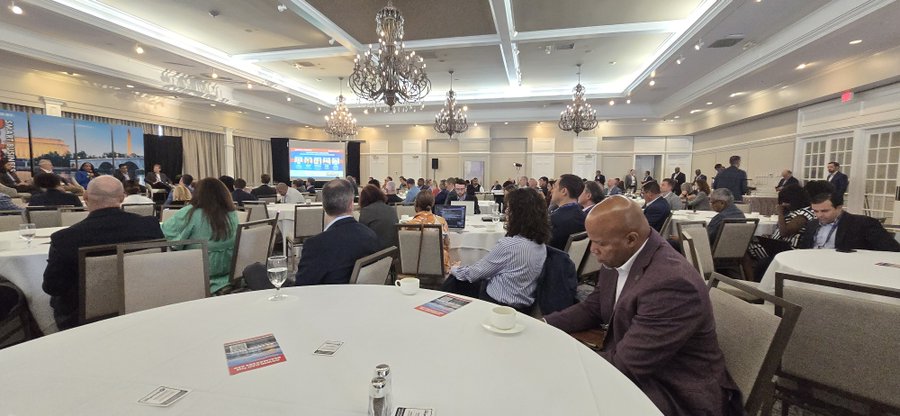
In September, I attended the the Smart Business Dealmakers Conference at the Westwood Country Club today learning a lot.
If you were there, let's connect #dealmakers


At 4 years old, I was given a 95% chance of dying before my 10th birthday.
Over the last week, watching the U.S. Open, I thought about why I'm still here — and why I still serve one-handed.
The prognosis came from a CAT scan (there were no MRIs back then). The doctors told my family that even if I survived, I would never have fine motor control over the left side of my body. Never write. Never type. Never play the piano with two hands.
I was four. But I was raised with spiritual beliefs that ran deep, and that night, alone in my hospital bed, I prayed and I meditated. And I made a decision that has shaped every day of my life since:
If I always gave everything my absolute best — and got creative about the rest — everything would be OK.
At 12, I celebrated being alive by picking up a tennis racquet. I couldn't play the way other kids played.
So I became obsessed with finding a way to compete one-handed. I studied. I experimented. I practiced my serve 1,000 times a week. One thousand.
Every single week. Three years later, I was Varsity Captain and the #1 singles player — serving one-handed.
Here's what I've learned in the decades since — through Columbia Law School, through training at White & Case and Schulte Roth & Zabel, through 100+ closed transactions and building Benedict Advisors into the firm it is today:
The obstacle is never the point. The response is. That 4-year-old's promise is now my professional operating system:
→ When a deal hits a wall, I don't accept "it can't be done." I ask: what's the one-handed serve here?
→ When a client faces a problem with no obvious answer, I get obsessed — genuinely obsessed — with finding the structure, the path, the way forward.
→ When everyone else is ready to walk away, I'm still on the court.
The best outcomes I've delivered weren't won on leverage. They were won on preparation, creativity, and a flat refusal to let a solvable problem kill a great result for my client.
Tenacity isn't something I learned in law school. It's something I earned in a hospital bed before I could read.
Today, as Founder and Managing Partner of Benedict Advisors, I bring that same never-give-up creativity to every deal, every project, and every person I work with.
Because I know something most people have the luxury of never learning: there is almost always a way forward. You just have to want to find it more than anyone else in the room.
I'm still serving one-handed. And I wouldn't have it any other way.
What early challenge shaped who you are professionally? I'd genuinely love to hear it. 👇
#NeverGiveUp #Resilience #MergersAndAcquisitions #CorporateLaw #Leadership #BenedictAdvisors #USOpen #Tennis #ColumbiaLaw #FoundersJourney
[Rushing the net after serving at Il San Pietro; impromptu Doubles thanks to Peppe. A rare pic of me serving one-handed, Peppe a wonderful Tennis Pro at Il San Pietro]


🔥 MAEU | MERGERS & ACQUISITIONS EDUCATIONAL UPDATE 🔥
FINANCING EDITION: SBA ISN'T DEAD. IT'S AUDITED.
⠀
Everyone keeps telling me SBA acquisition loans are getting harder to close.
⠀
They're not wrong. But they're missing the point.
⠀
SBA lending didn't die on October 1. It got audited.
⠀
Under SBA SOP 50 10 8.1, qualifying SBA-financed acquisitions with a business purchase price of $3M+ now require an independent Quality of Earnings (QoE) report. And the lender must underwrite to the QoE's earnings number. Not the listing's.
⠀
Credit to Mark B Hirsch, Founder of TrueQoE, whose breakdown of the new rule is the sharpest I've read. Here's what dealmakers at or below $10M need to know. 👇
⠀
1️⃣ THE $3M LINE IS HARDER THAN IT LOOKS
→ Applies to new-owner acquisitions and business expansions
→ Measured on purchase price, before buyer equity or seller notes
→ Owner-occupied real estate (at appraised value) comes out
→ Owner buyouts and ESOPs are exempt
→ Below $3M, a lender can still require one
⠀
You can't structure your way under it.
⠀
2️⃣ YOUR ADD-BACKS ARE NOW ON TRIAL
The QoE ties bank statements to the P&L and tax returns, then tests every add-back.
⠀
Price a deal on $850K of earnings. The QoE supports $800K. At a 1.25x coverage floor, the loan shrinks after the LOI is signed.
⠀
Someone writes a bigger check: more equity, a larger seller note, or a lower price. Usually after weeks of legal and diligence spend.
⠀
3️⃣ TIMING IS NOW STRATEGY
Since SBA's September 25 update, a buyer's own QoE can count if paired with a reliance letter or a secondary review by a different firm. A seller's QoE still never counts.
⠀
→ Sellers & brokers: pressure-test add-backs before going to market
→ Buyers & searchers: agree on QoE provider, scope, and reliance terms with your lender before engaging anyone
→ Everyone: confirm which SOP governs your file before signing the LOI
⠀
THE BIGGER PICTURE
SBA 7(a) loans cap at $5M. On a $6–10M deal, SBA was never the whole capital stack. Now it's slower and costlier to reach.
⠀
That's where alternative acquisition debt (senior, unitranche, mezzanine, seller financing) earns its place.
⠀
After 14+ years and $75B+ in transactions, from White & Case and Schulte Roth to the middle market, one lesson holds: the deal that closes is the one whose numbers were tested before anyone else tested them.
⠀
📩 Buyers, sellers, searchers, independent sponsors, and investors: if you're navigating SBA or alternative acquisition financing on a deal at or below $10M, DM me or reach out. We work with strategic financing partners who help clients structure and pursue these loans.
⠀
BigLaw trained. Middle market focused.
Grateful to Shai Stern for meeting with me today. We talked deals, SBA financing, and how the new QoE rule is already reshaping who gets to the closing table. Conversations like that are why I write these. 🙏
⠀
Question for the dealmakers here:
Will the new QoE requirement push more sub-$10M buyers toward alternative debt, or will SBA lenders adapt and keep their share?
⠀
Drop your take below. 👇
⠀
For the full breakdown of the rule, read Mark Hirsch's article:
trueqoe.com/insights/sba-3m-…
⠀
#MAEU #SBA #SBALoans #QualityOfEarnings #MergersAndAcquisitions #SearchFund #IndependentSponsor #LowerMiddleMarket #ETA #AcquisitionFinancing #BenedictAdvisors

A reverse merger used to be the deal you did when you couldn't do an IPO.
That's not why my phone is ringing anymore.
Not long ago, a founder called me about taking his company public through a reverse merger. I started walking him through the usual playbook. He stopped me. "Tab, I don't care about being public. I care about what the stock lets me do."
That sentence made me rethink the whole category.
Quick refresher, in plain English: in a reverse merger, a private company merges into a company that is already publicly traded. The private business survives. The public listing survives. A private company becomes a public one — without the roadshow, without timing the IPO window, at a fraction of the cost.
For decades, the purposes were textbook:
→ Speed. Months, not years.
→ Cost. No underwriting spread, no massive IPO bill.
→ Certainty. No pulled offering because the market caught a cold.
→ Control. Founders keep the wheel.
But here's the trend I keep seeing: going public isn't the goal anymore. It's the first move.
Companies merge into a publicly traded company to get one thing — a publicly traded stock. Then they put it to work:
→ As acquisition currency. Buying companies with shares instead of scarce cash.
→ As a liquidity engine. Registered shares that holders can actually monetize.
→ As collateral. Borrowing against public stock to fund investments and M&A without selling a single share. (This is exactly where our securities-backed lending platform gets busy.)
→ As a capital magnet. PIPEs and follow-ons that simply aren't available to private companies.
The listing isn't the finish line. It's the balance sheet upgrade that funds everything that comes next.
One note from someone who has papered these deals: shells have skeletons. Legacy liabilities, dirty cap tables, thin float that makes "liquidity" more theory than fact. The diligence is not optional. The structure is everything.
But done right? The reverse merger has quietly become one of the most interesting tools in middle-market dealmaking — not for going public, but for what a public currency lets you do after.
I'll be at The M&A Advisor's 2026 Leadership in Dealmaking Summit's Deal Forum in New York Monday evening (Opening Reception) and Tuesday (at NYAC). If you're there — and especially if you're seeing this trend too — let's connect.
#MergersAndAcquisitions #ReverseMerger #CapitalMarkets #PrivateEquity #MiddleMarket #Dealmaking #CorporateLaw #BenedictAdvisors
[Pics: BA MP; Benedict Advisors Sponsors Paws of War; NYC Summer Ends; in Italy with BA CMO]


Bonus for anyone considering this route — the first three questions I ask before touching any shell:
1. Where has this shell been? (Prior businesses, prior management, prior promises. The Edgar trail tells you almost everything.)
2. Who really owns the float? (Five holders controlling 80% of the tradeable shares means your "liquidity" is a handshake, not a market.)
3. What's still attached? (Legacy liabilities don't care that the letterhead changed.)
Get those three answers early and the rest of the deal gets much cheaper.
And if you're at The M&A Advisor's Deal Forum today or tomorrow — DM me here and let's find each other between sessions.
Tabber B. Benedict, Esq. retweeted
GAEL MONFILS OH MY GODDDD
Leaping slap shot forehand winner.
40 years old, doing things nobody else in the sport attempts.
One of the greatest entertainers in all of sports.
🤯🤯🤯🤯🤯🤯

Tabber B. Benedict, Esq. retweeted
People think the hourly rate matters until they realize that the $600/hour lawyer works 2x slower than the $1000/hour lawyer.


Tabber B. Benedict, Esq. retweeted

mapquest refusing to rename lake ontario is generating massive app store momentum. curious if this is a real inflection point for the brand or just meme-driven downloads that churn in a week. either way, standing firm on something small paid off more than any marketing campaig...
Greenwich Polo Match. It was a great event for professional service providers and the middle market. Thank you to ACG for this wonderful event. It was nice to get to see Greenwich Polo in action -- our first time attending.


Unauthorized practice of law and breach-of-confidentiality exposure are at all-time highs. The former is a felony in many states. The latter can mean forfeited IP, blown privilege, and real civil liability.
But using AI illegally, inappropriately, and unethically feels good, doesn't it? Saves a few dollars, too—in the short run.
A far wiser lawyer than me once warned: 'Don't be penny wise and pound foolish.' The bill always comes due. It's just a question of whether it arrives as a cost or a catastrophe. #GetaLawyer #Pennywise #UnathorizedPracticeofLaw #Lawyers #UnsophisticatedClients

I am going with the love of my life to Il San Pietro in just two weeks! @IlSanPietro . We are very much looking forward to meeting your wonderful team. #Italy #HomeAwayFromHome #10thAnniversary #Love
I just survived a semi all-nighter because I'm an m&a obsessed savage, at times, and work on cross-border deals as well.
I'm presenting for a CLE webinar on M&A due diligence and Risk for LearnFormula.
I'm looking forward to it, but will need some espresso. Also studying for SIE and slowly starting to build a boutique IBanking M&A advisory business with some truly impressive partners.
Tonight, a business dinner with Andrew Moscowitz at Casa Tua on the UES.
Quadrille Ball Spring Soiree later in the week.
Last night I attended a NYC Bar Association LAP celebration [with one of my heroes, Eileen Travis, and other snapshots].
#mergersandacquisitions #WhatsMarket #DueDiligence #MAE #RWI #Sandbagging #Service #gratitude


