





. retweeted

Alex Otti said his reason for not campaigning is that he rather use the money for more infrastructure than waste it on campaigns.
That the people should vote their choice.
. retweeted

Our analysis of the 2023 elections in Rivers State shows why publishing only polling-unit results on IReV is not enough.
In Obio/Akpor, the polling-unit sheets on IReV give the Labour Party HOR candidate 67,320 votes. The declared result gives him 18,766. Those two records cannot both be right. Somewhere between the polling unit and the declaration, during collation, 48,554 of his votes disappeared while his opponent's total rose by 24,357.
Collation is meant to add up polling-unit results, not override them.
The public cannot see where this happened, because the ward and constituency collation sheets have never been published.
We are not asking INEC to replace its collation process. We are asking it to publish every document that process produces, so that no figure can be changed between one stage and the next without anyone being able to see it real time.

. retweeted

This issue of fake products is a matter of national urgency 💔. He says that KY jelly hasn’t been supplied to Nigeria in the past 5 years! So what have we been using for Gods sake 💔this is a product we use for very intimate things. E.g Lubricant for catheter, sex, so many things

. retweeted
Yesterday, @inecnigeria said ward collation results can’t go on IReV because the feature hasn’t been built or tested, and that it would take a while.
We disagree.
It’s not rocket science, so we built it. In one evening. On IReV’s own data.
Left: IReV today.
Right: IReV with Form EC8B. 🧵👇


. retweeted

This is Adejoke Orelope-Adefulire, who paid N147m to a restaurant to build classrooms, while Daniel Ojukwu was arrested for asking questions.


Daniel Ojukwu was arrested for exposing corruption, but Tinubu’s aide, Adejoke Orelope-Adefulire, who paid N147m to a restaurant to build classrooms, remains free.
#Journalismisnotacrime #FreeDanielOjukwu
. retweeted

All of the instruments of state for coercion and compliance, seen negotiating with bandits.
Arise! O compatriots….let us in 2027 retrieve our country from these corrupt government.
. retweeted
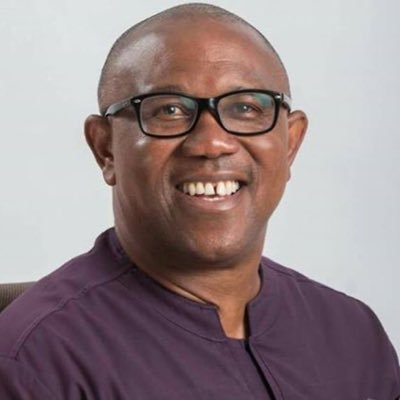
NIGERIANS, GO AND VERIFY (2)
Building the Institutions of the State
Peter Obi
In Series 1, I explained the philosophy that guided our administration in Anambra State: governance as a public trust, anchored on character, competence, capacity, and compassion. I also introduced the Anambra Integrated Development Strategy (ANIDS), our comprehensive framework for achieving balanced and sustainable development across all sectors.
But a development vision, however noble, cannot succeed without strong institutions to drive it. Before the government could effectively deliver on its promises in education, healthcare, infrastructure, security, and other sectors, we had to first restore the machinery of government itself. We could not build a prosperous state on a cracked and unstable foundation.
This was why one of our foremost priorities under ANIDS was to rebuild, strengthen, and reposition the institutions of government. When I assumed office, the physical and administrative architecture of governance was in a deplorable condition. Our task was not simply to construct buildings but to restore the institutions, systems, and structures through which government could function effectively.
We therefore began systematically rebuilding the infrastructure of governance across the executive, legislature, judiciary, civil service, and local government system.
Restoring the Seat of Government
The Government House in Awka, the state capital, had been vandalised and burnt by reactionary forces in 2004. We therefore had to rebuild, re-equip, and furnish it, restoring its dignity and functionality as the seat of executive government.
In the same vein, we rehabilitated the Governor’s Lodge in Amawbia and constructed a new Governor’s Lodge in Onitsha. These investments were intended not merely to provide accommodation but to strengthen executive presence and facilitate effective governance across the state’s major administrative and commercial centres.
Strengthening the Legislature and Judiciary
We rehabilitated the Anambra State House of Assembly Complex in Awka, providing our lawmakers with a more conducive and decorous environment in which to discharge their constitutional responsibilities. We also provided legislators with vehicles to facilitate the effective performance of their legislative duties.
We recognised that a functioning democracy requires strong institutions, including an effective legislature and an independent judiciary, each operating within its constitutional mandate.
In strengthening the judiciary, we provided brand-new vehicles to High Court judges. This was the first time such provision had been made for them in the history of the state. We also provided vehicles to magistrates for the first time since the creation of Anambra State.
These interventions were intended to strengthen the administration of justice, improve mobility, and enable judicial officers to discharge their responsibilities more effectively.
Rebuilding the Civil Service: The Chief Jerome Udoji State Secretariat Complex
Before our administration, many Ministries, Departments, and Agencies (MDAs) operated from scattered rented apartments, while civil servants lacked a centralised and decent working environment. This untidy arrangement undermined coordination, efficiency, and the dignity of public service.
We addressed this situation by constructing the two-phase, ultra-modern Chief Jerome Udoji State Secretariat Complex, comprising Blocks 1 and 2. The project brought the MDAs together under one roof, improved administrative coordination, and provided civil servants with a more suitable environment in which to serve the people.
The complex was named after Chief Jerome Udoji, the first indigenous Chief Secretary (the equivalent of today’s Secretary to the State Government) of the Eastern Region during the First Republic. This was also a recognition of his contribution to public administration and the civil service tradition.
. retweeted
NIGERIANS, GO AND VERIFY (1)
Introduction: Governance as a Public Trust
Peter Obi
When I took office as Governor of Anambra State, our beloved state was at a critical juncture. Leadership had become increasingly disconnected from the people, and many of the essential institutions needed to support a modern society were weak, ineffective, or absent altogether. We understood that governance could not continue according to established habits. It needed to be reconceived as a solemn public trust founded on transparency, prudence, accountability, and demonstrable results.
Our governing philosophy rested on four principles: character, competence, capacity, and compassion. We understood that leadership was not a platform for self-promotion, political slogans, or the pursuit of personal acclaim. Its purpose was to improve the circumstances of ordinary citizens. It meant converting public resources into concrete benefits and ensuring that government’s foremost responsibility was to serve the people. Achieving this demanded more than good intentions; it required a clear vision, careful planning, and disciplined execution.
Among our earliest findings was that the state lacked a unified development plan to direct its priorities and determine how resources should be allocated. We therefore promptly created the Ministry of Economic Planning to establish the institutional foundation for deliberate, coordinated, and sustainable development. After completing the necessary groundwork and consultations, we launched the Anambra Integrated Development Strategy (ANIDS).
At that time, the Millennium Development Goals (MDGs) were being pursued worldwide across eight clearly defined priorities: eliminating extreme poverty and hunger; achieving universal primary education; advancing gender equality and empowering women; reducing child mortality; improving maternal health; combating HIV/AIDS, malaria and other diseases; promoting environmental sustainability; and fostering a global partnership for development.
We adopted ANIDS as our overarching development philosophy and strategic framework for advancing these objectives, tailoring them to the distinctive circumstances, needs and development priorities of Anambra State. Instead of viewing the MDGs as remote international benchmarks, we worked to convert their aims into practical policies, programs and measurable results that would produce tangible improvements in the lives of our people.
We also undertook a deliberate effort to redefine the state’s identity, changing its public image from ‘Home for All’ to ‘The Light of the Nation’. This was not merely a change in slogan; it reflected our resolve to restore public confidence in government, renew civic pride and show that Anambra could serve as a model of purposeful leadership and development.
The ANIDS Blueprint: A Comprehensive Framework for Development
ANIDS served as the foundation for our commitment to broad-based and balanced development. We did not accept the idea that government could focus on a single sector while leaving others behind. We recognized that education, healthcare, infrastructure, security, agriculture and capable public institutions were mutually dependent. Advancement in one area could not be sustained without commensurate progress elsewhere. Accordingly, we pursued development across every sector, guided by defined priorities, disciplined planning and prudent stewardship of public resources.
Central to this vision was the restoration of the dignity of the Anambra person. We understood that dignity could not be restored through rhetoric alone. It was evident in the condition of roads and other infrastructure, the availability of healthcare, the quality of education, the performance of public institutions and the way government treated its workers, pensioners and traditional institutions.
. retweeted

Did you people think you could distract me from posting some @PeterObi goodness? Never!
So walk with me 🚶🏾♂️ let me take you through the first of a three part series detailing Peter Obi's legacy in Anambra state
This first part covers his achievements in Education, roads & health
. retweeted

I’ve compiled the hard copy into a single 237-page PDF, just 31 MB. Enjoy! ❤️
drive.google.com/drive/folde…


. retweeted

An APC member escorted INEC Chairman, Joash Amupitan, to Chatham House yesterday, and you want Nigerians to believe that INEC is non-partisan?
. retweeted

The biggest mistake a voter can make is to believe that their responsibility ends when their ballot goes into the box.
As Nigeria approaches the 2027 general elections, I want us to reconsider how we understand electoral participation. We have repeatedly witnessed presidential election results challenged in court. These disputes raise an important question: why should the credibility of an election depend so heavily on what happens after the results have been declared?
A major part of the problem, in my view, is that we have reduced the role of the voter to accreditation and voting. You obtain your Permanent Voter Card, arrive at your polling unit, get accredited, cast your vote and go home.
But what happens afterwards? Who takes responsibility for checking that the votes counted are the votes actually cast? Who verifies the figures announced by the presiding officer? Who ensures that the results entered on Form EC8A accurately reflect what happened at the polling unit?
This is why I believe Nigerian voters must become more informed and actively engaged in protecting the credibility of elections. Our electoral framework provides for the announcement of results at polling units, the completion and signing of Form EC8A, and the electronic transmission of results to INEC's IReV portal.
The Electoral Act 2026 also provides that where electronic transmission fails because of communication problems, the duly signed and stamped Form EC8A remains the primary source for collation and declaration of the result.
Political parties must take their responsibilities seriously by deploying properly trained polling agents to monitor the process, identify irregularities, verify announced figures and ensure that the relevant result forms are properly completed.
And voters should understand that they have a legitimate interest in what happens after they cast their ballots. They can observe peacefully in accordance with INEC's guidelines, which provide for observation of the counting and announcement of results from at least 300 metres away.
This is not a call for people to crowd polling units or interfere with election officials. It is a call for informed, lawful and responsible civic participation.
I am particularly concerned that many Nigerians have become too distant from the electoral process. We leave the responsibility to political parties, candidates and their agents, and then become spectators waiting to hear who has won.
If the votes are properly counted, the figures are accurately recorded, the polling agents have verified the results, and the results are transparently transmitted and made available for public scrutiny, it becomes much harder to manipulate the process without detection.
But we should be doing everything possible to reduce avoidable electoral disputes by ensuring that the evidence of what happened at each polling unit is properly documented and preserved.
The United States, whose presidential system informed much of our own constitutional arrangement, offers an important lesson in citizen participation. Electoral transparency is strengthened when citizens, party representatives, observers and the media take an active interest in the process.
Nigeria has 176,846 polling units. Imagine the difference it would make if electoral accountability were taken seriously at every one of them. We cannot continue to demand credible elections while leaving the protection of our votes entirely to other people.
Your vote is your choice. Protecting its integrity is a shared responsibility.

. retweeted

See as peter Obi warn this principal, nah Rev. Father save her 😂😂😂😂

. retweeted
Every serious opposition party should identify and flag polling units across Nigeria with unusual increases in registered voters as strategic red zones ahead of the 2027 elections.
These polling units should be closely monitored, with trained agents, documented evidence, and legal teams prepared to challenge any irregularities.
Act now. Don’t wait until it’s late.
. retweeted

The arrest and remand of Daniel Ojukwu should concern everyone who believes in accountability and the public's right to know.
Journalism is not a favour granted by those in power. It is an essential part of the accountability architecture of a functioning democracy.
Where there are allegations against a journalist, the proper response is due process, not the creation of an environment where reporting on public expenditure becomes a perilous undertaking.
The questions raised by investigative journalism should be answered with evidence, transparency and facts.
We must be careful not to create a country where the cost of asking difficult questions is the loss of one's liberty.
I stand in solidarity with Daniel Ojukwu and the team at FIJ. His right to a fair hearing must be protected, and his bail application deserves urgent and fair consideration.
A society that makes accountability dangerous will eventually make impunity comfortable.

. retweeted

Isu Achara Town Hall, Onicha, Ebonyi: 992 voters in 2023, 4,485 on the 2026 register. That's +3,493, the 3rd-highest increase in Nigeria when polling units are ranked by absolute increase.
We saw duplicate photos, AI generated photos and photos that didn’t match the names. #Mundx #Ebonyi #INEC #VotersRegister
. retweeted

Minister of Women affairs, Hajiya Imaan Sulaiman Ibrahim. Sharing bundle of N100,000 to every person inside this hall
I believe this is our Subsidy money. it's better to reverse it than allow these few number of clowns enjoying, while 200m Nigerian suffering.
. retweeted

Lol. My gee, this is a video of them protesting against the killing of their member, rightfully demanding justice.
Tell me the party logo you see on their shirt.

. retweeted

DANGER! THE FEDERAL GOVERNMENT IS ABOUT TO DRAG NIGERIAN EDUCATION BACK TO THE STONE AGE!
From 2027, the Federal Ministry of Education wants to force EVERY private and international secondary school in Nigeria to make students sit for WAEC, NECO or other approved Nigerian examinations, even when those students are already pursuing internationally recognised qualifications.
Schools that refuse risk losing their licences!
Instead of urgently modernising our outdated curriculum, fixing dilapidated public schools, building functional science laboratories, training teachers and introducing globally competitive learning standards, we are busy creating policies that threaten educational innovation.
Why are we more interested in forcing successful schools to conform than in raising the standards of failing schools?
The world is moving towards artificial intelligence, robotics, critical thinking, practical skills and competency-based education. Yet we are obsessed with forcing everyone into the same examination system.
We should be exporting educational excellence, not restricting it!
Nigeria cannot become globally competitive by punishing schools that dare to do things differently.
This policy must be urgently reconsidered before we sacrifice another generation’s educational opportunities on the altar of regulatory control.


