

Global Bio x AI Community. A third place for scientists, product managers, computational biologists, engineers and academics working in AI & Software for Bio
Global
Joined August 2024
- Tweets726
- Following75
- Followers1.5K
- Likes3.8K




Pinned Tweet
Is compute really all you need for biology?
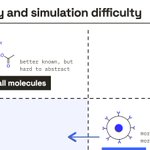
Simulating a single cell for one day could take 100x the world’s current power output.
Why brute-force scaling in biology won’t work - yet - —and what the path forward looks like: techbiotransformers.substack…

TechBio Transformers retweeted

I need all the AI people to stop saying "biology" when they mean "medicine" or "drug development"
TechBio Transformers retweeted

What is "medical superintelligence" and why are we so far away from the concept?
open-access
bmjdigitalhealth.bmj.com/con…

TechBio Transformers retweeted
When genome editing got going, the ability to trace a mammalian embryo's development to organ generation in exquisite detail was not envisioned. Now it's been accomplished by 2 independent groups. A big week in developmental biology
science.org/doi/10.1126/scie… @JShendure @ScienceMagazine
cell.com/cell/fulltext/S0092… @jonathanweisman @CellCellPress
nature.com/articles/d41586-0… @nature @ewencallaway

TechBio Transformers retweeted

For years, I've wanted to take a paper I wrote and create a web demo so people can play around with symmetric tilings. With LLMs, finally got around to it. Now you can play with symmetry-constrained molecular dynamics
whitead.github.io/symdjs/
TechBio Transformers retweeted
$1.8 billion committed for predictive models of AI biology
@biohub @GoogleDeepMind, @ENERGY , @NIH, @Meta @IsomorphicLabs all came together
reuters.com/business/healthc…

TechBio Transformers retweeted

AI folks who are new to bio should spend some time with wet lab folks not only to understand how experiments, assays, lab work is done but also to learn the basic concept of CONTROLS. 1/
TechBio Transformers retweeted

The OpenAI Foundation — the charity arm of the AI behemoth — has so far committed to giving away at least $25 billion. The foundation's life sciences lead speaks to Nature about its ambitions to cure disease.
go.nature.com/47pvvLZ

TechBio Transformers retweeted

biggest data factory event in history happening tomorrow in SF!
excited for the @CompoundVC @benchling collab!
full circle to be running it with one of my oldest friends in SF biotech, @shantenuagarwal

TechBio Transformers retweeted

Here’s a visualisation I built of the generative design agent we use every day at Iso. IsoDDE takes the goals of our drug designers and works autonomously to produce a set of pareto best molecules. Throughout the core generative design and optimisation process you can see a visualisation of the agent’s attention (heatmap) as it balances exploration-exploitation across chemical space (here just umap visualised) to find the best molecules (greener = better)
I’ve pulled out only one pareto-best molecule to exemplify this process, but I’ll showcase in a later video how we do this at scale (1/5)
TechBio Transformers retweeted

Writing an Investigational New Drug (IND) application is a major hurdle for drug developers. It can take a team of specialists three to four months, and mistakes can trigger protocol amendments or clinical holds.
In June, we started working with Population Health Partners (PHP) to leverage specialized Kosmos Clinical Protocol Design (“CPD”) and Kosmos Regulatory Authoring (“RA”) products to support PHP’s process of IND preparation.
Since then, specially trained Kosmos products produced a first acceptable draft of the Nonclinical Overview in 4.2 hours, against 100 hours of expert time, flagged an error that roughly fifteen human reviewers missed, and authored 70% of the text in a Pre-IND Briefing Meeting Request submitted to FDA.
PHP is now bringing Kosmos products to a second program and expects to complete IND preparation in as little as 1 month, instead of the 4 month industry standard.
PHP's experts can spend their time reviewing and deciding, not just drafting. The time recovered by Kosmos products means that drugs could make their way to patients faster.

TechBio Transformers retweeted

Today we announced the Claude-led discovery of a molecular machine that we suspect could represent a new gene editing mechanism. Its precise function, biotechnological utility (if any), or level of significance is not yet clear, but at minimum it is work I would have been proud to do as a PhD student. The work was done mostly, though not entirely, by Claude: our life sciences team suggested a broad area of research, Claude read through the literature and a bunch of genome data and discovered something interesting, then Claude proposed experiments to verify the discovery and our team carried them out.
It’s easy to dismiss this as a one-off or curiosity, but we’ve repeatedly seen a pattern where AI performance in new intellectual domains goes from weak to superhuman in a matter of a few years. In 2023 models struggled to do math at the level of an average high-school student. In 2024 they started to do well on math competitions for the best high-schoolers in the country, in 2025 they started to solve minor open problems, in early 2026 more significant open problems, and in late 2026 they are beginning to solve the top few open problems in all of mathematics. We believe AI for biology is on a similar exponential trend.
The main difference between biology and mathematics, of course, is that math can be done purely theoretically, while biology requires experimentation. Some have used this to draw the conclusion that AI’s utility in biology will be limited. We think this is wrong. As we’ve demonstrated today, humans can collaborate with AI to perform the experiments, validate key results in a few weeks and, if necessary, work with the AI to iterate on what they find. Eventually it may even be possible for Claude itself to safely perform the experiments by autonomously controlling lab equipment, with appropriate safeguards in place, but we aren’t doing that today (our lab is also a BSL1/BSL2 facility that doesn't handle materials dangerous to humans).
More broadly, biomedical advancement has many stages — from fundamental biology discoveries, to translational research, to drug discovery, clinical trials, and finally the actual delivery of medicines and health care to patients. We are also interested in these later stages, but even simply accelerating the first stage of fundamental biological discoveries has the potential to speed up and broaden the entire pipeline. Improving our understanding of biology and sharpening biologists’ tools can drive forward all of the later stages, for example by identifying new drug targets, finding new therapeutic modalities, allowing for more precise measurement, and speeding up the experimental loop which itself further accelerates our understanding of biology. This will not in itself speed up clinical trial times, but if it succeeds it could greatly increase the number of promising candidates that go into the pipeline — an increase in throughput even though latency remains.
In Machines of Loving Grace, I wrote about AI’s potential to “cure most diseases in 5-10 years” — a goal that sounds impossible, but one I believe is just barely possible if AI is applied to every stage of the pipeline. The first step is showing that AI can first help with, and then drive, biological discoveries.
Claude’s discovery is the latest in a line of related prior work that goes back decades, beginning with systems like CRISPR, and continuing with discoveries like the bridge recombinase and VIPR in the past few years. Recently, there has been heightened interest in systems based on reverse transcriptase (RT) enzymes, the enzyme underlying the system Claude identified. And most recently, a Stanford team working independently described a novel RT system with an associated non-coding array that is in some ways similar to the one Claude found, though they are distinct systems that evolved independently from each other. I believe that we’re at the very beginning of finding such systems and developing them into powerful tools for biotechnology.
I’m proud of the resources Anthropic has invested in accelerating the public benefits of AI through the life sciences, and we’re aiming both to grow our life sciences team and to work with other scientists to extend this approach to a broad range of problems. If you have a proposal for a research collaboration or are interested in joining our life sciences team, please reach out.

Claude has discovered a previously unknown enzyme system hidden in the DNA of bacteriophages. Beside the enzyme’s gene sits a long array of repeating DNA—a structure that looks somewhat similar to CRISPR.
We don’t yet understand what this system does, but only a handful of known systems share its features, and all of them are able to cut, copy, and paste DNA. Historically, the discovery of such programmable systems has helped revolutionize medicine. CRISPR, for instance, is now the foundation of genetic medicines. But it will take much more work to learn what this system does, and whether it can be put to similar use.
Read more: anthropic.com/news/claude-di…

TechBio Transformers retweeted

There is a biotech arm in the new Horowitz Andreessen Academy 🧬

the rumors are true
we're launching a biotech arm inside the new Horowitz Andreessen Academy in sf
key interests:
- longevity and anti-aging
- gene editing, we've read about it, seems fine
- peptides, don't ask where from, ask what dose
- embryo optimization, we are simply applying our investment thesis one generation earlier
- artificial wombs, because 9 months is a long vesting schedule
- AI wet labs, the interns don't sleep and neither should the science
first cohort graduates either enlightened or radioactive, we'll know by Q3 2027
bio/acc
TechBio Transformers retweeted

AI in biology may have a data problem before it has a model problem.
It’s easy to use AI to make drug discovery faster & more efficient. The much harder challenge is discovering impactful medicines humans would never have found.
AI models are only as useful as the data they learn from, and it’s especially hard in biotech. The biggest and most valuable goals in AI in biotech are to cure diseases we haven’t been able to cure and design therapeutics capable of doing things that haven’t been possible before. By definition, these goals aren’t represented in our training data.
For our second essay at Waypoint Bio, we wrote about the data we think we’ll need to build out-of-distribution medicines: waypointbio.com/writings

TechBio Transformers retweeted

If you are wondering how AI will change science and what it makes sense to do right now, there are essentially three things:
1. You can work on solving the problems that are fast and easy to verify. This is a small subset of all problems, but these are the problems that will be most impacted by AI. The Millennium Problems we published are an example.
2. You can work on solving the problems that make other problems hard to verify. For example, one of the slow parts for solving many problems is small molecule synthesis. Make small molecule synthesis fast, and we will solve many more problems. Other things that fall into this category include creating new assays, finding new biomarkers, and accelerating clinical trials.
3. You can go and gather data for the really hard problems (i.e., the ones that are impossible to verify easily). In the age of AI, data is king.
There are many other extremely important and valuable things to be done as well. But they will not benefit from AI nearly to the same extent.
TechBio Transformers retweeted
We're doing a AI x Bio block party. Come by

Join the Edison team at our AI Biotech Block Party, co-hosted with @multiplylabs!
The evening will include a fireside chat with @FredParietti, CEO of Multiply Labs, and @andrewwhite01, CTO of Edison, on the future of AI across drug discovery, development, and manufacturing.
Plus food, drinks, lab tours, and demos!
TechBio Transformers retweeted
In a somewhat unprecedented move, Anthropic has published a research report on misuses of its platform - particularly highlighting cyber risks, biological misuse and instances of illicit distillation.
Interestingly most harmful instances recorded use of Haiku, Sonnet, Opus but no Fable or Mythos cases except one distillation case.
The biological misuse has been of particular interest lately and the report shows that 30-day sweep of adversarial state institutions found efforts to write grants about chikugunya, avian flu, venom and toxin design among other things. But the key point is that Anthropic could not tell legitimate research from malicious intent in these sweeps.

TechBio Transformers retweeted

Almost 400m cells freely viewable, downloadable! Compile your own cell atlases in 2 clicks.

40 000 public scRNA-seq datasets, with cell types annotated. Freely available for viewing and downloading at demo.glass.bio
TechBio Transformers retweeted

she's also dripped out in a gucci cable knit and a custom "Bertozzi 24" lab coat jersey. iconic

TechBio Transformers retweeted

"The past, present and future of de novo
protein design" (Nature, from Baker's Lab)
"Over the next five to ten years, we anticipate
the design of sophisticated protein nanomachines and materials with functionality ranging far beyond that generated during natural evolution for a wide range of
applications in medicine, technology and sustainability"
The paper offers a general picture of de novo protein design. The major classes of challenges include the design of:
- monomeric protein folds and multiprotein assemblies
- proteins that bind to other proteins
- small-molecule binders, sensors and enzyme catalysts
- multistate functional biomolecular systems
bakerlab.org/wp-content/uplo…

TechBio Transformers retweeted

Vijay Pande — who left a16z's roughly $4 billion biotech practice last year to start the much smaller, AI-native VZVC — talks about why biology is finally shifting from a "discovery" science to an "engineering" one, why clinical trials are still brutally
spr.ly/6018B12xCm
