






Diana retweeted

British artist, Paul Fordyce Maitland (1863-1909), “The Green Park, Piccadilly”
oil/panel


Diana retweeted

How do we tell the sea that we are drowning on land?
~Robert Henri, Rough Seas Near Lobster Point (1903)

Diana retweeted
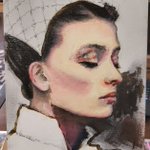
Alison Pullen whose interiors are done by painting onto the pages of magazines, often 'World of Interiors.' The result is an image of the room which is dominant, but also coexists with a foundation of photographs of totally different objects that seem to reflect at the surface.


Diana retweeted

Louis Sullivan (1856 to 1924): Applied organic, plant-like terra cotta and iron ornament to early skyscraper design, bridging functionalism and natural form.
When a bank director was considering hiring him but hesitated because other architects had bid lower for a conventional classical design, Sullivan is said to have replied: “A thousand architects could design those buildings. Only I can design this one.” He got the commission.
He is also the source of the famous motto “form ever follows function.”


Diana retweeted
The info about ROCOCO SCULPTORS is from GROK. Images credit to many sites.
Rococo sculpture was an 18th-century art style characterized by theatricality, sensuality, asymmetry, scrolling curves, and dynamic movement.
Étienne-Maurice Falconet (1716–1791) was a prominent French sculptor known for graceful, light-hearted, and mythological works.
When Catherine II of Russia gave him the honorific title roughly meaning “Your Highborn”, the self-made sculptor, from a poor artisan family, replied that it suited him perfectly because he was born in an attic.

Diana retweeted
Claude Michel, known as Clodion (1738–1814): A French sculptor famous for intimate, sensual terracotta reliefs and statuettes depicting nymphs, satyrs, and bacchantes.
Catherine the Great tried to lure him to Russia (as she had with Falconet and others), but he turned her down and went back to Paris instead.


Diana retweeted
What is a museum, if not time holding its breath?
~Winged Victory of Samothrace, c. 200–190 BC

Diana retweeted
This is "Ruth" (c. 1880) by Italian sculptor Giovanni Ciniselli. It captures the biblical figure in a quiet moment of deep thought, holding a bundle of wheat from the fields she gleaned to survive.


