

Research Director at Wood Mackenzie | Energy markets analyst | Geoscience geek | Reading rocks and price curves | Views my own
Dubai, United Arab Emirates
Joined February 2026
- Tweets496
- Following60
- Followers1.3K
- Likes175
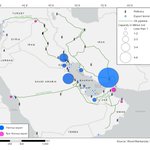




Iran’s IRGC Navy said yesterday that two oil tankers exploded and caught fire after striking naval mines, while transiting the Strait of Hormuz along what it described as an "unauthorized route".
Incidents like this are becoming an almost daily occurrence. At least (at that's a very conservative number) 20 vessels have been attacked or damaged in the strait this month, with Iran attributing many of these incidents to naval mines. JMIC has recorded 194 confirmed incidents since 1 March.
Despite this persistent risk, Wood Mackenzie's proprietary High Frequency Oil Production Monitor data shows that regional production has almost fully recovered to pre-war levels, with the UAE and Iraq already exceeding them. Iran is the only country still facing production cuts, and these stem from the US blockade rather than shipping risks.
Shipping through Hormuz, however, has not kept pace with the production recovery. Wood Mackenzie's Vessel Tracker data shows that traffic through the Strait of Hormuz in October remained 30% below pre-war levels. Continued attacks on tankers are disrupting oil flows, raising the cost of the blockade and pushing companies to find alternative export routes. I'll right more on these alternative export routes in future posts.

LNG demand trends are diverging between Asia and Europe.
Asian imports are heading for a fourth consecutive monthly decline in November. Northeast Asian buying remains subdued amid expectations of a warmer El Niño-driven winter and comfortable inventories. South Asian spot activity has also weakened, although Thai and Vietnamese buyers remain active in the tender market.
Europe continues to increase LNG imports, but storage levels are falling. Inventories dropped below 68.5% on 24 November, 10 percentage points below last year's level. A prolonged cold spell could increase the risk of shortages and put further pressure on gas prices this winter.
Egypt is also importing less LNG, with volumes down nearly 30% y/y in November. Lower domestic demand has enabled recent cargo diversions to Europe.
For clients only -> lens.woodmac.com/reports?doc…

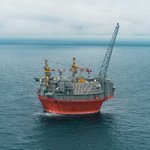
Vår Energi has agreed to acquire ConocoPhillips’ Norwegian business for a headline consideration of US$4.425 billion.
The landmark deal marks the end of ConocoPhillips’ long-standing presence in Norway, dating back to 1969, when predecessor Phillips Petroleum discovered the giant Ekofisk field, laying the foundations for the country’s oil and gas industry.
More for our clients here-> lens.woodmac.com/reports?doc…

5
275
COP31 in Antalya has ended without consensus or a final agreement, marking the first COP since 2009 to conclude without a core deal. Deep divisions over the proposed commitment to “transition away from fossil fuels” proved impossible to bridge.
The outcome reflects a changing global reality: energy security, affordability and geopolitical tensions are increasingly taking precedence over climate ambitions. Fossil fuels still meet around 80% of global energy demand, and the wars in Ukraine and Iran have reinforced the risks of relying on imported hydrocarbons.
Oil and gas producers emerged on the front foot, successfully keeping any reference to phasing out fossil fuels out of the final text. Meanwhile, the lack of US leadership and China's reluctance to fill the vacuum further weakened prospects for global consensus.
The failure could also have unintended consequences for Europe, potentially making it easier for governments to approve new domestic upstream investment as they seek to balance decarbonisation with energy security.
More here -> lens.woodmac.com/reports?doc…

1
1
170
Oil and gas producers moved in opposite directions again in Q3 2026.
Oil hedging volumes reached a record ~420 million barrels, with most new positions concentrated in 2027. Gas hedged volumes, by contrast, fell 15%, despite additional hedging for late 2027 and 2028 at higher strike prices.
Gas producers remain more heavily hedged and further forward: around 20% of production is covered through late 2027, compared with less than 10% for liquids by Q3 2027. Coverage for both falls sharply in 2028.
Our clients can assess the potential financial impact of producers’ hedging positions across our different price scenarios -> lens.woodmac.com/reports?doc…
Iraq’s Midland Oil Company has confirmed oil shows and crude flow of 24°–29° API from the L3 interval of the Hartha reservoir in East Baghdad North, following a revised petrophysical evaluation of the EB-102 well. The findings overturn earlier assessments that classified the interval as non-hydrocarbon bearing. No flow rates were disclosed.
The result is encouraging for the operator ZPEC. East Baghdad North is the northern extension of East Baghdad South, operated by ZhenHua Oil and where a 2-billion-barrel discovery was confirmed in January 2025. EBN-11 was spudded in September, with EBN-12 planned, alongside ongoing 2D and 3D seismic surveys.
The Hartha is an Upper Cretaceous carbonate formation estimated to hold around 2+ billion boe across several Iraqi fields. At East Baghdad South, its development has been constrained by variable oil quality, reservoir characteristics, increasing water saturation and limited lateral continuity.
The 24°–29° API crude reported at East Baghdad North is notably lighter than the 15°–24° API oil encountered at East Baghdad South. Whether these characteristics extend across the wider L3 interval and translate into commercial production remains to be established.

1
6
295
Rovuma LNG moves closer to FID. Mozambique has approved an expanded 18.6 mmtpa development plan, while a reported asset swap will give ExxonMobil a 50% stake in the project.
We now see three major LNG projects – Rovuma, Papua LNG and Argentina LNG – taking FID before year-end, potentially adding 34.6 mmtpa of new capacity, with Sabine Pass (7 mmtpa) likely to follow in early 2027.
That's around 41 mmtpa of new LNG supply reaching FID in just a few months, signalling renewed momentum behind global LNG investment and strengthening the outlook for Mozambique's wider LNG ambitions.
More for our clients only -> lens.woodmac.com/reports?doc…

2
203
This brings us to Oman and yesterday’s big announcement: ExxonMobil just entered Oman, and it’s going straight for the hardest gas in the country: Makarem.
Oman signed a concession with Energy Oman and ExxonMobil to appraise and develop the Greater Makarem area (now know as Block 20 - although the exact boundaries of that block have not been disclosed), with an initial commitment of more than US$400 mn. It is tied to a proposed LNG project at Duqm, targeting 6-9 mmtpa.
Makarem is a known problem. PDO found it in the 1990s. BP held it and relinquished it in 2018 after poor appraisal results. The gas sits in the deeper, tighter Amin and Buah formations, with sour gas in places.
Oman needs this to work. Majors drilled for gas across the country with few commercial discoveries, and the planned fourth Sur LNG train was shelved for lack of feedgas.
It’s not the first US attempt at Omani tight gas. EOG entered in 2020 with Blocks 36 and 49. Thameen-1 found a 30-40 m hydrocarbon column in the Hasirah sandstone but no flows on test. EOG decided to exit in late 2021, completing it in 2023. The problem was the nature of the discoveries, gas in tight, low-permeability rock, more than their size.
Now EOG is in the UAE and Bahrain, and ExxonMobil is in Oman, bringing US tight-rock expertise to the region. Different players, same bet.
Cautious optimism is warranted. Feeding a 6-9 mmtpa plant likely means moving beyond the sweet spots, and the LNG plant adds substantially to capital needs.
More on Makarem and ExxonMobil's plan in Oman (for our clients only) -> lens.woodmac.com/reports?doc…

2
369
Not long after EOG’s Shilaif oil results, ADNOC made a big and long-awaited decision (a couple of weeks ago at ADIPEC): FID on Ruwais Diyab, its first commercial-scale unconventional gas development.
This is a long way from where it started. The first wells tested in 2020 came in at or below 2 mmcfd IP.
The project now targets 345 mmcfd of raw gas from 2029 under a 25-year plan, with potential to reach 1 bcfd. Capex and partners are undisclosed (expect for TotalEnergies with its 10% in the JV area).
The play spans three Jurassic carbonate mudstones, analogues of Saudi Arabia’s Jafurah. But this is dry gas with H₂S and CO₂, not liquids-rich, and deep, overpressured, tight rock made early appraisal difficult.
What changed is well performance. Multi-formation fracture zones and longer laterals have lifted productivity to levels comparable with the core of the Haynesville, while drilling costs keep falling. At the well level, returns now rank among the best of global unconventional gas peers.
The key variable is now gas pricing. ADNOC’s historical domestic price cap has weighed on commerciality, and a revision to attract international partners looks necessary.
Next, expect ADNOC to farm down part of its 90% stake. EOG, already active in Shilaif oil, would be a credible partner. Operators in both plays can share rigs, standardise completions and pool subsurface expertise, cutting costs across the two.
The UAE’s unconventional push is now running on both oil and gas.

3. The rise of unconventional resources, from the UAE to Oman
The Middle East’s unconventional story is moving from theory to results, and the UAE is leading it. Oman has followed (yesterday!), but let me start first with the UAE and its unconventional oil and gas ambitions.
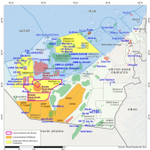
EOG’s first Shilaif wells in Abu Dhabi are almost certainly targeting the Upper Cretaceous Shilaif Formation, the source rock behind an estimated 22 bn bbl of technically recoverable unconventional oil. Activity is accelerating, with Petronas also drilling appraisal wells on UCO1 and UCO5, while UCO4 is still available for future licensing but actively pursued by several US independents.
Three reasons the results matter:
i. Productivity. 30-day cumulative output of 25,000 bbl is in line with the best acreage in leading US liquids plays. And it came from one-mile laterals, while Permian and Eagle Ford wells now routinely exceed two miles. Per foot, EOG’s UAE wells clearly outperform.
ii. Commercial framework. UCO3 is a concession with tax and royalty terms better suited to capital-intensive unconventionals than a PSC. After a three-year appraisal, EOG can elect full-field development, with ADNOC holding a participation option.
iii. Cost reduction potential. Appraisal has relied mostly on local drilling and completion services. If commerciality is confirmed, higher-spec equipment, longer laterals and further optimisation should cut unit costs, and locally sourced frac sand already helps.
Caveats: I believe the first two wells share the same area and landing zone, so repeatability is unproven, and decline rates, well spacing and reservoir variability will decide resource quality.
Still, the UAE could become the first internationally competitive unconventional oil play able to compete with leading US shale economics.

1
153
2. Iraq's exploration (and DRO) renaissance
Between LUKOIL’s Eridu in 2017 and this year, Iraq had no major discovery. Then ZhenHua Oil made three in 2026 alone, including Shams on the Qurnain block adjacent to the Saudi border, an estimated 8.84 bn bbl in place and a possible new play in the under-explored Jurassic Mus formation.
Meanwhile, the big redevelopment contracts are going to Western companies, almost always with a US partner (the best example is ConocoPhillips alongside BP in Kirkuk). Chevron, ExxonMobil and HKN are all very active too signing MoUs, HoTs and negotiating commercial terms.
But when it comes to exploration, the story is being written almost entirely by Chinese companies while they capitalize on their Round 5+ and 6 awards. The West takes discovered giants and super-giants, while China takes the risk on the frontier.
The reason is fiscal. Iraq’s terms leave the government ~90% of pre-share NPV and deliver the lowest post-tax investor NPV/boe in the Middle East. Almost all upside from higher prices goes to the state, and there’s little protection when prices fall. That’s tolerable for development, but hard to justify for exploration’s added risk and longer payback.
Iraq has ~200,000 km² of open acreage, the lowest opex in the region and a global industry desperate to reload portfolios. The rocks are ready. Whether the terms follow, especially with Hormuz raising the region’s risk premium, will decide if Iraq’s potential stays just that.

5
242
The reopening of the Federal ITP is also important for the redevelopment of the Kirkuk fields. Iraq awarded BP a contract in February 2025 to rehabilitate and redevelop the fields, with ConocoPhillips (42%) and TPAO (15%) involved in the wider redevelopment plans from July 2026. The project encompasses more than 3 billion boe of recoverable resources, with additional exploration upside in deeper, high-pressure reservoirs.
Discovered in 1927 and brought onstream in 1934, Kirkuk is one of Iraq's oldest and largest oil fields. Production exceeded 1.4 million b/d in the 1970s before declining due to sanctions, conflict, infrastructure damage and under-investment. Current combined production across the five fields is around 300,000 b/d. The fields produce light, sour crude from fractured carbonate reservoirs. Decades of production and limited investment have resulted in reservoir damage, elevated water cuts and ageing infrastructure, requiring extensive rehabilitation.
Produced oil is currently supplied to northern refineries and exported via the KEP. The reopening of the Federal ITP provides an alternative export route, allowing production to bypass the KEP and potentially unlocking additional pipeline capacity for higher exports.
A more detailed analysis of the Kirkuk fields is available to our clients:
lens.woodmac.com/reports?doc…
1
199