

Prof @uscbme | Educator | Director Transformative Nanomed | Director SPARK USC | Founder SSTX | Editor @BioactiveMat | Author https://xitter.cf/t.co/8HXzOgb3LH
Los Angeles, CA
Joined June 2016
- Tweets2.9K
- Following686
- Followers5.6K
- Likes17.6K





Pinned Tweet
Our lab, in conjunction with the Transformative Center for Nanomedicine, has openings for postdocs and research technicians.
Email [email protected] with CV and interests, and for more information.

Day 0 and 1 of @ASNKidney #KidneyWk!
Always keep it moving so nanotherapeutics can make the impact for the clinic.
Looking forward to Day 2 and 3!
@kidneyrebel @kapitsinou @GiblinJoshua @PKDFoundation


Our lab is accepting Postdoc and research technician applicants - those that are committed to collaborative research and supporting therapeutic development are encouraged to apply!

Our lab, in conjunction with the Transformative Center for Nanomedicine, has openings for postdocs and research technicians.
Email [email protected] with CV and interests, and for more information.
Eunji Paige Chung retweeted

Apply now for Round 4 of the OKRA Opportunity Pool Program! Submissions close next Tues., Oct. 20, at 5pm CT.
Full application details, including eligibility requirements, application components, & contact info can be found in the NOFO on the OKRA website:uab.edu/okra/funding/okra-op…

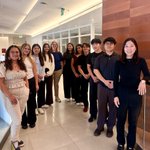
We had a meaningful and productive day via the 3rd symposium hosted by the USC Transformative Center for Nanomedicine and DD.
We all got to work across the sectors, learning from e/o toward our shared goal in developing therapeutics for patients. 💪
#teamworkmakesthedreamwork


Eunji Paige Chung retweeted

BREAKING NEWS
The 2026 #NobelPrize in Physiology or Medicine has been awarded to Karl Deisseroth, Peter Hegemann and Georg Nagel “for their discoveries concerning light-gated ion channels and optogenetics.”

Read a ton of books over the last few months but this one is particularly illuminating. Learning more about my workplace from the last few decades:


Eunji Paige Chung retweeted

🧬 Excited to share our new work in @NatureBiotech!
Paper: nature.com/articles/s41587-0… Research Briefing: nature.com/articles/s41587-0…
Large gene editors require large mRNAs, but LNPs are typically discovered using much smaller reporter RNAs. We asked: does RNA size matter when discovering delivery lipids?
Using a large base-editor mRNA for high-throughput screening, we identified LC-1, an ionizable lipid that enabled efficient gene editing in the liver, lung, and brain via different administration routes in mice, with up to 4× higher Cas9 editing than benchmark LNPs. LC-1 also efficiently delivered base editors for disease-relevant targets in hypercholesterolemia, cystic fibrosis, and Angelman syndrome.
Why does LC-1 work so well? Cryo-EM and X-ray scattering revealed that LC-1 LNPs form an ordered, inverted-hexagonal structure that persists with large RNA cargo. This membrane-fusing structure helps RNA escape from endosomes, the compartments that can trap it inside cells. In cell studies, LC-1 released roughly twice as much large mRNA into the cytosol as the benchmark formulations. We show that LC-1's key design features also apply to ionizable lipids made through other synthetic routes.
These findings show that accounting for RNA size from the start can change which lipids we discover and improve delivery of large gene editors. This could help expand the delivery options available for future gene-editing medicines.
Thank you to all our co-authors, collaborators and funders @CIHR_IRSC @NSERC_CRSNG @UofTPharmacy @LisaDolovich @PMResearch_UHN @bradwouters #LipidNanoparticles #GeneEditing #RNATherapeutics

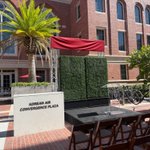
Lucky the final location of the Lucas Museum is across the street from my office.
Such a magical place, with a lot to be inspired by - including one of my favorite artists KAWS, “Small Lie”.


Eunji Paige Chung retweeted
Join the NIH Stadtman Tenure-Track Investigator Program and build your independent research program in a collaborative environment where early-career scientists can think boldly, work across disciplines & tackle biomedical science’s biggest challenges.
“What attracted me most to the Stadtman Program was the ability to develop and lead my own independent research program and to do that in a sustained and intentional way, making use of the research environment and trying to make use of the collaborations that are possible here.” - Dr. Tiarnán Keenan, Stadtman Investigator at the National Eye Institute.
🔗 Learn more and apply by 9/30/26: bit.ly/3V1XNcA


It was fun to make this video, in celebration of our department's 50th anniversary.
50 Years of USC Biomedical Engineering | A Legacy of Innovation youtu.be/HufkZ3sz5vU?si=xVs_… via @YouTube
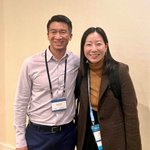
My co-organizer and I at our Dept 50th Anni this past week.
Michael recruited me to USC over a decade ago and has always been a solid, kind support.
It’s been a busy summer, but lucky to have partnered together.
Thanks to all BTS that made this joyous event happen.
Fight on! ✌️


Our Annual Transformative Center for Nanomedicine Symposium on Oct 8, 2026 will also showcase experts from academia in cell therapy, organ regeneration, and therapeutic development.
Register here!
docs.google.com/forms/d/e/1F…
