

The Cyber First Movement | Because Technical Solutions Need Leadership to Work | Founder | Author | The Cybersecurity CEO | Cybersecurity NED | Keynote Speaker
Dublin City, Ireland
Joined November 2010
- Tweets2.2K
- Following2.7K
- Followers772
- Likes1.9K


Pinned Tweet
When security teams simply block AI initiatives, they don't eliminate risk, they displace it.
Employees who need AI tools to remain competitive will find alternatives, often using personal devices and consumer accounts outside IT visibility.
This will make Shadow IT look like child's play.
As always put the effort into a thoughtful policy on AI usage.
Pull a team of internal experts into an AI guiding council.

51
Four things I took from Gartner this year that matter more than the AI hype
I have been going to Gartner’s security and risk management conference in London on and off since 2008. It is a lot bigger than it used to be. I still go for the same reason, to hear what the serious money is saying about how cybersecurity is actually evolving and not what the media cycle needs it to be.
We are four years into AI and the novelty has worn off. What I heard this year was calmer, sharper, and more useful than the panic in the media.
1. AI is no longer a surprise. It is just a faster attacker.
Cybersecurity leaders are not as rattled as the coverage suggests. For them, AI is not a new category of threat. It is hackers who are quicker, more patient, and better at scale. The problems that AI creates in access, detection, judgement, recovery have not changed as much as the physics. Treat AI as an accelerant, not a revolution, and you stay closer to reality.
2. Identity is the control plane. Especially non-human identity.
This was the point that resonated with me. People are no longer the only actors on the network. AI agents are there too. If you cannot authenticate a machine identity with the same rigour you apply to a human one, you cannot answer the only question that matters after an incident: who did what, and when.
Human IAM was hard enough. Non-human and agent identity is now the gap that will decide whether your controls still mean anything.
3. In Europe, regulation is not coming. It is already the operating environment.
NIS2 and DORA have teeth. Cyber leaders have largely accepted that protection and governance are equal parts of the job. The lag is higher up. Boards and executive teams have not all internalised that cyber compliance now carries personal liability. That gap between the security function and the people who sign for the organisation is where the real risk sits.
4. Resilience is the point. Compromise is assumed.
The strongest line in the keynote from Christopher Mixter was simple, getting breached is no longer the exception. It is closer to falling on the ice. The skill is how fast you get up, how little you lose, and whether the business keeps moving. Resilience, not perfect prevention, is the ultimate goal.
That last point is the one I keep coming back to. Prevention still matters. It is no longer the whole story.
These conferences are useful because they force you to test your own assumptions against what large organisations are actually funding and fearing.
For me, identity , human and machine is the thread that will run through the book I am in the process of writing: Better Safe: A Cybersecurity Guide for CEOs in the Age of AI.
The ideas are not new. The urgency of writing them down clearly, for people who do not live in this world every day, is.
If you were at Gartner this year, or if you are living these four tensions inside your organisation, I would like to hear which one is landing hardest for you.

1
1
165
Just heard David @friedberg on the All-In Podcast stating SpaceX & Starlink aren’t just internet.
They’re a backup to the internet.
Smart move for every CEO: Put a @Starlink in your home office.
Even smarter: Add Starlink backups to billing systems, data centres, and key infrastructure.
When your provider goes dark, you’ll be glad you did.
Resilience beats regret.
1
37
Given the week that we are living through I thought I would share my thoughts on the necessity for CEOs & C-Suite to accept the new reality of Cyber Warfare and Cyber Threats that we are facing.
A new approach is called for that rejects the "tick box" security we have accepted in the past. We need a Cyber First approach that places security above all other considerations.
Check out my article: teapawt.net/TheCyberCEO/status/202…
#CyberSecurity #Leadership #CEOLife #OTSecurity


26
What should you do with your spare time?
Well check out this article that might provide the key to unlocking your peace of mind.


27
Robert O'Brien retweeted

David Lammy’s plan to slash our longstanding right to trial by jury is facing a huge chorus of opposition — and rightly so.
FSU research shows that those charged with “speech crimes” are almost twice as likely to be found not guilty in a Crown Court with a jury than in a magistrates’ court without one.
Last week, the Four Bars released a rare joint statement opposing Lammy’s sinister plan to curtail the right to jury trials.
They said they are “deeply concerned that the UK government is planning to restrict the right to a jury trial in England and Wales. Being tried by a jury of one’s peers is a fundamental cornerstone of the criminal justice system in our respective jurisdictions.”
They added that Lammy’s proposal would also undermine public trust in the criminal justice system.
Read the full statement below 👇


Robert O'Brien retweeted

I‘m back temporarily for one reason and one reason only:
To voice my absolute shock and disgust at the arrest of Graham Linehan—the latest in a long line of events that mark the end of a once great nation.
And it is, in fact, the end.
1/

Robert O'Brien retweeted

In my opinion we have to recognise the current state level of fucks to give... we are trying as an industry/community to increase the number of fucks people give about digital security (cyber security) because as humanity we have put technology into everything in our lives!
#Mission make family and friends safer!

Superyachts at Cannes are cybercrime magnets. 2017: Hackers remotely steered a yacht!
Businesses, learn from yachts: cut connectivity, tighten controls to protect VIPs. Watch from Antibes:

1
2
47


📍 Filmed on location in Sparta, Greece — at the foot of the ancient fortress of Mystras.
But the threat I’m talking about today isn’t ancient. It’s modern. And it’s in your pocket.
A recent leak of U.S. military strike plans—via a Signal group chat—should be a flashing red light for every cybersecurity leader, executive, and board member.
This isn’t just a one-off mistake. It’s a pattern I see across organisations:
🔹 Leadership teams using Signal, WhatsApp, and Telegram as backchannel comms
🔹 No oversight, no guidance, no security controls
🔹 Massive potential for information leakage, reputational damage, or worse
So in this video, I unpack: ✅ Why these tools are so appealing to execs
✅ The real risk they pose when used without guardrails
✅ Practical steps you can take right now to manage the risk—without blocking productivity
This is one of those topics that sits in the “we’ll deal with it later” category… until later becomes too late.
Let me know your thoughts—how is your organisation handling messaging apps outside the official tool stack?
1
3
234
Robert O'Brien retweeted
'The anonymous hackers shared with the BBC screenshots of the first extortion message they sent to Co-op's head of cyber security in an internal Microsoft Teams chat on 25th April.
"Hello, we exfiltrated the data from your company," the chat says.
"We have customer database, and Co-op member card data."'
(Today is Friday 2nd May....)
bbc.co.uk/news/articles/crkx…

Robert O'Brien retweeted
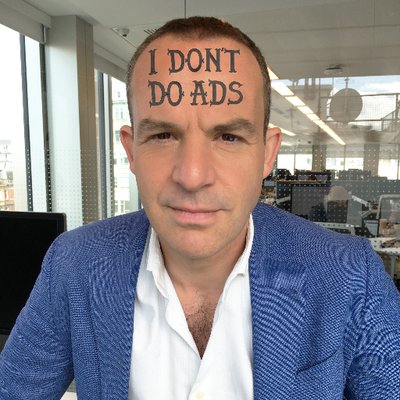
Phone theft UP 40%. 5 things you should to do secure your mobile so they can't access your banking
Courtesy of ITV's Martin Lewis Money Show
Feel free to share
North Korean Hackers Exploit Human Weakness: SMEs in the Crosshairs
Whilst Crypto and Bitcoin are very much in the news it's not an activity that the great majority of business owners are involved with. However, because it is so lucrative for hackers it can act like a canary in the coal mine for the rest of us. That is why it’s worth looking at the latest hack of Bybit and what that means for the rest of us.
1
35
These bastards are relentless. North Korean hackers aren’t just after profit—they’re funding state agendas, making them bolder and more persistent. SMEs can’t afford to lag behind. Social engineering preys on trust, tricking employees into revealing credentials or approving fraudulent transfers. In Bybit’s case, hackers manipulated screens during a routine process, redirecting funds to their own accounts.
1
17
SMEs, with small security teams and overstretched staff, are prime targets for these tactics. Unlike banks, where fraud can sometimes be reversed, crypto’s finality leaves no room for mistakes. It’s time to level up—train staff to spot phishing, enforce multi-layer verification, and prioritize cyber resilience. Against nation-state predators, doing nothing is not an option.
17