

I look at what people do when money, status, or pressure is on the line. Business, power, and the incentives behind the headlines.
Joined November 2023
- Tweets1.6K
- Following1.9K
- Followers1.1K
- Likes141






Pinned Tweet
Most people explain behavior by listening to what people say.
I prefer to watch what they protect, what they repeat, what they pay for, and what they’re afraid to lose.
Money reveals incentives.
Power reveals character.
Pressure reveals priorities.
This account is about the motives underneath all four.
Imagine getting paid for one photoshoot, then finding out the company wants to keep using an AI version of you for another year. Without paying you again.
Reuters just investigated this.
They reviewed modeling contracts where brands asked for rights to swap faces, change bodies, and create digital replicas.
One proposed contract even gave the brand the right to own and use an AI copy for a year without extra pay. The company says it hasn’t actually done that.
Meanwhile, AI fashion images can cut production costs by 90% or more.
I get why brands love the idea.
But if your face can keep making money long after you’ve left the studio, shouldn’t some of that money still belong to you?

20 years in prison. Zero days served.
Arif Patel stole £33.4 million in a UK tax fraud scheme.
He was convicted in 2023. But he’d already left Britain years earlier, and according to a new BBC investigation, he’s still living in Dubai.
Last year, a court ordered him to repay £90.5 million. He’s appealing that order.
The BBC even found photos of him attending glamorous events abroad.
Imagine spending years investigating this guy, finally getting a 20-year sentence, and then seeing pictures of him enjoying his life overseas.
I’d be furious.
At what point does a prison sentence stop meaning anything if nobody can make you serve it?

I did not expect to be reading about a bull named Utopia over coffee this morning.
He’s an elite Angus bull in Australia, and his sperm is being frozen and shipped to China.
China has reopened imports of cattle genetics, but there’s a catch. Only sperm from the top 10% of bulls qualifies.
Apparently the global bull semen trade is worth around $500 million a year.
Half a billion dollars.
We’ve got people spending years trying to figure out their next big business idea, and somewhere in Australia there’s a bull whose entire job is having excellent genetics.
I have so many questions about this industry now.

An Australian politician says his ex-wife lost A$400,000 from their divorce settlement in a collapsed retirement fund.
And she’s far from the only one.
Around 11,000 Australians put roughly A$1.1 billion into two funds that later collapsed.
What bothers me is how some people got pulled in. They were looking for help with their retirement savings. Some came through online ads and referrals.
Now Australia’s regulator alleges companies linked to one financial adviser received about A$34 million from businesses connected to those funds.
Imagine spending decades saving for retirement, only to discover that the person giving you advice might have had a very different reason for recommending an investment.
I’d want to know exactly who’s paying my adviser.

A guy checked the price of a hard drive on Walmart’s app.
$369.
His wife checked the exact same product on her phone.
$259.
Same product. Same household. $110 difference.
The Wall Street Journal reported the story today. Walmart says it was a pricing error, not personalized pricing.
Maybe it was. Glitches happen.
But think about how easily he could’ve paid that extra $110 without ever knowing.
We’ve reached a point where checking the price apparently isn’t enough. You might need to check your spouse’s phone too.
That’s a pretty strange way to shop.

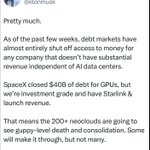
Elon Musk’s warning about AI debt markets got me thinking about something that has nothing to do with AI.
Looking wealthy and being financially secure are two very different things.
A company can own billions of dollars in GPUs and still be in trouble when lenders stop lending.
And someone can have a big house, a nice car, and a $200K salary while being just a few missed paychecks away from serious trouble.
That’s why cash flow matters more than appearances.
Easy money doesn’t last forever. A booming industry doesn’t mean every company in it will survive. And having cash sitting in the bank isn’t necessarily a missed investment opportunity.
Sometimes, that cash is what gives you choices.
You can walk away from a bad job. You don’t have to sell your investments during a market crash. You don’t have to take on expensive debt just to get through the month.
And when everyone else is desperate for money, you might actually be in a position to take advantage of opportunities.
I’ve come to think of financial freedom a little differently.
It’s not about how rich you look when everything is going well.
It’s about how many choices you still have when things go wrong.

A woman in Texas spent over a year trying to sell her house.
She listed it for $750,000.
Finally sold it for $650,000. And had to contribute another $9,000 toward repairs.
She wasn’t flipping houses or trying to make a quick profit.
She’d lived there for 21 years. Her kids had grown up and moved out. She just wanted a smaller place.
Meanwhile, buyers are looking at mortgage rates that make even discounted homes hard to afford.
That’s what makes this housing market so frustrating.
Some homeowners can’t afford to move.
Some buyers can’t afford to move in.
Owning a house is supposed to give you financial security. Pretty strange when your biggest asset is also what’s keeping you stuck.

Imagine your doctor’s office gets bought by a hospital chain.
Same doctor. Same waiting room. Same appointment.
But suddenly, your bill can get a lot bigger.
A Health Care Cost Institute study found that an average primary care visit cost $116 at a doctor’s office, compared with $217 in a hospital outpatient setting.
Hospitals say the extra fees help cover their operating costs.
Okay, but imagine explaining to a patient why they’re paying so much more when nothing about their appointment has changed.
We’ve reached a point where who owns your doctor’s office can matter almost as much as the care you actually receive.

Your 2% credit card cash back might be partly funded by someone paying cash for groceries.
Sounds ridiculous, right?
A 2026 NBER study estimates that credit card swipe fees shift roughly $30 billion a year from cash and debit users to credit card users.
Here’s how it works.
Stores pay fees when customers use credit cards. Some of those costs get built into prices everyone pays.
The person with the rewards card gets points or cash back.
The person paying cash pays the same price and gets nothing.
I love a good credit card reward as much as anyone.
But it’s interesting how quickly “free money” stops looking free when you start asking who’s paying for it.

Halloween candy is getting ridiculously expensive.
Candy and gum prices are up 44% in five years. And Halloween candy sales fell 6.7% in the month ending October 17.
I don’t think Americans suddenly stopped liking Halloween.
I think a lot of parents are standing in grocery aisles doing math they never used to do over a bag of candy.
Gas, groceries, rent, insurance. Everything wants another piece of the paycheck.
And now even handing out chocolate to kids is something people have to think twice about.
That’s a pretty depressing sign of where we are.

Amazon agreed to a $2.5 billion FTC settlement over allegations that people were signed up for Prime without consent and had trouble cancelling.
Now more customers are getting automatic refunds.
What gets me is how familiar this whole thing feels.
Companies spend millions figuring out how to make buying something as easy as possible.
One click. Done.
But when you want to stop paying? Suddenly there are extra screens, more questions, and another offer to stay.
They clearly know how to make things easy when they want to.
Funny how that works.

For years, the whole pitch was simple: buy a car, get freedom.
Now some young Americans are giving up their cars to get that freedom back.
AAA estimates it costs $12,863 a year to own and operate a new vehicle. That’s roughly $1,072 a month when you count everything, including depreciation.
Of course, going car-free only works if you live somewhere you can actually survive without one.
If you don’t, you just keep paying.
We’ve somehow turned something that was supposed to give people more choices into an expense millions of people can’t really opt out of.

You can spend 30 years paying off your house and still get hit with bills you have almost no control over.
Bloomberg Intelligence says home insurance now costs more than property taxes in roughly two-thirds of US counties.
Think about that.
You can negotiate the price of a house. You can lock in a mortgage rate.
But an insurance company gets to reassess what it costs to protect your home every year.
A paid-off house is supposed to feel like financial freedom.
I’m starting to wonder how many homeowners actually feel that way anymore.

194,000 new unemployment claims last week. Lowest since July.
Sounds like a healthy job market, right?
Now tell that to someone who’s sent out dozens of applications, has the experience, and can’t even get a rejection email.
Companies aren’t laying off many people. But they’re not exactly rushing to hire either.
If you’re already employed, things might feel pretty stable.
If you’re trying to get hired, it can feel like every door is locked.
We’re measuring job security and job opportunity like they’re the same thing.
They’re not.
Rhode Island just sued Meta, alleging it profited from scam ads while telling users it was fighting fraud. Meta says the lawsuit is unfounded.
Think about how a scam ad works.
The scammer pays to reach you. The platform gets paid to deliver the message. You’re the one who might lose your savings.
And we’re trusting the same platform to decide how aggressively to stop it.
That’s a conflict of interest worth talking about.

$40,000 for a fake wedding. Then, in some cases, $500 a month to keep the “marriage” going.
Federal prosecutors say a Massachusetts ring sold sham marriages to people seeking immigration status. Six people were charged this week.
They allegedly coached couples to take selfies, open joint bank accounts, even get life insurance.
It’s the selfies that got me.
A photo can show two people together. It can’t tell you why they’re standing next to each other.

15 people were charged in a California healthcare fraud crackdown yesterday.
One alleged scheme billed insurers over $1.6 billion for fake addiction treatment.
I keep thinking about the people who walked into those places hoping to get better.
Prosecutors say they were being used to generate insurance claims.
Imagine asking someone for help and finding out your suffering was their business model.

Barclays’ quarterly profit rose 12%. It’s also cutting 5,000 jobs this year as AI and other tech help lower costs.
People still talk about AI layoffs as if the company must be struggling.
Sometimes the company is doing just fine. It just thinks it can do fine without you.
Wall Street wants tech companies to win the AI race. It just doesn’t want to pay for it.
Meta beat expectations and still dropped about 7% on Thursday.
If you’re a CEO, what scares you more: overspending now, or explaining in five years why you fell behind?
I think that fear is driving a lot of this spending race.