

In-depth and uncompromising journalism in the public interest | إعلام مكرَّس لإنتاج صحافة معمّقة وغير مساوِمة لخدمة المصلحة العامّة
Beirut, Lebanon
Joined March 2019
- Tweets2.3K
- Following65
- Followers8.3K
- Likes585





Pinned Tweet
We are looking for rigorous, well-sourced work — journalistic, historical, or investigative — that is grounded in anti-imperialist and anti-colonial commitments on Lebanon and the region. We are also interested in photo essays, testimonies, and interviews.

ALT Image: Marwan Bou Haidar/The Public Source CALL FOR SUBMISSIONS The Public Source invites writers from Lebanon, Palestine, and across the Global South to submit pitches and full-length drafts, in English or Arabic on the latest escalation of the ongoing imperial war on our region. thepublicsource.org/write
Fatima Hourani, displaced from Tarbikha in 1948, passed away on Friday, October 16, at the age of 96.
Journalist Dana Hourany (@DanaHourany) spoke with her in 2024 while conducting oral history interviews documenting the lives and experiences of residents expelled from their villages in Lebanon in 1948.
In 1948, the Haganah, a Zionist militia-turned-army, invaded Tarbikha, known now as one of seven Lebanese villages stolen during the Nakba. Fatima was nine months pregnant. She fled on foot with a stack of plates balanced on her head. Her family sheltered in Khallet Warde, below Aita al-Shaab, before being pushed from village to village across south Lebanon. She never returned to Tarbikha.
Fatima trusted us with her memories, and we’re grateful she did so we could share her story. We offer our deepest condolences to her children and grandchildren, and the expelled people of Tarbikha and Lebanon’s other lost villages.
Read Fatima’s story in “Stolen by a map: the haunting history of Lebanon’s lost villages”: thepublicsource.org/lebanon-…

مصدر عام | The Public Source retweeted

Kfarshouba, Lebanon 🇱🇧

[Olives Under Occupation] — Olive harvest season is underway as usual across Lebanon, except in southern border villages, where access to the land hinges on the permission of the Israeli occupation.
In Kfarshouba, Israeli occupation forces blocked villagers from picking their olives on October 15.
(Videographer: Ramiz Dallah)
مصدر عام | The Public Source retweeted

Israeli occupation of southern Lebanon ignored by western media.
[Olives Under Occupation] — Olive harvest season is underway as usual across Lebanon, except in southern border villages, where access to the land hinges on the permission of the Israeli occupation.
In Kfarshouba, Israeli occupation forces blocked villagers from picking their olives on October 15.
(Videographer: Ramiz Dallah)
An Israeli occupation patrol suddenly appeared and stopped the residents’ cars. Soldiers then questioned the villagers about their presence on their land, photographed their identification documents, and ordered them to leave immediately. They forced them to take a longer route to the nearby village of Halta instead of returning through Kfarshouba. Israeli military jeeps drove them out, and occupation forces then opened fire in the area.
Elsewhere in the South, the olive harvest has turned deadly.
On October 11, Hussein Ali Nehme Ramadan from Froun was killed when an unexploded ordnance detonated while he was picking olives. That same day, an Israeli tank fired at Ali Abed al-Hasan Sweidan, killing him, as he was visiting his grove in the outskirts of his hometown Yater.
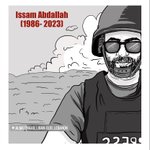
Three years ago today, Israel killed Reuters journalist Issam Abdallah in a strike near Alma al-Shaab, south Lebanon. He was 37. Six other journalists were wounded alongside him.

At least six investigations by human rights organizations, media outlets, and the UN reached the same conclusion: Israel deliberately targeted the journalists in what should be investigated as a war crime. Three years on, justice has yet to be served.
In 2023, Christina Cavalcanti (@cavalcantich) wrote about Issam, his legacy, and what he meant to friends, family, and colleagues who loved him.
Read our profile of Issam Abdallah: thepublicsource.org/israel-k…
Illustration by Amy Chiniara (@AmyChiniara)

Depuis le cessez-le-feu de novembre 2024, la question du désarmement du Hezbollah s’est imposée au cœur du débat politique libanais. Sous la pression des États-Unis et d’Israël, le gouvernement de Nawaf Salam a fait du monopole des armes par l’État l’un de ses objectifs.

Pourtant, nombreux sont ceux qui, au sein de l’armée, "refusent catégoriquement de voir leur institution retourner ses armes contre son propre peuple."
Que signifie alors le monopole des armes par l’État dans un pays traversé par les ingérences internationales et les divisions internes ?
L’illusion d’une solution militaire au Liban, par Jonathan Hassine.
À lire sur @OrientXXI
orientxxi.info/L-illusion-d-…

بعد ثلاث سنوات على طوفان الأقصى، ما الذي تبقّى من الفاعلية حين تُصمَّم كلّ الشروط لسحقها؟
تقوم الكاتبة الفلسطينية نادين ن. صايغ بقراءةٌ في المقاومة بوصفها شكلًا من أشكال الوجود السياسي، لا ردّ فعلٍ عليه.
thepublicsource.org/ar/sinwa…
ترجمة فاطمة فؤاد السمّان


