

Teacher | Child Sexual Exploitation Educator | Safeguarding Trainer | Turning frontline experience into safeguarding education. 'The Risk Register' on Spotify
UK
Joined June 2026
- Tweets1.4K
- Following482
- Followers199
- Likes216
Pinned Tweet
Anybody going on, or been on, holiday this year?
Any not going? Whether or not you're going on holiday this year, this is the time that we usually either buy a new suitcase or throw out the old ones. Instead of getting rid of your old cases/backpacks/holdalls, I'd like to suggest something different.
In the UK, approximately 39,000 children and young people enter the care system each year. This equates to over 100 children per day. Due to circumstances beyond the child's control, they are usually taken from their homes at very short notice, with very little time to pack. On most occasions, children enter the care system with their belongings in carrier bags, or even just with the clothes on their backs.
I want to ask people, if you are getting rid of your old cases/backpacks/holdalls this year, to consider donating them to your local Children's Services (Social Services for Children) department within your Local Authority. Sometimes these departments go by other names. That way, when social services take a child into care, they can take a suitcase with them, and the child can take as many of their belongings as possible and arrive at a care home with some dignity.
Thank you. Oh, and please share the heck out of this.

Australia has spent millions examining whether CCTV can make childcare centres safer. The findings should make governments, regulators and providers reconsider what effective safeguarding actually looks like.
The national assessment, involving more than 300 early childhood education and care services, found insufficient evidence to justify compulsory CCTV across the sector. Cameras can provide useful evidence and support investigations, but they cannot replace active supervision, professional judgement or a strong child-safety culture.
That distinction matters enormously.
A camera cannot comfort a distressed child, recognise subtle changes in behaviour, challenge an adult who is crossing professional boundaries or ensure that a child's disclosure is taken seriously. Nor can it compensate for inadequate staffing, weak management, poor reporting procedures or regulators failing to act on concerns.
The government plans to spend up to $1 million developing national CCTV guidance and establish an $11.5 million grants program for eligible providers. Those measures may be useful, particularly where footage can help establish what happened during an incident. But technology mustn't become a convenient substitute for the harder work of improving safeguarding practice.
The assessment also raises important questions about privacy, footage access, storage and who is responsible when recordings reveal concerning conduct. Installing cameras creates obligations; it doesn't discharge the duty of care.
Federal, state and territory governments need to demonstrate how supervision reforms, mandatory safeguarding training, regulatory inspections and provider accountability are improving children's actual safety. The responsibility must be clearly assigned, enforceable and measurable.
For me, the central issue is the difference between recording abuse and preventing abuse. We should be aiming for the latter, with the former providing an additional safeguard where appropriate.
Will governments put the same resources and scrutiny into improving the adults responsible for protecting children as they're prepared to put into the cameras watching them?
#TheRiskRegister
1
8
The Department of Education's assessment concluded that CCTV works best as part of a wider safeguarding approach, not as a replacement for supervision. National guidance is expected by June 2027, with voluntary grants for eligible providers to follow.
The accountability test is whether providers and regulators can demonstrate better supervision, stronger professional boundaries, effective responses to children's disclosures and consequences when safeguarding standards aren't met.
Read the full story at: theriskregister.net/childcar…
1
A 29-year-old man from Western Sydney has been charged with child exploitation offences after Australian Border Force officers allegedly discovered child abuse material on his mobile phone when he arrived at Sydney International Airport.
Further forensic examination allegedly uncovered additional material, prompting an Australian Federal Police investigation and a search of his Villawood home. The charges include using a carriage service for sexual activity with a person under 16, possessing child abuse material and producing child abuse material for online use. The allegations have not yet been proven in court.
There's an important safeguarding distinction here. This isn't simply about prohibited files being found on a device. The alleged offences also raise questions about online contact with children, the circumstances in which material was produced and whether any children may require immediate protection.
Every image or video depicting actual child sexual abuse represents exploitation, not entertainment. Investigations must therefore look beyond identifying suspects and securing convictions. They must also establish whether children can be identified, whether exploitation is ongoing and whether information needs to be shared with other agencies or international authorities.
The ABF and AFP response demonstrates why trained border officers, specialist digital investigators and effective referral procedures matter. But governments must also ensure that investigative resources keep pace with encrypted communications, cross-border offending and increasingly complex digital evidence.
This case doesn't establish an institutional failure. It does, however, highlight an important measure of safeguarding effectiveness: not just how many people are charged, but how quickly children at risk can be identified and protected.
Are we measuring success in tackling online child exploitation primarily through arrests and prosecutions, or through the children whose abuse is actually identified, interrupted and prevented?
#TheRiskRegister
1
36
The AFP investigation began with an Australian Border Force examination on 23 October. A subsequent search on 12 November resulted in additional electronic evidence being seized, and the accused was refused bail.
Effective safeguarding requires evidence preservation, lawful information-sharing, specialist investigation and prompt protective action wherever identifiable children may be at risk. The criminal proceedings will determine the allegations against the accused.
Read the full story at: theriskregister.net/sydney-m…
5
A 14-year-old girl goes missing from home. Three adult men rape her over approximately 48 hours. One of those men becomes aware that her family is desperately searching for her, yet instead of helping her return to safety, he tells her to contact her parents and persuade them to remove their missing-person appeals.
That detail should concern every safeguarding professional.
The Court of Appeal has now increased the prison sentences of Daryl German, Jordan Doneley Wint and Deon Smith after the Attorney General referred the original sentences as unduly lenient. German's custodial sentence increased from 15 to 18 years, Wint's from six to eight and a half years, and Smith's from seven to nine years.
The sentencing review is important, but there's a wider safeguarding issue here. Missing children are sometimes described as having 'run away', as though their absence is primarily a behavioural problem. Yet missing episodes can expose children to adults who deliberately exploit their vulnerability through accommodation, attention, transport, coercion or threats.
A child contacting home to say they're safe doesn't automatically mean they're safe. We need to understand who may be controlling that communication and whether the child can speak freely.
The government, police and local safeguarding partnerships must ensure that missing-person reports trigger appropriate exploitation risk assessments, intelligence-sharing and urgent protective action. This case doesn't establish that particular agencies failed, but it raises legitimate questions about whether opportunities existed to locate this child sooner.
Are our missing-child procedures designed around finding and protecting vulnerable children, or are we still too often treating the missing episode as the problem rather than recognising the exploitation risk behind it?
#TheRiskRegister
1
16
The Unduly Lenient Sentence scheme allowed the Attorney General to challenge the original punishments, and the Court of Appeal imposed longer custodial terms.
But sentencing reform alone won't prevent another child being exploited while missing. The important safeguarding questions concern the initial risk assessment, police response, intelligence-sharing and whether children are given a genuine opportunity to disclose exploitation safely when they return.
Read the full story at: theriskregister.net/missing-…
2
Three men have been convicted of raping and sexually exploiting a girl aged just 13–14 in Rotherham. But two of those convicted weren't even in court to hear the verdicts. They'd absconded while on bail, leaving a survivor with convictions against men who remain at large.
Mudasar Hussain was convicted of 12 counts of rape. He'd been released on conditional bail and required to surrender his passport, yet his whereabouts remain unknown. Kamir Ifzal Khan, convicted of rape and trafficking for sexual exploitation, was on unconditional court bail. He flew to Qatar in September and is believed to have travelled onwards to Pakistan.
Think about that. A man facing extremely serious child rape and trafficking charges was able to leave the country before trial.
Bail is an important safeguard against unnecessary detention before conviction, but courts must also assess whether defendants are likely to attend trial and whether restrictions are necessary. The seriousness of the charges alone doesn't settle that question, but the consequences of getting the assessment wrong can be devastating.
We need to know which judges granted or reviewed bail, whether the CPS opposed the arrangements, what flight-risk evidence was presented and why Khan was subject to no travel restrictions. The Ministry of Justice and the courts should provide a transparent account of the decisions and examine whether existing safeguards are sufficient.
Operation Stovewood has demonstrated that historical grooming offences can be prosecuted, even many years later. Yet obtaining convictions is only part of justice. Survivors also deserve to know that offenders will be located, sentenced and held accountable.
Who authorised these bail arrangements, what risks were considered, and what will change to prevent another convicted child rapist disappearing before justice can be completed?
#TheRiskRegister
1
12
The National Crime Agency's Operation Stovewood has investigated historical child sexual exploitation in Rotherham for more than a decade. The latest convictions are significant, but two fugitives remain an unresolved part of the case.
The bail records, prosecution submissions and any subsequent reviews should establish whether the risks were properly assessed. We shouldn't speculate about individual judicial misconduct without that evidence, but neither should the system escape scrutiny simply because bail decisions were made before conviction.
Read the full story at: theriskregister.net/rotherha…
6
The judge (Judge Sarah Carolyn Wright), defence lawyers, @ukhomeoffice , @ShabanaMahmood , and the Safeguarding Minister @jessphillips should be in jail over this and all the other cases like it. This is NOT looking after our country.
Bail? Who the hell gives these scum bail? How is justice served here? Explain to me how 'bail' isn't handing these animals a free card to run away.
They break in illegally, commit the crimes they came here for, then break out illegally.
We're in island. A f*cking island! Not only do we have a border, we have seas surrounding us. No one should be able to get in or out without a lot of people knowing.
Therefore, I can only assume that they DO know, and it's all part of the plan.
gbnews.com/news/rotherham-gr…

13
On November 19th 2019, during the general election campaign, Jess Phillips took her children to see David Walliams. In her post, she called him a 'legend' and that he had 'spoilt them rotten'.
Just a year earlier, Phillps had publicly criticised Walliams over the Presidents Club controversy, retweeting/commenting around reports about his books and the event.
Remember that controversy?
David Walliams had hosted the men-only Presidents Club fundraising dinner for the third year running. An undercover Financial Times investigation reported widespread sexual harassment of female hostesses at the event, including alleged groping, sexual propositions and other inappropriate conduct. Walliams said he was there in a professional capacity, left after presenting, did not witness the alleged behaviour and was appalled by the reports. The Guardian
Jess Phillips reacted very strongly. In Parliament she described the event as one where women had effectively been used as “bait” for wealthy men and called the reported behaviour totally unacceptable. Parliament News
Her specific comment about Walliams’s children’s books came because he had donated an auction prize allowing a bidder to name a character in his forthcoming children’s book. Phillips mocked that by tweeting:
“I tell you what I'll name the next character in your CHILDRENS book David Walliams, ‘Micky the Misogyinist’, ‘Barry Banter’ ‘Larry Ladz’.” That tweet was published on 23 January 2018.
Several independent bookshops then temporarily removed Walliams’s books from their shelves. One bookseller said she could not stock them until she was satisfied he did not condone the culture of the event. Walliams subsequently withdrew his auction lot. The Guardian
There was also a broader criticism of the content of some of his books. One parent cited The Demon Dentist, pointing to scenes in which female characters have their underwear exposed and mocked, and argued that this sort of humour normalised misogynistic attitudes.
So, January 2018: Phillips publicly attacks Walliams over the Presidents Club episode and explicitly invokes his role as a children's author.
November 2019: roughly 22 months later, wanting to 'connect' with the popular Walliams during the general election campaign, she takes her own children to meet him, publicly calls him a “legend”, and says he had “spoilt them rotten.”
This is the woman, who clearly had double-standards when it came to trying to advance her political career, who went on to become Safeguarding Minister.
Is it any wonder now why it is not only an embarrassment to have this woman as a safeguarding minister, but that she is a danger to women and children? Career and photo opportunities over safeguarding.
Her later 'work' as a safeguarding minister speaks for itself;
In October 2024, Phillips rejected Oldham Council’s request for a government-led public inquiry, saying the council should commission its own local inquiry. That decision became a major national controversy in January 2025. The government later shifted position: it first proposed locally led inquiries with central support, and after Baroness Casey’s 2025 audit accepted the recommendation for a new national statutory inquiry into group-based child sexual exploitation and abuse. That sequence allowed critics to argue that the original refusal was too cautious and that ministers had underestimated the need for a stronger statutory process.
A second failure was loss of confidence among some grooming-gang survivors. By late 2025, some survivors had withdrawn from the government’s consultation arrangements and were calling for Phillips to resign; the government itself acknowledged that some survivors had felt discouraged and had left the consultation group. Under her watch, the safeguarding process failed to retain the confidence of an important section of the survivor community.
A third area was delay in the Violence Against Women and Girls strategy. Phillips herself accepted responsibility in Parliament in December 2025, saying explicitly that the delay was her fault because she considered earlier drafts insufficiently ambitious. That is probably the cleanest example of a failure she personally acknowledged rather than one attributed by opponents.
There was also criticism of the government’s slow implementation of the 2022 Independent Inquiry into Child Sexual Abuse recommendations.
Another recurring criticism concerns fragmentation and delay in the grooming-gangs inquiry architecture. The policy moved through several stages: refusal of a national inquiry, proposed local inquiries, a £5 million local-inquiry framework, abandonment of that framework after Casey, then creation of a statutory national inquiry. The final inquiry did not formally commence immediately; by January 2026 the government was still finalising terms of reference, with formal commencement planned only after March. Critics characterised that as drift, even though the government argued it was strengthening the inquiry rather than delaying it.
Add to that list;
Initial refusal of a government-led Oldham grooming-gangs inquiry
Subsequent policy reversal toward a national statutory inquiry
Loss of confidence among some grooming-gang survivors
Delay to the Violence Against Women and Girls strategy, which Phillips personally accepted responsibility for
Slow implementation of longstanding child-sexual-abuse inquiry recommendations
Repeated restructuring and delay around the grooming-gangs inquiry process
Continuing acknowledged failures in family courts, social services and domestic-abuse safeguarding systems
Maybe she's just waiting for the right photo opportunity with the right celebrity before she pulls her finger out. Or maybe she just doesn't care.
1
215

Michael Horsham retweeted
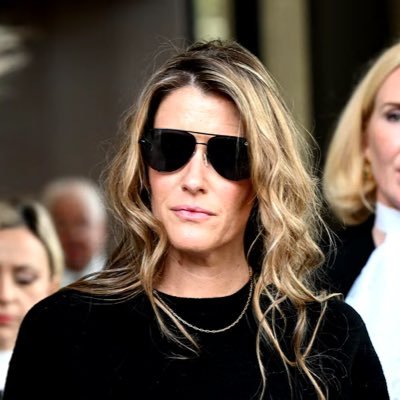
While two former Australian politicians quarrel over who is the least sexist & misogynistic, it’s worth noting that they were both in power when the sex discrimination act was amended to allow men to be women. The woman was the prime minister & the man was the opposition leader. Both of them could have done something to stop it, both of them did sweet FA to protect women’s rights. Over a decade later, the one piece of legislation created to protect women’s sex based rights is now used as the way to legally punish women who know what sex & a woman is, while both women & lesbians are denied actual rights because of it. Funny how they both never even talk about that.
Why was David Walliams only suspended from the Labour Party on 10 November 2026 AFTER the joint Guardian–ITV investigation was revealed, when the safeguarding questions surrounding his conduct go back more than twenty years?
The joint Guardian–ITV investigation has brought serious allegations involving teenage girls and young women into the public domain. Walliams denies grooming, sexual assault, harassment and other wrongdoing.
But this story isn't simply about the allegations published this week. It's also about a long history of publicly documented behaviour and the responsibilities of organisations that maintained relationships with him.
Consider the timeline.
2004: Jonathan Ross makes a joke at the British Comedy Awards associating Walliams with 15-year-old girls.
2006–2007: Walliams performs sexually suggestive Little Britain Live routines involving audience participants, including footage of an interaction with someone reportedly aged 16. Routinely pulls the trousers and underwear down of people on stage.
2011: Walliams makes sexual comments about 17-year-old Harry Styles on Chris Moyles' Quiz Night.
2015: Walliams publicly supports Andy Burnham's Labour leadership campaign. That same year, 17-year-old Abby Tomlinson says Walliams invited her and a 13-year-old girl backstage at Britain's Got Talent. Tomlinson subsequently became a senior adviser to Prime Minister @andyburnham. @downingstreet
2020: Tomlinson reportedly posts publicly about her earlier experience, without identifying Walliams. Separately, Walliams makes derogatory and sexually explicit remarks about BGT contestants that become public in 2022.
December 2025: HarperCollins announces it will publish no further Walliams books, amid reports of complaints concerning young female employees.
10 November 2026: The Guardian–ITV investigation is published, and Labour suspends Walliams's membership.
The chronology raises legitimate questions about institutional safeguarding and the scrutiny applied to influential public figures.
@UKLabour needs to answer some specific questions.
When did Walliams become a member, and what roles did he perform in fundraising or political campaigns?
Did the party ever receive complaints or safeguarding concerns about his behaviour before November 2026?
Did the 2022 BGT controversy prompt any assessment of his conduct?
When HarperCollins ended its relationship with him in December 2025, did Labour undertake a safeguarding review? If not, why not?
What information was available to party officials before 10 November, and what specifically triggered the suspension?
And did Andy Burnham or his office ever receive relevant information concerning Walliams's alleged conduct? If so, what action followed?
We must distinguish these questions from accusations of complicity. There is currently no established evidence that Burnham knowingly ignored a safeguarding disclosure. Nor should Abby Tomlinson be expected to have disclosed her personal experience to political colleagues.
But political parties should be able to demonstrate how they assess credible safeguarding concerns involving prominent members and supporters.
We've raised similar questions about Labour's public associations with Russell Brand. Political endorsement doesn't establish knowledge of wrongdoing, but celebrity influence should never exempt anyone from appropriate scrutiny.
Safeguarding cannot depend on whether someone is famous, commercially valuable or politically useful. The question for Labour is whether it had effective procedures for identifying and assessing concerns before they became national headlines.
What did the party know, when did it know it, and what did it do?
#TheRiskRegister
Our investigation reconstructs more than two decades of public controversies, workplace complaints and allegations involving David Walliams.
It examines the 2015 connections with Andy Burnham's leadership campaign, Abby Tomlinson's account, the 2022 BGT controversy, HarperCollins' December 2025 decision and Labour's suspension on 10 November 2026.
It also sets out the questions broadcasters, publishers, Labour and Downing Street should answer, while distinguishing established events from allegations and matters that remain unverified.
Read the full story at: theriskregister.net/david-wa…
109
Good luck, I'm SO glad this is happening.

Today is the day. David vs Goliath. Today we go to the High Court for our landmark judicial review against the Government. We have been shocked at the arguments being advanced by the Home Secretary in defence of its failure to implement key recommendations made by the Independent Inquiry into Child Sexual Abuse (IICSA). These arguments include, that The Maggie Oliver Foundation does not have standing to bring this challenge on behalf of children, that the Government is under no obligation to implement child protection measures, and that the public at large cannot rely upon promises made by the Prime Minister and Ministers that are made in Parliament.
The Government's legal defence raises fundamental questions about public trust, accountability and whether promises made to survivors following public inquiries mean anything at all.
At the centre of the judicial review are 20 key recommendations issued by the Independent Inquiry into Child Sexual Abuse (IICSA) proposed to better protect children across the UK from sexual abuse. These include properly collecting data relating to child abusers and victims of abuse and exploitation, ending the use of pain-inducing restraint techniques on children in custody and regulation of staff in children’s homes.
We are concerned that more effort and public money appears to be going into defending a challenge designed to ensure these critical improvements in child protection are made than into implementing them.
The simplest example of this is this – if the Government had implemented the first recommendation of the IICSA, there would have been no need for a further three-year, £65 million public Inquiry (The Statutory Independent Inquiry into Grooming Gangs).
WHO IS ALLOWED TO ASK THE QUESTION?
The Secretary of State is a challenging whether The Maggie Oliver Foundation and our founder and Chair, @MaggieOliverUK , have standing to bring the case at all.
This raises a deeply troubling question.
If organisations representing survivors and working every day with the consequences of child sexual abuse are not entitled to ask why promised child protection measures have not been implemented, who is?
The Government is trying to exclude from the debate the very people closest to the consequences of these failures.
For years survivors have been told to come forward. Speak up. Tell the truth. Many have done so at enormous personal cost, but now the Government says they, and those who represent them, cannot object to failures to protect children. Their voices must be silenced.
This challenge was never about politics. Governments of all stripes have let down children. It is astonishing that the Government's first argument in this judicial review is that victims can have no voice.
If organisations representing survivors, and survivors themselves, cannot ask why promised child protection measures have not been implemented, who can?
IF GOVERNMENT DOESN'T HAVE TO ACT, WHAT IS THE POINT?
A central plank to the Government's defence is that ministers are under no legal obligation to implement recommendations made by public inquiries.
If that is right, why spend hundreds of millions of pounds on public inquiries if Government is just going to ignore what they find? We genuinely struggle to understand how anyone can think that is acceptable.
Millions are spent, years of hearings are had, victims pour out their hearts, findings and recommendations are made, promises are made by Government and then broke – but when someone has the temerity to ask why those promises haven't been kept, the Government's response is we never had to keep our promises.
If that is right, the Government must be open about it, and explain to the public why they hold expensive public inquiries at all.
IICSA took seven years, heard from more than 7,000 survivors, cost more than £200 million and made twenty recommendations intended to protect children. But the Government now says, we have no obligation to fulfil its promises to implement recommendations to protect children.
CAN POLITICIANS DENY THEIR PROMISES MATTER?
We are also challenging the Government's position regarding promises made by the Prime Minister and ministers following publication of IICSA's recommendations.
Repeated assurances that action would be taken have been made by senior politicians across successive governments.
The Government's defence includes arguments relating to parliamentary privilege. In effect the Government say that The Foundation cannot rely upon ministerial promises made in Parliament, and that such promises cannot give rise to expectations about future action.
If the public cannot rely on promises made in Parliament, what can they rely on?
Survivors and the public hear ministers make promises.
They hear repeated assurances that lessons have been learned and change will follow.
They build their expectations around those promises.
Many survivors have spent years believing ministers when they said action was coming.
To now be told that those promises cannot be relied upon is not just a legal argument, it is a fundamental betrayal of the trust survivors (and children across the UK) were asked to place in the process.
Trust works both ways.
Survivors are asked to trust public inquiries with the most painful experiences of their lives.
Governments should not then be able to argue that survivors cannot rely on the promises they receive in return.
WHILE GOVERNMENT ARGUES, CHILDREN ARE STILL BEING ABUSED
Government figures show that approximately 2 million children have been sexually abused since IICSA published its recommendations in October 2022.
That astonishing number must not be lost amidst legal arguments and the Government’s technical defences. This case is about the protection of all British children.
What shocks us most is how much ingenuity and effort has gone into finding reasons not to act.
Imagine if half of the same energy had been invested in implementing child protection measures.
Imagine if the resources currently being spent defending this case had instead been spent protecting children.
How many children might already be safer?
While well paid Government lawyers argue, children are still being sexually abused.
That is the reality we cannot lose sight of.
This case was never about clever legal arguments.
It is about whether promises made to children and survivors mean anything at all.
The Maggie Oliver Foundation will not be silent on that question.
24

I'm seeing many posts actually complaining that Russel Brand has been jailed for 10 years for touching the breasts of a woman who consented to other acts. What I don't see, is the failure to understand that this is not the full story, and it might just be the lucky break we needed to get a sexual predator, who thought he was untouchable, off the streets.
Russell Brand has been jailed for 10 years and six months for rape and three sexual assaults. But there's another disturbing story behind those convictions.
For years, the entertainment industry allowed a culture to develop in which a celebrity's reputation and commercial value could make inappropriate behaviour difficult to challenge.
Brand's public persona was built around sexual provocation, outrageous remarks and disregard for personal boundaries. Remember the televised exchange in which he asked Vanessa Feltz whether he could sleep with her and her daughters? Or the Andrew Sachs voicemail scandal, when sexually explicit messages about Sachs's granddaughter were broadcast by the BBC?
Those incidents weren't themselves proof of sexual assault. But they illustrate how behaviour that disregarded other people's boundaries became entertainment. And behind the cameras, the warning signs were more serious.
The BBC's subsequent review found that staff had felt unable to challenge Brand and that a formal complaint hadn't been handled effectively.
Channel 4 acknowledged that a serious allegation made by an employee in 2009 wasn't properly investigated or escalated.
An investigation into the production company behind his Big Brother appearances identified further concerns about his behaviour that hadn't been adequately addressed.
These are documented organisational failures, not simply accusations made after his conviction.
We can't establish that earlier intervention would have prevented any particular offence, or that every manager knew about his criminal behaviour. But the evidence raises an important question about what happens when an influential individual appears to operate under different rules from everyone else, and when a lack of safeguarding fails people.
Brand is entirely responsible for the crimes he committed. His fame doesn't excuse him, and the failures of broadcasters don't diminish his guilt. But holding the offender accountable mustn't become an excuse for ignoring the institutions that failed to respond properly to concerns.
Now Culture Secretary Lisa Nandy is considering whether media organisations should be required to participate in independent misconduct oversight.
Why wasn't effective independent accountability already in place? And how many other powerful figures are still benefiting from workplace cultures where employees fear the consequences of speaking out?
Safeguarding must apply to everyone, regardless of celebrity, commercial value or political connections.
The convictions establish Brand's criminal responsibility. Separate investigations by the BBC, Channel 4 and production-company authorities identified failures involving complaints, workplace culture and professional oversight.
Our investigation reconstructs that history, examines the allegations involving a school-aged girl, and distinguishes documented institutional failures from unanswered questions.
Read the full story at: theriskregister.net/russell-…
#TheRiskRegister
134
An 86-year-old former Catholic priest has been charged over an alleged child sexual offence in Mount Isa dating back to 1976.
But the history surrounding Neville Joseph Creen makes this far more than a report about a newly laid charge. Creen has previously been convicted of sexually abusing children. In the early 2000s, he was jailed after pleading guilty to offences involving 18 girls. He has subsequently faced further proceedings and convictions relating to historical abuse.
In 2022, reporting revealed that the Catholic Church had undertaken multiple investigations into allegations that another priest failed to respond appropriately when a survivor disclosed abuse by Creen decades earlier.
One survivor alleged that she told a priest about Creen's conduct when she was 16. That priest denied receiving the disclosure. Other church officials said they first became aware of allegations against Creen in 1994, when he was stood down.
These disputed accounts and documented proceedings make the historical chronology central to understanding the safeguarding issues.
Who received concerns about Creen, and when? What records were kept? How were allegations investigated? Were decisions about his access to children and his religious responsibilities properly documented?
The new 2026 charge remains an allegation, and Creen is entitled to the presumption of innocence in those proceedings. His previous convictions, however, are established facts.
This is why safeguarding investigations must examine the history surrounding an individual, not simply the latest arrest or court appearance.
The question is not only what an offender did. It's whether institutions recognised warning signs, responded appropriately and acted to prevent further harm.
#TheRiskRegister
1
27
Creen's history includes previous child sexual abuse convictions and investigations into disputed accounts of earlier disclosures to Catholic authorities.
The latest charge concerns a separate alleged offence dating to 1976 and has not been proven.
Understanding what institutions knew, when they knew it and how they responded is essential to identifying safeguarding lessons.
Read the full story at: theriskregister.net/queensla…
6
A Darwin primary school educator has been committed to stand trial over alleged child sexual offences, with some allegations dating back to 2007 and 2010.
The 40-year-old man was initially arrested in June 2026 following an allegation involving a child attending a school vacation-care programme. Northern Territory Police confirmed at the time that his Working With Children clearance authority, SAFE NT, had been notified and that he was understood to have been stood down from employment.
Investigators were already examining whether there was further alleged offending. Additional complainants subsequently came forward, and further charges followed.
The accused hasn't been convicted, and every allegation must be tested through the courts. But the expanding chronology raises important safeguarding questions that deserve examination independently of the eventual verdict.
Where was the accused working during the periods covered by the historical allegations? Were concerns ever reported to employers, school leaders or safeguarding authorities? If information existed, was it assessed and shared appropriately?
We don't yet know whether any institution received earlier warnings. We shouldn't invent a history of missed opportunities where the evidence hasn't established one.
But this case illustrates why Working With Children checks cannot be treated as a permanent guarantee of safety. Safeguarding requires continuous professional oversight, clear reporting procedures and prompt reassessment when new information emerges.
The crucial question is whether safeguarding systems can recognise relevant concerns across different workplaces and different years, rather than treating each report in isolation.
#TheRiskRegister
The June 2026 police statement confirms that SAFE NT was notified and that investigators were examining possible additional offending. Further allegations have since emerged, but the accused remains entitled to the presumption of innocence.
Our investigation examines the chronology, screening arrangements and unanswered questions about institutional knowledge.
Read the full story at: theriskregister.net/darwin-s…
7