

Documenting space exploration 🚀
Joined November 2026
- Tweets64
- Following20
- Followers272
- Likes6
SpaceX's Dragon just undocked from the space station carrying a 3D-bioprinted blood vessel and frozen cancer tumor samples back to Earth
Separation is confirmed after 36 days docked. Dragon is now performing four departure burns to move away from the station
Splashdown off California is targeted for 4:55 PM ET Saturday

1
56
NEW: After 8 years and billions of kilometres traveling through space, BepiColombo has finally reached Mercury
The €1.6 billion European-Japanese mission is set to enter orbit on November 21, becoming only the second spacecraft in history to orbit the planet closest to the Sun
Launched in 2018, BepiColombo used a series of planetary flybys to slow down enough for Mercury's gravity to capture it
Its two orbiters will study the planet's surface, magnetic field, and mysterious water ice deposits hidden inside permanently shadowed craters
The orbiters will separate in December, with full science operations beginning in April 2027
2
548
SpaceX's next Starship looks absolutely insane up close
New photos capture Ship 44 rolling out at Starbase, revealing thousands of hexagonal heat shield tiles and an intricate arrangement around its flaps
The spacecraft is now headed for cryogenic testing as SpaceX prepares its next generation of Starships for flight


SpaceX fires back at viral claims of Starship debris washing ashore in Mexico, calling many of the reports outright fabrications or deliberately misleading
Mexico's environmental agency Profepa says debris began reaching Playa Bagdad on November 17 following Flight 15 and is demanding SpaceX take responsibility for the cleanup
SpaceX disputes the reports, saying its Super Heavy booster safely aborted its tower catch and splashed down in the Gulf of Mexico as designed
The company says recovery crews have found very little debris onshore, with none conclusively identified as SpaceX hardware
It also cites independent toxicity tests showing Starship materials pose no chemical or biological risk
Mexican authorities are continuing to collect suspected rocket debris as they investigate its origin
With SpaceX planning more frequent Starship launches from Starbase, the dispute could complicate future recovery operations along the US-Mexico border


On Starship’s 15th flight last week, the Super Heavy booster correctly performed a safe abort when returning for a catch and ended its mission with a splashdown in the water off the coast of Starbase. Following splashdown, SpaceX recovery teams were immediately onsite to safe the area while our Environmental Health and Safety team worked to ensure any debris that washes onshore was recovered → x.com/SpaceX/status/21216299…
When we received reports of potential debris in Mexican territory, we immediately mobilized to send specialists to aid in identification and lead any cleanup work required, just as we did on Boca Chica Beach near Starbase. We continue to stay in contact with the Mexican government and are on standby to send support if authorities in Mexico tell us it is actually needed. Partners on the ground relayed that theyhave found very little debris in their sweeps of the beach, and the small amount they have found are not clearly from SpaceX operations.
The majority of the social media posts online claiming widespread debris and damage are either outright fabrications or intentionally misleading. As repeatedly stated, independent tests conducted on materials inside Starship and the Super Heavy booster, including toxicity analyses, confirm they pose no chemical, biological, or toxicological risks.
Starship is designed to be fully reusable, with future missions planning to return all hardware back to the launch site for catch and reuse. SpaceX is the only one, whether company or country, that has demonstrated this capability is now possible.
NEW: NASA's Orion spacecraft will have to fly backward to the Moon while attached to SpaceX's Starship, requiring major changes to its original design
Under NASA's revised Artemis plan, Starship will dock with Orion in high Earth orbit and propel both spacecraft toward the Moon, with Orion's service module facing forward
This sends propellant toward the wrong end of Orion's tanks, requiring ESA and Airbus to modify them
Starship could also subject Orion to nearly 1 g of acceleration, up to 10 times what it was originally designed to experience
Separately, the revised Artemis III mission will keep Orion in low Earth orbit for two weeks, creating new thermal and orbital debris risks
Lockheed Martin is now working three shifts to meet its 2027 launch target, on a schedule it says already has "zero margin"

How SpaceX plans to return humans to the Moon in 2028, more than 50 years after the last Apollo landing
Multiple tanker Starships will fill an orbital fuel depot before the lunar Starship refuels, docks with NASA's Orion spacecraft, and carries four astronauts toward the Moon. Two will descend to the surface
NASA is targeting Artemis IV in 2028, with SpaceX and Blue Origin competing to provide the lander
NEW: Tesla has filed plans for a $3.1 billion factory in Texas to produce the silicon used in solar cells, as SpaceX prepares to scale solar-powered data centers in orbit
The Nueces County facility plans to convert ultra-pure trichlorosilane into solar-grade polysilicon, a material currently produced largely outside the US
Construction would run from 2027 to 2030, with $1.5 billion allocated to engineering and construction and another $1.4 billion to equipment
Tesla is seeking tax incentives under Texas' JETI program, warning that the project could move to another state without them
Meanwhile, SpaceX's CFO projects gigawatt-scale computing capacity in orbit by 2029, requiring massive solar arrays to power its growing satellite infrastructure
SpaceX is already developing solar cell manufacturing in Bastrop, Texas. Germany's Singulus Technologies is scheduled to deliver the first production line in the first half of 2027, with a longer-term partnership aimed at scaling beyond 100 GW
Tesla's proposed refinery could supply the silicon for those cells, extending Musk's vertical integration strategy from raw materials and solar manufacturing to satellite production and launch
If connected, the facilities would reduce SpaceX's dependence on foreign suppliers and give it greater control over the solar power infrastructure needed to deploy gigawatts of orbital compute

Every Starship flight in just 45 seconds, from explosions in 2023 to the historic tower catch in 2026
The first three flights lost both stages. Flight 4 achieved controlled splashdowns, Flight 5 caught the Super Heavy booster, and Flight 15 brought Starship itself back to the launch tower
SpaceX has now caught both halves of the rocket. The next milestone is bringing them both home on the same flight
SpaceX CFO Bret Johnsen says the company expects to bring gigawatts of AI computing capacity online in orbit by 2029, with space-based compute potentially becoming cheaper than terrestrial alternatives within just 1–2 years
At the TomorrowX Summit today, Johnsen said SpaceX plans to launch its first orbital computing satellites in 2027, begin scaling the constellation in 2028 and reach commercial-scale deployment by 2029
The company plans to adapt its existing Starlink architecture with GPUs, larger solar arrays and radiators, while fully reusable Starship could cut launch costs another 10x
Johnsen argues that continuous solar power and radiative cooling could eliminate major expenses associated with terrestrial data centers, claiming that operating costs in space could approach zero
If SpaceX can deliver on those economics, the next generation of data centers will be built in space

2
208
SpaceX, ULA and Blue Origin just received NSSL Phase 3 Lane 2 contract modifications worth up to $985M combined
The Space Force announced the awards today for national security launches from Cape Canaveral, Kennedy and Vandenberg, with work extending through April 2033. No funds have been obligated or allocation is clear yet
The announcement comes just 24 hours after ULA's Vulcan rocket failed, destroying 40 Amazon Leo satellites and raising new questions about its ability to deliver the Pentagon's most sensitive payloads
The Pentagon is spending billions to avoid dependence on a single launch provider, yet every Vulcan setback makes SpaceX more indispensable


4
359
NASA's Voyager 1 will become the first spacecraft ever to reach one light-day from Earth this Wednesday at 5:16 AM ET
At that moment it will be 16,094,799,096 miles away, after more than 49 years in flight
A command sent from Earth will take a full 24 hours to reach it, and its reply will take another 24 hours to come back
Its twin, Voyager 2, is 13.5 billion miles out and won't hit the same mark until 2035
Both probes lose about 4 watts of power every year from a starting 470 watts, and NASA has been shutting off instruments one by one to keep them alive into the 2030s
For perspective, nearly half a century of travel has carried humanity's most distant spacecraft less than 0.1% of the distance to the nearest star beyond our Sun
It's an extraordinary testament to human ingenuity, but also a reminder of just how vast the universe is and how little of it we've explored

2
355
NEW: The U.S. Space Force is targeting a 2029 launch of its first cislunar spacecraft system, extending American military operations toward the Moon as China accelerates its own lunar ambitions
The Pentagon is considering up to five spacecraft, each capable of carrying 2,000 kg of payload and operating as far as 1.5 million kilometers from Earth
Initial operational capability is targeted for 2031
Meanwhile, China is pursuing lunar communications networks, navigation infrastructure, and a permanent research station
These systems could eventually support commercial lunar operations, from transporting cargo to extracting resources, creating entirely new industries and opportunities for private companies
The Moon is emerging as the next strategic battleground between the U.S. and China, with control over infrastructure that could underpin a future multibillion-dollar lunar economy at stake

2
270
The FAA is requiring ULA to conduct a mishap investigation after yesterday's Vulcan failure, which destroyed 40 Amazon Leo satellites
During the failure, debris fell outside the planned hazard areas, forcing the FAA to activate two Debris Response Areas and slow or hold aircraft at their departure airports
Vulcan can't fly again until it is determined the failure poses no risk to public safety
Sierra Space's Dream Chaser is also scheduled to make its debut on Vulcan in spring 2027

1
303
Close-up photos show where Ship 42 lost a heat shield tile during reentry, leaving bare stainless steel exposed to extreme heat
The steel held, leaving only a scorched patch and a long rust streak below it
It was the only missing tile out of roughly 18,000 covering the spacecraft
A heat shield breach led to the destruction of Space Shuttle Columbia in 2003, while Starship’s steel hull appears to have survived the localized exposure
The significance goes beyond surviving a missing tile. A reusable spacecraft needs to tolerate minor damage without requiring extensive repairs after every flight
Elon Musk says Ship 42 could fly again after just a few weeks of refurbishment
That kind of resilience could be just as important to making spaceflight routine as the successful catch itself


NEW: Elon Musk says Starship's propellant cost per flight will drop below $500,000, while payload capacity to orbit will exceed 200 tons
That's half the roughly $1 million propellant bill and double the 100-ton payload in estimates following the Ship 42 catch
At those figures, propellant would cost less than $2.50 per kilogram delivered to orbit
For perspective, a hypothetical 200 kg payload allowance per passenger would translate to just $500 in propellant per person
That's roughly an order of magnitude cheaper than flying first-class from London to New York
The economics of access to space are beginning to look very different

2
193
NEW: Elon Musk just revealed that Starship V4 will be about 70 meters long, carrying over 60% more propellant than V3
That brings its total propellant capacity to roughly 2,650 tons, up from 1,600 tons on V3
The upgraded ship will also feature 3 additional higher-thrust Raptor Vacuum engines, bringing the total engine count to 9
The additional capacity and thrust will allow tanker variants to deliver significantly more propellant to orbit per flight, reducing the number of launches needed to refuel Starships heading to the Moon and Mars
This is especially important for Mars missions, where SpaceX and others will need to transport enormous quantities of equipment, infrastructure and supplies to establish a permanent human base


NEW: ULA's Vulcan rocket failed today on its Amazon Leo 1 mission, the first full mission failure in the company's history since its founding in 2006
ULA says an anomaly occurred about 10 minutes into flight, and the 40 Amazon Leo satellites did not reach orbit
The mission milestones on ULA's published timeline didn't match what tracking cameras and telemetry animation showed during the flight
"Today, we did not meet that standard," ULA said

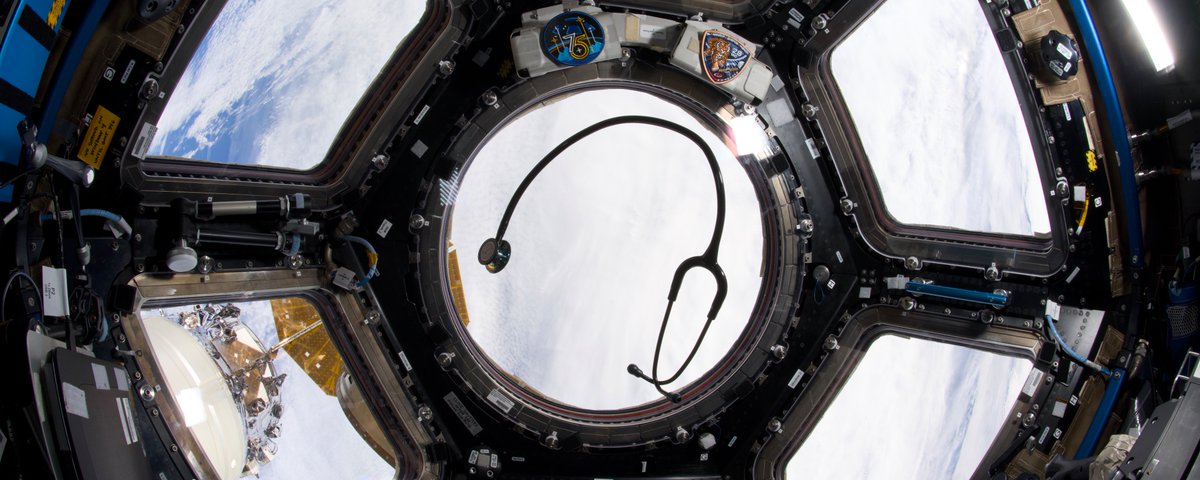
NASA astronaut Anil Menon says he had to drain an abscess on his own finger with a needle and syringe aboard the space station
Menon, a physician, wrote from orbit today that blood flow out of his head slowed to a near stop, and he’s now on a low-dose blood thinner because clots are a known risk in space
He watched the Starship catch from the station and says routine flights will mean more people living in space, and more work for doctors up there
Making spaceflight accessible to millions of people will require major advances in how we prevent and treat medical emergencies beyond Earth


5
228