

Torah study informed by contemporary scholarship
Joined April 2013
- Tweets2.5K
- Following2
- Followers23K
- Likes2.6K


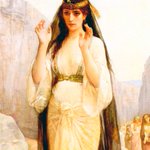
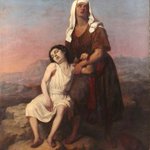


📜 Ishmael: prophet in the Quran, outcast in the Bible? ✡️ ☪️
The #Quran portrays Ishmael as a prophet who helps Abraham build the Kaʿba. But in the #Bible, Abraham sends him away into the wilderness at Sarah's demand.
Was Ishmael really a threat to Isaac? And did he remain forever an outcast from Abraham's family?
thetorah.com/article/ishmael…

What Biblical Studies Can Learn from the Composition of the Book of Abraham!
In 1830, Joseph Smith claimed to have translated the Book of Mormon from tablets written in Egyptian.
In 1835, he bought Egyptian funerary papyri from a traveling exhibitor, which he declared to have been written by Abraham.
Over the coming years he published his translation as the Book of Abraham, which later became part of the LDS canon.
Because every stage of this process is documented, we can see how a mid-century piece of American literature was made into scripture by a new religious movement.
thetorah.com/article/the-mor…

Abraham was NOT Jewish. So in what sense is he the father of the Jewish people? thetorah.com/article/abraham…

The builders of the Tower of Babel—a ziggurat with “its top in the heavens”—seek to bring YHWH down its stairway to inhabit the temple, but YHWH rejects their attempt to establish His presence on their own terms.
Instead, YHWH chooses to come down to Jacob via the stairway of Bethel and later to Israel at Sinai, establishing His presence through His covenant with Israel and bringing order through the torah.
thetorah.com/article/the-zig…

The “Day of Atonement” is a Christian translation of #YomKippur!
The word “atonement” reflects a Christian theological idea that humans and God can become “at one,” an idea that does not fit the Bible’s understanding of the fundamental distinction between God and humanity.
So what is Yom Kippur all about from the biblical point of view? thetorah.com/article/yom-ha-…

Paul’s (ca. 5-67 C.E.) portrayal of #Jesus as an exalted ruler may seem to challenge Jewish monotheism. Yet the idea of a human king ruling on God’s behalf is already found in the #Bible.
Reading Paul alongside Jewish traditions of divine kingship shows how his claims about Jesus remain consistent with exclusive allegiance to one God.
thetorah.com/article/exaltin…

Only by contemplating the possibility of an immensely complex universe such as our own emerging and running without God is it possible to appreciate the alternative...
thetorah.com/article/only-an…

God, Orthodox Judaism, and Israel — Prof.Samuel Heilman
"When I was young American Jew, trying to figure out my personal relationship to my Judaism, I accepted some fundamental Jewish truths that had been instilled in me by family, school and community.
They informed and inspired my personal commitments to Judaism and what I believed would be the trajectory of my life as a Jew and a human being.
Over time, one by one, I had to change my mind about their truth. Uncertainties have replaced those certainties."
thetorah.com/article/god-ort…

When means become ends, ideals become idols.
We cease to test our convictions against experience and instead force experience to conform to our convictions.
— Dr. Andrew Rehfeld
thetorah.com/article/when-id…

Monotheism Is Harder than I Thought — Prof. Kenneth Seeskin
“As I see it, then, Judaism asks us to worship a God we cannot see, imagine, hear (at least literally), describe, or fully comprehend. This is a hard pill to swallow, and many will take it as evidence that when push comes to shove, the Jewish conception of God is barren.”
thetorah.com/article/monothe…

TheTorah.com retweeted

The ex-Aish rabbi who opened up a universe of knowledge
thejc.com/judaism/the-ex-ais…

He never went to college. He grew up in the ultra-Orthodox world, “vaccinated” against the idea that academic scholarship had anything meaningful to say about the Bible. Then he co-founded TheTorah.com—the world’s leading platform for accessible academic biblical scholarship.
The Jewish Chronicle profiles Rabbi @DavidDSteinberg and the journey that led to the founding of TheTorah.com

The ex-Aish rabbi who opened up a universe of knowledge
thejc.com/judaism/the-ex-ais…
617 Scholars, 13 Years, 1 Torah
I love the festival of #shavuot—not only for its more original agricultural aspects, but also for the way it highlights the centrality of Torah to Jewish life—even though I do not believe that any version of the Decalogue (the “Ten Commandments”) was given to Moses on Shavuot (or any other time).
Believing that the Sinai theophany is not historical does not diminish my love for the Torah reading for the holiday, Exodus 19, which contains several contradictory images of what revelation looked like, offering (alongside Exodus 24 and Deuteronomy 4–5) enough options to satisfy just about anyone.
Indeed, what makes the Sinai revelation narratives so powerful to me is precisely that they do not preserve a single, fixed picture of revelation, but multiple voices and perspectives struggling to describe an encounter with the divine.
Read Prof. Marc Brettler's reflections on 13 years
thetorah.com/blogs/617-schol…
We can theoretically arrive at a 3rd century B.C.E. archetype of the Torah by using the conservative Masoretic Text (MT) as the default and comparing it with non-harmonistic variants in the Septuagint (LXX), Samaritan Pentateuch (SP), and Qumran fragments.
But textual criticism offers little help in understanding what the text of the Torah looked like at an earlier stage, or how and when it was composed.
thetorah.com/article/do-we-k…

Why was Ezekiel’s vision of YHWH’s chariot considered so dangerous?
The answer lies in Ezekiel 1:27, where the prophet describes what appeared to be YHWH’s “loins” surrounded by fire and radiance.
In no other biblical depiction of the divine body is the gaze drawn so directly to God’s private parts. No wonder later rabbis warned against reading it publicly.
thetorah.com/article/ezekiel…

On Shavuot night in the 1530s, R. Joseph Karo and R. Shlomo Alkabetz stay up learning Torah all night.
At midnight, a divine voice suddenly speaks through Karo itself.
The voice thanks them for “raising her from the dust” through their learning, warns them against materialism, and urges them to move to the Land of Israel. thetorah.com/article/at-the-…

On the road to Meron, where the Safed kabbalists believe Jesus is buried, R. Hayyim Vital (16th cent.) encounters a dangerous spirit, who overpowers him in a moment of spiritual weakness.
The spirit later tosses him in the air and exhausts him nearly to death, but Vital makes it to his master, the great R. Isaac Luria, the Arizal, who, fearing the spirit will kill Vital and thwart his plans to bring about the messianic age, exorcises it. thetorah.com/article/the-ari…
