

PM - Green Ash Horizon Fund. Perusing latent space
London
Joined March 2021
- Tweets952
- Following1.3K
- Followers616
- Likes3.5K







James Sanders ⚛🌍 retweeted
It's quite aspirational from the chips angle too - implies $350-420 billion in capex on NVIDIA chips over the next year and a half at ~$40-50 billion per GW, against current cash of $100 billion.
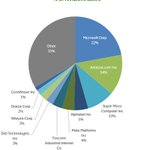
At the mid-point, it also amounts to about 57% of NVIDIA's forecasted datacentre revenues over the next six quarters. The servers for SpaceX/xAI's first 1.4GW were supplied at around a 50:50 split between Dell and SuperMicro - at last estimate, these two providers combined only amounted to 13% of NVIDIA's sales

ALT Source: Bloomberg supply chain estimates
James Sanders ⚛🌍 retweeted

Attempted to write a Steam Engine hype at the era of Industrial Revolution as if it was the age of AI —
The steam engine breakthrough is insane right now.
Watt’s separate condenser + new GRPO optimization just dropped the 405 hp-class engine. We went from 7 hp → 70 hp → 405 hp+ in basically three years. One machine now does the work of 50+ men or water wheels — nonstop, rain or shine, anywhere.
Textile mills, ironworks, everything scaling 5-10x overnight. Productivity exploding.
This isn’t incremental. It’s automating physical labor at massive scale. Jobs shifting forever. Society about to look unrecognizable.
The Industrial Revolution isn’t coming. It’s here and accelerating faster than anyone predicted.
Terrified. Excited. Both.
What a time to be alive. 🚂💨
James Sanders ⚛🌍 retweeted

Here's what a CEO cuddling his head of HR at a Coldplay concert taught me about zero-shot detection models:
1. Just like LLMs you can prompt zero-shot detection models.
Notice how you can inject details into the classes to get specific detections.
The model even picks up on "coldplay concert bracelet".

ALT Screenshot of an object‑detection demo webpage: left pane shows a man in a light shirt standing behind and hugging a woman in black inside a circular stage frame; right pane overlays the same photo with colored boxes labeled 'man', 'woman', 'surprised face', 'holding hands', and 'water bottle', with threshold sliders and input fields below.
James Sanders ⚛🌍 retweeted

"AI will eat SaaS"
IMO, no, it will eat Services which is 25X larger.
the prize isn’t the familiar $200B SaaS pool; it’s the $4.6T enterprises pour each year into salaries and outsourced services – the very labor-intelligent agents are now poised to absorb.


James Sanders ⚛🌍 retweeted

Say AI one more time, and we’ll end 2024 for good. It’s been a wild ride. The year went on like a diffusion model - we watch our sci-fi visions gradually denoise and materialize. So let’s celebrate - one line each, lightning round. You ready?
6 chapters: Robot Hardware, Embodied AI (robot brains), Compute Hardware, Video Gen & World Modeling, LLMs, AI4Science.
> Chapter 1. Robot Hardware
We are the last generation without advanced robots everywhere. Everything that moves will be autonomous.
1) Rise of high-end humanoids: the world is built for us. All the facilities, appliances, and tools are designed around our form factor.
- Tesla Optimus: very few humanoid companies have the courage to show live interactive demo in the wild. Tesla did it at "We, Robot" event. Gen 3 hand, 22 DOF, ahead of the game;
- 1X Neo: friendly neighborhood humanoid, aiming to deploy massively at homes;
- Boston Dynamics e-Atlas: the heavy-duty champion, 360-degree joints unlock some insane gymnastics;
- Figure: fast iteration speed from prototype to car factory deployment;
- Fourier Intelligence: GR-1 robots are one of the few in mass production (1000s) and being shipped worldwide;
- Clone: "Westworld"-style design of biomimetic muscles and tendons, a fresh new perspective on how humanoids can materialize.
And a lot others springing up, too many to count.
2) Rise of inexpensive robot hardware: cheaper than cars, highly scalable, very affordable to most middle classes in the near future.
- Unitree G1 humanoid: costs ~$40K, weighs 77 lbs and stands 50 in tall. Small but mighty in agility;
- Unitree B2-W: robot dog with 4 wheels that out-maneuvers most animals on earth;
- ALOHA: dirt cheap, open-source Stanford robot with 2 grippers. Can be teleoperated to do complex motions like making an omelette or folding laundry.
3) Apple Vision Pro: plays an interesting role in robotics as a data collection device. Parses your head & hand pose in real time, and controls the robot to mimic your actions.
> Chapter 2. Embodied AI (Robot Brain)
Some self-plugs here because this is my home domain ;)
1) Tesla FSD v12: the largest Physical AI data flywheel in history, compressed into a powerful photon-to-action neural net. A paradigm shift in the decade-old autonomous driving problem.
2) NVIDIA launches Project GR00T, a moonshot initiative to build the AI brain for general-purpose robots. Jensen walks on stage at the SAP center with 10 humanoid robots in the background.
3) HOVER: our team trained a 1.5M foundation model that learns how to coordinate the motors of a humanoid, capturing the "subconscious processing" that our cerebellum does every millisecond.
4) DrEureka: our team trained a robot dog to balance and walk on top of a yoga ball purely in simulation, and then transfer zero-shot to the real hardware. An LLM automatically writes the reward function and tweaks the parameters, so we can watch Netflix and still get work done.
5) pi0, from the startup Physical Intelligence: a robot vision-language-action (VLA) model that performs impressive multi-step tasks like laundry folding. Uses ALOHA setup for cheap data scaling.
6) OpenVLA: a Stanford work on open-source VLA model, trained on Open X-Embodiment (OXE) dataset that aggregates robot motion trajectories from labs around the world.
> Chapter 3. Compute Hardware
1) Scaling up: NVIDIA introduces Blackwell architecture, a new beast in town. DGX GB200 crosses 1 Exaflop compute in a single rack.
2) Scaling down: Jetson Nano Super, 67 TOPS of AI computing in a $249 mini box, designed for running small LLMs on edge devices like robots. It is NVIDIA's raspberry pi moment!
3) Google Willow Chip: quantum computers are GPUs over the multiverse. Solved Random Circuit Sampling (RCS) in 5 min that would take 10 septillion yrs for a regular computer.
> Chapter 4. Video gen & world modeling
1) Sora: announced in Feb, stunned the world, eventually released in Dec, and lost some charm due to the long wait. The first of its kind in high-res, long video generation. Sora is a text-conditioned, soft simulation of the visual world. The model learns intricate rendering and intuitive physics all by some denoising and gradient maths.
2) Veo: as OpenAI delays the release, Google stages a great comeback with more accurate physics and fine-grained object dynamics.
3) Action-driven world models:
- GameNGen: yes, you can run DOOM literally anywhere, even inside a diffusion model;
- Oasis: yes, you can run Minecraft anywhere, even inside a diffusion model;
- GENIE-2: run even more games with joystick controls inside a diffusion model.
4) World Labs (startup led by Fei-Fei Li): stunning demo of a generative 3D foundation model with strong geometric consistency.
> Chapter 5. LLMs
>> Capability frontier
1) Claude Sonnet-3.5: few are expecting No. 1 from Anthropic, but the mighty Sonnet beats everyone's expectations.
2) Gemini 1.5 pro, 10M context length: learns to translate English to Kalamang (< 200 speakers in New Guinea) purely from context using 500 pages of tutorial, a dictionary, and 400 parallel examples. Learning happens on the fly in fast neural activations instead of slow gradient descent.
3) o1 (project "Strawberry"): popularizes inference-time scaling and figures out a way to deploy widely. As Sutton said in the Bitter Lesson, there're only 2 techniques that scale indefinitely with compute: learning & search. It's time to shift focus to the latter.
4) o3: comeback of reinforcement learning. Give me a reward function, and I shall move the world. The essence of o3 is about relaxing a single-point RL super intelligence (such as AlphaGo) to cover more points in the space of useful problems (such as math and coding).
5) The true AGI test is to complete this sequence:
4o -> o1 -> o3 -> (?)
>> Human-AI interface is a criminally underrated topic. LLM capability envelope is way ahead of UIUX design to unlock the full potential of such capability.
6) Rise of real-time speech models, such as GPT-4o (advanced voice mode). It's a one-stage distillation of a traditionally 3-stage process: audio->text (Automatic Speech Recognition or "ASR"), text->response (LLM), response->audio (Text to Speech, or "TTS").
7) NotebookLM: one of the best reimagining of UX for LLMs: podcast-ify *anything*. Lowers barrier to entry: no need to prompt, no need to read. Just upload a file and listen to 2 streams of tokens unfold.
>> Open-source community
8) llm.c: Andrej Karpathy crunches tokens in naked C. No python, no frameworks, no dependencies. Just raw math talking to bare metal. He writes poetry in code.
9) Llama-3: the power of GPT-4 in the palm of your hands.
10) DeepSeek: biggest dark horse in OSS LLM this year. Shows that resource constraints force you to reinvent yourself in spectacular ways.
> Chapter 6. AI4Science
1) Nobel Prize in Physics: today, we are all physicists. AI PhDs - read my hitchhiker's guide to rebranding. Machine learning is now "statistical mechanics". You are eligible for the top award now.
2) Nobel Prize in Chemistry: I double dare you, say Nobel one more time ... jokes aside, congrats to Demis and the AlphaFold team. A breakthough of a lifetime. Solve AI first, and then use AI to solve everything else!
3) Neuralink: someone with spinal cord injury is now able to browse the web, live stream, play Civ VI, and even Mario Kart on a Nintendo Switch by controlling a mouse with his mind. Neuralink maps the biological neural pulses to artificial neural pulses, which then maps pixels to cursor actions. So underrated.
> Closing Thought
There are many, many great AI moments that I couldn't possibly enumerate in this post. Can't believe it's already been 2 years since the debut of ChatGPT, and 7 years since the Transformer paper. Lots of hype, promises, and fears. I try my best to improve the signal-to-noise ratio for my audience.
I'll end with Wilson's quote:
"The real problem of humanity is the following: We have Paleolithic emotions, medieval institutions and godlike technology."
The good news is, we get to build the technology, which means we also get to define the role it plays in our institutions, societies, and cultures. AI is an inevitable part of humanity's future. It can be a tremendous force of good if we choose to apply the right force.
Happy new year everyone!

James Sanders ⚛🌍 retweeted

Matter is sparse and rare in the universe.
The scale of emptiness in the universe is staggering. Consider this: The Milky Way has a galactic volume of ~ 8 trillion cubic light years that contains on the order of ~100 billion stars. This is almost all just empty space filled with tiny points of light when viewed from a distance. How empty is the actual space?
You can fit the total cubic volume of all the stars in the Milky Way into a cubic light year. Not just once, in fact, you could fit all the stars from 3 billion Milky Ways into a single cubic light year.
What does this say about the rarity of matter within the Milky Way? It says that matter exists within the Milky Way at a rate of 1 part per 24 sextillion of empty space or 1 part per 24,000,000,000,000,000,000,000.




James Sanders ⚛🌍 retweeted
What makes up the abstract concept of an apple? We read the word "apple" as a string, see 2D pictures online, 3D shape in real life, and moving apples in videos. We touch the apple, feel its geometry in our palms and texture through the rich tactile sensation on our fingers.
Do all these different modalities converge to the same representation space, given sufficient learning capacity? After all, they are all shadows of one "true reality" projected onto our different senses.
I really like this study paper from MIT, "The Platonic Representation Hypothesis". The authors show that highly capable LLMs and vision models learn very similar representations, even though the modalities are never explicitly co-trained. Concretely, the experiments compare the similarity between strings "apple" and "orange" with the similarity between a picture of an apple vs orange. These two turn out to agree with each other in a wide selection of off-the-shelf models.
Reminds me a bit of the famous word vector experiment: f("king") - f("queen") ~= f("man") - f("woman"). But this time, the equation holds across modality, datasets, and completely separate training pipelines.
I would love to see this study extended to more modalities: how about 3D point clouds? Speech? Sound of a lion vs a bird? Tactile signals on a robot hand? Can we train meta-models that transfer to *unseen* modalities at test time, since it's just another projection of reality from a different angle?

James Sanders ⚛🌍 retweeted

Thanks to everyone who is speaking up against Apple blocking Epic from competing with their App Store.
On PC, we’ve served over 270,000,000 customers, so the victims of Apple’s competition bans include hundreds of millions of future customers on iOS who are deprived of better deals on games and better cross-platform gaming and social features, as well as hundreds of thousands of developers who are stuck under Apple’s tax regime.
Competition is a fragile thing. Apple can crush it not only by banning it outright as it did pre-DMA, but also by selectively blocking specific competitors like us, and by sowing fear among all developers who’d like to partner with us to reach users, and by users who fear buying apps on a third-party store Apple can block at any time.
Apple is doing everything they can to sow fear so that, even if they’re forced to end this blockade, every developer will know Apple can crush any of us on a whim, and therefore that competition is futile. It’s a sad slope for the world’s most respected company to be slipping down, but slipping it is, and it’s a long way down.
bit.ly/48Kl0RC
James Sanders ⚛🌍 retweeted

ASML just made them most badass AI generated ad, using Midjourney and Runway
1,963 Midjourney prompts that yielded 7,852 images
Then processed by RunwayAI, with total film covering 25,957 frames at 1,000 MB per frame
The trickiest scene was with Issac Newton
Via @lithos_graphein – at Nashville, TN
James Sanders ⚛🌍 retweeted

Live from the $MSFT offices today after that W:


James Sanders ⚛🌍 retweeted

The thing about LLMs that make them unintuitive is that analogizing them to having a scifi AI is less useful than thinking of them as infinite copies of some guy named Steve, a grad student who is great at coding & art and is widely-read, but makes up stuff when he is pressed.
James Sanders ⚛🌍 retweeted

Uncovering the causes of disease is one of the greatest challenges in genetics. 🧬
To help advance this, we created AlphaMissense: an AI model classifying missense variants - or genetic changes affecting proteins.
Here's how it can help scientists. 🧵 dpmd.ai/alphamissense-blog
James Sanders ⚛🌍 retweeted

Europe 🇪🇺 significantly lags the US 🇺🇸 and China 🇨🇳 as a tech power.
Data-rich 🧵 below on the economic consequences of tech stagnation for Europe’s prosperity and beyond (1/25)
Cc: @GerardAraud @Noahpinion @erikbryn @paulg

James Sanders ⚛🌍 retweeted

Newly installed solar PV & wind capacity is set to save consumers in the European Union €100 billion from 2021-2023
Wholesale electricity prices in Europe would have been 8% higher last year without the additional renewable capacity 👉 iea.li/3rKcFh1
