




ALT A dark field of space scattered with numerous faint, distant objects. Most appear as tiny smudges or points of white, blue, orange and red light. Near the centre is a small but distinct red dot, marking the farthest quasar in the image. Several larger, elongated galaxies are visible, including a pale galaxy to the centre-right and a yellowish galaxy near the bottom. The nearly black background is densely speckled with faint points of light.





ALT A gold rendering of Voyager 1 against a starry background accompanies the headline “Shine Bright for Voyager’s Light-Day.” After sunset on Tuesday, Nov. 17, 2026, celebrate Voyager 1 reaching one light-day from Earth by signaling its call sign, V-G-R. Open the automated flasher in your phone or tablet’s browser and point your device toward the sky, or use a flashlight to flash the on-off pattern shown online. Find both at go.nasa.gov/shinebright.


ALT An artist’s concept depicting a Voyager spacecraft with a long instrument protruding from the rear of the spacecraft. The front is circular and golden with light shining into its right side. A long antenna stretches out straight to the left and two smaller antennae form a Y from the left side of the circle.
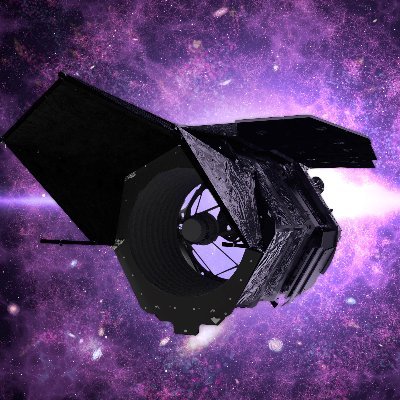

ALT Two people in head to toe white clean room suits stand in Goddard's large white clean room, staring up at Roman. Fully integrated, the telescope towers over them. Three irregular, elongated hexagon-shaped solar panels are the most striking part of Roman from this angle. The solar panels are gold with black squares covering almost their entire surface. Below the solar panels, which are several feet above the floor, the rest of the telescope is a silver cylinder, with various instruments protruding from its sides.




ALT Quenton Nelson trade details.


