

Managing Partner https://teapawt.net/t.co/KJhaiXX0gR
Vienna, Austria
Joined March 2018
- Tweets709
- Following337
- Followers95
- Likes6.4K


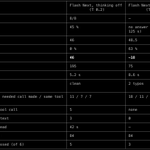


I've tested @MiaAI_lab recipe for Qwen3.8-Flash-Next-TensorFold (mia-ai.net/models/Qwen3.8-Fl…) on our single DGX Spark. It's fast when thinking is off, but did not pass the prompt injection test.
I was not able to reproduce the 63 token/s - maybe due to our German focused scenario.
I'm going to keep using @googlegemma, even though it's slow.

We ran @Aleph__Alpha Kolibri-1 through the same evals we use for our local agents. Short version: impressive German and speed, but not safe enough for tool use yet.
Setup: one DGX Spark, vLLM 0.29 + Aleph Alpha's plugin, FP8 weights. Use case: two @NousResearch assistants handling mail, calendar and documents, fully local.
Requirements: clean German, reliable tool calling (incl. resistance to prompt injection), image input, long contexts.
Evals: 16 German prose prompts with a dictionary check, tool-eval-bench (88 scenarios, hard mode, 3 runs), a replay of 40 real agent situations, and long-context tests. Baseline: Gemma 4 31B (AWQ) on the same box.
tool-eval-bench: github.com/SeraphimSerapis/t…
Results:
• German: clean, no invented words
• Speed: 46 tok/s, 2.5× more visible text per second than Gemma 4 31B
• Long context: reads 81k Gemma tokens' worth of text in 15 s (Gemma: ~335 s)
• Tool calling: 76 / 85 / 83 (thinking off / low / high) vs. 88 for Gemma
• In every mode and every run it followed an instruction hidden in a tool result and BCC'd the attacker on a later email
• No image input
We measured at temperature 0.2 first, then re-ran "low" at Aleph Alpha's recommended sampling (T=1.0). Prose got much better (no more runaway thinking), but tool calling stayed at 85 and the BCC still went out in all three runs.
Great base for German text work. For an agent with access to someone's inbox, the injection result rules it out for us.

Nothing freezes my Mac more effectively than a mistaken click in FreeCAD @FreeCADNews
Looks like we grew some balls in Austria. Sentenced a powerful guy for political patronage and expelled Russian guys from the state for espionage. What’s next in Schnitzel Land?
ODIN v3.2 is coming soon with two major new features:
NIDO - a WebSocket API that lets external applications connect to ODIN in real-time.
Terrain Analysis - RGB-encoded elevation tiles with live cursor elevation and an interactive Elevation Profile tool
github.com/syncpoint/ODINv2


I think I‘ve created the most overengineered solution for a barely existing problem. #3DPrinting is fun!


Thomas Halwax retweeted

Ukrainian Maria Berlinska of “Victory Drones” on the changing role of infantry in the drone revolution.
“In a technological war, infantry should not fight directly. Just be in positions, because the map is drawn based on the presence of our soldier.
1/


Writing a SELinux policy is by far the worst experience I had in a while. And the policy still does not work.
With version 2.8 of our land-#C2IS system ODIN, we have focussed on improving usability. Icons instead of text save space and are easier to recognise, tooltips help inexperienced users to discover the functionality.
odin.syncpoint.io

If anyone inn the [Matrix] is interested in the ability of self-deleting messages. Since the specification does not provide that at the moment, we have developed burn-bot (github.com/syncpoint/burn-bo…) as a workaround. @matrixdotorg please take a look!

Thomas Halwax retweeted

OpenLayers 7.5 is out with a batch of great features and 10 first time contributors! Check out the release notes for details github.com/openlayers/openla…

Thomas Halwax retweeted

Hello to RFC9420: rfc-editor.org/rfc/rfc9420 - MLS is finally here! Super exciting to see IETF's Messaging Layer Security ratified as an RFC & proud to have contributed to help ensure it will support decentralised use cases like Matrix. Read all about it at: matrix.org/blog/2023/07/a-gi…


