

Licensed Architect, Member of the American Institute of Architects AIA & Professor of Architecture since 2006. Owner of Architecture Firm since 2010.
Joined March 2024
- Tweets18.9K
- Following983
- Followers1.9K
- Likes7.1K




Tim the Architect retweeted

À Orléans, l’emblème de notre XIXe congrès ne pouvait être que Sainte Jeanne d’Arc.


Tim the Architect retweeted

Monet’s Iris sold yesterday for €50 million.
Art or speculation?
Art is treated as a financial asset, bought and sold for profit.
Is that fair?

Trying doing this today from the start and environmentalists would cry foul, yet they did it and it became home to some of the best land to own in America and most desirable place to live on the ocean.


So true. Many good ideas here and yes I am that guy with three old Porsches who isn’t looking to impress anyone because I’m secure enough in who I am that I have no need for outside validation.
youtu.be/sxZ3oTUlMp8?is=M-qc…
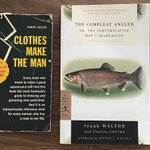
Books are an acknowledgment of knowing there are others who know much more about something than you which requires humility.
It is also a sign of wanting to know more which is an investment to increase your intellectual diversity and range of knowledge.
On my desk today….

Who you are is not determined by what you own but by what you know and how you behave. Aka Manners. Intellectual range (travel, books, culture, craft) is a stronger signal of distinction than material things.

Most people get up have some coffee brush teeth and begin to day. I get up have coffee. Dream and draw things. I also read and listen to lofi morning music. Then I do a pensive & observant 1 mile walk.

Tim the Architect retweeted

John Cowperthwaite did more for human prosperity than any development economist drawing a government salary ever managed, and he did it by refusing to do almost anything at all.
As Hong Kong's Financial Secretary from 1961 to 1971, Cowperthwaite ran one of the most radically free economies the modern world has ever seen. He kept taxes flat and low (the top income tax rate sat at 15%), ran consistent budget surpluses, abolished import tariffs, and blocked nearly every subsidy request that crossed his desk. When British civil servants demanded economic statistics to justify intervention, he refused to collect them. Not out of laziness. He genuinely believed that giving planners numbers gave them excuses.
The results? In 1960, Hong Kong's per capita income stood at roughly 28% of Britain's. By 1997, Hong Kong had surpassed Britain. That trajectory happened without natural resources, without foreign aid, and without a single five-year plan drafted by well-intentioned economists from Oxford. Hong Kong had a harbor, people willing to work, and a bureaucrat with enough intellectual discipline to keep the state out of their way.
Capital flows toward secure property rights and reliable rules, and flees the moment politicians start allocating it. Every industry Beijing picked as a "priority sector" during those same decades burned through subsidies and produced junk. Hong Kong's industries emerged organically, serving real demand, building real wealth.
You benefit from this history whether you know it or not, because Hong Kong's success gave the world a controlled experiment that still embarrasses every advocate of managed development. The control group thrived. The planned economies didn't.
Cowperthwaite retired to St Andrews, received a knighthood, and gave almost no interviews. That restraint was entirely in character.


Tim the Architect retweeted

Merci à Christophe Clavé pour cet éclairage sur l’appauvrissement de la langue et la ruine de la pensée 🙌
"La disparition progressive des temps (subjonctif, passé simple, imparfait, formes composées du futur, participe passé…) donne lieu à une pensée au présent, limitée à l’instant, incapable de projections dans le temps.
La généralisation du tutoiement, la disparition des majuscules et de la ponctuation sont autant de coups mortels portés à la subtilité de l’expression.
Supprimer le mot «mademoiselle» est non seulement renoncer à l’esthétique d’un mot, mais également promouvoir l’idée qu’entre une petite fille et une femme il n’y a rien.
Moins de mots et moins de verbes conjugués c’est moins de capacités à exprimer les émotions et moins de possibilité d’élaborer une pensée.
Des études ont montré qu’une partie de la violence dans la sphère publique et privée provient directement de l’incapacité à mettre des mots sur les émotions.
Sans mot pour construire un raisonnement, la pensée complexe chère à Edgar Morin est entravée, rendue impossible.
Plus le langage est pauvre, moins la pensée existe.
L’histoire est riche d’exemples et les écrits sont nombreux de Georges Orwell dans « 1984 » à Ray Bradbury dans « Fahrenheit 451 » qui ont relaté comment les dictatures de toutes obédiences entravaient la pensée en réduisant et tordant le nombre et le sens des mots.
Il n’y a pas de pensée critique sans pensée. Et il n’y a pas de pensée sans mots.
Comment construire une pensée hypothético-déductive sans maîtrise du conditionnel ? Comment envisager l’avenir sans conjugaison au futur ? Comment appréhender une temporalité, une succession d’éléments dans le temps, qu’ils soient passés ou à venir, ainsi que leur durée relative, sans une langue qui fait la différence entre ce qui aurait pu être, ce qui a été, ce qui est, ce qui pourrait advenir, et ce qui sera après que ce qui pourrait advenir soit advenu ? Si un cri de ralliement devait se faire entendre aujourd’hui, ce serait celui, adressé aux parents et aux enseignants : faites parler, lire et écrire vos enfants, vos élèves, vos étudiants.
Enseignez et pratiquez la langue dans ses formes les plus variées, même si elle semble compliquée, surtout si elle est compliquée. Parce que dans cet effort se trouve la liberté. Ceux qui expliquent à longueur de temps qu’il faut simplifier l’orthographe, purger la langue de ses «défauts», abolir les genres, les temps, les nuances, tout ce qui crée de la complexité sont les fossoyeurs de l’esprit humain. Il n’est pas de liberté sans exigences. Il n’est pas de beauté sans la pensée de la beauté."
Christophe Clavé

French Anti-Christians.

Tim the Architect retweeted

Most people buy a Porsche 911 Turbo as a weekend prize, keeping it tucked away to preserve its resale value. You did the exact opposite. By treating a legendary 3.6L twin-turbo machine as a daily commuter braving brutal northeastern winters, everyday traffic, and rigorous track days you have proven what true automotive passion looks like.
Passing 784,000 miles (1,261,726 km) on the same car is not just a victory for meticulous maintenance and legendary German engineering; it is a masterclass in living life behind the wheel. While your physical odometer famously maxed out at 999,999 km, your dedication to the road hasn't skipped a beat.
Thank you for showing the entire car community that cars are meant to be driven, memories are meant to be made on the blacktop, and that the journey to one million miles is the ultimate destination. Keep rolling, Tom!


We have a leader. We have apostolic succession. That can’t be started in tomorrow’s church or the the church that started last week or the year before. 2000 years. This is Jesus kingdom on earth.

Years ago (87’) I was an art student in Pittsburgh. On Sundays I’d take my bike out and explore Pittsburgh Oakland area.
One day I visited the beautiful Frick Museum and on a back wall of a hallway I found this poem. It seemed so wise I took my sketchbook out and copied it down. Been meaningful ever since.
Desiderata
by Max Ehrmann (1927)
Go placidly amid the noise and the haste,
and remember what peace there may be in silence.
As far as possible, without surrender,
be on good terms with all persons.
Speak your truth quietly and clearly;
and listen to others,
even to the dull and the ignorant;
they too have their story.
Avoid loud and aggressive persons;
they are vexatious to the spirit.
If you compare yourself with others,
you may become vain or bitter,
for always there will be greater and lesser persons than yourself.
Enjoy your achievements as well as your plans.
Keep interested in your own career, however humble;
it is a real possession in the changing fortunes of time.
Exercise caution in your business affairs,
for the world is full of trickery.
But let this not blind you to what virtue there is;
many persons strive for high ideals,
and everywhere life is full of heroism.
Be yourself. Especially do not feign affection.
Neither be cynical about love,
for in the face of all aridity and disenchantment,
it is as perennial as the grass.
Take kindly the counsel of the years,
gracefully surrendering the things of youth.
Nurture strength of spirit to shield you in sudden misfortune.
But do not distress yourself with dark imaginings.
Many fears are born of fatigue and loneliness.
Beyond a wholesome discipline,
be gentle with yourself.
You are a child of the universe
no less than the trees and the stars;
you have a right to be here.
And whether or not it is clear to you,
no doubt the universe is unfolding as it should.
Therefore be at peace with God,
whatever you conceive Him to be.
And whatever your labors and aspirations,
in the noisy confusion of life,
keep peace in your soul.
With all its sham, drudgery, and broken dreams,
it is still a beautiful world.
Be cheerful. Strive to be happy.
The Latin title means “things desired” (or desired things). Ehrmann, a lawyer and poet from Terre Haute, Indiana, wrote it around 1927; it later became widely known through posters and a 1971 spoken-word recording.

This is interesting. A Holy water vending machine. Got a quarter? 😆🥤

The first vending machine, invented 2,000 years ago by Hero of Alexandria, a Greek engineer in the Roman world.
In the temples of Alexandria, people took holy water before they prayed. But people were taking more water than they paid for, so Hero looked for a solution.
He explains it in his book Pneumatica. You dropped a five-drachma coin into a slot at the top of a box. The coin fell onto a small tray at the end of a lever. The weight of the coin tipped the lever, the lever pulled up a plug, and the holy water flowed out. When the coin slid off the tray, the lever went back to its place and the water stopped.
This way, everyone got the same amount of water. A priest didn’t need to stand there and measure it.