

A digital time machine that takes you to unique places and shares unforgettable stories. Our goal is to open your mind and inspire your travels.
Discover places worth seeing ➜
Joined February 2024
- Tweets41.8K
- Following165
- Followers443K
- Likes29.3K


Pinned Tweet
Savannah is my kind of city. Walkable. Unhurried. More front porches than agendas. You don’t visit Savannah to check boxes. You visit to slow down and remember what a GREAT day can feel like.
The Timeless Traveler 🇺🇸 retweeted
Kyoto's Ninenzaka and Sannenzaka have been used by pilgrims for centuries. But there's an interesting story behind how these old streets have survived.
I cover that history in the video below.
If you enjoyed this video, there are more stories like it on my channel:
youtube.com/@TimelessTrvlr


Most people have seen a rainbow during the day. But did you know you can sometimes see one at night?
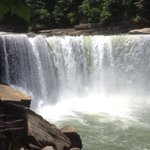
At Cumberland Falls in Kentucky, moonlight can create a rainbow in the waterfall's mist when conditions are right.
Has anyone here ever seen a moonbow in person?


The Timeless Traveler 🇺🇸 retweeted
Gold was discovered near Bannack, Montana, in 1862. By the following year, more than 3,000 people had arrived.
Over 50 historic buildings still stand along its main street. It's remarkable how much of this old mining town has survived.


The Timeless Traveler 🇺🇸 retweeted

Broken Country should be mandatory viewing across the Western Hemisphere.
We’ve already lost BioWare and Ubisoft.
We can’t afford to lose the Western values that built Canada and turned it into one of the most prosperous nations in our region.

American friends —
We made Broken Country to answer one question: what happened to Canada? A country that was the envy of the world is now a shell of itself. It didn’t happen by accident. It happened one bad policy at a time.
Every one of those policies sounded good when it was sold. Mass immigration at a pace our housing, hospitals and wages couldn’t absorb. “Free” health care you wait months to actually use and increasingly are offered death instead of care. More programs, more promises, more government standing between people and their own lives.
The result: separatist movements in three provinces, a generation that can’t afford a home, and a government insisting things have never been better.
When I look south I see a country that isn’t perfect, but is thriving. With your midterms two weeks out, I’d ask you to look hard at three candidates running on the exact promises that took us down:
Texas — James Talarico. On video calling capitalism an “oppressive system” that must be “dismantled.” Now he says he’s a capitalist. Texans should ask which one shows up in the Senate.
Michigan — Abdul El-Sayed. Deleted thousands of posts before running. Told NBC his family had no Muslim Brotherhood ties; his own half-sister’s posts say otherwise. You can delete tweets. You can’t delete a record.
Florida — Angie Nixon. A card-carrying member of the DSA, whose platform calls for defunding police and open borders. She says she disagrees with those parts. Then why join?
We’ve lived where this road goes. If you want to see it for yourself, watch Broken Country at BrokenCountry.com.
Don’t make Canada’s mistakes.

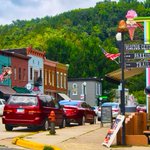
Port Townsend, Washington, doesn't get nearly enough attention.
This old seaport has streets lined with Victorian buildings, a beautiful waterfront and Fort Worden just outside town.
If you enjoy historic coastal towns, this one belongs on your list.


Kyoto's Ninenzaka and Sannenzaka have been used by pilgrims for centuries. But there's an interesting story behind how these old streets have survived.
I cover that history in the video below.
If you enjoyed this video, there are more stories like it on my channel:
youtube.com/@TimelessTrvlr
Gold was discovered near Bannack, Montana, in 1862. By the following year, more than 3,000 people had arrived.
Over 50 historic buildings still stand along its main street. It's remarkable how much of this old mining town has survived.
I’ve always loved seeing cities from above. Mexico City is massive. Venice is another one I never get tired of looking at.
What city would you pick?

More than 35 million years ago, an enormous volcanic eruption helped shape a mountain range in West Texas. Today, one of the state's most remote roads takes you right through the surrounding landscape.
It's called Pinto Canyon Road, and it runs between Marfa and Ruidosa, near the Mexican border.
Most people associate West Texas with wide-open desert, but the Chinati Mountains tell a different geological story.
The mountains were shaped by one of the largest volcanic eruptions in the region's history. Over millions of years, erosion exposed layers of rock and helped create the rugged peaks and canyons you see today.
Pinto Canyon Road offers a chance to see that landscape up close.
The route begins south of Marfa on Ranch Road 2810, crossing miles of open ranchland before reaching the mountains. Eventually, the pavement gives way to dirt and gravel, and the road winds through increasingly rugged terrain.
It's a part of Texas that looks very different from the Hill Country, the Gulf Coast, or the plains of North Texas.
And getting there requires some preparation.
Cell service is unreliable, portions of the road are rough, and rain can make the route dangerous. A high-clearance vehicle with good tires is recommended. Bring extra water, carry offline maps, and check conditions before setting out.
The nearby Chinati Mountains State Natural Area covers nearly 39,000 acres, although it isn't open to the public yet. For now, Pinto Canyon Road offers one of the best ways to appreciate this unusual landscape.
I've spent a lot of time researching places across Texas, and I'm continually surprised by how much there is to discover beyond the destinations everyone already knows.
That's a big part of what I write about in my newsletter. Places you might never have considered visiting, along with the history that makes them interesting.
thetimelesstraveler.substack…


You don't have to travel to Europe to see houses built in the 1700s.
Ste. Geneviève, Missouri, still has homes from its days as a French colonial settlement, including some built before the Louisiana Purchase.
A few use an unusual construction method with upright wooden logs.
It's one of those towns where an afternoon walk can turn into a history lesson.


Lanesboro, Minnesota, looks like the kind of town where you'd stop for lunch and end up staying the weekend.
It's tucked between limestone bluffs, with the Root River running nearby and miles of trails winding through the countryside.
Rent a bike, wander around town, and take your time.
There's no reason to rush through a place like this.


People tried to build a perfect society in this little Indiana town. Twice.
New Harmony was founded by a German religious community in 1814. Then, in 1825, Robert Owen bought the town and tried to create a different kind of utopian society.
Neither experiment lasted.
But you can still visit New Harmony and see buildings from that period.


There's a stretch of Idaho that looks like it belongs on another planet.
Craters of the Moon has miles of black lava fields, volcanic cones, and caves formed by molten rock.
Some of the lava flows are only about 2,100 years old.
And you can actually walk through parts of this landscape.


Between 1200 and 1500, people in Micronesia built a ceremonial city across more than 100 artificial islands.
They constructed enormous walls using basalt stone and connected the islands with canals.
The ruins are still there.
It's called Nan Madol, and I'm amazed more people haven't heard of it.
There's a lake in Kazakhstan with an entire forest standing underwater.
Lake Kaindy formed after an earthquake in 1911 triggered a landslide that flooded a valley.
More than a century later, the dead spruce trees are still standing, their trunks rising straight out of the water.
You can travel back in time and spend one day in any city in the world.
What city and what year are you choosing?

Whoever decided to build Castellfollit de la Roca, Spain, on the edge of a volcanic cliff had a lot more confidence than I do.
Some of the houses sit right along a drop of nearly 160 feet.