

Loving old photos! Timepix has 50,000 #OrdnanceSurvey #GreaterManchester #1950s pics, Plus #Victorian #Edwardian #postcard also @timepix@mastodonapp.uk
Somerton, England
Joined August 2016
- Tweets6.4K
- Following1.1K
- Followers843
- Likes17.1K





Timepix retweeted

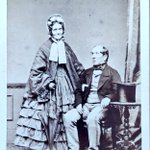
Henry Taunt on the houseboat which he used for river photography with a lady, probably his close friend Fanny Miles in Oxfordshire, 1895. Photo: Historic England.

Timepix retweeted

You are looking at Prussian soldiers in Paris in 1871, photographed following France's defeat in the Franco-Prussian War.

Timepix retweeted

In the long aisles of the Y-12 plant at Oak Ridge, Tennessee, rows of young women sat on stools facing walls of dials, gauges, and switches.
Their job was simple on the surface: watch the meters, turn the knobs to keep the readings in range, and report anything that looked wrong.
They were told the work mattered to the war effort. They were not told what the machines were doing.
These were the Calutron Girls. Tennessee Eastman, which ran the facility for the Manhattan Project, recruited thousands of them—mostly recent high-school graduates—between 1943 and 1945.
With men overseas and trained scientists in short supply, the company discovered that carefully instructed young women could operate the electromagnetic separation units (calutrons) as well as, or better than, the specialists who had run the earlier experimental machines.
The calutrons used strong magnets to separate the rare, fissile uranium-235 isotope from the far more common uranium-238.
The enriched uranium they produced became the fuel for Little Boy, the atomic bomb dropped on Hiroshima on 6 August 1945.
Secrecy was absolute. Workers were forbidden to discuss their jobs even with one another. Managers told them they would be taught how to perform the tasks but not why.
Gladys Owens, who arrived in late 1944 and worked there for about eight months, later recalled the blunt instruction: they could be trained to do what was needed, but they could not be told what they were doing—only that if the enemy beat the United States to it, “God have mercy on us.”
Those who asked too many questions sometimes vanished from the dormitories and the plant.
Photographer Ed Westcott, the official chronicler of the secret city, captured the scene in 1944–45.
In one widely reproduced image, a young woman sits in the foreground on a tall stool, hands in her lap, looking toward the camera while others work farther down the aisle.
That woman was Gladys Owens. She had no memory of the photograph being taken.
Nearly sixty years later, around 2003–2004, Owens returned to Oak Ridge for a public tour of Y-12.
She saw the photograph on display and recognized herself. Only then did she fully grasp that the dials she had watched and adjusted had helped separate the uranium used in the first atomic bomb.
Like many of the other operators, she had left Oak Ridge after the war, resumed ordinary life, and remained silent about the work for decades.
The image that had long symbolized the anonymous contribution of the Calutron Girls turned out to contain a face she knew—her own. ❤️


Timepix retweeted

This is a photograph of the Battle of Sedan in 1870.
It is considered to be the first ever photograph of an active land battle.

Timepix retweeted

I’m remembering Louis Daguerre on his birthday today. Although he’s best known for inventions in photography (the daguerreotype process), he was also a talented artist and painted this wonderfully Gothic moonlit nocturne of the ruins of Holyrood Abbey in Edinburgh, Scotland.

Timepix retweeted

A Victorian street child, believed to be Jim Jarvis. Though the photograph's date and identification remain uncertain.
Around 1867, a homeless boy named Jim Jarvis reportedly showed Dr Thomas Barnardo where children were sleeping rough on London's rooftops. Shocked by what he saw, Barnardo went on to open his first boys' home in 1870.
Thousands of children struggled to survive on Victorian London's streets, often relying on begging or stealing food.
#VictorianLondon #DrBarnardo #SocialHistory


Timepix retweeted
Five women, 1840s, photo by Scottish pioneers David Octavius Hill (1802-70) and Robert Adamson (1821-48). Miss Ellen Milne, Miss Mary Watson, Miss Watson, Miss Agnes Milne and Sarah Wilson (Scottish National Portrait Gallery).

Timepix retweeted

How's about them onions! Mr & Mrs Rider of the Heigham Horticultural Society, Norwich, ca 1930

Timepix retweeted

In 1890, the legal age of sexual consent in Delaware was seven years old.
Seven.
In 38 American states, it was twelve or younger.
A man accused of sexually assaulting a little girl could escape conviction by arguing that she had consented.
One woman helped change that.
Her name was Helen Hamilton Gardener.
At a time when most American women couldn't even vote, Gardener joined a movement demanding that lawmakers raise the age of consent and offer girls greater protection against sexual exploitation.
What she discovered was horrifying.
Some legislators resisted reform because they feared girls would falsely accuse men. Others insisted that girls matured early enough to consent to sex.
In Texas, opponents argued that working girls might blackmail their employers. Another argument was that Southern chivalry offered women sufficient protection.
These were actual arguments recorded in an 1895 report on legislative opposition.
Gardener refused to remain silent.
She wrote novels exposing the consequences of sexual abuse, published detailed comparisons of state laws, and publicly identified states that refused to strengthen their protections.
She encouraged Americans to question nearly 9,000 state legislators about their positions.
She also fought proposals that would have denied protection to sexually assaulted girls unless they could prove they had been virgins.
And she challenged the supposedly scientific arguments used to portray women as intellectually inferior to men.
Her campaign was part of a much larger movement involving thousands of women, including suffragists, temperance activists and Black reformers.
By 1900, 32 states had raised their age-of-consent thresholds to between fourteen and eighteen.
Gardener subsequently became an influential campaigner for women's suffrage, helping secure President Woodrow Wilson's support for a federal constitutional amendment.
In 1920, she became the first woman appointed to the United States Civil Service Commission.
She died in 1925.
There is something extraordinary about the women who fought these battles.
They had to ask men for permission to protect children from other men, while those same men denied them the right to participate equally in making the laws.
And some of those lawmakers were more concerned about protecting adult men from accusations than protecting little girls from sexual assault.

Timepix retweeted
Meet Mrs Robinson, photographed in Bethnal Green, East London, around 1902 by John Galt.
She earned just one shilling (5p) for stuffing a mattress with straw, using heavy striped fabric known as ticking. Hard, poorly paid work that helped keep many East End families afloat.
The photograph was originally titled "Mrs Robinson – a shilling a mattress."
#EdwardianLondon #EastEnd #SocialHistory


Timepix retweeted

Staying with a poppy theme for Armistice Week, I take you back 110 years to a poppy field in the Bellefontaine valley, at Champigneulles, France. I have cleaned-up this beautiful autochrome plate of a wandering belle, photographed by Julien Gérardin a few years before the fields of Europe were torn apart by war.
It was taken using an early colour glass-plate process and isn't colourised.


