

Biology is life 🍃 Postdoc at Harvard Medical School @harvardmed| Loparo +TJ Ha labs | PhD at TU Delft @tudelft | Cees Dekker lab |
🇺🇸 via 🇳🇱,🇩🇪,🇷🇸
Joined December 2019
- Tweets702
- Following368
- Followers437
- Likes1.3K





I'm happy to share the first paper from my postdoc work:
biorxiv.org/content/10.64898…
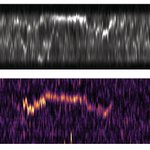
How does RecA find one homologous sequence -and what turns that encounter into a repair-competent one?
We find that DNA topology is the gatekeeper!
With @anjbadri / @JoeLoparo / TJ Ha 🙏
1/10

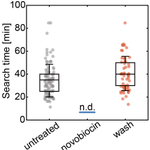
But this faster search was completely unproductive: we observed 0/100 homology-resolution events over 2 h !!!
Drug washout restored normal dynamics and resolution.
Mobility can solve the encounter problem; DNA topology solves the commitment problem.
9/10


Honored to receive a Poster Prize at @Fusion_Conf in Prokaryotic Cell Bio for my research on the effects of chromosome topology on DNA repair.
Thank you to the organizers, and everyone who stopped by to discuss the work.
Excited to continue working on it! #ProkaryoticCellBio


In the last steps of the manuscript writing and I just ran the full document through the new @qedScience manuscript comparison...
I am beyond excited to share this work in the next few weeks! 🤩🤩

Probably the best thing I've seen this year! Absolutely beautiful animation of DNA repair machinery.

Incredible.
This is the DNA Repair System. Look how many parts work together to make the system function.
Without DNA Repair, mutations in DNA would completely destroy its functionality very quickly - it would degrade rapidly into non-functional junk. Which means, the DNA Repair System would have to have been around since the very beginning of Life; DNA and the Repair Systems would have to arise together, at the same time, or DNA could not survive - and neither could Life.
But how complex is the DNA Repair System?
It requires 6-7 major systems, working in coordination together. Combined, those systems contain a total of about 130-200+ total unique proteins that make up the systems to do the job.
Two things make this system most likely designed:
1. DNA cannot survive without DNA Repair. The entire system must be in place at the very start of Life, or Life never starts. But creating the systems requires the information in DNA - they both must arise together, simultaneously.
2. The specified, irreducible complexity of the system. DNA Repair requires a minimal amount of specifically engineered protein systems to function. Just look at how many separate systems are involved in that process!
How can anyone see something like this and believe it arose by an accident of natural processes?
Life is so clearly intelligently Created.

Wrapped up a GRC on Bacterial Cell Biology last week in SNHU, New Hampshire.
A full week of talks on novel bacterial systems and new mechanistic details on eastablished systems.
Great chance to learn, connect with peers and enjoy science!

Miloš Tišma retweeted

Best thing about the PhD are the friendships that last beyond the 4/5 years !!! Great meet up with @TismaMilos at his new home in Boston!

Miloš Tišma retweeted

We're excited to host two fantastic speakers at our next online @PhysicsofLifeUK ECR Seminar on Tuesday 15 April, 2–3 PM BST:
@TismaMilos and Thomas McLean, chaired by @BigaVeronica
Please register below for the Zoom link:
lnkd.in/dSynrAe8

Looking forwards to this PoL Seminar!
I will cover single-molecule techniques and tricks to study the biophysics of DNA organization and how this relates to ParB proteins.
Big thanks to the organizers for inviting me! 🤩

We're excited to host two fantastic speakers at our next online @PhysicsofLifeUK ECR Seminar on Tuesday 15 April, 2–3 PM BST:
@TismaMilos and Thomas McLean, chaired by @BigaVeronica
Please register below for the Zoom link:
lnkd.in/dSynrAe8