

News, history, & heritage of the world's earliest civilizations in Mesopotamia—Sumer, Akkad, Babylonia & Assyria & their living legacy: the Assyrian Christians
Europe
Joined October 2021
- Tweets4.4K
- Following543
- Followers4K
- Likes5.7K




📸 An Assyrian monk and nun of the Syriac Orthodox Church at the historic St. Mary’s Church in the village of Hah, Tur Abdin, Western Assyria, in 1909, before the Assyrian Genocide of 1915.
Photo: Gertrude Bell (1909)
⛪ The historic St. Mary’s Church, also known as Yoldath Aloho (Mother of God), is located in the ancient Assyrian village of Hah, approximately 22 km east of Midyat. According to local Christian tradition, the church’s origins date back to the first century AD, while its surviving architecture dates mainly to the sixth–eighth centuries. This remarkable monument is included on UNESCO’s World Heritage Tentative List, recognizing its historical and architectural importance.
🏛️ Tur Abdin, meaning “Mountain of the Servants of God,” is an ancient Assyrian homeland where generations preserved their Aramaic language, Christian faith, and cultural traditions. The vast majority of Assyrians from Tur Abdin, often estimated at around 90%, belong to the Syriac Orthodox Church, which has played a central role in preserving their religious and cultural identity for centuries. The region’s ancient churches and monasteries remain important symbols of Assyrian Christianity and heritage.
🕯️ In 1915, during the First World War, the Assyrians suffered the devastating Assyrian Genocide, known as Sayfo (“Sword”), when Ottoman forces and allied Kurdish tribal groups massacred thousands of Assyrians, destroyed villages, and displaced entire communities. Hah became a refuge for survivors and endured a prolonged siege during the genocide.
💔 Despite these atrocities, Assyrians continued living in their ancestral homeland. However, emigration increased dramatically during the 1980s and 1990s because of discrimination, insecurity, violence, and armed conflict between the Turkish military and Kurdish insurgents. Thousands of Assyrians were forced to abandon their ancestral villages and seek safety in countries such as Sweden, Germany, the Netherlands, Belgium, Austria, Switzerland, the United States, Australia, and many other countries around the world.
🕊️ Today, only a small Assyrian population remains in Tur Abdin, although some families have returned to restore their ancestral homes and churches. Despite centuries of persecution, genocide, and displacement, Assyrians worldwide continue to preserve their ancient language, faith, traditions, and identity.
🌿 Tur Abdin remains an enduring symbol of Assyrian history, faith, survival, and the unbreakable connection between the Assyrian people and their ancestral homeland.
#Assyria #Assyrian #Assyrians #TurAbdin #Sayfo #AssyrianGenocide #AssyrianHistory #AssyrianHeritage #Hah #Midyat #StMarysChurch #Aramaic #SyriacOrthodoxChurch #Mesopotamia #UNESCO

📚👑 The World’s First Library — And the Fire That Saved It.
THE GREAT LIBRARY OF ASHURBANIPAL — WHEN ASSYRIA PRESERVED THE KNOWLEDGE OF HUMANITY
🏛️ Over 2,600 years ago, King Ashurbanipal of Assyria created one of the world's earliest systematically organized libraries in Nineveh, the magnificent capital of the Assyrian Empire.
📜 More than 30,000 clay tablets and fragments were discovered, preserving extraordinary knowledge of medicine, astronomy, mathematics, law, religion, history, and literature.
🌍 Ashurbanipal, one of the few ancient kings trained as a scholar, ordered scribes to collect and copy important texts from across Mesopotamia, creating an unparalleled treasury of ancient knowledge.
✨ Among its greatest treasures was the Epic of Gilgamesh, one of the oldest surviving masterpieces of world literature.
🔱 The library's tablets were written in cuneiform, preserving centuries of intellectual achievements. Even after Nineveh fell in 612 BC, much of this knowledge survived beneath its ruins for more than 2,000 years.
🦁 Before modern libraries, before printed books, an Assyrian king understood that knowledge was humanity's greatest treasure.
⚜️ Kingdoms rise and fall, but the wisdom of Assyria lives forever!
#Assyria #Assyrian #Assyrians #Ashurbanipal #LibraryOfAshurbanipal #Nineveh #AssyrianEmpire #Mesopotamia #AncientCivilization #EpicOfGilgamesh #AncientHistory #Cuneiform #WorldHeritage
🏛️ The Origins of Banking Began in Ancient Assyria Nearly 4,000 Years Ago
The remarkable story of how Assyrian merchants in ancient Mesopotamia pioneered international trade, credit, investment, and sophisticated financial networks.
💰 Long before the great banking houses of Europe, before Wall Street, London, Amsterdam, or Venice became financial centers, Assyrian merchants in ancient Mesopotamia were already conducting sophisticated international financial transactions.
Nearly 4,000 years ago, merchants from the ancient Assyrian city of Ashur, in northern Mesopotamia, established one of the earliest and best-documented international commercial networks in history.
They lent silver, charged interest, financed trading expeditions, invested capital, negotiated contracts, and maintained detailed financial records. Their business activities reveal a remarkably advanced understanding of commerce, credit, and financial cooperation.
At the heart of this extraordinary story was Kanesh, an ancient trading center in Anatolia, present-day Turkey.
🏺 Kanesh: A Major Center of Assyrian Trade and Finance
Around 2000–1700 BC, Kanesh flourished as an important center of Assyrian international commerce, with an organized trading district known as the kārum.
Although Kanesh was an Anatolian city, it became an important center of Assyrian trade and commerce, where merchants from the ancient city of Ashur established extensive networks of international trade, credit, investment, and financial cooperation.
These commercial networks connected Assyria with the markets of Anatolia through numerous trading settlements and long-distance business relationships.
🐎 Assyrian merchants organized long-distance trading expeditions transporting valuable textiles and tin, which were exchanged primarily for silver and sometimes gold. These journeys crossed mountains, plains, and territories controlled by different rulers.
The actual merchant caravans of this period relied heavily on pack donkeys, while horses became especially prominent in later Assyrian military and royal imagery.
But the most remarkable aspect of Assyrian commerce was not simply the goods they transported.
It was the sophisticated financial system that made this international trade possible.
Assyrian merchants could borrow silver to finance commercial ventures, invest capital in trading partnerships, and arrange repayment through written agreements.
Investors did not always need to accompany the caravans themselves. They could provide capital to experienced merchants who conducted business on their behalf.
Profits, debts, obligations, and repayment conditions were carefully recorded.
These arrangements demonstrate that Assyrian merchants had developed financial practices resembling several important elements of later commercial banking.
📜 The Clay Tablets That Revealed Assyria's Financial Genius
For nearly four millennia, much of the evidence of this extraordinary commercial civilization remained buried beneath the earth.
Archaeological excavations at Kültepe, the site of ancient Kanesh, have uncovered more than 20,000 cuneiform tablets, many originating from the private archives of Assyrian merchants and their families.
Written primarily in Old Assyrian, these tablets preserve one of the world's most remarkable collections of early commercial documents.
They contain records of:
💰 Loans and credit: Silver lent to merchants and other borrowers, often with interest.
📈 Capital investment: Financial contributions to commercial enterprises and trading partnerships.
⚖️ Interest and repayment: Agreements specifying obligations, deadlines, and penalties for overdue debts.
🐎 International trade financing: Capital used to purchase goods and support long-distance commercial expeditions.
📜 Written contracts: Legally documented agreements authenticated by witnesses and seals.
🤝 Business partnerships: Arrangements allowing investors and merchants to cooperate and share commercial returns.
These were not merely inventories of goods. They were detailed financial records documenting an international economy built on credit, investment, trust, and contractual obligations.
The Assyrians were conducting complex financial transactions centuries before minted coins became widespread.
Silver was commonly weighed rather than counted as coins, while clay tablets served as durable records of financial agreements.
Some documents were even enclosed in sealed clay envelopes to protect the authenticity of their contents.
The surviving archives provide extraordinary evidence of the organizational abilities of Assyrian merchants and the importance of written financial documentation in their commercial world.
⚖️ Babylonia: Another Major Center of Ancient Finance
The development of early banking practices was not limited to northern Mesopotamia.
In southern Mesopotamia, including the region that later became Babylonia, lending and credit transactions were documented even before 2000 BC.
Temples, wealthy individuals, and merchants participated in financial activities involving grain, silver, loans, interest, and the management of economic resources.
The temple of Shamash at Sippar became an important economic institution, controlling substantial resources and participating in lending and financial administration.
During the reign of King Hammurabi of Babylon in the 18th century BC, laws addressed loans, commercial agreements, interest, repayment obligations, and the protection of creditors and debtors.
Centuries later, wealthy Babylonian business families, particularly the Egibi, managed extensive commercial enterprises involving lending, property, investments, and financial contracts.
These developments demonstrate that Babylonia also played an important role in the evolution of ancient financial practices.
The remarkable merchant archives discovered at Kanesh provide particularly direct evidence of Assyrian achievements in international commercial finance, including credit arrangements, investment partnerships, and long-distance trading networks.
🌍 A Forgotten Chapter in the History of Banking
When the history of banking is discussed today, attention often turns to medieval Italian banking families, Renaissance financial institutions, and the emergence of modern European banks.
Yet the story of organized finance reaches much further into the past.
Thousands of years before these developments, Assyrian merchants were already financing international trade, extending credit, calculating interest, investing capital, and documenting their financial obligations.
The Assyrian trading networks were not banks in the modern institutional sense. Nevertheless, their archives preserve some of the earliest and most extensive evidence of sophisticated international commercial finance.
The financial practices of ancient Mesopotamia developed over many centuries, with Assyria and Babylonia making important contributions to this history.
The Assyrian merchants of Kanesh deserve special recognition as pioneers of organized international trade and commercial credit.
Their achievements demonstrate that the ancient Assyrian civilization was not only a great political and cultural power but also home to merchants who mastered complex financial relationships and connected distant markets.
✨ Nearly 4,000 years ago, Assyrian merchants were already conducting business across borders, financing international expeditions, and recording financial agreements on clay tablets.
Today, those tablets remain enduring witnesses to their ingenuity, ambition, and extraordinary commercial achievements.
Their financial legacy was written in clay—and preserved for history.
#Assyria #Assyrian #Assyrians #Ashur #AncientAssyria #AssyrianHistory #AssyrianCivilization #OriginsOfBanking #HistoryOfBanking #AncientBanking #FinancialHistory #Kanesh #Ashur #Kultepe #Mesopotamia #Cuneiform #AncientTrade #InternationalTrade #AncientCivilizations #WorldHistory #AssyrianHeritage

📜✨By Ahikar the Wise.
— Ahikar the Wise, Grand Vizier of Assyria (704–681 B.C.) 🦅🏛️
Ahikar the Wise is one of the most celebrated figures in ancient Assyrian Mesopotamian history and literature. According to tradition, he served as a royal advisor and Grand Vizier under the Assyrian kings Sennacherib and Esarhaddon 👑. His teachings were preserved in The Story and Wisdom of Ahikar, one of the oldest surviving works of wisdom literature from the ancient world 📖.
The Book of Ahikar survives in ancient Aramaic manuscripts dating back more than 2,700 years ⏳ and is regarded by scholars as one of the earliest collections of moral teachings and practical wisdom. Long before many classical philosophical works were written, Ahikar's sayings offered guidance on friendship, humility, justice ⚖️, leadership, loyalty 🤝, and human behavior.
🌟 What makes The Story and Wisdom of Ahikar especially remarkable is its antiquity. Originating in the Neo-Assyrian period and preserved in ancient Aramaic manuscripts, it is among the oldest surviving works of wisdom literature in the world. Very few literary texts from such an early era have survived and continued to influence generations across different civilizations. Its preservation over more than two millennia makes it a unique treasure of both Assyrian and world heritage, offering a rare glimpse into the moral teachings, values, and intellectual achievements of the ancient Near East. 📜🏺🦅
The story tells how Ahikar, a wise and respected statesman, was betrayed by his adopted nephew Nadin 💔, falsely accused, and condemned to death. Through wisdom, patience, and justice, Ahikar ultimately survived and was vindicated, while his teachings endured for generations 🌟. His story spread throughout Mesopotamia, Persia, the Levant, and Egypt, influencing later Jewish, Christian, and Near Eastern wisdom traditions 🌍.
This famous quote reminds us that perfection does not exist. True friendship is not about finding flawless people, but about understanding ❤️, patience 🙏, forgiveness 🤲, and loyalty 🤝.
📚 Read The Story and Wisdom of Ahikar the Wise:
pseudepigrapha.com/pseudepig……
🏺 More than 2,700 years later, Ahikar remains one of the greatest voices of ancient Assyrian wisdom and a lasting symbol of Assyria's intellectual, literary, and cultural heritage.
#Ahikar #AhikarTheWise #Assyria 🦅 #Assyrian #AssyrianHistory #AncientAssyria #Mesopotamia #Aramaic #WisdomLiterature 📜 #AncientWisdom #History #AssyrianHeritage #Nineveh #Sennacherib #Esarhaddon #Quotes #AncientWorld 🌍 #AssyrianPride #AncientKnowledge ✨

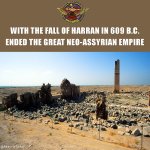
🔥🏛️ HARRAN: THE LAST THRONE OF THE ASSYRIAN EMPIRE 🦅👑
For centuries, the mighty Assyrian Empire stood as one of the greatest powers of the ancient world. From legendary cities such as Aššur, Dur-Šarrukin, Kalhu, and Nineveh, the Assyrians built an empire stretching from Egypt across Mesopotamia and deep into Persia.
The Assyrian military became one of the most powerful and advanced forces of antiquity. Assyria pioneered sophisticated siege warfare, imperial administration, extensive road networks, and military strategies that influenced empires for centuries. ⚔️
But beyond the famous imperial capital of Nineveh stood another city of extraordinary importance: Harran, located near present-day Şanlıurfa (Urfa) in modern-day Turkey. 🏛️🌙
For centuries, Harran served as a major religious, strategic, and royal center within the Assyrian Empire. Assyrian kings and crown princes frequently resided there and performed sacred ceremonies at the famous Temple of Sîn, dedicated to the Mesopotamian moon god. Although Nineveh was the imperial capital, Harran held a unique and influential position within Assyria.
🔥 The Fall of Nineveh Was Not the End of Assyria
When Nineveh fell in 612 BC to the combined forces of the Babylonians and Medes, the Assyrian Empire did not immediately disappear.
The surviving Assyrian royal forces regrouped at Harran, where King Aššur-uballiṭ II continued to claim the Assyrian throne. Harran became the final royal stronghold and last capital of the Neo-Assyrian Empire. 👑
⚔️ From Harran, the Assyrians continued their resistance for several more years, supported by Egypt. Despite the destruction of Nineveh, the Assyrian struggle for survival continued.
The Babylonians understood that as long as Harran remained in Assyrian hands, the empire's royal resistance had not been completely extinguished.
They therefore launched another campaign against the city. In 609 BC, Harran finally fell, marking the end of the Neo-Assyrian Empire and an imperial legacy that had shaped the political, military, and cultural landscape of the ancient Near East for centuries.
🦅 Assyria did not fall with Nineveh in 612 BC. Its final chapter was written at Harran in 609 BC — the last throne of the Assyrian Empire. 🔥
🏛️⚔️🌹
#Harran #Assyria #Assyrian #Assyrians #AssyrianEmpire #NeoAssyrianEmpire #Nineveh #Mesopotamia #Urfa #Şanlıurfa #AncientHistory #Ashur #Babylon #MiddleEastHistory #Archaeology #History

👑 SARGON II – THE MIGHTY ASSYRIAN KING RAISING HIS HANDS IN PRAYER TO THE GODS OF ANCIENT ASSYRIA 🙏🦅🏛️
🏛️ A magnificent carved stone relief panel, dating to approximately 713–706 BC, depicts the mighty Assyrian King Sargon II, from his royal palace in Dur-Sharrukin, Assyria (modern Khorsabad, Iraq). This extraordinary masterpiece of ancient Assyrian art is currently displayed at the Louvre Museum in Paris, France.
🙏 During times of war, the powerful Assyrian King Sargon II (reigned 722–705 BC) sought divine protection, strength, and victory through prayers to the great gods of ancient Assyria. In this remarkable relief, the king raises his hands toward the heavens in a sacred gesture of prayer and devotion, invoking divine powers such as Ashur, Shamash, Sin, and the great goddess Ishtar, whom the Assyrians believed protected their kingdom and supported their armies against enemies.
👑 SARGON II – THE GREAT CONQUEROR AND BUILDER OF ASSYRIA
⚔️ Sargon II was one of the most successful and influential rulers of the mighty Assyrian Empire. A courageous warrior, brilliant military strategist, and ambitious king, he strengthened Assyria's position as one of the greatest powers of the ancient world.
🦅 During his reign, he led victorious campaigns across Mesopotamia and the ancient Near East, expanded Assyrian influence, completed the conquest of Samaria, and defeated powerful enemies. His famous campaign against Urartu in 714 BC demonstrated the extraordinary discipline, organization, and strength of the Assyrian army.
🏛️ Sargon II also founded the magnificent city of Dur-Sharrukin, meaning "Fortress of Sargon," a splendid royal capital decorated with monumental palaces, enormous protective Lamassu sculptures, magnificent gateways, and beautifully carved reliefs celebrating Assyrian kingship, religion, and military victories.
👑 His achievements strengthened the political, military, and administrative foundations of the empire, leaving an extraordinary legacy for his successors, including his son, the famous King Sennacherib.
🙏 THE GREAT GODS AND GODDESSES OF ANCIENT ASSYRIA AND MESOPOTAMIA
The ancient Assyrians were deeply religious, believing that divine powers governed the universe, protected their cities, and granted victory to their kings. Religion influenced royal authority, warfare, justice, agriculture, and everyday life.
☀️ ASHUR (AŠŠUR) – The supreme national god of Assyria, protector of the Assyrian people and empire, and divine source of royal authority and military victories.
🌞 SHAMASH (ŠAMAŠ) – The sun god of justice, truth, and righteousness, believed to illuminate the world and uphold justice.
🌙 SIN (SÎN) – The moon god, associated with wisdom, lunar cycles, and the measurement of time, especially revered in Harran.
⭐ ISHTAR (IŠTAR) – The powerful goddess of love, fertility, warfare, and royal protection, particularly worshipped in Nineveh and Arbela.
🦅 Before military campaigns, Assyrian kings performed sacred ceremonies, offered sacrifices, and prayed for divine guidance and victory, believing their successes depended upon the favor of the gods.
✝️ FROM ANCIENT ASSYRIAN PRAYER TO ASSYRIAN CHRISTIAN TRADITIONS
🙏 One of the most fascinating features of this relief is King Sargon II raising his hands toward the heavens in prayer, a gesture still familiar among Assyrian Christians today.
❤️🤍💙 More than 2,700 years later, Assyrian Christians continue raising their hands during prayer and religious worship, expressing humility, faith, devotion, and supplication to the one God of Christianity.
✝️ Although ancient Assyrians worshipped multiple gods and Assyrian Christians worship one God, the visual resemblance is remarkable. Raising hands in prayer was also practiced by other ancient civilizations and early Christians, so the gesture cannot be considered exclusively Assyrian or proof of an uninterrupted religious tradition.
🏛️ Nevertheless, this ancient relief offers a fascinating glimpse into the spiritual world of our ancestors and illustrates how expressions of faith can remain recognizable across centuries, civilizations, and religions.
🙏 From the royal palaces of ancient Assyria to the churches of Assyrian Christians today, hands raised toward heaven remain a powerful symbol of prayer, hope, humility, and devotion.
🦅 THE IMMORTAL LEGACY OF KING SARGON II
👑 Sargon II remains one of the greatest kings in Assyrian history, remembered for his military victories, magnificent architecture, political leadership, and devotion to the gods of ancient Assyria.
🏛️ His monumental buildings, royal inscriptions, and magnificent stone reliefs continue to testify to the greatness, sophistication, and artistic achievements of ancient Assyrian civilization.
❤️🤍💙 THE GLORY OF ANCIENT ASSYRIA LIVES ON THROUGH ITS HISTORY, CULTURE, HERITAGE, AND THE ASSYRIAN PEOPLE!
🦅 LONG LIVE ASSYRIA AND ITS TIMELESS CIVILIZATION! ❤️🤍💙
#Assyria #Assyrian #Assyrians #SargonII #KingSargon #AssyrianKing #AssyrianKings #AssyrianEmpire #AssyrianHistory #DurSharrukin #Khorsabad #Nineveh #Ashur #Shamash #Sin #Ishtar #Mesopotamia #AncientMesopotamia #AssyrianChristianity #AssyrianChristians #AssyrianHeritage #AssyrianCulture #AssyrianRelief #LouvreMuseum #Archaeology #AncientHistory #AncientCivilizations #AssyrianArt #AssyrianPrayer #History #Iraq #AssyriaNews

Lucian of Samosata (c. AD 120–180): The great Assyrian Satirist, Philosophical Critic, and Father of Science Fiction from Mesopotamia
📜 Lucian of Samosata was one of the most remarkable Assyrian intellectuals of the ancient world, celebrated for his extraordinary imagination, sharp satire, philosophical criticism, and pioneering contributions to science fiction.
🏛️ Born in Samosata, on the Euphrates River in northern Mesopotamia, he became an influential writer of the second century AD, leaving a remarkable literary legacy of approximately 70 works, including philosophical dialogues, satirical essays, imaginative adventures, and social criticism.
✍️ Writing in Greek, he challenged hypocrisy, superstition, religious deception, corruption, and the arrogance of philosophers who claimed wisdom but failed to practice it. Through humor and intellectual courage, Lucian questioned established beliefs and exposed the contradictions of human society.
🚀 His most extraordinary achievement was A True Story, widely regarded as one of the earliest surviving works anticipating modern science fiction.
🌕 Nearly 1,900 years ago, Lucian imagined humans traveling into outer space, reaching the Moon, encountering extraterrestrial civilizations, and witnessing an interplanetary war between the inhabitants of the Moon and the Sun.
👽 His narrative even described attempts to colonize the Morning Star, fantastic alien creatures, and an extraordinary device through which inhabitants of the Moon could observe events on Earth. These imaginative concepts appeared many centuries before modern space exploration and the emergence of science fiction as a literary genre.
🌌 Remarkably, Lucian openly acknowledged that his fantastic adventures were fictional, using the story to ridicule writers who presented invented tales as historical truth. His creativity extended to other astonishing imaginary worlds, including a gigantic whale containing entire communities, a sea of milk, and an island made of cheese.
📚 In another fascinating work, Icaromenippus, Lucian imagined a philosopher flying into the heavens and observing human civilization from above, using this extraordinary perspective to criticize human vanity and intellectual arrogance.
⚖️ His other important writings include Dialogues of the Dead, Dialogues of the Gods, The Fisherman, Alexander the False Prophet, and How to Write History, revealing his profound interest in truth, morality, religion, and human behavior.
🌍 Lucian's literary innovations helped shape later traditions of satire, fantastic voyages, and imaginative storytelling, influencing generations of European writers, including Jonathan Swift and Voltaire.
📖 Lucian's achievements represent an important contribution to Assyrian intellectual heritage and the wider history of world literature. His writings demonstrate that ideas associated with modern science fiction—space travel, extraterrestrial civilizations, interplanetary warfare, and imaginary technologies—were already being explored by an Assyrian-born author in the second century AD.
✨ Although science fiction developed into a distinct literary genre much later, Lucian's A True Story remains a groundbreaking precursor, demonstrating the remarkable power of human imagination across nearly two millennia.
🚀 His legacy deserves recognition not only as a master of satire and philosophical criticism but also as one of the earliest visionaries of science-fiction literature.
📖 Reference: thecollector.com/lucian-true…
#Assyria #Assyrian #Assyrians #LucianOfSamosata #AssyrianHistory #AssyrianHeritage #AssyrianLiterature #Mesopotamia #ScienceFiction #FatherOfScienceFiction #AncientHistory #Philosophy #Satire #LiteraryHistory

💙🤍❤️ “My name is Ishtar, an Assyrian Christian from the Nineveh Plains—ASSYRIA, our ancestral homeland.
Our ancestors carved these stones thousands of years ago. Our roots are here.
This is our heritage. Our homeland. Our future.
We are Assyrians. We are still here.” 🕊️ 💙🤍❤️
🏛️ Assyrians are an indigenous people of Mesopotamia, with roots stretching back thousands of years.
Ancient Assyria left a profound mark on the world through its magnificent cities, monumental architecture, art, administration, scholarship, and vast written archives.
The great libraries and preserved texts of ancient Mesopotamia helped carry knowledge, literature, history, and science across generations. 📜
🌍 THE HERITAGE OF ASSYRIA IN MUSEUMS AROUND THE WORLD
Today, magnificent treasures of ancient Assyria are preserved and displayed in museums across the world.
If you ever visit these cities, do not miss the opportunity to discover the extraordinary civilization of Assyria and the legacy of our ancestors.
🇬🇧 LONDON, UNITED KINGDOM
🏛️ The British Museum — Home to extraordinary Assyrian palace reliefs, colossal winged bulls (lamassu), and treasures from Nineveh, Nimrud, and Khorsabad, including objects associated with the famous Library of Ashurbanipal.
🇫🇷 PARIS, FRANCE
🏛️ The Louvre Museum — Houses magnificent Assyrian sculptures, monumental winged bulls, and palace reliefs from Khorsabad, reflecting the power and artistic achievements of ancient Assyria.
🇩🇪 BERLIN, GERMANY
🏛️ Vorderasiatisches Museum — Preserves important Assyrian reliefs, sculptures, and archaeological artefacts representing the civilizations of ancient Mesopotamia.
🇷🇺 MOSCOW, RUSSIA
🏛️ The Pushkin State Museum of Fine Arts — Holds ancient Near Eastern collections, including material relating to Assyrian and Mesopotamian civilization.
🇷🇺 SAINT PETERSBURG, RUSSIA
🏛️ The State Hermitage Museum — Home to remarkable ancient Assyrian palace reliefs from Nimrud, including representations of Assyrian kings and protective winged figures.
🇺🇸 NEW YORK CITY, USA
🏛️ The Metropolitan Museum of Art — Displays magnificent Assyrian palace reliefs and monumental sculptures from Nimrud, preserving the artistic legacy of ancient Assyria.
🇺🇸 CHICAGO, USA
🏛️ The Institute for the Study of Ancient Cultures Museum — Houses remarkable Assyrian sculptures, including monumental reliefs and archaeological treasures from ancient Mesopotamia.
🇺🇸 PHILADELPHIA, USA
🏛️ The Penn Museum — Preserves important collections of ancient Mesopotamian and Assyrian artefacts.
🇮🇶 BAGHDAD, IRAQ
🏛️ The Iraq Museum — Preserves invaluable treasures from the civilizations of Mesopotamia, including the ancient Assyrian heritage of our ancestral homeland.
🇮🇶 MOSUL, IRAQ
🏛️ The Mosul Museum — Located near ancient Nineveh, this museum represents an important connection to the historical heartland of Assyria.
When you stand before these ancient stones, remember that they are not simply museum objects. They are witnesses to a civilization whose descendants are still alive today.
These sculptures were created in the cities of our ancestors, on the land where our history began.
And while our ancient treasures are admired around the world, the Assyrian people themselves continue to struggle to preserve their presence in their ancestral homeland.
Over the past two decades, conflict, persecution, insecurity, and displacement have forced countless Assyrians to leave lands their families have called home for generations.
But our history should not exist only in museums, monuments, and ancient stones.
A LIVING PEOPLE HAS THE RIGHT TO A LIVING HOMELAND. 🕊️
Assyrians deserve security, equal rights, recognition of their identity, and the freedom to preserve their language, culture, Christian faith, and heritage.
The Nineveh Plains must remain a place where Assyrians can live with dignity, raise their children, and build their future without fear.
Those who were forced to leave should have the right to return safely, if they choose.
We do not ask to take the rights or homeland of another people.
We ask that our own rights, identity, and ancestral connection to this land be respected.
Mesopotamia is where our civilization took root.
We are not merely a chapter of ancient history—we are a living indigenous people with a future.
💙🤍❤️ Our ancient heritage is preserved in museums around the world. But our homeland is not a museum. It is a place where our people still live, pray, speak their language, and dream of a future.
OUR HISTORY IS ANCIENT. OUR PEOPLE ARE ALIVE. OUR FUTURE MUST BE PROTECTED.
🕊️ WE ARE ASSYRIANS. WE ARE STILL HERE. 💙🤍❤️
#Assyria #Assyrian #Assyrians #NinevehPlains #Mesopotamia #AssyrianChristians #IndigenousPeople #AssyrianHeritage #AssyrianHistory #AssyrianCulture #Christianity #Nineveh #IndigenousRights #WeAreStillHere #AssyriaToday #AssyriaNews
🎨✨ **Esther Elia – Where Ancient Assyria Meets Contemporary Art** 🪽
Assyrian-Irish artist **Esther Elia**, based in Albuquerque, USA, brings the rich heritage of Assyria to life through her vibrant paintings, sculptures, and textile art.
Her work is a powerful reminder that **Assyrian culture is not just a legacy of the past — it is alive, evolving, and inspiring new generations.** ❤️🤍💙
🌍 **Ancient roots. Living heritage. Timeless identity.**
thisiscolossal.com/2026/11/e…
#EstherElia #Assyrian #Assyrians #Assyria #AssyrianArt #AssyrianCulture #AssyrianHeritage #AssyrianIdentity #ContemporaryArt #AssyrianArtists #Mesopotamia #LivingHeritage #AssyrianPride

🏛️ THE WORLD OF CIVILIZATION — 900 BC
💔 THE AGE OF BARBARISM — AD 2015
The ancient Assyrian city of Kalhu (Nimrud), near Nineveh, was one of the greatest treasures of Mesopotamia, built in the 9th century BC under King Ashurnasirpal II.
For nearly 2,800 years, its palaces and Lamassu guardians survived empires, invasions, wars, and the passage of time itself.
These monuments were already ancient before Alexander the Great, before the Roman Empire, and before most nations of the modern world even existed.
Yet in AD 2015, the extremist Islamic terrorists of ISIS deliberately destroyed what nearly three millennia had preserved.
Driven by a fanatical ideology that considered these masterpieces "idols," they turned priceless Assyrian heritage into rubble.
💔 Perhaps the greatest tragedy is this:
In the 21st century, in an age of science, medicine, artificial intelligence, and space exploration, there were still people who believed that destroying almost 3,000 years of human history was a religious duty.
🤦♂️ It is almost impossible to comprehend.
These monuments belonged not only to Assyrians, but to all humanity.
This was not simply the destruction of stones.
⚫ It was an attack on memory.
⚫ It was an attack on history.
⚫ It was an attack on civilization itself.
⏳ What time protected for 2,800 years, extremist fanaticism destroyed in minutes.
🏺 Civilizations create.
💀 Barbarism destroys.
#Assyria #Assyrian #Nimrud #Kalhu #Mesopotamia #AncientMesopotamia #AssyrianHeritage #AncientHistory #ISIS #NeverForget #ProtectHeritage #WorldHistory #Civilization #HistoryMatters #MiddleEastHistory #CulturalHeritage

📚✨ BOOK OF THE WEEK ✨📚
📖 THE ASSYRIANS AND THE TWO WORLD WARS
✍️ Author: Malek Yakoub d’Malek Ismail
⚔️ SEYFO 1915 — THE ASSYRIAN GENOCIDE UNDER THE OTTOMAN EMPIRE
A powerful account of genocide, resistance, survival, and the struggle for justice.
During World War I, one of the darkest chapters in Middle Eastern history unfolded under the Ottoman Empire. Assyrian Christians faced systematic persecution, massacres, forced deportations, and the destruction of their ancestral communities.
🕯️ Known as Seyfo (ܣܝܦܐ), meaning “The Sword,” the Assyrian Genocide of 1915 claimed countless innocent lives, devastated entire villages, and forced generations into exile. Hundreds of thousands are estimated to have perished through violence, starvation, disease, and displacement.
📜 A WITNESS TO HISTORY — A LEGACY THAT MUST NOT BE FORGOTTEN
Written by Assyrian military and political leader Malek Yakoub d’Malek Ismail (1894–1974), this remarkable book offers a firsthand perspective on the tragedies and struggles that shaped the Assyrian nation during the twentieth century.
📖 THE BOOK EXPLORES:
⚔️ Seyfo 1915 — The genocide of Assyrian Christians under the Ottoman Empire.
🛡️ Resistance & Survival — The courage of Assyrian communities defending their people and homeland.
🚶 Exile & Displacement — The destruction of ancestral communities and the struggle of survivors.
🕊️ The Fight for Recognition — The pursuit of justice, security, and national self-determination.
🕯️ The Simele Massacre of 1933 — Another devastating tragedy in Assyrian history.
🌍 World War II — The Assyrians' role and experiences during the second global conflict.
✨ WHY THIS BOOK MATTERS
More than a historical account, The Assyrians and the Two World Wars is a powerful testimony to human suffering, extraordinary resilience, and the determination of a people to preserve their identity against overwhelming odds.
It brings attention to historical tragedies that deserve recognition, remembrance, and a rightful place in world history.
🕊️ THE VICTIMS DESERVE REMEMBRANCE. THE SURVIVORS DESERVE A VOICE. HISTORY DESERVES THE TRUTH.
📚 DISCOVER THE BOOK
🌐 Amazon International:
🔗 amazon.com/dp/B08ND956WB
📢 READ • REMEMBER • EDUCATE • SHARE
🕯️ SEYFO 1915 — NEVER FORGET
#BookOfTheWeek #AssyrianGenocide #Seyfo1915 #NeverForgetSeyfo #AssyrianChristians #Assyrian #Assyria #Assyrians #AssyrianHistory #OttomanEmpire #AssyrianHeritage #AssyrianBooks #GenocideAwareness #HistoricalMemory #WorldWarI #WorldWarII #Simele1933 #HistoryMatters #NeverForget

📸 Mardin, 1960 — The great Assyrian scholar and Syriac Orthodox Archbishop of Mardin, Mor Yuhanon Dolabani (1885–1969), surrounded by the students, priests, and monks of the ancient Deyrulzafaran Monastery.
🙏 Mor Yuhanon Dolabani was one of the most distinguished Assyrian spiritual leaders, historians, writers, and educators of the twentieth century. He dedicated his life to preserving the Syriac language, ancient manuscripts, Christian faith, and the cultural heritage of his people.
📚 The Assyrian School of Deyrulzafaran was an important center of learning, where generations of students studied the Syriac language, theology, history, and sacred literature. Through centuries of hardship, the monastery helped preserve Assyrian Christian identity and scholarship.
☀️ From Ancient Assyrian Traditions to Christianity
Long before Christianity, the site was associated with an ancient Sun Temple, traditionally linked to Shamash, the ancient Assyrian god of the sun and justice, although its precise dedication has not been archaeologically confirmed.
✝️ As the Assyrians embraced Christianity, the ancient site eventually became a Christian monastic center, developing into one of the most sacred institutions of the Syriac Orthodox Church.
⛪ Deyrulzafaran Monastery, near Mardin in the ancient Assyrian homeland of Mesopotamia, served as the patriarchal residence of the Syriac Orthodox Church for approximately 600 years, until 1933.
🌍 Today, thousands of tourists and pilgrims visit this magnificent monastery, admiring its ancient architecture, sacred churches, and remarkable history. Yet beyond its beauty, Deyrulzafaran remains a living symbol of Assyrian faith, education, and cultural survival.
🕊️ Mor Yuhanon Dolabani passed away in 1969, but his sacred work and extraordinary dedication to his people's language, faith, and heritage will never be forgotten.
#Assyrian #Assyria #Assyrians #MorYuhanonDolabani #Deyrulzafaran #AssyrianHistory #AssyrianHeritage #AssyrianCulture #Mardin #SyriacOrthodox #SyriacLanguage #Shamash #Mesopotamia #AssyrianChristianity #AssyrianScholars #PreserveOurHeritage #AssyrianLegacy

🌹 MOR PHILOXENOS YUHANON DOLABANI (1885–1969) 🌹
🕊️ A Love for Mother Assyria That Transcended Death 🇦🇸
🌹 Commemorating the 57th Anniversary of His Passing | 2 November 2026 🌹
Today marks the 57th anniversary of the passing of Mor Philoxenos Yuhanon Dolabani, one of the most distinguished Assyrian intellectuals, spiritual leaders, historians, poets and devoted defenders of the Assyrian nation's cultural and historical heritage.
Born on 27 September 1885 in the ancient city of Mardin, Dolabani dedicated his life to the service of God, the Assyrian nation, the Syriac language, and the preservation of Assyrian history, literature and national identity.
He was not merely a bishop. He was an Assyrian patriot whose pen became an instrument of national survival, whose writings preserved centuries of knowledge, and whose devotion to Mother Assyria inspired generations.🇦🇸
🌹 His profound love for Mother Assyria is reflected in these powerful words attributed to him:
“My bones shall rest in the grave, bearing witness to the salvation of Assyria, our motherland.”
These words, reproduced in commemorative accounts although their original Syriac source remains unverified, express the depth of patriotism associated with Dolabani's memory: a devotion to Mother Assyria that extended beyond his own lifetime.
🇦🇸 A Patriot Who Loved Mother Assyria
Mor Dolabani lived through one of the darkest chapters of Assyrian history: the Assyrian Genocide of 1915, known as Sayfo, which devastated Assyrian communities throughout the ancestral Assyrian homeland.
Yet amid destruction, displacement and suffering, he refused to allow the Assyrian spirit to disappear.
He expressed his profound attachment to Mother Assyria through patriotic poetry, historical writings, education and the preservation of the Syriac language.
Among his patriotic compositions were “Othur” (Assyria), “Neshono d'Othur” (The Splendor of Assyria) and “Yolufotho d'Othuroye b-Qiliqiya” (The Assyrian Students in Cilicia).
These compositions celebrated Mother Assyria, the Assyrian people, the Assyrian historical inheritance and the responsibility of future generations to preserve Assyrian national identity.
His patriotic songs were even sung by Assyrian orphans, children who had lost so much during the genocide but were being taught to remember their Assyrian identity.
For Dolabani, Assyria was not simply a memory of an ancient civilization. Assyria was a living homeland, a nation and a heritage that deserved to endure. 🇦🇸
🌹 A Father to the Assyrian Orphans of Sayfo
Following the Assyrian Genocide, Dolabani devoted himself to educating Assyrian children who had survived the catastrophe.
At the Assyrian orphanage in Adana, he taught Syriac and Arabic, helping children reconnect with Assyrian history, culture, language and spiritual inheritance.
Through his teaching and patriotic poetry, he nurtured a new generation of Assyrian intellectuals, writers, musicians and religious leaders.
He understood that rebuilding the Assyrian nation began with educating Assyrian children.
Where genocide had attempted to destroy a generation of the Assyrian nation, Dolabani worked to give that generation knowledge, dignity, national consciousness and hope.
📚 A Giant of Syriac Literature and Assyrian Scholarship
Mor Dolabani was among the most productive Syriac scholars of the twentieth century.
He authored, translated, edited and preserved an extraordinary body of literature. Scholarly accounts record more than 40 authored books, while his own bibliography listed 82 writings, many of which remained unpublished during his lifetime.
His works included:
📖 Syriac Grammar, a two-volume contribution to the teaching and preservation of the Syriac language.
📖 Syriac Reader, educational works intended to strengthen Syriac literacy among future generations.
📜 History of the Patriarchs, preserving the historical memory of the Church.
⛪ History of Mor Gabriel Monastery, documenting one of the most important religious institutions of the Assyrian homeland.
📚 Manuscript catalogues, recording invaluable Syriac writings preserved in monasteries and churches.
✍️ Theological and historical writings, reflecting his extensive knowledge of Christian scholarship.
🇦🇸 Assyrian patriotic poetry and hymns, expressing his love for Mother Assyria, the Assyrian people and the Assyrian national heritage.
He also edited and published important classical Syriac works, including writings by Bar Ebroyo (Bar Hebraeus) and Mor Yuhanon Bar Ma'dani, helping preserve the intellectual achievements of earlier generations.
His translation of The Scattered Pearls, the monumental history of Syriac literature by Patriarch Aphrem Barsoum, further demonstrated his dedication to making the literary inheritance of the Assyrian people accessible to future generations.
📜 The Guardian of the Syriac Language
Dolabani understood that the Syriac language was one of the most precious treasures of Assyrian civilization and national identity.
At a time when ancient manuscripts were endangered and Assyrian communities were struggling to survive, he dedicated countless years to studying, copying, cataloguing, translating and publishing Syriac literature.
He worked with manuscripts preserved at Deyrulzafaran Monastery, St. Mark's Monastery and other historic religious institutions.
He also helped advance Syriac printing and publishing, ensuring that ancient knowledge would not remain confined to fragile manuscripts but could reach new readers and students.
His scholarship was an act of Assyrian cultural preservation.
Every manuscript he preserved, every book he published and every student he taught represented another victory against the disappearance of Assyrian heritage.
✝️ A Life Dedicated to Faith, Knowledge and the Assyrian Nation
In 1947, Mor Dolabani became Metropolitan of Mardin, continuing his spiritual, educational and literary service.
Throughout his life, he demonstrated that devotion to Christianity and love for the Assyrian nation could stand together.
He served the Church with faith, the Assyrian people with compassion, and Mother Assyria with unwavering cultural and patriotic devotion.
He left behind not merely books, but an intellectual and spiritual inheritance that continues to enrich Assyrians throughout the world.
On 2 November 1969, Mor Philoxenos Yuhanon Dolabani departed this earthly life in Mardin. He was laid to rest at the historic Deyrulzafaran Monastery. 🕊️
🌹 His Legacy Lives On 🇦🇸
Fifty-seven years have passed since his death, yet his contributions remain alive wherever the Syriac language is taught, wherever Assyrian history is studied, and wherever the cultural inheritance of the Assyrian nation is preserved.
He belonged to a generation that witnessed the destruction of Assyrian communities, yet chose to rebuild through education, literature, faith and national consciousness.
📜 He answered destruction with preservation.
✍️ He answered silence with poetry.
📚 He answered ignorance with education.
🕯️ He answered the loss of manuscripts with scholarship.
🌹 And he answered the suffering of the Assyrian nation with a lifetime of service.
Today, the Assyrian nation honors the memory of one of its remarkable sons, a man whose devotion to Mother Assyria was expressed not merely through words, but through a lifetime of extraordinary deeds.
Mor Philoxenos Yuhanon Dolabani was more than a bishop, more than a scholar, and more than a poet. He was a guardian of Assyrian national memory, a defender of the Syriac language, a preserver of Assyrian civilization, and a devoted patriot whose life's work became a lasting gift to the Assyrian nation.
May future Assyrian generations remember his name, read his writings, learn from his dedication and carry forward the Assyrian heritage he worked so tirelessly to protect.
🌹 And as the words attributed to him proclaim:
“My bones shall rest in the grave, bearing witness to the salvation of Assyria, our motherland.”
🇦🇸 57 YEARS HAVE PASSED, BUT HIS LOVE FOR MOTHER ASSYRIA AND HIS ENDURING LEGACY SHALL NEVER BE FORGOTTEN. 🇦🇸
🌹 Eternal glory to the memory of Mor Philoxenos Yuhanon Dolabani. 🌹
🕊️ May his memory be blessed.
ܕܘܟܪܢܗ ܠܒܘܪܟܬܐ
🌹 Mother Assyria shall forever remember her devoted son. 🇦🇸
#MorPhiloxenosYuhanonDolabani #Assyrian #Assyrians #MorPhiloxenosDolabani #YuhanonDolabani #HannaDolabani #Assyria #MotherAssyria #SonOfAssyria #AssyrianNation #AssyrianPeople #AssyrianPatriot #AssyrianPatriotism #AssyrianNationalIdentity #AssyrianHistory #AssyrianHeritage #AssyrianCulture #AssyrianCivilization #AssyrianHomeland #AssyrianLegacy #AssyrianLiterature #AssyrianPoetry #AssyrianScholars #AssyrianIntellectuals #AssyrianChristianity #SyriacLanguage #SyriacLiterature #SyriacOrthodoxChurch #Sayfo #AssyrianGenocide #Mardin #Deyrulzafaran #MorGabriel #BethNahrain #Othur #AssyriaForever #RememberAssyria #AssyriaNews

ASSYRIA TODAY ܐܬܼܘܪ ܝܘܡܢܐ retweeted

It took many individuals from across the US to come together and provide $45,000 support to transform 13 classes in Baghdeda's Mar Afram Secondary & Ashurbanipal Primary Syriac schools! We're forever thankful to: @StandWIraqiXns, @assyrianaid, @AmericanFRRME, @WeareDTI & CASA OU
🌹 Today, the Assyrian Nation Remembers the Martyrs of Amid (Diyarbakır) — November 1, 1895 🕯️
131 Years of Remembrance — The Massacres of Amid, 1895
🌹 On November 1, 1895, the ancient city of Amid (Diyarbakır), one of the historic centers of the Assyrian nation, became the scene of devastating massacres against its Christian population.
Under the reign of Ottoman Sultan Abdulhamid II, violence erupted against Assyrian and Armenian Christians, whose communities had lived in the region for centuries.
For three days, armed mobs attacked Christian neighborhoods, murdering civilians, looting homes and businesses, setting buildings on fire, and causing widespread destruction throughout the city.
Assyrians belonging to the Syriac Orthodox, Syriac Catholic, and Chaldean Catholic Churches were among the victims, alongside Armenian Christians and members of other Christian communities.
🌹 Men, women, and children were killed, families were torn apart, and survivors were left without homes, possessions, or livelihoods.
Assyrian-owned shops, businesses, and workshops were among the Christian properties looted and burned during the massacres. The destruction of commercial districts devastated livelihoods that families had built over generations.
Contemporary reports documented more than a thousand Christian deaths in Amid, including Assyrian and Armenian victims, while many others were initially reported missing. Historical estimates of the death toll vary.
The violence also spread into surrounding towns and villages of Diyarbekir province, where Christian communities experienced killings, destruction, displacement, and, in some places, forced conversions to Islam.
🌹 The massacres deeply affected Assyrian Christian communities whose churches, cultural traditions, and historical presence had been rooted in northern Mesopotamia for centuries.
Amid was also the birthplace of the prominent Assyrian writer, poet, journalist, and national intellectual Naum Faik (1868–1930). Facing political pressure and threats under Ottoman rule, he emigrated to the United States in 1912, where he continued writing and promoting the Assyrian nation's language, culture, and national identity.
Twenty years later, during 1915 — Sayfo, the Assyrian Genocide, Assyrian Christian communities suffered further mass killings, deportations, and forced displacement under Ottoman rule.
The massacres of 1895 remain an important chapter in the history of the Assyrian nation and the wider history of Christian communities in the Ottoman Empire.
🌹 On November 1, 2026, the Assyrian nation commemorates the 131st anniversary of the massacres of Amid, honoring the memory of the Assyrian Christians and other victims who lost their lives in 1895.
#AssyrianNation #Assyrian #Assyria #Assyrians #AssyrianChristians #Amid1895 #Diyarbakir1895 #AssyrianHistory #AssyrianMartyrs #NaumFaik #HamidianMassacres #Sayfo1915 #AssyrianGenocide #NeverForget #SyriacOrthodox #SyriacCatholic #ChaldeanCatholic #ArmenianChristians #Mesopotamia

📰 ASSYRIAN JOURNALISM DAY — NOVEMBER 1ST 💙🤍❤️
🌟 177 YEARS OF ASSYRIAN JOURNALISM (1849–2026) 🌟
Celebrating 177 Years of Assyrian Journalism, Literature, and Cultural Heritage
📜 On November 1, 1849, Assyrian journalism was born in Urmia, Persia, with the publication of Zahrire d-Bahra(“Rays of Light”), the first Assyrian-language newspaper.
✒️ It became an important platform for education, literature, faith, and the preservation of the Assyrian language.
📖 Pioneers such as Mirza Shmuel Badal Khangaldi (1865–1908) and Shamasha Khnanisho Abraham helped develop and preserve this remarkable journalistic heritage.
⭐ In 1906, Yohannan Mushie founded Kokhwa (“The Star”), an independent Assyrian newspaper promoting national consciousness and unity.
🖋️ Intellectuals such as Benjamin Arsanis (1884–1957) contributed to the development of Assyrian cultural and national identity.
🕯️ Ashur Yousef (1858–1915), publisher of Murshid Athuriyon (“The Assyrian Guide”), became a victim of the Assyrian Genocide of 1915 (Seyfo).
📚 Naum Faik (1868–1930) dedicated his life to Assyrian literature, journalism, and national unity through publications including Kawkab Madenho and Beth Nahrin.
✒️ Dr. Freydun Bet-Abram Atturaya (1891–1926) contributed to Assyrian journalism and political writing during a significant period in Assyrian history.
📜 Despite the challenges of war, persecution, and displacement, Assyrian journalism continued to develop across different countries.
🌍 Newspapers and magazines such as Assyria, The Assyrian American Herald, and The Assyrian Star helped connect Assyrian communities throughout the diaspora.
📰 In Sweden, Hujådå (“Unity”), established in 1978, became an important publication covering Assyrian culture, identity, and community affairs.
💻 Today, digital publications and news platforms such as the Assyrian International News Agency (AINA)continue this journalistic tradition.
📖 Over the past 177 years, Assyrian journalists and writers have made valuable contributions to documenting history, preserving language, and sharing cultural knowledge.
💙🤍❤️ Their newspapers, magazines, and literary works form an important part of the Assyrian historical and cultural heritage.
🌹 On Assyrian Journalism Day, we recognize the contributions of past and present Assyrian journalists, editors, publishers, and writers, and celebrate their lasting influence on Assyrian literature, culture, and society.
📰 HONORING 177 YEARS OF ASSYRIAN JOURNALISM AND ITS PIONEERS 💙🤍❤️
#AssyrianJournalismDay #Assyria #Assyrians #Assyrian #November1 #177YearsOfAssyrianJournalism #AssyrianPress #ZahrireDBahra #AssyrianHistory #AssyrianHeritage #AssyrianIdentity #AssyrianGenocide #Seyfo1915 #NaumFaik #AshurYousef #BethNahrin #SyriacLanguage #AssyrianNation #AssyrianDiaspora
🤖 Made with AI

Pazuzu 🌹 — From the Ancient Assyrian World to the Louvre in Paris and the Silver Screen in Hollywood: The Mysterious Mesopotamian Demon That Captivated and Terrified the World 🇦🇸🏺
finestresullarte.info/en/wor…
#Pazuzu #Assyrian #Assyrians #Assyria #Ashur #Nineveh #Louvre #Hollywood

🇦🇸🌹 A CALL FOR JUSTICE — PROTECT THE ASSYRIAN HOMELAND 🌹
🌍 To the international community, the United Nations, and the Kurdish authorities in Northern Iraq:
We, the Assyrian Christians, are the indigenous people of this land. Respect our rights, protect our ancestral villages, and put an end to the unlawful seizure of Assyrian lands.
🏡 For generations, Assyrian communities have struggled to defend their villages, farms, and homes against land disputes and encroachments.
⚖️ We demand that court rulings be respected and fully enforced. Justice delayed is justice denied.
⛪ Our churches, monasteries, villages, and cultural heritage are an irreplaceable part of Mesopotamia's history.
🌍 We call upon the international community and the United Nations to stand up for the rights of the indigenous Assyrian people and ensure their protection.
📢 Our homeland is more than land — it is our identity, our history, and our future.
🕊️ We seek justice, equal rights, and lasting protection so that future generations can continue to live in their ancestral homeland.
❤️ We will not be erased. We will not be forgotten. We will continue to defend our people, our heritage, and our future.
🙏 Share this message. Raise your voice. Stand with the Assyrian people! 🇦🇸🌹
#Assyrian #Assyrians #Assyria #AssyrianChristians #IndigenousPeoples #ProtectAssyrians #SaveAssyria #NorthernIraq #Nineveh #Mesopotamia #HumanRights #ReligiousFreedom #ProtectOurHeritage #StopLandGrabs #JusticeForAssyrians #StandWithAssyrians #UnitedNations #HumanRightsMatter #MiddleEast #AssyrianHeritage
🕯️💔 16 YEARS SINCE THE BLOODY MASSACRE OF 58 ASSYRIAN CHRISTIANS — A NIGHT OF HORROR THAT WILL NEVER BE FORGOTTEN ✝️
October 31, 2010 – October 31, 2026
Today marks 16 years since one of the most heartbreaking and horrifying tragedies in the modern history of Assyrian Christians — the massacre inside the Syriac Catholic Church of Our Lady of Salvation (Sayidat al-Najat) in Baghdad, Iraq.
On October 31, 2010, heavily armed Islamist terrorists linked to Al-Qaeda stormed the church while innocent Assyrian Christians were gathered for Sunday evening Mass, praying peacefully to God.
💔 What began as an evening of faith and prayer turned into a nightmare of gunfire, explosions, screams, bloodshed, and unimaginable suffering.
The terrorists opened fire and took the worshippers hostage, trapping terrified families inside the very church where they had come seeking peace and God's protection.
58 innocent lives were lost, including priests, women, men, and children, while dozens of others were wounded and left with lifelong physical and emotional scars.
⛪ Among the martyrs were Father Thaer Saadallah and Father Wassim Sabih, two young Syriac Catholic priests whose lives were brutally taken alongside members of their congregation.
Parents lost their children, children lost their parents, and entire families were shattered in a place that should have been a sanctuary of love, hope, and safety.
The church, once filled with hymns and prayers, became a place of mourning, where innocent blood was spilled simply because people had gathered to practice their Christian faith.
🌹 Behind every victim was a name, a face, a family, a dream, and a future that was cruelly stolen.
This horrific massacre was not an isolated tragedy but part of the long history of persecution, violence, and displacement endured by Assyrian Christians in their ancestral homeland.
For countless Assyrian families, the attack deepened the painful realization that even their churches could no longer offer refuge from terror.
Thousands were driven by fear and persecution to leave behind their homes, ancient churches, villages, and the land where their ancestors had lived for thousands of years.
💔 Sixteen years have passed, yet the tears of grieving mothers, fathers, children, and survivors have not been forgotten, and the wounds of that terrible night remain in the hearts of Assyrians around the world.
We remember the 58 martyrs not merely as victims of terrorism, but as beloved human beings whose lives, faith, and dignity must never be erased from history.
🕯️✝️ Their killers tried to spread terror and silence a community, but they could never destroy the memory, faith, and identity of the Assyrian people.
🌹 Rest in eternal peace, our 58 Assyrian martyrs. Your blood was shed inside a house of God, your lives were stolen, but your names will live forever in our hearts and in the history of Assyria. ❤️🕊️
WE REMEMBER. WE MOURN. WE WILL NEVER FORGET. 🕯️💔
#Assyrian #Assyrians #Assyria #AssyrianMartyrs #58Martyrs #BaghdadChurchMassacre #SyriacCatholicChurch #OurLadyOfSalvation #AssyrianChristians #NeverForget #October31 #AssyrianHistory #PersecutedChristians #JusticeForAssyrians #RememberOurMartyrs #ChristianMartyrs #StopChristianPersecution 🌹

🪽 The Eternal Guardians of Assyria — A Civilization Whose Legacy Lives Across the World ❤️🤍💙
Two proud Assyrian girls, wrapped in the Assyrian flag ❤️🤍💙, stand beside the ancient Lamassu 🪽 at the Metropolitan Museum of Art in New York 🏛️.
This monumental guardian figure — a human-headed winged bull — originates from the Assyrian city of Kalhu (Nimrud) and dates to the reign of King Ashurnasirpal II (883–859 BC) 👑.
The Lamassu once stood at the entrances of royal palaces in ancient Assyria 🏺, guarding the gateways of power and symbolizing divine authority and the strength of the Assyrian Empire.
In ancient Assyrian religion, the Lamassu was far more than a sculpture. It represented a protective spirit ✨ believed to guard against evil forces, chaos, and enemies.
Every element carried symbolic meaning: the human head represented wisdom 🧠, the body of a bull or lion symbolized strength 💪, and the eagle's wings represented supernatural power and divine protection 🪽.
One remarkable feature is its five legs. From the front, the Lamassu appears to stand firmly on two legs, while from the side, it appears to walk forward on four — creating the impression of movement and eternal guardianship.
These magnificent guardians once stood in the great Assyrian capitals of Kalhu (Nimrud), Dur-Sharrukin (Khorsabad), and Nineveh, surrounded by monumental palaces and magnificent stone reliefs depicting royal victories, hunting scenes, and sacred ceremonies.
During archaeological excavations in the 19th century ⛏️, many Assyrian sculptures and treasures were transported to museums across the world. 🌍
Today, important Assyrian and Mesopotamian artefacts can be found in museums across the globe:
🏛️ Metropolitan Museum of Art — New York 🇺🇸
🏛️ British Museum — London 🇬🇧
🏛️ Louvre Museum — Paris 🇫🇷
🏛️ Pergamon Museum / Vorderasiatisches Museum — Berlin 🇩🇪
🏛️ ISAC Museum (Oriental Institute) — Chicago 🇺🇸
🏛️ Penn Museum — Philadelphia 🇺🇸
🏛️ Istanbul Archaeological Museums — Istanbul 🇹🇷
🏛️ Iraq Museum — Baghdad 🇮🇶
🏛️ Mosul Cultural Museum — Mosul 🇮🇶
🏛️ Sulaymaniyah Museum — Sulaymaniyah 🇮🇶
🏛️ Pushkin State Museum of Fine Arts — Moscow 🇷🇺
🏛️ State Hermitage Museum — St. Petersburg 🇷🇺
These museums preserve extraordinary artefacts that testify to the achievements of ancient Assyria and Mesopotamiain architecture, astronomy, mathematics, literature, religion, and art.
Although many of these treasures now stand thousands of kilometres from their homeland, they continue to tell the story of Assyrian civilization, its remarkable achievements, and its enduring cultural legacy.
❤️🤍💙 To all Assyrians and lovers of ancient Mesopotamian history: If you ever visit one of these cities, don't miss the opportunity to explore these extraordinary museums and witness the magnificent treasures of one of the world's greatest ancient civilizations. 🏛️🪽 Walk through thousands of years of history, discover the legacy of our ancestors, and experience the timeless beauty of Assyrian and Mesopotamian heritage. ✨
For Assyrians today, the Lamassu is more than an ancient monument — it is a symbol of identity, ancestral pride, resilience, and a civilization whose memory will never disappear.
Empires may fall, cities may be destroyed, and monuments may be scattered across the world — but Assyria lives on through its people, its history, and its heritage. 🪽❤️🤍💙
#Assyria #Assyrian #Lamassu #Mesopotamia #AncientAssyria #Nimrud #Kalhu #Nineveh #Khorsabad #Ashurnasirpal #AssyrianHistory #AssyrianHeritage #AssyrianIdentity #AssyrianEmpire #AssyrianArt #MesopotamianHistory #AncientCivilizations #Archaeology #CulturalHeritage
