

1 on 1 Consulting: https://xitter.cf/t.co/8o88YQK1lb Cyprus Webinar: https://xitter.cf/t.co/kB4pM5InjB Webinars: https://xitter.cf/t.co/eytMFEm9Hw
Florida, USA
Joined March 2011
- Tweets2.4K
- Following249
- Followers4.4K
- Likes3.5K


Toine Manders retweeted

The greatest heist in world history...
Seven men boarded a private railroad car in New Jersey on the night of November 22, 1910, under fake names, and by the time they reached Jekyll Island, Georgia, they had begun drafting the legislation that would hand control of American money to the banks that needed controlling.
Nelson Aldrich organized the trip. He was a Rhode Island senator, the father-in-law of John D. Rockefeller Jr., and the chairman of the National Monetary Commission. He brought Paul Warburg of Kuhn, Loeb and Company, Frank Vanderlip of National City Bank, Henry Davison of J.P. Morgan and Company, and a handful of other men whose combined institutions held one-quarter of the world's investable wealth. They told no one. They used first names only on the island. The servants who staffed the Jekyll Island Club were replaced before arrival.
The cover story, once the trip leaked years later, was that these men gathered to reform a broken banking system for the public good. How generous of them.
They built a cartel with a government badge. The Federal Reserve would act as a lender of last resort, meaning your tax dollars and your inflated purchasing power would backstop the riskiest decisions made by the largest banks. Smaller banks, those that competed with Morgan and Rockefeller institutions, would face reserve requirements Washington enforced on their behalf. Credit expansion, which produces the boom-bust cycle you live through every decade, would now operate through a centralized mechanism immune from market discipline.
Warburg, who had spent years lobbying for a European-style central bank in America, drafted the core structure. Aldrich carried it to Congress. Congress passed it as the Federal Reserve Act on December 23, 1913, after many members had already left Washington for Christmas recess.
The scheme operated through rhetorical genius. They named it a reserve system, implying caution. They called it federal, implying public ownership. A private banking cartel now possessed the legal authority to manufacture money. You have been paying the interest on that arrangement ever since.

Did Elon Musk Sentence Millions to Death by Dismantling USAID? reason.com/video/2026/08/03/… via @reason

Toine Manders retweeted
Lysander Spooner committed the unforgivable act of taking the state's own logic and following it to its conclusion: anarchism.
Born in 1808 in Athol, Massachusetts, Spooner spent his adult life attacking government monopoly with the fury of a man who had personally been robbed. In 1844 he launched the American Letter Mail Company to break the Post Office's stranglehold on mail delivery. His rates undercut the federal monopoly immediately. Within two years Congress passed legislation explicitly banning private competition, because the Post Office could not compete on price and quality and survive.
That episode tells you everything. When the state wins, it wins by outlawing the competition.
Spooner's 1870 work "No Treason: The Constitution of No Authority" demolished the consent doctrine underpinning every modern government. A contract signed by men long dead binds you to nothing. You never signed the Constitution. Your grandfather never signed it. The men who ratified it in 1788 had no authority to mortgage your liberty to a federal government in perpetuity. Spooner made this argument with the rigor of a lawyer, which he was, having studied law under John Davis and Charles Allen in Worcester.
His natural law theory drew property rights from human labor directly, bypassing the state entirely. Production precedes the state. Rights precede legislation. Governments confiscate rights.
Free market thinkers inherited Spooner's anti-monopoly logic and applied it to every sector the state subsequently captured.

Toine Manders retweeted
Monopoly requires a gun at someone's back. Without state coercion forcing competitors out of a market, no single firm can permanently dominate one.
There is a sharp distinction between two types of monopoly. The first, a government-granted monopoly, uses legislation to make competition illegal. The second, so-called "market monopoly," exists only in textbooks. Standard Oil is the favorite villain here. John D. Rockefeller built Standard Oil to roughly 90% of U.S. refining by 1879 through relentless cost-cutting and voluntary contracts. He never arrested a rival.
Competitors were entering the kerosene market the entire time, and oil prices fell from 58 cents per gallon in 1865 to under 8 cents by 1885. Consumers benefited. The government then broke Standard Oil apart in 1911, and the successor companies collectively became more valuable than the original. Government intervention created problems where none existed.
In a genuinely free market, high profit margins do exactly what prices are supposed to do: they shout at every entrepreneur with capital that an opportunity exists. That signal draws entry. Entry competes profits down. The firm that refuses to innovate loses your business to the firm that does.
Permanent dominance requires one of two things: either your product is so superior that no one can match it (in which case you earned every penny, and society as a whole benefits from your productiveness), or you lobbied Congress to outlaw your competition. The U.S. Postal Service holds a legal monopoly on first-class mail delivery; without that, it would have stopped existing very long ago.
The state creates monopoly. The market dissolves it.

Concentration of power is the root of all evil.

Give Me the Man, I'll Find the Crime – How the Soviet Terror Machine Worked.
"Give me the man, and I'll find the crime." The line is attributed to Lavrentiy Beria, head of Stalin's secret police. Whether or not he said it, it describes the whole machine.
1. It began in December 1917, six weeks after the revolution: the Cheka, the "Extraordinary Commission." Its founder was Felix Dzerzhinsky – a Pole by birth. Twenty years later, the machine he built would make Poles its largest group of national victims.
2. The principle was set from the start. In 1918 a Cheka chief instructed his men: don't look for evidence of what the accused did. Ask what class he belongs to, what his origin, education and profession are – that decides his fate. Guilt was no longer a matter of acts. It was a matter of categories.
3. The machine changed its name – GPU, OGPU, NKVD – and kept growing. And it ran like the rest of the Soviet economy: on a plan. Regions received quotas of people to arrest, shoot or deport, and local chiefs asked Moscow for higher ones. Three-man tribunals passed sentences in minutes. Terror by quota – a planned economy of death.
4. In 1937 Nikolai Yezhov – a small man, barely five feet tall, later known as "the bloody dwarf" – took the machine to its peak. He would not survive it. Confessions were extracted by torture, officially permitted. Neighbors denounced each other for an apartment, colleagues for a promotion. Being accused was proof enough: the accused confessed to plots that never existed, and named others, who confessed in turn.
5. Then came the anti-Polish operation – the clearest proof that the machine was never looking for the guilty. Order 00485, August 1937, targeted a "Polish Military Organization" that had been dissolved in 1921. The categories were written so that almost any Pole would fit, and in Leningrad officers combed the address registers for Polish-sounding names. A Catholic prayer book was evidence. A letter from a cousin in Warsaw was espionage. Interrogators wrote the confessions, torture got the signatures, and the verdicts came in "albums" – a few lines per person, signed in Moscow by the hundred. Killing as paperwork. Nearly four in five of those sentenced were shot: about 111,000 people. A Pole in the Soviet Union was some forty times more likely to be shot than an average citizen. The goal was not to find the guilty. It was to erase inconvenient people from existence. And the Poles, with their unyielding character and love of freedom, were always inconvenient for any totalitarian system.
Reminds you of anyone today?
6. The machine devours its own. Yezhov was arrested in 1939 and shot – and then erased even from the photographs, the same erasure he had applied to others. His successor, Beria, proposed in March 1940 the execution of Polish officers, policemen and intellectuals held as prisoners. Around 22,000 were shot – Katyn. At the same time, in the West, the Germans were murdering Poland's elites too. On this, the two totalitarian systems fully agreed. When Stalin died, Beria was arrested and shot too.
7. And the apparatus never really died. It became the KGB, then the FSB. Russia's security officers still celebrate "Chekist Day" every December 20. Its president is a former KGB officer.
The method outlived the regime as well. Find the man first – then search his life for the crime. In the West, the soft version is called lawfare: the process is the punishment.
The West reads about this in history books. In Poland, it is family memory. That is why we recognize the method instantly – in any language, under any name.
——
The picture below says it all. Literally erasing people: Nikolai Yezhov, the "Bloody Dwarf" – small and bloody in more than one way – walking beside Stalin. Then the same photograph, a few years later.
Now you see him. Now you don't.


Marcel Crok: Klimaatketter

"We geven als land vele honderden miljarden euro’s uit om de opwarming van de aarde tegen te gaan, maar laten zonder gewetensnood duizenden Nederlanders doodvallen in hun ijskoude huizen. Zo hardvochtig zijn deugmensen. Er zijn veel meer klimaatBELEIDsslachtoffers dan klimaatslachtoffers. Maar die doen er blijkbaar niet toe."
Goede column van @mariannezw over het onderzoek van het @rivm waaruit blijkt dat er jaarlijks 12.000 (!) koudedoden vallen in Nederland tegenover 350 hittedoden.
telegraaf.nl/opinie/marianne…

How socialism causes war

The Nazi economy was socialism in a better-tailored uniform. Strip away the parades and you find exactly what Mises diagnosed in 1940 as Zwangswirtschaft: private ownership on paper, total state control in practice. You held the title to your factory. Göring's ministries told you what to produce, what to charge, whom to hire, and where your profits went. That is ownership the way a prisoner owns his cell.
Hjalmar Schacht ran the monetary con. From 1934 the Reichsbank financed rearmament through Mefo bills, off-books IOUs worth 12 billion Reichsmarks by 1938, hiding the printing press behind a shell company. Berlin froze wages in 1933 and prices in 1936, so the inflation surfaced as shortages and ration cards instead of rising numbers. You have watched the same trick play out in Caracas.
The "economic miracle" in your textbook was conscription plus capital consumption. Unemployment fell because Hitler drafted young men into the Wehrmacht and labor battalions while forcing women out of the workforce. Real wages stagnated below 1929 levels. The 1936 Four Year Plan chased autarky, burning capital on synthetic rubber and gasoline that cost multiples of the world price.
By 1939 the regime faced the choice every inflationist regime faces: liquidate the malinvestments or loot the neighbors. Hitler chose Poland. War was not incidental to this economy. It was the business model.


Toine Manders retweeted
Lyndon Johnson declared war on poverty in January 1964, and poverty promptly won.
The Office of Economic Opportunity launched that same year, spending $800 million in its first year alone. By 1980, the federal government had spent over $3 trillion (in today's dollars) across the constellation of Great Society programs: Medicaid, food stamps, housing subsidies, community action agencies, the whole apparatus. The poverty rate in 1964 sat at 19 percent. By 1973, it had fallen to 11 percent. Impressive, until you notice it was already falling at precisely that rate throughout the 1950s, before Johnson spent a single dollar.
The market was already doing the job.
What Johnson created was a dependency infrastructure. The Aid to Families with Dependent Children program paid higher benefits when no father lived in the household, which subsidized his departure.
Between 1965 and 1980, out-of-wedlock births among black Americans climbed from 25 percent to 56 percent. Charles Murray documented the numbers exhaustively in "Losing Ground" (1984), and the left never refuted the math; instead, they attacked Murray personally.
Bureaucracies administer poverty rather than eliminate it. Every dollar Washington sends to a poor family in Chicago passes through a federal agency, a state agency, a county office, and a caseworker's desk first. The machinery consumes a stunning share before anything reaches you.
Capital formation, voluntary exchange, and sound money pulled more people out of destitution in the 19th century than every federal program combined has since Johnson's cameras rolled in the Rose Garden.

Norway's Wealth Exodus Is Worse Than You Think youtu.be/IN2hYBVVgCk?is=wepi… via @YouTube
Leftists never grew up
Every one of us started out as a mental communist.
A very small child believes that wishing makes it so. The world revolves around him. Food appears, toys appear, someone else pays for everything. When reality says no, he cries: "It's not fair!" And when something breaks, it's someone else's fault.
Normally, children figure out around four that it isn't so. The mental communist doesn't.
The rest of us learn it from reality. The stove is hot. The toy breaks. The friend leaves. Wishes don't move the world; work does. Freud called it the passage from the pleasure principle to the reality principle. It is called growing up.
The mental communist never made that passage. He is fifty years old, and still four.
Why? Because he was protected from reality for too long. A comfortable home, endless studies, a job in an institution where being wrong costs nothing, and a state that plays the parent. Peter Pan was the boy who wouldn't grow up. Today Neverland has a campus, a newsroom and a ministry.
And so the fantasies became delusions.
A child's fantasy is soft. It gives way when reality pushes. A delusion is hard. It survives every piece of evidence – that is what makes it a delusion.
You recognize the grown child easily. The tantrum when reality says no – today we call it outrage. Rights without duties. Someone else always pays – only the parent has become the state. Every failure is someone else's fault: he started it. And the imaginary friend – "humanity," "the people," "history" – who always agrees with him.
Here is the danger. A child's fantasy is guarded by his parents. A grown man's delusion is guarded by power – and paid for by everyone else.
What grows people up is what it always was: consequences, work, responsibility for someone other than yourself. And nothing ends a fantasy faster than your own baby crying at three in the morning.
A civilization is built by adults. It cannot be run from Neverland.

Toine Manders retweeted

Gas in Europa is nu 11x zo duur als in de VS (€93 vs €8 per MWh). Een jaar geleden was het 'maar' 4x en nog nooit was dit verschil zo groot!
Voor energie-intensieve industrie is dit einde oefening. Investeringen gaan nu eenmaal naar waar de energie goedkoop is.
Maar ook voor gewone burgers levert dit energiestress. Ze worden ziek van een koud of schimmelig huis, of ziek van hun energierekening.
En wij? Wij sloten Groningen en verbieden boren op de Noordzee.
De EU moet af van de #greendeal, anders zal onze welvaart verder verdwijnen.

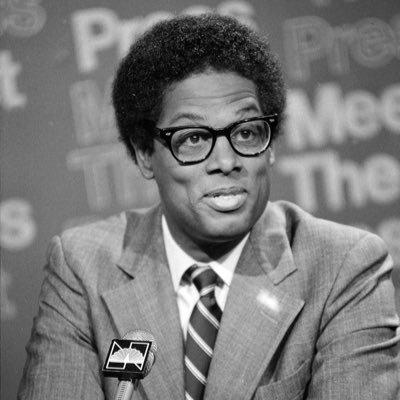

Worst president ever: FDR
The US presidency is the most dangerous office in the world.
Here are the top 3 best and worst presidents ever:
Let's start with the best:
1. Grover Cleveland vetoed 414 bills in his first term alone, including congressional handouts to drought-stricken Texas farmers in 1887, on the grounds that the Constitution authorized no such charity. He was right.
2. Warren Harding inherited the sharp 1920-21 depression and did almost nothing, cutting federal spending from $6.4 billion to $3.3 billion and slashing tax rates. The economy recovered within eighteen months, precisely because Washington stepped aside.
3. John Tyler, largely forgotten today, vetoed a national bank bill twice, endured expulsion from the Whig Party, and refused to let Henry Clay transform the Treasury into a political instrument.
These three men share a rare quality: they treated the federal government as a cage, not a tool.
Now the worst.
3. Abraham Lincoln suspended habeas corpus, imprisoned 14,000 political opponents without trial, shut down opposition newspapers, and conscripted men at gunpoint. The war's financing required the Legal Tender Acts of 1862, which forced irredeemable paper greenbacks on US citizens regardless of what contracts previously specified. Centralization of federal power over the states never fully reversed after 1865. The constitutional republic that emerged was a different animal from the one that entered.
2. Woodrow Wilson delivered the Federal Reserve in 1913, the income tax through the Sixteenth Amendment, the military draft, and the Espionage Act, which could imprison anyone for criticizing the war. He segregated the federal civil service. He took the country into a European slaughter with a propaganda apparatus, the Committee on Public Information, designed to manufacture consent. Every major expansion of state power in the twentieth century traces a direct line back to Wilson's two terms.
1. Franklin Roosevelt gets the top prize for catastrophe. He criminalized gold ownership via Executive Order 6102 in 1933, forcing Americans to surrender their gold at $20.67 per ounce, then immediately revalued it to $35, confiscating roughly 41 percent of savings held in the hardest monetary form available. He extended a cyclical recession into a decade-long depression through the National Industrial Recovery Act, agricultural price controls, and relentless uncertainty about property rights. Businesses do not invest when the rules change by executive whim every quarter. Real unemployment never fell below 14 percent throughout the 1930s. He packed the Supreme Court when it resisted. The regulatory state you live inside today, with its 188,000 pages of federal rules, grew from seeds Roosevelt planted between 1933 and 1945.
Power corrupts budgets, currencies, and constitutions with equal efficiency. The best presidents understood their job was to leave you alone.

Is Rand Paul Running for President in 2028? youtu.be/ZAeHKXW4pek?is=s-Ma… via @YouTube
Why medical care costs skyrocketed
LASIK eye surgery costs roughly $2,100 per eye today. In 1998, it cost $2,200 per eye. Adjusted for inflation, you are paying about 60% less for a procedure that has simultaneously become faster, safer, and more precise. That is what markets do when left alone.
Now compare that to a hearing aid. The FDA classified hearing aids as prescription medical devices for decades, locking you into audiologist appointments before you could buy a $3,000 device that a manufacturer could produce for $300. Or, look at insulin. Heavily regulated, patent-extended, and politically manipulated, a vial of Humalog ran over $330 in 2024 versus roughly $21 in Canada for a biosimilar. Same molecule. Different regulatory environment.
LASIK sits in a peculiar gap. Insurers rarely cover it, which means third-party payment schemes never severed the price signal between provider and patient. You shop, clinics compete, manufacturers race to improve technology. The feedback loop that markets depend on functions exactly as it should.
Regulated medical markets break that loop deliberately. The FDA's approval process costs pharmaceutical companies over $2.6 billion per new drug on average, erecting barriers that protect incumbents and punish smaller competitors who cannot absorb a decade of compliance costs. Patients then pay the premium on the back end.
LASIK is the control in the experiment. The market won.

Belasting is diefstal

Gas komt voor heel Europa van dezelfde markt. Het verschil zit in wat je eigen overheid erbovenop legt.
Nederland (🥇🏆): €0,87 belasting per kuub.
EU-gemiddelde: €0,37.
Vijf lidstaten heffen nul energiebelasting op gas.
En dat in het land dat op een van de grootste gasvoorraden van de EU zit.
Duur gas is een @d66 @VVD @cdavandaag beleidskeuze.
