A 12-week RCT in 72 healthy adults aged 65+ found that a self-selected vegan diet lowered protein intake, muscle protein synthesis and skeletal muscle mass.
Thigh muscle volume:
• Omnivorous: essentially unchanged (−0.01 L)
• Vegan: −0.61 L
• Vegan + 2×/week resistance training: −0.35 L
Training reduced the loss, but did not fully match the omnivorous group. This was a free-living vegan diet, not a protein-optimised one.
PMID: 42680254
pubmed.ncbi.nlm.nih.gov/4268…
🤖 Made with AI
28
A 6-month low-carb diet (no calorie restriction) changed circulating fatty acids in adults with type 2 diabetes in a direction previous studies have linked to lower cardiometabolic risk.
Vs a higher-carb control diet:
• Palmitoleic acid (a de novo lipogenesis marker) ↓ 23% • DGLA ↓ 12%
• Arachidonic acid ↑ 9%
• Total circulating SFA fell, even though people ate 2.6× more saturated fat.
Secondary analysis of an open-label RCT (n=71). This is a blood-fat profile change, not proof that heart attacks reduce. PMID: 42680257
pubmed.ncbi.nlm.nih.gov/4268…
🤖 Made with AI
1
46
Your fingerprints aren’t just unique: they may also track your blood group. A 2026 Bangladeshi study of 200 medical students found statistically significant differences in finger-ridge counts across ABO groups, and the pattern wasn’t the same in men and women.
Nur-E-Azam N, Ashrafuzzaman M. Association between Dermatoglyphics and Blood Group. Mymensingh Med J. 2026 Jan;35(1):184-188. PMID: 41474907.
pubmed.ncbi.nlm.nih.gov/4147…
🤖 Made with AI
1
3
96
A systematic overview and second-order meta-analysis of nature-based interventions for stress, anxiety and depression
Nature-based interventions are good for your health. A new systematic assessment (and they are free)
nature.com/articles/s41562-0…
28
Breast cancer (BC) incidence was positively associated with conjugated bile acids, including the novel glycohyocholic acid, and inversely associated with unconjugated bile acids, suggesting a potential role for bile acid conjugation in carcinogenesis. Multiple dietary factors were linked to these metabolites, highlighting potential metabolic pathways connecting diet and BC.
pubmed.ncbi.nlm.nih.gov/4211…
🤖 Made with AI

ALT Breast cancer (BC) incidence was positively associated with conjugated bile acids, including the novel glycohyocholic acid, and inversely associated with unconjugated bile acids, suggesting a potential role for bile acid conjugation in carcinogenesis. Multiple dietary factors were linked to these metabolites, highlighting potential metabolic pathways connecting diet and BC.
21
The consumption of a diet high in fat and fructose induces sex-specific
alterations in the expression of key genes related to insulin synthesis,
inflammation and apoptosis in the pancreatic beta-cells of rodents.
“females showed lower vulnerability, possibly because of adaptive responses in insulin synthesis signaling influenced by sex hormones.”
pubmed.ncbi.nlm.nih.gov/4188…
Serum thyroglobulin (Tg) can predict population iodine status categories based on Urine Iodine Concentration (UIC) thresholds. The proposed median Tg cutoffs appear particularly useful for detecting iodine deficiency (higher Tg values) at lower ends of the UIC spectrum.
pubmed.ncbi.nlm.nih.gov/4099…
45
“The present meta-analysis revealed the efficacy of ketogenic diet therapy (KDT) in the treatment of genetic epilepsies, particularly in epilepsies associated with SLC2A1 and SCN1A mutations, but KDT had relatively poor efficacy in epilepsies related to CDKL5 and KCNT1 mutations. Notably, compared to other follow-up intervals, at the 6-month post-KDT follow-up interval patients showed the highest overall responder and seizure-free rates.”
pubmed.ncbi.nlm.nih.gov/4098…
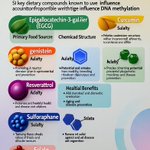
“current findings underscore the promise of dietary DNMT modulators (e.g., epigallocatechin-3-gallate, curcumin, genistein, resveratrol, sulforaphane, and folate) as foundational elements for precision nutrition strategies aimed at promoting healthy aging and mitigating age-associated disease risk.”
pubmed.ncbi.nlm.nih.gov/4097…
1
1
207
“This review summarizes mechanistic and clinical evidence on the electrophysiological effects of selected nutrients, food constituents, and supplements-including grapefruit juice, licorice, over-the-counter products, and energy drinks. Gene-nutrient interactions and their impact on ion channel function, drug metabolism, and electrolyte balance are discussed. The second part outlines genotype-specific considerations, such as potassium supplementation and dietary guidance for rare forms of Long QT Syndrome (LQTS), including Andersen-Tawil and Timothy syndromes.”
pubmed.ncbi.nlm.nih.gov/4099…
1
1
50
“This review synthesizes emerging evidence on both macronutrient and micronutrient influences on serotonin pathways, connecting central and peripheral mechanisms including gut-brain interactions, presenting a new perspective on nutritional targets and translational potential for various serotonin-related diseases spanning mental, metabolic and gastrointestinal outcomes.”
pubmed.ncbi.nlm.nih.gov/4099…
44
“Probiotic and synbiotic supplementation significantly reduces inflammatory cytokines (CRP, IL-6, TNF-α) in individuals with prediabetes and T2DM, with the strongest effects observed in those with higher baseline inflammation and longer intervention durations. These findings underscore the importance of tailoring supplementation strategies to individual inflammation status, intervention duration, and metabolic profile to optimize therapeutic outcomes.”
pubmed.ncbi.nlm.nih.gov/4102…
“In this pilot study, Hepatitis C virus (HCV)-cirrhosis presents sex-specific FM differences, suggesting potential microbial signatures. Dietary modifications correlated with microbiota shifts, highlighting the importance of diet-microbiota interactions and the need for targeted dietary interventions to improve patient outcomes.”
pubmed.ncbi.nlm.nih.gov/4100…
31
“Results suggest that a dietary pattern network reflecting the consumption of ultra-processed sweets and snacks is associated with incident CVD in a sample of the French population, independent of diet quality.”
pubmed.ncbi.nlm.nih.gov/4099…
30
“This review mainly discussed the research progress on energy and fat-manipulated diets (caloric restriction diet, ketogenic diet, and high-fat diet) and several nutrients (polyunsaturated fatty acids, phospholipids, copper, iron, zinc, selenium, vitamin A/D/E/C, and some vitamin Bs) in the treatment of Charcot-Marie-Tooth disease (CMT) and related peripheral neuropathies.”
pubmed.ncbi.nlm.nih.gov/4099…
46
“A high-protein, low-glycemic-index (HPLGI) diet during pregnancy was associated with higher offspring body weight and BMI at 18 years of age compared to an moderate-protein, moderate-glycemic-index (MPMGI) diet. These findings suggest that maternal dietary composition during pregnancy may have long-term implications for offspring growth and obesity risk, underscoring the importance of evaluating dietary recommendations during pregnancy.”
pubmed.ncbi.nlm.nih.gov/4099…
“Dietary intake of B vitamins, especially riboflavin, vitamin B6, and folate, is associated with a reduced risk of disabling dementia in Japanese individuals.”
pubmed.ncbi.nlm.nih.gov/4099…
1
50
“Replacing animal fat and saturated fat with vegetable fat and monounsaturated fats could serve as a dementia prevention strategy.”
pubmed.ncbi.nlm.nih.gov/4099…
24
“Despite the central role of diet in weight regulation, most clinical trials involving injectable anti-obesity medications fail to report meaningful diet quality or food intake data.“
pubmed.ncbi.nlm.nih.gov/4081…
27
“Current evidence suggests that Mexican children and adolescents who have overweight or obesity are more likely to experience vitamin D deficiency, and some evidence suggests that they are also prone to zinc, iron, and vitamin B6 deficiencies.“
pubmed.ncbi.nlm.nih.gov/4080…
33