

Radiation Oncologist | MSc Physics | PhD AI & Quantum Computing / Oncologic Imaging | Views are my own
Québec, Canada
Joined January 2012
- Tweets1.7K
- Following667
- Followers515
- Likes3.4K





Pinned Tweet
Happy to share our recent publication on the use of quantum technology for machine learning to differentiate between brain metastases and high-grade gliomas on MRI. 1/3
doi.org/10.1007/s10278-023-0…
Tony Felefly retweeted

Congrats to Reck, Spicer, Filippi and team on the full MDT-BRIDGE paper in Nature Medicine! Really appreciate seeing the RT protocol and full denominators alongside the ASTRO results. 👏
This single-arm ph2 enrolled 142 pts with resectable or borderline-resectable stage IIB-selected IIIB, EGFR/ALK-wt NSCLC. Durvalumab + platinum chemo x2c→ MDT reassessment→ additional chemoimmunotherapy and surgery, or CRT, followed by durvalumab.
Resection was 74.6% (95CI 66.7-81.6), with R0 in 96.2% of those who started surgery. pCR was 27.3% in the resectable analysis cohort. The 12-mo EFS estimates are 88.5% overall and 90.1% in that resectable cohort. Different denominators, same readout.
The RT protocol details are useful: nominal 60/30 (60 Gy ±10% in 2 Gy fx), 5 fx/wk for ~6 wk, concurrent or sequential platinum chemo. SBRT was not allowed. IMRT with daily CBCT was preferred, then consolidation durvalumab q4w up to 12c.
All 25 pts who started CRT completed it: 21 concurrent, 4 sequential. 23 received consolidation durvalumab. The post hoc CRT-treated analysis estimated 12-mo PFS at 85% (95CI 59.8-95.0), measured from the FIRST study-treatment dose, including induction.
CRT-period G3/4 AEs were 28%; pneumonitis 8% (2 pts, both G2). During consolidation, G3/4 AEs were 17.4%, AE discontinuation 13%, and pneumonitis 8.7% (G1/2). One cardiac-failure AE death occurred during consolidation; the paper reports no treatment-related AE deaths in that period. The safety windows extend beyond treatment delivery and can overlap.
The ESMO ctDNA analysis adds an interesting association. Pre-Sx/CRT clearance occurred in 33/90 evaluable pts (36.7%). C2D1 clearance had an 83.3% PPV for pCR (95CI 43.6-99.1).
Among resected pts, no EFS events occurred with pre-Sx clearance (n=28); 12-mo EFS without clearance was 88.9% (n=40). In CRT-treated pts, 12-mo PFS was 100% with pre-CRT clearance vs 77.5% without. The paper now supplies those subgroup sizes: just 4 vs 16 pts, with 2 vs 6 at risk at 12 mo. One later event occurred in the clearance group, so 100% is a timepoint estimate, not no events throughout follow-up.
Useful prospective evidence that patients can reach definitive CRT after starting on a surgical pathway. The unanswered question remains who benefits from that sequence versus going directly to CRT or selecting for NAC-ICO with intent for organ preservation. Selected cohorts, immature EFS/PFS and no reported OS cannot settle that, and ctDNA does not yet tell us which local therapy to choose or omit.
doi.org/10.1038/s41591-026-0…
cslide.ctimeetingtech.com/es…
#radonc #ESMO26 #LCSM


Congrats to Filippi, Reck, and the MDT-BRIDGE investigators on fantastic, much-needed work presented at #ASTRO26 LBA05!
This is a challenging area, and prospectively studying what happens when patients do not proceed to surgery is a valuable contribution.
142 patients with resectable or borderline-resectable NSCLC received neoadjuvant durvalumab + chemotherapy, with MDT reassessment after 2 cycles. Overall, 106 underwent surgery and 25 received CRT: 92% reached local treatment.
The reasons for unresectability and for receiving NO local treatment deserve separate attention.
Among 20 patients actually assessed as unresectable after cycle 2:
• Tumor burden: 10
• No treatment response: 4
• Patient frailty: 4
• Risk of non-R0 resection: 1
• Metastatic disease at diagnosis: 1, identified as an enrollment error
Persistent tumor burden or lack of response does not necessarily mean progression. Encouragingly, 18/20 received CRT! 👏
Among the 11 patients who received neither surgery nor CRT:
• AEs/imAEs: 6
• Progression: 3
• Frailty: 1
• Exclusion criteria: 1
The baseline borderline-resectable group warrants particular attention: 7/50 (14%) received no local treatment, versus 4/92 (4.3%) initially considered resectable. AEs/imAEs accounted for 4 of those 7 borderline cases.
This raises an important patient-selection question: when we select borderline-resectable patients for neoadjuvant chemo-immunotherapy, might we also be enriching for patients at risk of never reaching definitive local therapy?
Small numbers, nonrandomized study, and no upfront CRT comparator. These data cannot establish that induction caused the difference or that upfront CRT would have prevented it. But the observation deserves prospective attention alongside conversion and resection rates.
The CRT results are encouraging: 23/25 received consolidation durvalumab, with estimated 12-month PFS of 85% from the first durvalumab dose. Still a small, selected cohort with immature follow-up.
Really appreciate the investigators reporting these details.
How can we better identify who benefits from an attempt at conversion, who should proceed directly to definitive local therapy, and when to change course?
Exactly the kind of collaborative MDT discussion these data should help us have. #LCSM #OncTwitter


Tony Felefly retweeted
CRC has been a fascinating space for many years, but in 2026, wow... Just wow!
For example, switching gears from dMMR colon in NICHE-2 and going below the peritoneal reflection for pMMR rectal cancer, UNION, STELLAR II, and TORCH-iTNT have shown eye-popping response rates with a short-course RT backbone (?!) plus immunotherapy.
@NiuSanford @DrEmmaHolliday @nbn426 @KrishanJethwa @GIMedOnc @adapthyun @TimothyJBrownMD @manjuggm @OncoAlert @OncBrothers
#ASTRO26 #ESMO26 #OncTwitter #CRCSM
Full UNION paper is out in Lancet Oncol. Supplement Table S4 caught my eye: median time from RT start to surgery was 72 vs 113 days (SCRT/IO vs control), yet pCR was 39.8% vs 15.3%.
I would've expected LOWER pCR with surgery that much sooner(!), as we've seen in past short-course RT trials. Makes that response signal even more interesting!
Adding ICI in rectal cancer sure seems enticing! Are we entering a new frontier?!?
---
#ASTRO26 STELLAR II (Li): phase 2/3, 588 pts w/ pMMR LARC, SCRT 25/5 → CAPOX x4 +/- sintilimab. Adding sintilimab increased CR (pCR + cCR) from 27% → 52% (p<0.001). pCR among operated pts went from 19% → 42%. G3-4 toxicity also went up, 20% → 28%. Looking forward to the primary phase 3 endpoint, 3y DFS, which is still pending.
---
#ASTRO26 TORCH-iTNT (Wang) asks a different question: randomized phase II, pMMR LARC, CAPOX + toripalimab x6 w/ vs w/o SCRT 25/5. CR was 37% w/o RT → 62% w/ SCRT. IO in both arms here.
---
Unlike UNION, both ASTRO trials allowed watch-and-wait / organ preservation, so CR includes cCR. These aren't all pCR comparisons. Oh and of course standard caveat that cross trial comparisons are a sin.
UNION enrolled only surgery-intended pts, and both arms got just 2 cycles of consolidation chemo vs the 4-6 now recommended. I wonder how this compares w/ modern TNT, especially when organ preservation is the goal.
doi.org/10.1016/s1470-2045(2…
#ESMO26 #radonc #OncTwitter #CRCSM


Tony Felefly retweeted

Presenting the UK’s SARON study Dr @fifimcdrmh to a full hall at #ESMO26
In patients with de novo oligometastatic mutation driver negative #NSCLC , consolidation radiotherapy to the primary and metastases improved PFS but no OS
No significant difference in QOL or AEs
Huge thanks to all the patients and trialists involved


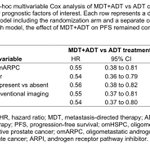
Of note, the Surrogate Threshold Effect for MFS in ICECaP-2 was 0.81. So basically even if we buy into the PSMA-PET MFS in PROTEUS, HR was 0.8 (95%CI 0.67-0.96). Consequently, this MFS HR does not predict an OS benefit by surrogacy, as the CI upper limit is way above the surrogate threshold.
Actual OS data are needed in this context.

🚨 Two major ARPI trials in high-risk localized prostate cancer, each adding a drug to standard local therapy 🧵 #ProstateCancer #RadOnc #pcsm
Tony Felefly retweeted

🚨 Two major ARPI trials in high-risk localized prostate cancer, each adding a drug to standard local therapy 🧵 #ProstateCancer #RadOnc #pcsm

🚨📣📣 #ESMO26 presidential: @niazi_Dr7 Adding darolutamide to ADT + RT dramatically ⬇️ risk of metastasis or death in high-risk localized prostate cancer. Phase 3 DASL-HiCaP = 58% ⬇️ in MFS (HR 0.42) + early OS signal (HR 0.88). #ProstateCancer #RadOnc #pcsm @ChrisSweens1


Tony Felefly retweeted

Full #ESMO26 @urotoday article 👇
I included as many details as possible that were provided in the presentation
urotoday.com/conference-high…


Tony Felefly retweeted

2/n All patients received comprehensive, contemporary prostate and nodal RT. There was some contention that in the STAMPEDE trial, had nodal RT (or higher dose prostate-directed RT) been mandated, it might have reduced the benefit of Abi. Here that argument is moot.
Further, the MFS benefit in Darolutamide was present regardless of PSMA PET staging, regardless of nodal status.
Tony Felefly retweeted
1/n Major congrats to our DASL team, especially to @ChrisSweens1 and @niazi_Dr7, and a big thanks to the patients. Working with @ANZUPtrials and @ThePCCTC on DASL as US lead has been a career highlight.
I'd contend this establishes a new standard of care in DASL very-high risk PCa. The conventional-image defined MFS benefit with the addition of Darolutamide to RT+ADT was extraordinarily robust; the DSMC recommended reporting out at IA. #ESMO26, #radonc, #medtwitter. @MSKCancerCenter @MSK_RadOnc. #pcsm
Brief 🧵

DASL-HiCaP at #ESMO26, presented by @Niazi_Dr7: darolutamide + RT + 2 yrs ADT vs placebo in very high-risk prostate cancer (n=1,106)
▪️ MFS HR 0.42, 4-yr MFS 95% vs 88%
▪️ PSA-PFS HR 0.47
▪️ Time to CRPC HR 0.22
▪️ OS immature (HR 0.88)
#ProstateCancer


Tony Felefly retweeted
Congrats to the trialists. This is yeomen's work to answer a critical question. Ideally, the sub-study would have randomized to three arms. We've hashed out concerns with the primary study population analysis back in June. Here the question should be: how does this stack-up to RP+ADT in a similar population? While not formally part of the sub-study randomization, we have that comparator arm from this trial..... #ESMO26
Tony Felefly retweeted

Putting STAMPEDE, ENZARAD, PROTEUS & DASL into context with the latest #ESMO26 updates:
STAMPEDE: Abiraterone-based intensification improved MFS AND OS, predominantly with RT. New #ESMO26 Decipher data suggests differential abi benefit in cN0 disease (interaction P=.01); using this to omit treatment still requires validation.
ENZARAD: At 8 years, MFS was 74% vs 72% (HR 0.88; P=.34). No significant overall MFS benefit from enza + ADT/RT. The cN1/planned pelvic RT subgroup signals remain hypothesis-generating.
DASL: new at #ESMO26: 1,106 patients; 96 weeks of daro v. placebo + ADT + prostate/bed AND pelvic RT. Four-year conventional-imaging MFS: 95% vs 88% (HR 0.42). Very-high-risk population, including selected postoperative patients. Interim analysis; OS immature.
PROTEUS main trial: Perioperative apa + ADT improved 5-year PSMA-inclusive MFS versus ADT alone: 78.2% vs 73.5% (HR 0.80). Conventional-imaging MFS was not statistically significant. #ESMO26 post hoc PSA-response analysis adds prognostic information.
PROTEUS randomized substudy: new at #ESMO26: Perioperative apa/ADT + RP/PLND (n=102) v. immediate RP/PLND (n=306). At 37.8 months’ follow-up:
• 3-year EFS: 63.0% vs 41.4%; HR 0.38.
• Secondary PSMA-inclusive MFS: HR 0.49; nominal P=.0193.
• Subsequent postoperative RT: 20% vs 43%.
The substudy strengthens a "perioperative strategy". But conventional-imaging entry followed by PSMA-inclusive endpoints matters. PSA-based EFS, conventional MFS and PSMA-inclusive MFS are different endpoints.
These trials support specific intensification strategies; they cannot rank the drugs or establish RP-versus-RT superiority. The decision remains who benefits enough to justify the ENTIRE treatment burden.
Tony Felefly retweeted

🚨📣📣 #ESMO26 presidential: @niazi_Dr7 Adding darolutamide to ADT + RT dramatically ⬇️ risk of metastasis or death in high-risk localized prostate cancer. Phase 3 DASL-HiCaP = 58% ⬇️ in MFS (HR 0.42) + early OS signal (HR 0.88). #ProstateCancer #RadOnc #pcsm @ChrisSweens1
Tony Felefly retweeted

DeLLphi-305 - tarlatamab added to durvalumab after initial chemo-immunotherapy for small lung cancer essentially doubles survival. Hope for all cancers here, if the right target & treatment modality can be refined. Unquestionably a new standard for this disease. #ESMO2026

Tony Felefly retweeted

Great start to #ESMO2026 in Madrid!
Just presented #RAPSTAR, our randomized phase III trial comparing #SABR with robotic partial nephrectomy (#RAPN) in localized renal cell carcinoma. Even better to do it alongside Krzysztof Konopa - a true SABR grandmaster I keep learning from!


Tony Felefly retweeted
Improved MFS w/ darolutamide in DASL-HiCaP!
📌 1,106 very high-risk prostate cancer pts, incl persistent/rising PSA after RP. Randomised to darolutamide vs placebo w/ ADT + RT.
📌 Median age 71; GS 9-10 73%; CT N+ 29%; prior RP 15%.
📌 4y MFS on conventional imaging: 95% vs 88%, HR 0.42 (95% CI 0.27-0.66). No clear OS benefit yet.
📌 All prescribed prostate/bed AND pelvic nodal RT, w/ 96 wk ADT.
📌 N+ = CT/MRI >10 mm short axis or path confirmation (PSMA PET alone insufficient if ≤10 mm).
Side note: RT dose/fx and PSMA staging use aren't reported in the abstract. #radonc #ESMO26 #PCSM

Tony Felefly retweeted
MASTERPLAN full publication is out!!
The RT volumes are worth a closer look. CTV = primary GTV + nodal GTV + tumour-vessel interface. The TVI extends 5 mm proximally and 5 mm distally along involved/closely adjacent vessels, for patients where surgery is likely. PTV = CTV/ITV + 5 mm. No elective nodal irradiation, and no elective perineural or celiac/SMA plexus volume specified in the protocol. That is a focused target, with gross nodal disease included.
Real-time RTQA is a big part of this story. Review identified 36 major planning deviations in 12 patients, reduced to 2 deviations in 2 patients after QA. All plans passed independent review before treatment. As a radiation oncologist, I want that detail alongside the outcomes. Reproducing the treatment means reproducing the contour review, OAR constraints and image guidance too.
Also worth keeping the treatment delivery denominator in view: only 40/49 patients assigned to SBRT actually received it (82%). The efficacy analysis is intention-to-treat. It should not be read as an outcome series of patients who all completed SBRT.
The surgical numbers need some unpacking. All comparisons below are chemo + SBRT vs chemo alone:
✅ Underwent surgery: 62% vs 44% (29/47 vs 11/25).
✅ Completed resection: 53% vs 44% (25/47 vs 11/25).
✅ R0 among all resected patients: 52% vs 36% (13/25 vs 4/11).
✅ R0 in the resected POPC subset: 62% vs 40% (13/21 vs 4/10).
POPC is the potentially operable cohort. So the 62% surgery figure includes exploration without resection, while the 62% R0 figure applies only to resected POPC patients. These are different endpoints with different denominators. None of those between-arm surgical comparisons was statistically significant. The paper also defines R0 as more than 1 mm clearance.
Adjuvant chemo is another important difference: 80% vs 36% of resected patients received it (20/25 vs 4/11). That complicates attribution within the treatment pathway. Early progression in the control group may have contributed, so this is a post-randomisation imbalance with more than one possible explanation. The post-hoc analyses were directionally consistent, but the authors explicitly caution about selection bias.
For the planning details: PTV_EVAL excluded the GI PRVs, with a minimum 3 mm PRV expansion. OAR constraints took priority over target coverage. Duodenum, stomach and small bowel D0.5cc were each constrained to <33 Gy, with V30 <5 cc. Delivery used standard linacs; breath hold was recommended, and fiducials were placed in 35/40 patients (88%). This is relevant to how we would implement the approach in practice.
With no elective nodes, isolated regional nodal relapse was 4% vs 8% (2/49 vs 2/25). Reassuring, although that does not establish the optimal elective volume (especially considering these patients went to surgery - ASTRO/NRG recommends inclusion of elective perineural coverage). Overall G3+ AEs were 70% vs 64% (33/47 vs 16/25). One G3 pancreatitis and one G2 small bowel obstruction were attributed to SBRT. The practical takeaway for me is to keep the target definition and prospective QA attached to the results, and to be precise about what the surgery and R0 numbers actually measure.

Tony Felefly retweeted
Thanks Jeff for the kind comments - this trial has been a labour of love. Thanks for the question and an excellent point by Tony.
In SARON we had a comprehensive RTQA program and have all this data. Some will presented on Sunday. The thing to remember that many of the patients had bulky central primary tumours and had to have “conventional” RT. We treated all
sites of disease.
Tony Felefly retweeted

#ESMO26: NSABP B-42 at 15 years: extended letrozole continues to improve DFS, with particular relevance for patients with node-positive disease.
No statistically significant OS benefit at 15 years, although a trend toward fewer breast cancer deaths is encouraging.
Tony Felefly retweeted
14.8% invasive local recurrence at 5y after BCS alone in TOP-1.
Age 70+, small low-grade ER+ tumors, no RT or ET.
Most recurrences were salvaged, but that is still more treatment. I'd be cautious about routinely omitting both.
#ESMO26 #radonc
cslide.ctimeetingtech.com/es…

Tony Felefly retweeted

🔥AGITG MASTERPLAN🔥
Borderline resectable or Locally advanced PDAC
n=75
🔍Randomized
3m mFOLFIRINOX or Gem+nab-Paclitaxel alone +/- SBRT (40 Gy/5 fx)
Primary endpoint: locoregional recurrence
🚨SBRT had improved:
✅12 m LRR: 20% vs. 50%
✅mOS 22m vs. 14 m
#ESMO26
