

Anatolian Turkoman Bayat Bahadırlı Xiongnu🐎🏹 https://teapawt.net/t.co/ZnLFRBq8aM
Gaziantep
Joined December 2024
- Tweets1.5K
- Following171
- Followers407
- Likes4.5K






Tonyukuk retweeted

To be honest, the main point of the post wasn't to modeling via MA2195. MA2195 is very likely a misdated Oghuz sample that does lacks Anatolian admixture. This sample has a 48% East Asian ancestry proportion,the models run with it fall within the "9–22%" range.
The fundamental critique we have regarding "9–22" is that a low figure like 9 meaning the possibility of Oghuz conquerors having 100% East Asian genetics was evaluated, which everyone knows is impossible. Also, I don't understand why a 100% East Asian proxy was included rather than being dropped down to ~32%. Although I personally don't find 32% logical either, it is clearly much more logical than 100%.
Additionally, samples from Trabzon were overrepresented more than they should have been, causing the average to drop. Trabzon forms an exception among ethnic Turks and contains even less East Asian ancestry than populations in Anatolia like Kurds or Circassians they should have been labeled as "Turkish_o".
Another problem with "9–22" is that many people think it means that the lowest group has 9% and the highest group has 22% Central Asian contribution, rather than Central Asian contribution of Turks lies between 9% and 22% . Still, that is not your responsibility.
Coming to the main subject of the post you quoted: the purpose of that post was to explain that when Anatolian Turks are modeled using MA2195, they require an excess Eastern Iranic heritage. If we exclude Anatolian Turks from MA2195, what we are left with besides groups like Rums, Armenians, and Slavs are also Eastern Iranic groups.
Therefore, the purpose of the post was to argue that the average Oghuz conqueror's East Asian ancestry should be lower than 48%, given that Anatolian populations did not possess an Eastern Iranic-specific admixture. This Eastern Iranic admixture was brought to Anatolia by the Oghuz who carried it. Consequently, if there is an excess Eastern Iranic heritage left over, this indicates that the average East Asian ancestry should be lower than that of MA2195.
This is not the only formula I use to calculate the average East Asian ancestry of the Oghuz conquerors. Furthermore, as can be seen from qpAdm and other tools, when Anatolian Turks are modeled in the format of Hunnic_Eurasia (RISE603, BRE008, BRE014, KRY001) + East Iranic (China_Xinjiang_Abusentaar_IA_oWestEurasian) + Local Anatolian (proxy varies by region), the combined amount of East Iranic + Hunnic weights generally tends to be higher compared to when they are modeled with Karakhanid or MA2195. The formula I use for this is as follows:
[Hunnic weight x East Asian percentage of the proxy (hypothetically let's say 87%) + East Iranic weight x East Asian percentage of the proxy (hypothetically 5%)] % (Hunnic weight + East Iranic weight) (Alternatively, it can also be calculated as 100 % [(Hunnic weight + East Iranic weight ) % East Asian weight(Mongolia_North_N or another proxy for it)]).
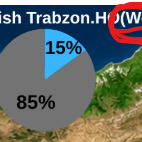
To give an example (which I will put visually): Turkish_Aydin.HO is modeled as Hunnic_Core 13.5%, China_Xinjiang_Abusentaar_IA_oWestEurasian 21.3%, Mugla_Stratonikeia_Byzantine 65.2%.
If this formula were to be applied to this sample:
[(13.5 x 87) + (5 x 21.3)] / (13.5 + 21.3)
This would give us a result of 36.81.
This indicates that the amount of Oghuz conqueror East Asian ancestry affecting this Aydin_HO sample is around 37%.
On this matter, a friend of mine (@Ilb3548) ran about 1,800 qpAdm runs(Turkish_Aydin.HO,Turkish_Balikesir.HO,Turkish_Kayseri.HO) with a neutral right set, and the result he found was that models requiring excess Eastern Iranic or having lower East Asian Central Asian samples (such as da89) had a tandency to pass meaning that out of 1,800 runs, we obtained a result showing that an excess Eastern Iranic contribution is quite correlated with a higher tendency to pass. I will send you these 1,800 runs via dm for you to check out.


Tonyukuk retweeted

Genetic Profile of EarlyModern Kazakhs
Most of the Samples are from Central. Without the Outlier (B2_B7) Sample
#Kazakh #kazakhstan #KazakhKhanate #G25 #Genetics

Tonyukuk retweeted
Although pre-Turkic Slavic migrations to Anatolia are documented by historical sources, their autosomal presence ,while not constituting a very high value, can still be observed particularly in the northwestern regions. Furthermore this presence is supported by various branches of I2 and R1a Y-DNA that do not exhibit a founder effect. While Y-DNA alone is not a reliable historical explanation on its own, the existence of non-founder effect Y-DNA lineages is particularly important for providing insight. In fact some individuals carrying Slavic paternal lineages even migrated from Anatolia to Azerbaijan.

Tonyukuk retweeted
The Y-DNA profiles of all the peoples you mentioned are present in high proportions in @TurkiDNAProject dataset of over 2,300 samples. Proto-Mycenaean Y-DNA, on the other hand is present in only 6 samples lol.Even Proto-Balto-Slavic R-Z283 has 50 samples.


Tonyukuk retweeted

Haplogrupları bir türlü anlayamayan arkadaşlar için haplogrup rehberi:
Şimdi sizin 2 tane ineğiniz var
G: bu iki ineğe saban takıp tarla sürer
J (J1/J2): bir ineği kesip etini yer diğer ineğin sütünü kullanır
R (R1a/R1b): iki ineği de siker
C ve N: inekleri yağmalar
Tonyukuk retweeted

🇬🇧: Genetic structure of Yoruk Turks from Southern Turkey.
🇹🇷: Güney Türkiye'den Yörük Türklerinin genetik yapısı.


Tonyukuk retweeted
Benim içimden geçen şey de bunla aynı. ''Core Oğuz'' Kitlesinin Selenge civarındaki Tiele kökenli olduğu ve en başta N-VL73,C-MF41320,C-PH36,N-F4205 taşıdığı yönünde.
Sonrasında ise başta çevredeki Onok/Göktürk(J-PH1795?,Q-L715? (Bu kısmı tahmin etmesi oldukça zor) soylarını sonrasında ise Hazar(C-Y10420,N-M2019,R-S10885? ve bir kaç Alan soyu) ve Soğd/Harezmi(Orta asya yerlisi R1a,J2,J1 haplogrupları vb) soylarını bünyesine katarak anadoluya girdiğini düşünüyorum.


Tonyukuk retweeted
Tarihsel metinlerdeki Dingling ve Tiele isimli halklara arkeogenetik bir bakış açışı:
Dinglingler tarihsel metinlerde Hunların kuzende yaşayan ve yer yer Hunlara isyan eden bir kavim olarak karşımıza çıkar.Günümüzde Elga kültürüyle ilişkilendirilmektedir.
Elga kültürü M.Ö 5. Yüzyılda transbaykalda ortaya çıkmış ve M.Ö 5. Yüzyıldan 2.yüzyıla kadar olan süreci Sotnikovo(Proto-Elga) olarak isimlendirilmiştir.M.Ö 3 ve 2.yüzyıllardan itibaren Cisbaykal bölgesine göç etmiş ve burada SlabGrave kültüründen etkilenmiştir.Transbaykalda kalan kısmının ise doğuya göç edip Darasun kültürünü oluşturduğu düşünülmektedir.Darasunlar ise bir Tiele grubu olan Bayırkularla ilişkilendirilir.
Henüz yayımlanmayan Sotnikovo(Proto-Elga) bireyi N-B197 için pozitif olduğu söylenmiştir.Bu haplogrup Yugur(Sarı Uygur),Kazaklar,Buryatlar,Anadolu Türkleri,Türkmenler gibi Türki ve Moğol halklarında görülmektedir.
Ortaçağa tarihlenen N-F4205 için pozitif olan TSA005 bireyi Darasun kültürüne ait bir örnek olma ihtimali taşır.Bu örneğin bir diğer özelliği yoğun oranda (%30) yakutia_lnba(Proto-Ural) taşımasıdır.Ayrıca kimi N-F4205 olan Avar elitleri ve Buryatia_Xiongnu örnekleri de belirli oranlarda yakutia_lnba taşır.
Elga kültürü kanımca yakutia_lnba bölgesinden transbaykala inen bir Proto-Ural etnisitesine sahip olabileceği gibi Argundaki Proto-Türk gruplarıyla etkileşime girdikten sonra Para-Turkic bir etnisiteye de sahip olma ihitimali bulunur.Birinci görüş doğruysa Dinglingler Xiongnu tarafından sonradan asimile edilmiştir.
Dingling olduğu düşünülen Elga kültürü Kuzey Xiongnu ile etnogenez geçirip Tieleyi oluşturduğu şuanki arkeogenetik verilerle kanımca en mantıklı açıklamadır.Samsun,Balıkesir ve Mersinde görülen N-F4205>N-FT37622 haplogrubunda antik örnekler içinde T5732 kodlu Tiele örneğini içermektedir.
N-F4205 babasoyunun bir diğer önemi Avar çekirdeğini oluşturmasıdır.Bu durum bize Avarların Göktürkler gibi Common Turkic veya Batı Hunları gibi Bulgar Türkçesi konuşmayabileceğini söylüyor olabilir.
Özet:Tiele grubu Dinglingler(Elga) ve Kuzey Xiongnunun bir etnogenezi sonucu oluşmuş olması oldukça muhtemeldir.Meydana getirdiği halkların bazıları Yugurlar,Avarlar,Bayirkular,Sakhalar ve benim şahsi olarak inandığım üzere Oğuzlardır.Hatta Oğuzların temel babasoyu olan N-VL73 babasoyunun da Elga kökenli olabileceğine yine şahsi olarak oldukça muhtemel görüyorum.
Oğuz kimliğini N-VL73(Elga?),C-PH36(Xiongnu),N-FT37622(Elga),C-MF41320(Rouran) gibi babasoylarının oluşturduğunu düşünüyorum.Dikkat çekmek isterim ki burada yazılan pek çok şey teoriktir ve doğruluğu kanıtlanmış şeyler değildir.
