
Software developer and crypto/stock trader
Joined March 2019
- Tweets6.7K
- Following396
- Followers380
- Likes16.7K





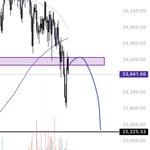



He used to be the goat bull. Said 200k btc all the way down. Become a bear when 50 k btc was the main thing on my feed. Now dead var bounce

$84K loses momentum.
The recent 50 week moving average reclaim fails.
$70K breaks.
The 200 week moving average around the low to mid $60k fails again.
The June $58,525 low breaks.
Realized price around the low $50K fails.
Then you get the real capitulation.
That is where $40K to $46K becomes completely defensible mathematically.
Toolken retweeted

Sänk skatten på ISK! Jag vill leda Sveriges mest sparvänliga parti. Liberalerna går nu till val på att sänka schablonskatten, utöver vårt löfte om en skattefri gräns på 500 000 kronor. Framtiden ska vara din, inte Nooshi Dadgostars!


Toolken retweeted

For those learning: You've probably heard experienced traders/investors repeat the mantra: "Focus on the charts, not the narratives". But do you truly understand why this advice exists? More importantly, do you grasp the mechanics behind charts versus narratives—and why, despite this widely repeated wisdom, 90% still believe narratives are what actually drive price?
Charts (price action, market structure, volume, order flow, etc.) represent the only objective, real-time truth available to us. They are the unfiltered aggregate of every single buy and sell decision made across the entire market. Price is the naked reality. Narratives—whether news headlines, earnings reports, tweets, geopolitical events, analyst opinions, or crowd beliefs—are merely human interpretations layered on top of that reality. They are stories we tell ourselves to explain what the price is already doing.
Very often, you'll spot a clean technical setup on the chart that strongly suggests the next high-probability move—yet nothing "happens" until a narrative appears to catalyze it. When price then explodes, the crowd immediately shouts: "It was the rumor!", "It was the news!", "It was Elon’s tweet!". This is a classic mistake: confusing the catalyst with the cause. In reality, the chart was already showing the underlying supply/demand imbalance and directional bias. The narrative simply served as the trigger that synchronized the broader market, decreased uncertainty, and brought in the remaining participants. Without that pre-existing technical foundation, the exact same narrative usually falls completely flat (we see this constantly: "bullish" news gets ignored or even sold into, and "bearish" news gets bought aggressively).
The narrative is only useful as secondary context to understand the timing of the trigger and provide clues about potential exits or reversals in sentiment. But when forced to choose one primary guide for direction and timing, always choose the chart. Narratives can deceive, mislead, and whipsaw you—price never lies (though we frequently misread it). The people who insist "it was the narrative that moved the price" are typically the same ones buying near the top and selling near the bottom. Those who read the chart first and treat the narrative only as confirmation or context are the ones who consistently survive over the long term.
Keep it simple: Price is cause and narrative is story. Master the cause.


