
Professor of Statistics, Harvard University
Cambridge, MA
Joined July 2020
- Tweets23
- Following88
- Followers306
- Likes26


Pinned Tweet
“The Gold Rush in AI4Math, II: What are signatures of AI-assisted proofs?”
arxiv.org/abs/2611.08412
How do AI-assisted proofs differ from human-written ones? We assemble a dataset of 8,281 mathematical papers spanning different forms and levels of AI involvement. To represent each paper, we introduce the graph of immediate proof support (GIPS). Our study reveals a qualitative gradient of AI involvement in the resulting feature space and identifies statistically significant features (“signatures”) of AI assistance in developing and organizing mathematical arguments.

Tracy Ke retweeted

The Harvard Statistics Department is seeking applications for Tenure-Track Professor and Tenured Professor in Statistics in the area of statistics and AI. Please distribute the ads:
academicpositions.harvard.ed…
academicpositions.harvard.ed…
"The Gold Rush in AI4Math: Where Are We Now?"
arxiv.org/abs/2608.24961
Is substantive AI use in math research increasing? Which subfields are most affected? What problems have been solved? Who is writing them—and which AI models are they using? An empirical study of 32,944 math arXiv submissions from Mar. 1–Aug. 20, 2026.


Our paper "Predicting returns with text data" is highlighted for JSM 2020.
amstat.org/ASA/News/Newswort…
Link to the paper: zke.fas.harvard.edu/papers/S…

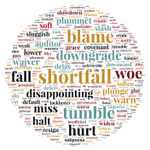
ALT Negative sentiment words in news that are correlated with stock price fluctuations

ALT Positive sentiment words in news that are correlated with stock price fluctuations