

A community for all traders and investors. Technical, Macro, Micro Eyes Up Trading - Trade What’s in Front of You https://xitter.cf/t.co/0Grb2spQly
Joined April 2012
- Tweets145K
- Following5.5K
- Followers21.7K
- Likes104K






Pinned Tweet
📊 Cautious Investor Market Weekly #22
The $8 Trillion Cash Mountain and the Rising Cost of Risk
🏦 US & European sovereign debt stress
💵 $8T in cash — No rate cuts, no cash cuts
⚡ Oil, Ukraine & the inflation shock
🤖 AI's growing financing burden
🌏 The evolving global carry trade
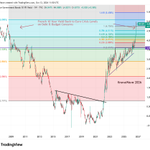
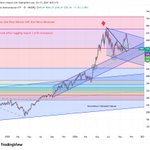
13 @KnovaWave charts covering bonds, FX, energy, gold & semiconductors.
Markets don't lack money. They face increasingly expensive competition for it.
traderscommunity.com/cautiou… #Markets #Bonds #Macro #Oil #AI
🤖 Made with AI


"Doing the same thing over and over and expecting different results is insanity" Einstein.

Netanyahu explicitly directs regime-change efforts
At an October 21 military ceremony, Israeli Prime Minister Benjamin #Netanyahu said he had directed the IDF, Mossad and security agencies toward overthrowing Iran's government.
This is an explicit statement of Israeli objectives, not confirmation that an operation has begun.
In reporting published October 22, the White House reiterated that the United States would not attack Iran before the November 3 midterm elections. #OOTT


One question stands above everything else this morning:
If Treasury yields collapse by nearly 20 basis points and semiconductors still fall almost 7%, what happens if yields start rising again while oil remains above $100?
That's the cross-asset tension I'd focus on today.
Netanyahu explicitly directs regime-change efforts
At an October 21 military ceremony, Israeli Prime Minister Benjamin #Netanyahu said he had directed the IDF, Mossad and security agencies toward overthrowing Iran's government.
This is an explicit statement of Israeli objectives, not confirmation that an operation has begun.
In reporting published October 22, the White House reiterated that the United States would not attack Iran before the November 3 midterm elections. #OOTT
Traders Community retweeted

Top oilfield services firm SLB beats quarterly profit estimates #oott reuters.com/business/energy/…

Traders Community retweeted
A tanker carrying diesel left the Russian port of Primorsk and intermittently signaled New York #oott bloomberg.com/news/articles/…

Trading implications — Friday's decision points
Market- What I'm watching
- S&P futuresWhether Thursday's selling extends, or 7,600–7,650 becomes an initial stabilization area
- Nasdaq / SMHA real reclaim of Thursday's breakdown, not simply an oversold bounce
- 10-year TreasuryWhether 5% becomes resistance or is decisively recaptured
- WTIAcceptance above $100 versus a headline-driven reversal
#Gold / GDXWhether miners begin leading bullion
#Copper$6.449 hourly pivot and $6.226 downside reference

Gold, copper and FX — three useful cross-checks
#Gold dipping below $4,000 and recovering is important, although with miners I'd be especially interested in whether $GDX begins outperforming bullion.
That would suggest investors are looking beyond forced selling and reassessing operating leverage to gold.
#Copper is more concerning as a growth indicator, notwithstanding this morning's rebound. At $6.443, it sits almost precisely on the 100-hour moving average of $6.449 from your feed.
A sustained failure there opens the possibility of a test toward $6
On currencies, the weakness in #CHF is interesting. But I'd still prioritize AUDJPY and CHFJPY, alongside the dollar, for an indication of whether this is becoming a genuine global carry unwind rather than a US technology correction.
A falling #AUDJPY with copper losing technical support would be a more compelling warning about global cyclical risk.
Oil is becoming the inflation problem that won't disappear
WTI crude $101.27 +1.81%
Brent crude $114.84 +1.48%
Brent–WTI spread $13.57 per barrel. That's a striking premium.
It's consistent with the international market placing substantial value on barrels outside the immediate Middle Eastern disruption risk.
Renewed concerns over Iran and attacks involving Saudi Arabia are supporting crude, while Brent has reached a five-month high. #OOTT

With Oil there are two different forces operating:
- Physical supply risk: Shipping, insurance, regional infrastructure and the possibility of prolonged disruption.
- Macroeconomic demand destruction: How much oil above $100, and potentially $115–120 Brent, can the global economy absorb before consumption and growth suffer?
This second part is becoming increasingly relevant to equities and bonds.
We've discussed how energy inflation had already contaminated September CPI and PPI. Today's oil prices increase the chance of further pressure in subsequent data.
The Fed is increasingly confronted with an unpleasant combination: weakening sentiment, expensive energy and stubborn inflation expectations.
Consider the political dimension. The decision to advertise limits on military action before the midterms may have reduced the credibility of an immediate deterrent. Whether that was deliberate negotiation or a miscalculation remains uncertain, but the oil market is clearly pricing persistent risk.
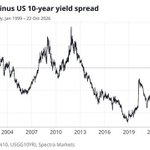
#Bonds are arguably sending the most important signal
Thursday's roughly 19-basis-point collapse in the 10-year yield was the largest daily decline since March 2023.
That is an unusually large move and it occurred while technology shares were getting hammered.
Normally, a substantial decline in discount rates would offer some support to long-duration equity valuations. Instead, the stock market effectively said that lower rates weren't enough.
Our interpretation:
Investors are becoming more concerned about the earnings denominator than the discount-rate numerator.
It also raises the issue we've repeatedly discussed about the crowded long-end Treasury short. Part of Thursday's rally could reflect aggressive short covering rather than a sudden, clean reassessment of inflation.
Today's rebound in yields may help distinguish the two.
- The 10-year returning toward 5% is a useful pivot. A sustained move back above that level, with oil still above $100, would create another challenge for high-multiple technology.
- However, if yields break lower again while technology continues falling, the market is increasingly pricing deteriorating growth expectations rather than celebrating easier financing conditions.
TGIF — Market Chaos | Friday, Oct 23, 2026
The big story isn't simply that technology is selling off. It's that bonds, oil, semiconductors and broader equities are telling increasingly different stories about the economy.
And Thursday gave us some particularly interesting evidence.
We've been discussing for weeks the possibility of indiscriminate liquidation in parts of the AI/speculative complex, while capital moves toward businesses with more dependable cash flows and stronger balance sheets.
Yesterday looked much more like that process accelerating than a straightforward market-wide collapse.

Thursday's real message: A technology liquidation, not a universal equity rout
Nasdaq Composite -2.60% 26,008.86
S&P 500 -1.21% 7,663.43
Russell 2000 +0.11% 2,784.03
Semiconductor index fell approximately 6.7%, its largest daily decline since June 23. Meta dropped approx7%, while CoreWeave lost around 10%.
- The broader market was considerably healthier than the Nasdaq made it appear. The majority of US stocks actually advanced on Thursday, despite the enormous damage to the capitalization-weighted indices.
There are potentially 3 different markets developing:
- AI infrastructure and heavily financed growth: Valuation compression, funding concerns and questions about the return on enormous capital expenditures.
- Established cash-generating companies: Potential beneficiaries of rotation away from speculative growth.
- Beaten-down small-cap/speculative shares: An opportunity for selective rebounds, but only where liquidity and financing survival can be established.
It reinforces our point from yesterday about debt and survival. We shouldn't assume every stock down 50–70% represents the same opportunity.
